June 5th
We left our campsite at Point of Ness around 8:30 am to get the 10 am ferry from Houton on Orkney Mainland to Lyness on the Isle of Hoy. The boat docked at 10:30 am and we went directly to the Scapa Flow Museum that was conveniently near the ferry terminal.


We enjoyed our time at the Scapa Flow Museum learning about Orkney Islands and the body of water called Scapa Flow, that was so integral to the British Royal Navy operations in the first and second world wars.
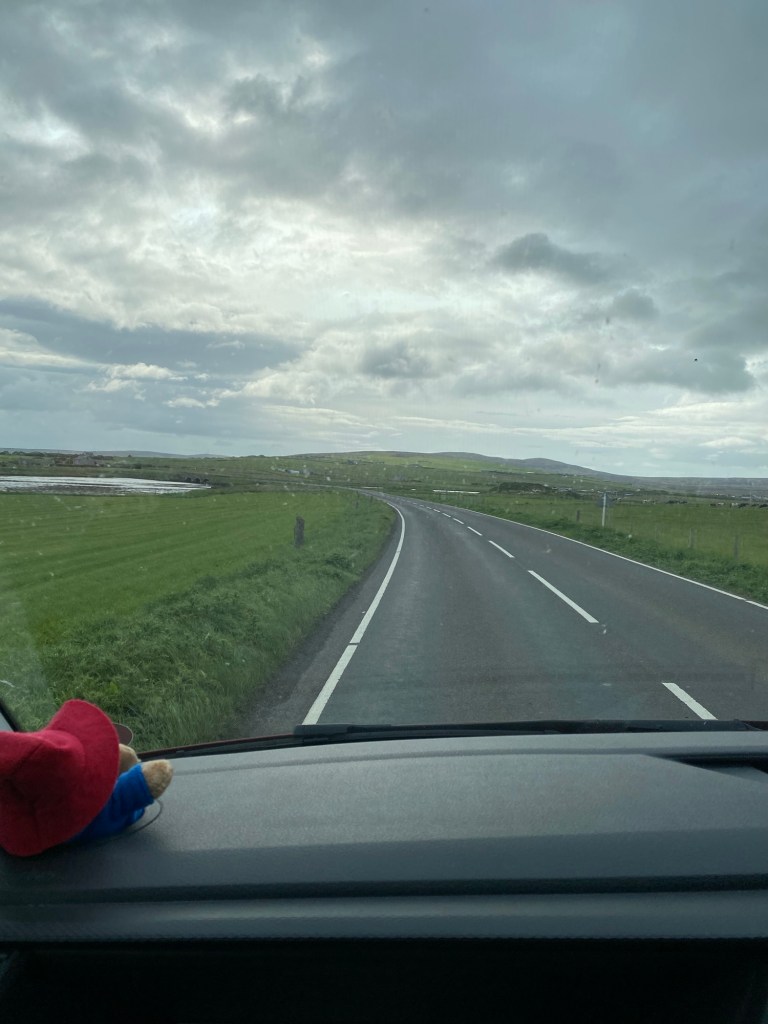
After the museum, we drove in the direction of Rackwich Beach on the other side of Hoy, where we would be camping for two nights. We had two stops planned enroute. The first was Betty Corrigal’s grave. When looking up on the net to find things to see and do on Hoy, Betty Corrigal’s grave came up. Information says that in the 1700’s when Hoy resident Betty Corrigal was 27, she had an affair with a sailor and became pregnant. Afterwards, the man abandoned her. Being pregnant and not married was frowned upon by the people of the Hoy community. She tried to commit suicide two times and the second time was successful. She was buried in a field and forgotten. In the 1970’s she was finally given a tombstone that states “Here Lies Betty Corrigal”. It truly is the loneliest of places. There is now a white picket fence around her grave and someone left Betty flowers recently.


Just down the road 20 minutes or so was the other “have to see” on Hoy, the Dwarfie Stone.
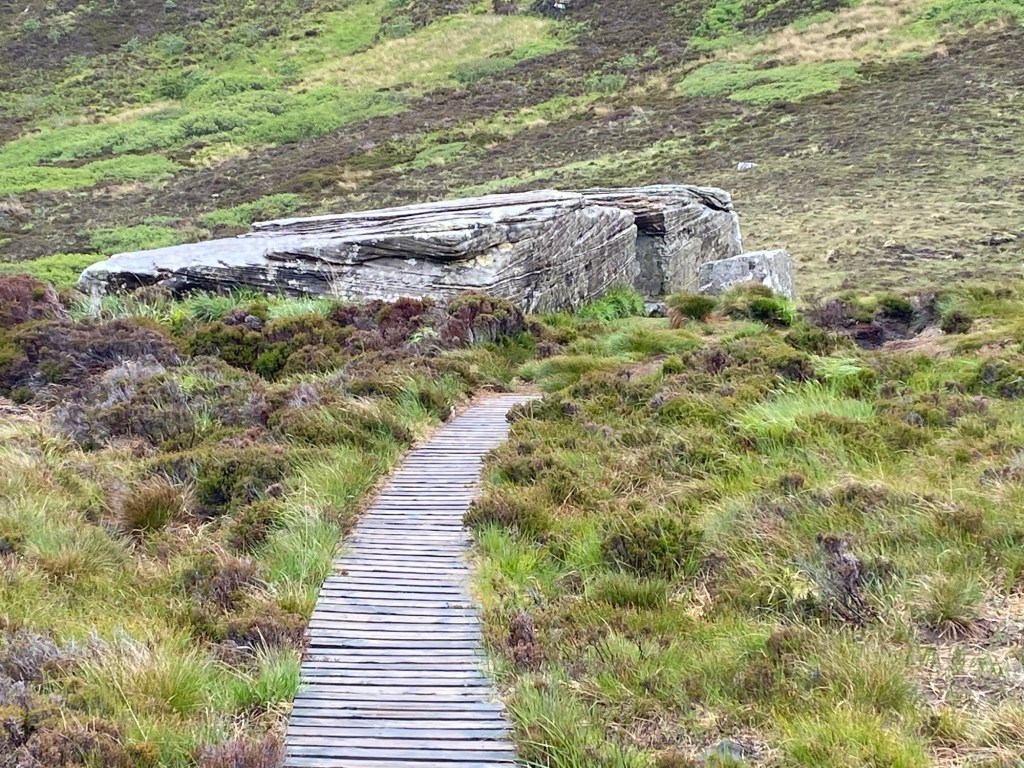
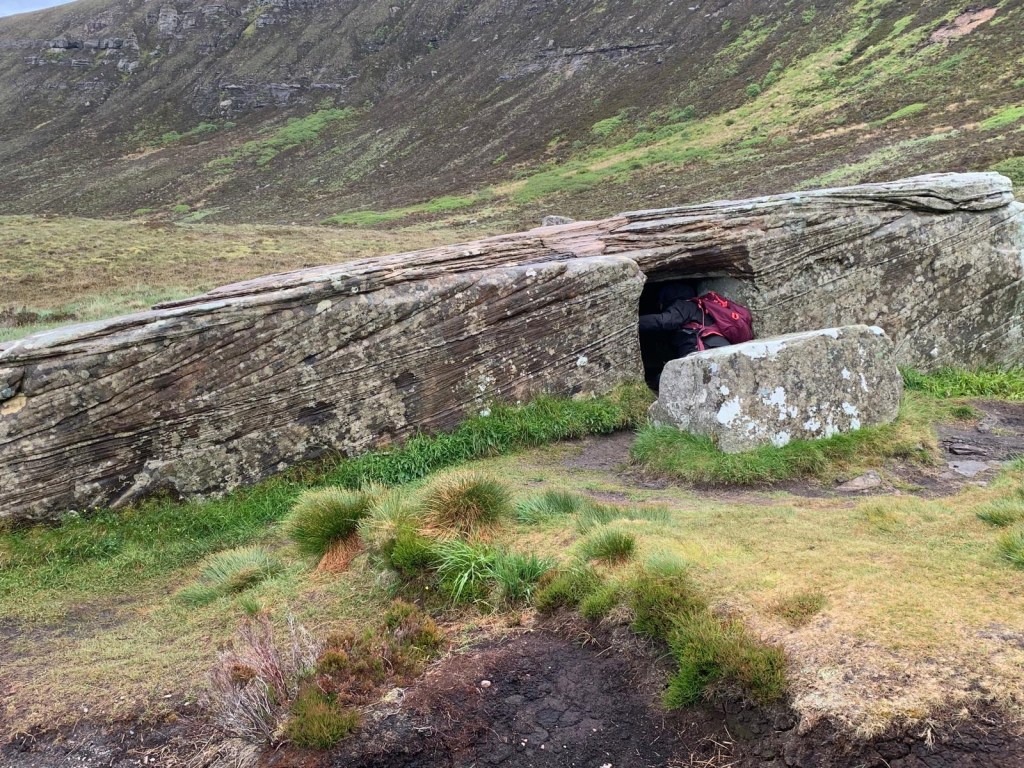
The Dwarfie Stone is a burial chamber on the side of a glaciated valley just 10 minutes before our campsite at Rackwick beach. Its chamber was cut out of the rock 5,000 years ago. It apparently is the only chamber on the Orkneys not built out of stacked rocks and may also be the only one built that way in Britain. (https://en.m.wikipedia.org/wiki/Dwarfie_Stane).
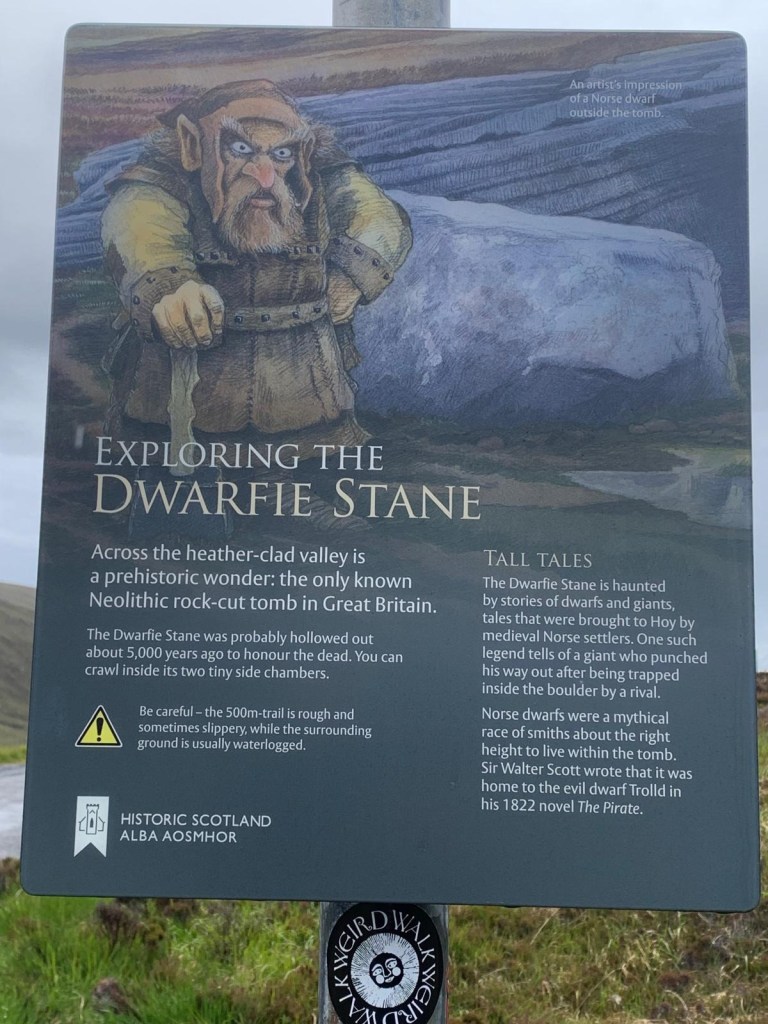
There are myths too about the Dwarfie stone, involving dwarfs and giants.
The acoustics in the chamber are ethereal.
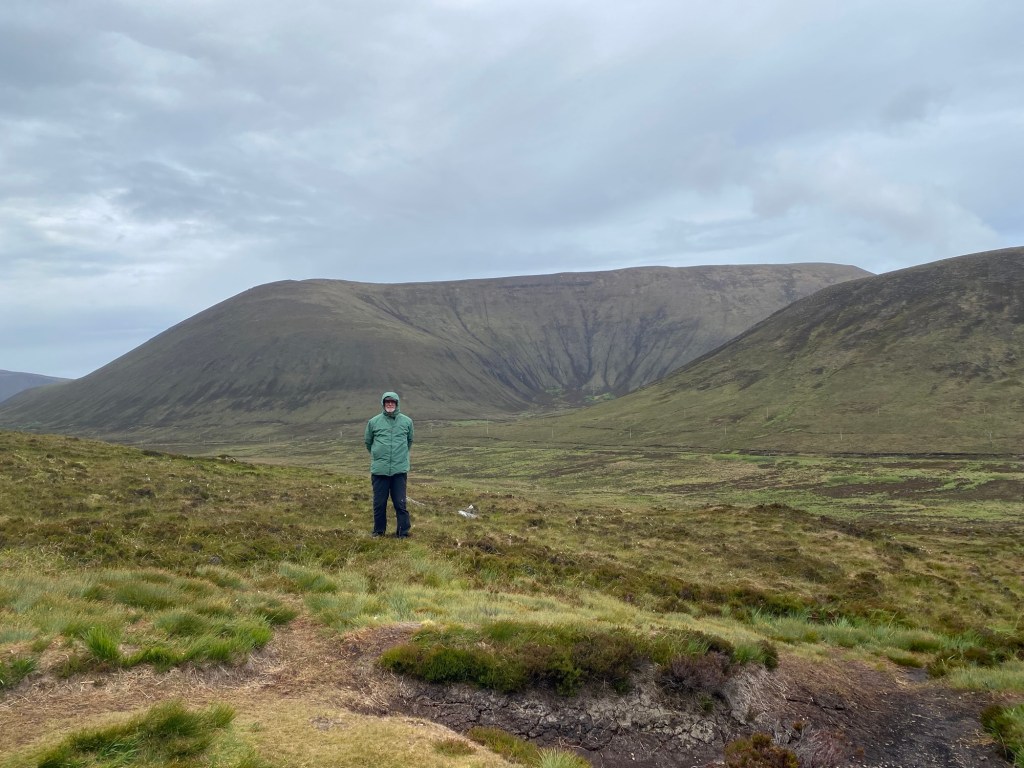
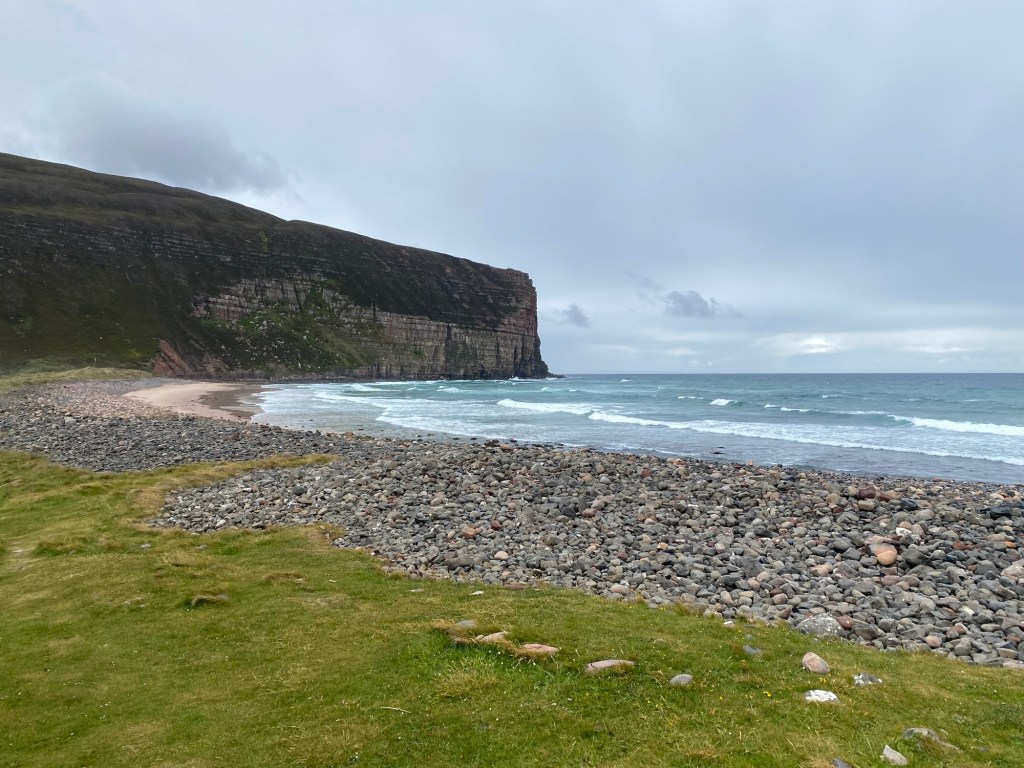
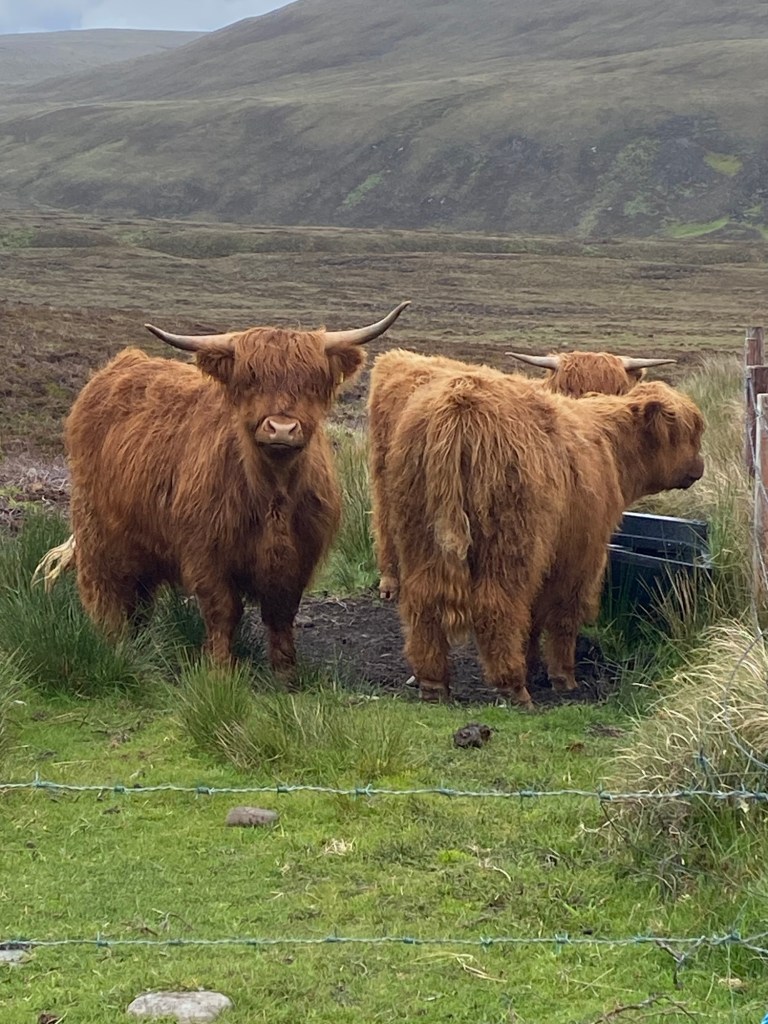
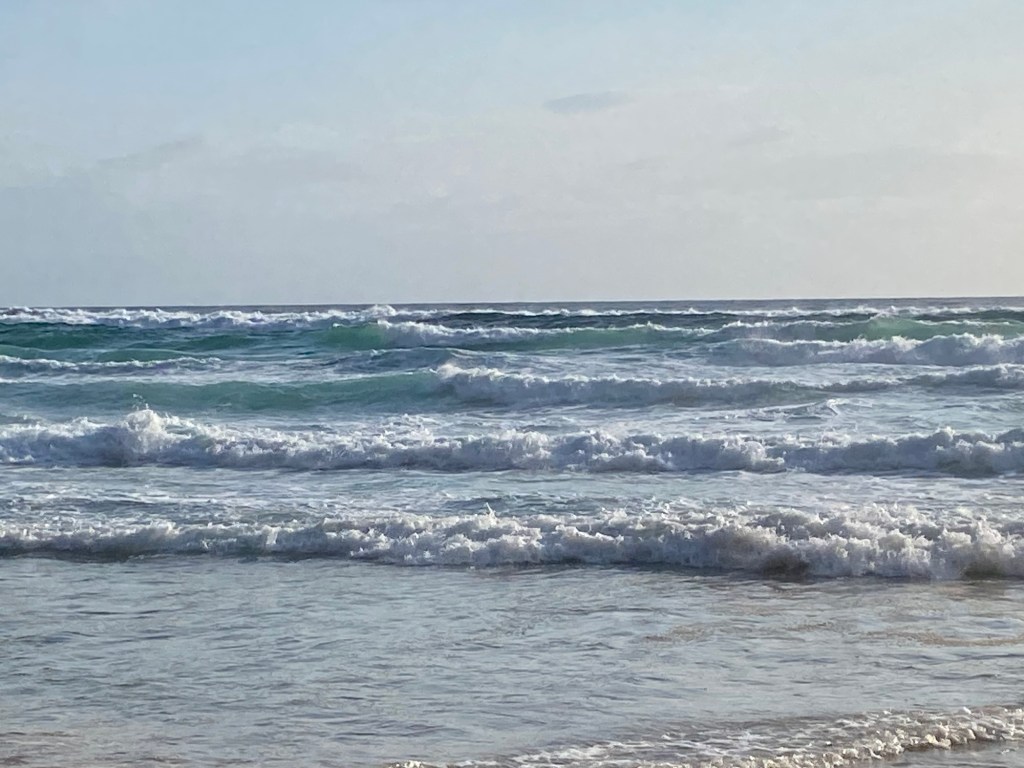
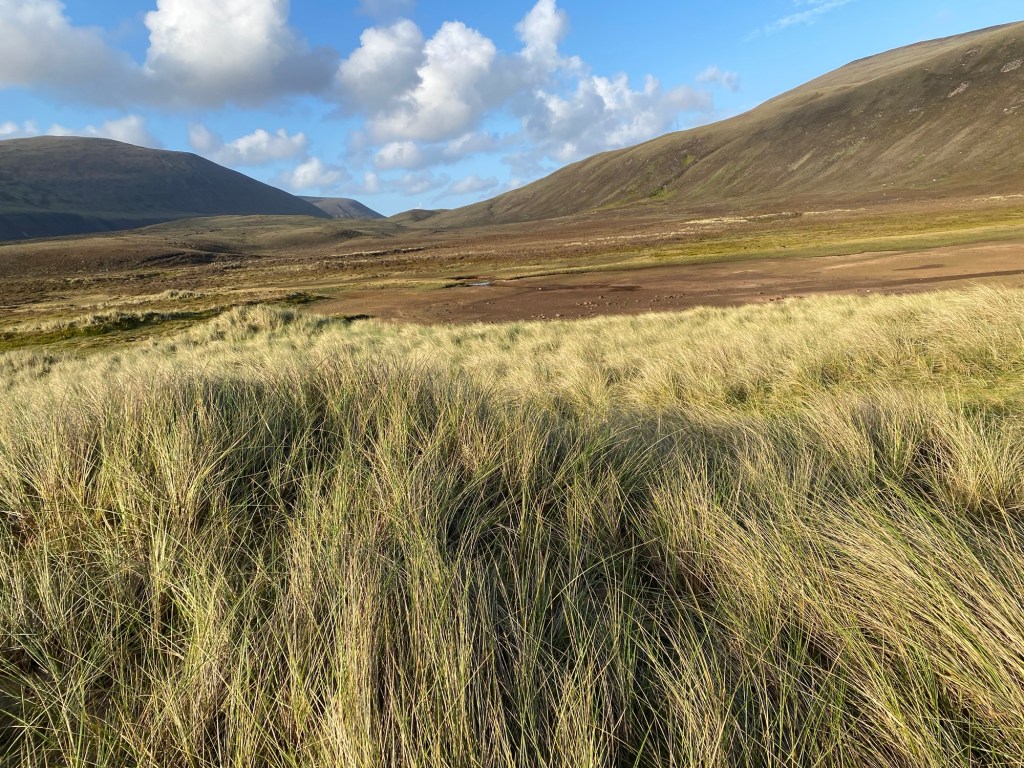
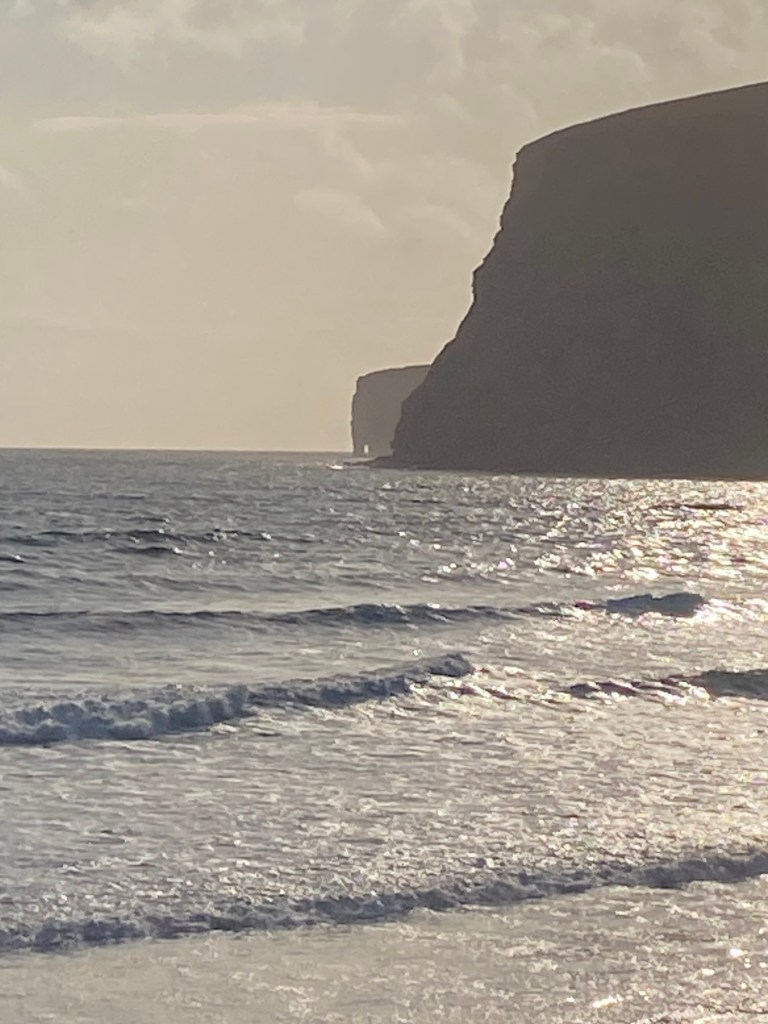
We drove the last little way to our campsite and were blown away by the stunning location near the beach between massive cliffs, old stone cottages scattered on the landscape, with highland cows and sheep in the fields.



June 6th
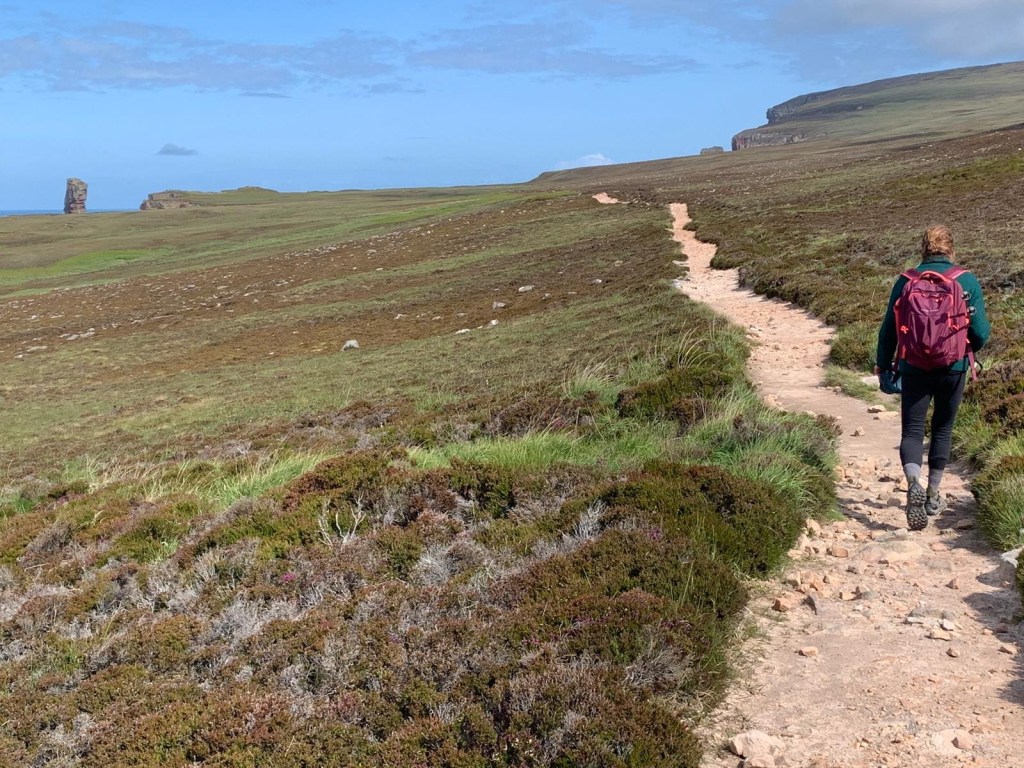
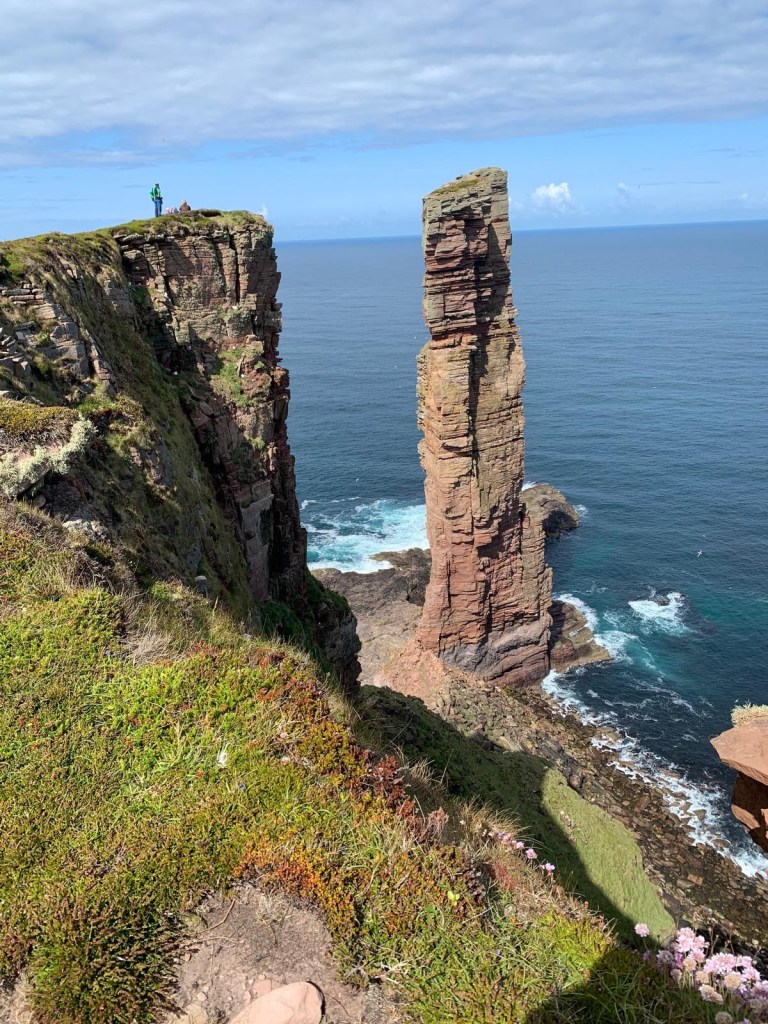
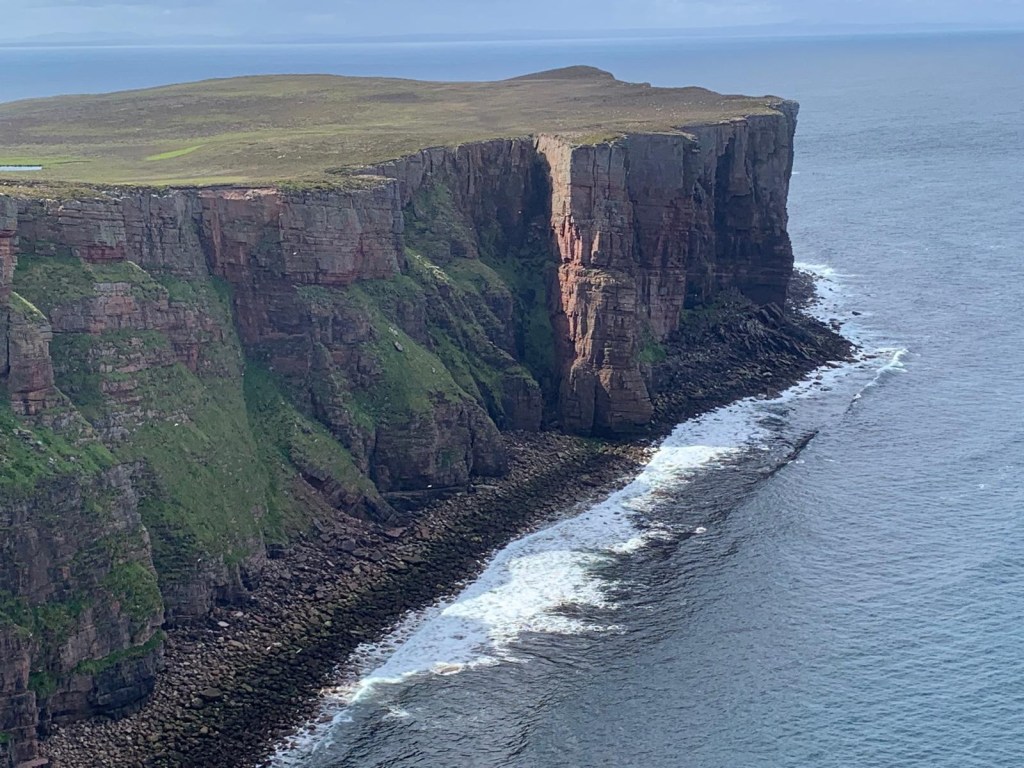
In the morning, we hiked to Old Man of Hoy. It is a 137 m red sandstone sea stack, one the highest in Britain. It has been climbed many times through the years. Most people though hike out to it from Rackwick Bay, as we did.
The head of the trail was just near our campsite. The projected time of the hike was 2-3 hours depending on the pace and conditions. It was a beautiful sunny day with a very slight breeze. The trail was good but had a few areas close to the cliffs that made me nervous. Guy was fine and happy to see the Old Man of Hoy and get some pictures. All in, it took us about 2 hrs 15 there and back.

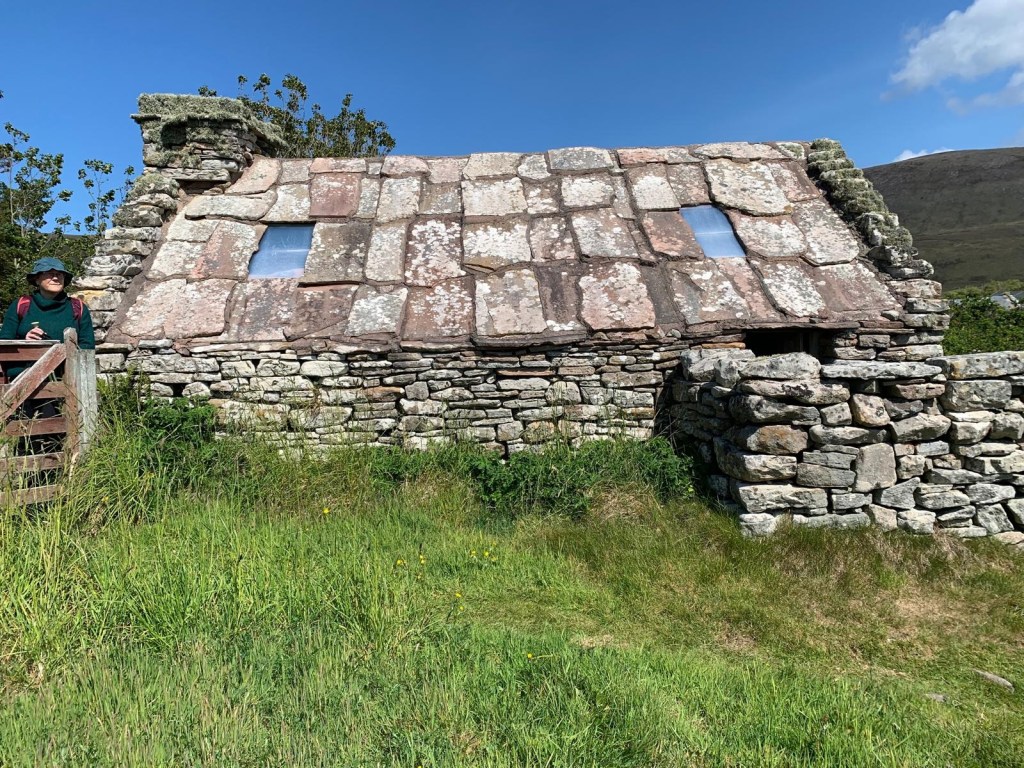
After the hike, we came back down into the village and took ourselves on a self guided tour of the little folk museums there. There were no attendants. We just let ourselves in and saw inside an old crofter house and outbuildings as well as the old schoolhouse. It was very interesting to see how village life might have been a couple of hundred years ago.


We had a rest back at the camper-van and then a walk down to the beach enjoying the sun and the views before we set out the next morning back to Orkney mainland.
June 7th
Our ferry was leaving Hoy at 9 am. We left the campsite at 7:30 am and didn’t meet one car on the half hour drive across the island.
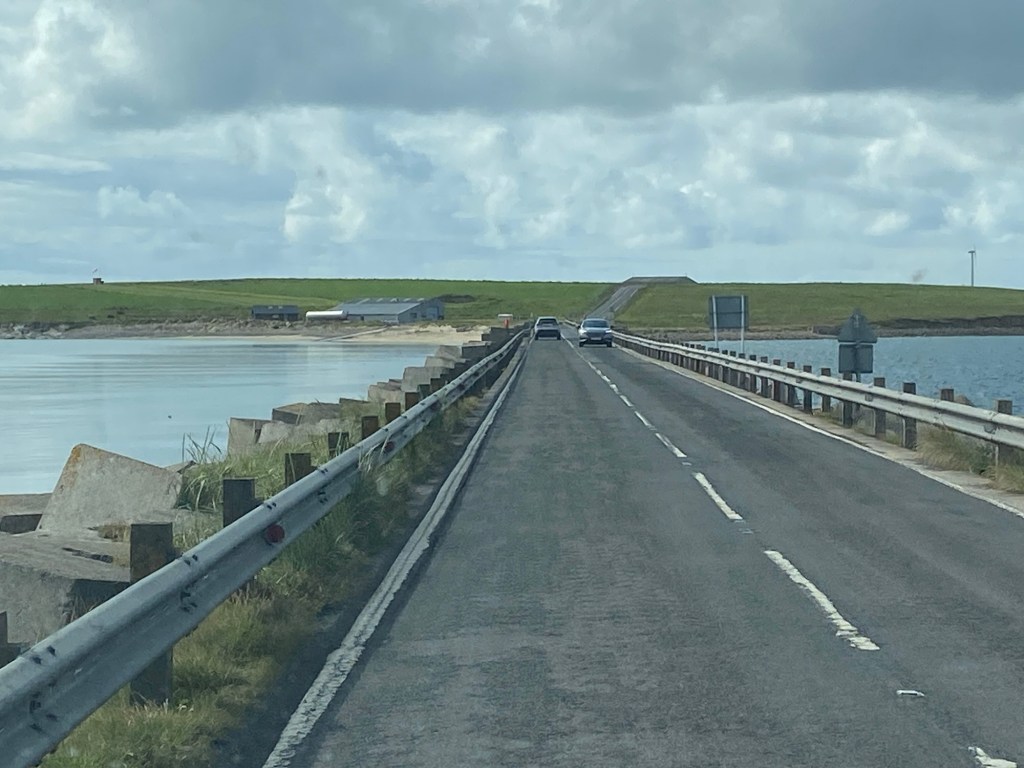
Once back on Orkney, we were headed to the Orkney Island of South Ronaldsay. It is reached by island hopping via the Churchill Barriers.
The Churchill Barriers are a series of structures commissioned by Winston Churchill in the Second World War. There were deemed necessary after a German submarine, in 1939, snuck through the passage between Orkney Mainland and the island Lamb Holm, into Scapa Flow. It torpedoed the HMS Royal Oak, a British Naval Ship, killing 835 people. The submarine was able to quickly sneak out after its operation.
The barriers construction would block water passage between the islands at 4 locations of Lambs Holm, Glimps Holm, Burray and South Ronaldsay, and add a level of security to Scapa Flow. The barriers also offered the islanders connection to the Orkney mainland, as roads were constructed on top of the barriers in 1946. It would certainly change island way of life forever.
We crossed the first Churchill Barrier between Orkney mainland and Lambs Holm to visit the infamous Italian Chapel.
The Italian Chapel was built by Italian prisoners of war during World War II who were involved in the building of the Churchill Barriers. They had rudimentary accommodation and conditions but apparently no place to worship. After protest, they were given the ok to build this church led by one of the prisoners who was an artist. The chapel described as “highly ornate” has beautiful murals painted by the prisoners of war. The church is visited by a 100,000 people a year and is a sign of friendship between the Orkneys and Italy. (https://www.secret-scotland.com/place/italian-chapel)


We continued on to the Fossil and Heritage Centre on the Island of Burray, going over Churchill Barrier 2 and 3 to get there. It’s a great little museum and the little cafe attached is excellent.
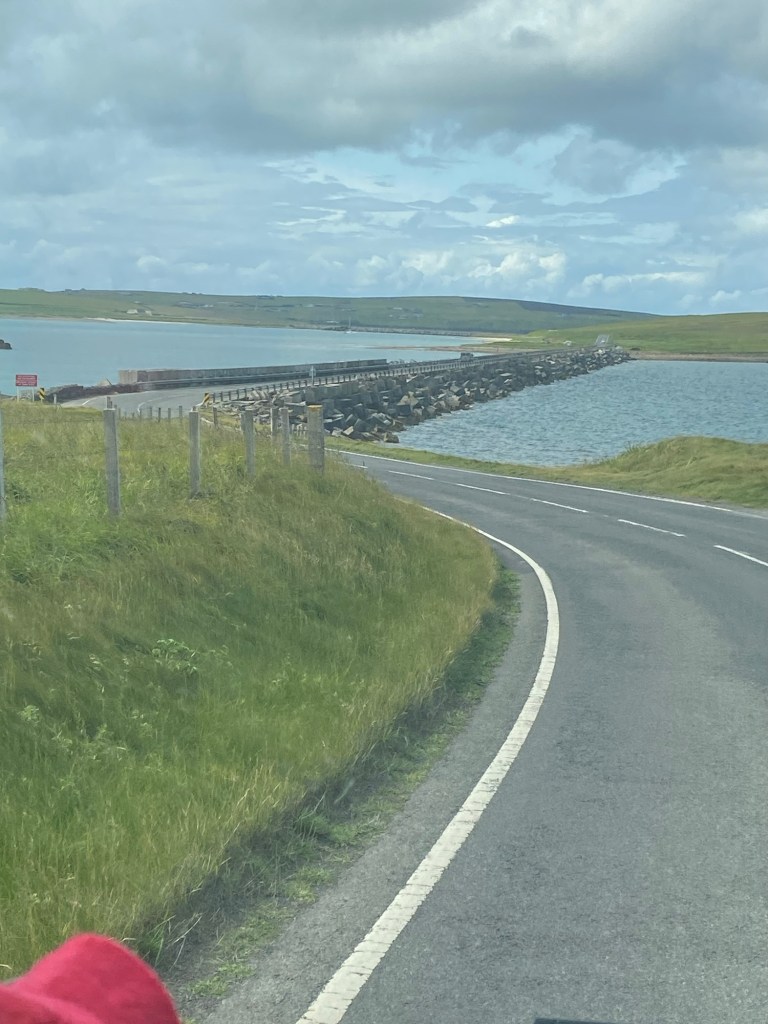
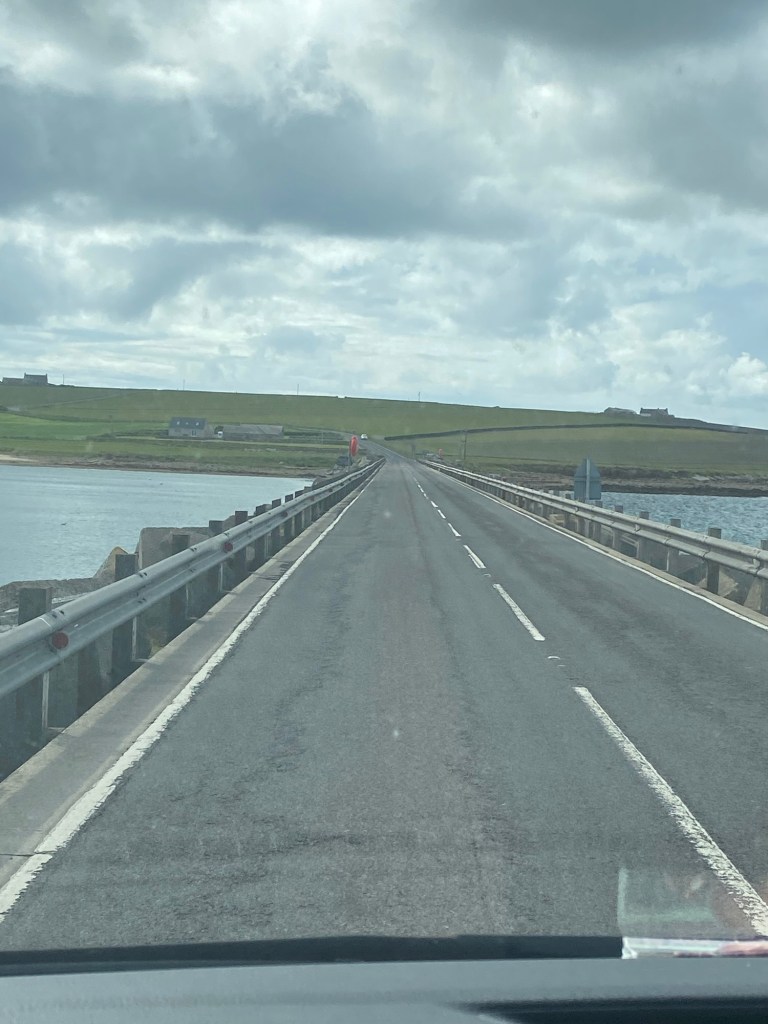
After a fun and informative time at the Orkney Fossil and Heritage Centre, we drove the last Churchill Barrier on to South Ronaldsay.

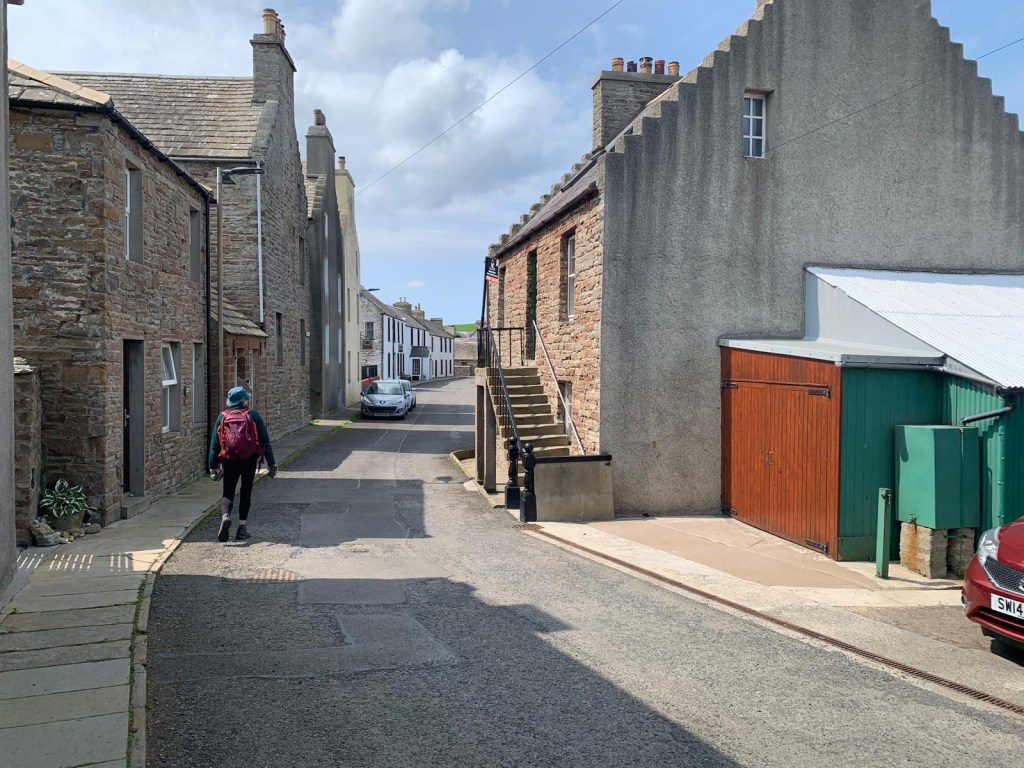
We stopped in St. Margaret’s Hope, a little village on the island for a look around.
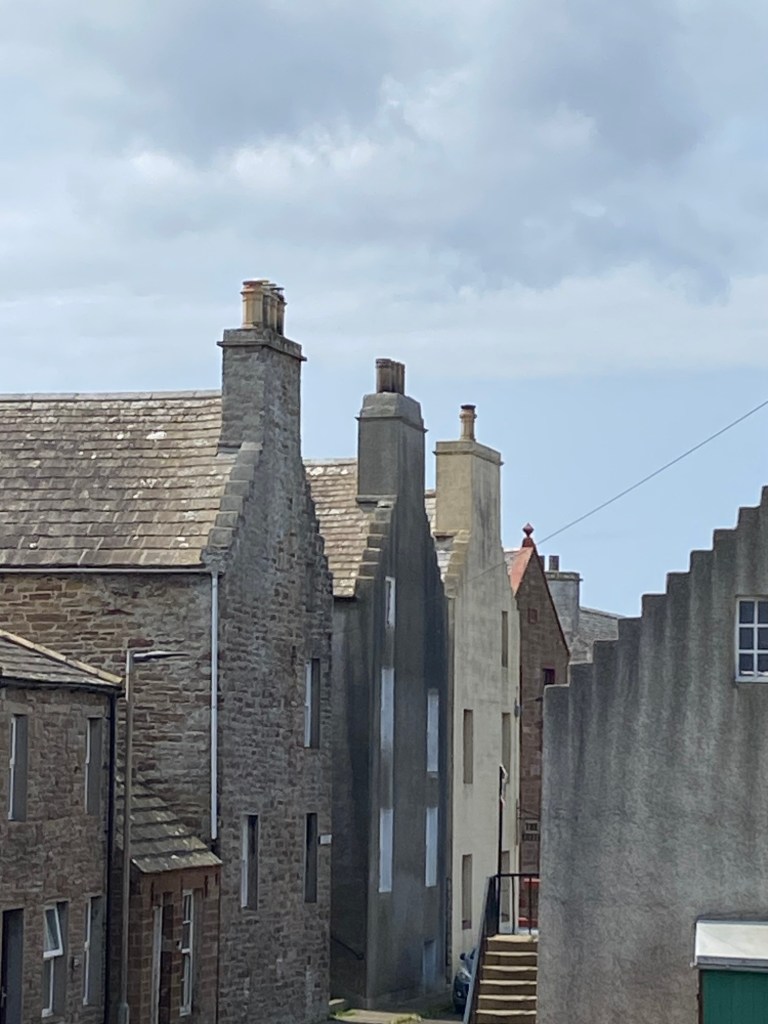

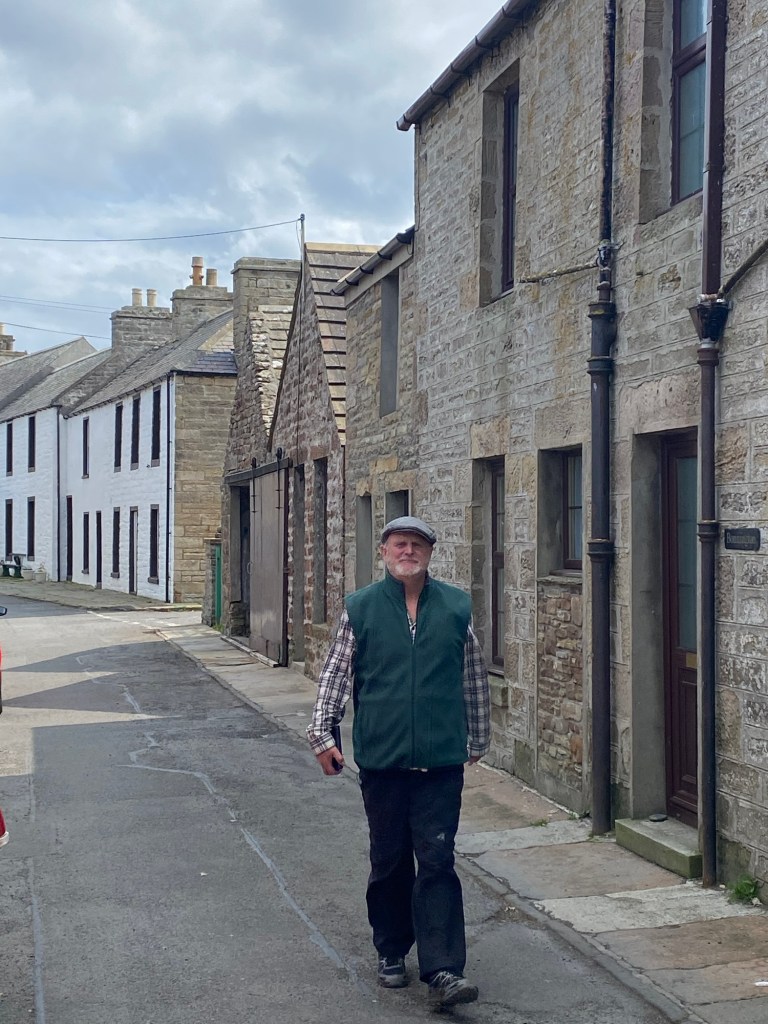
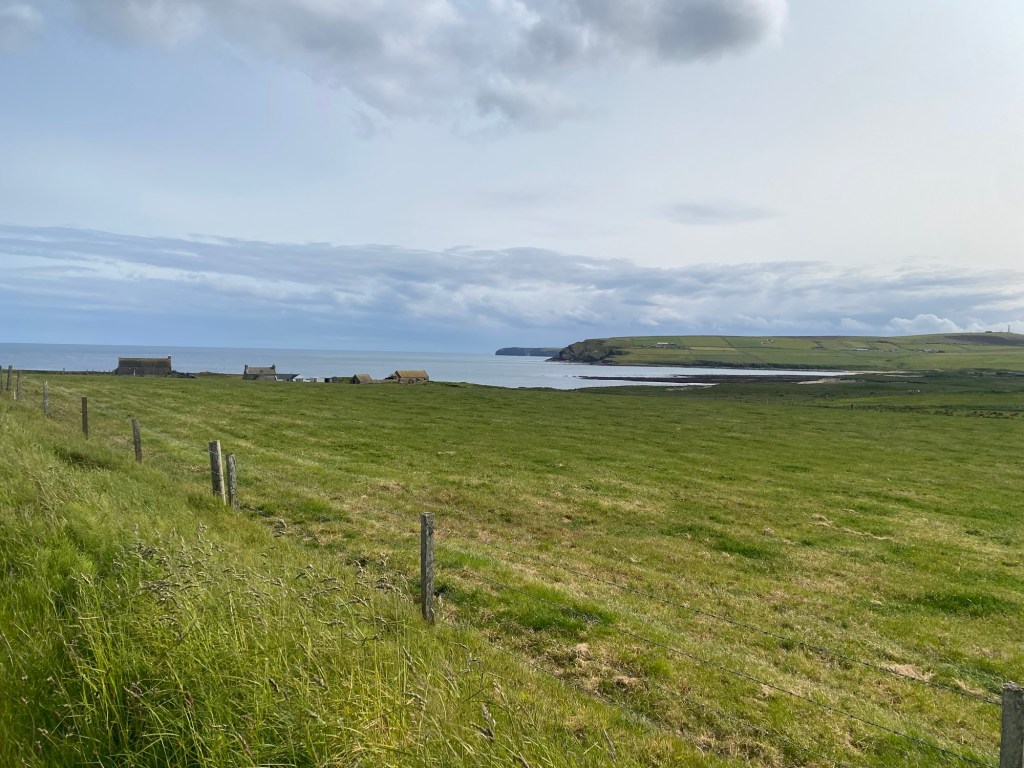
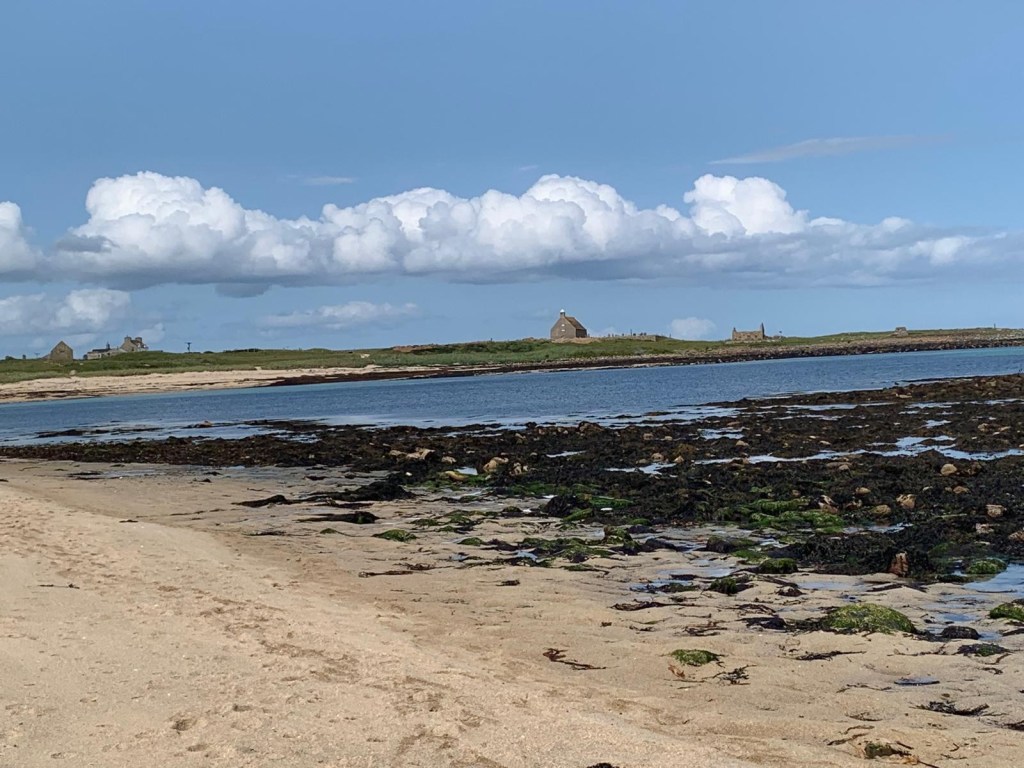
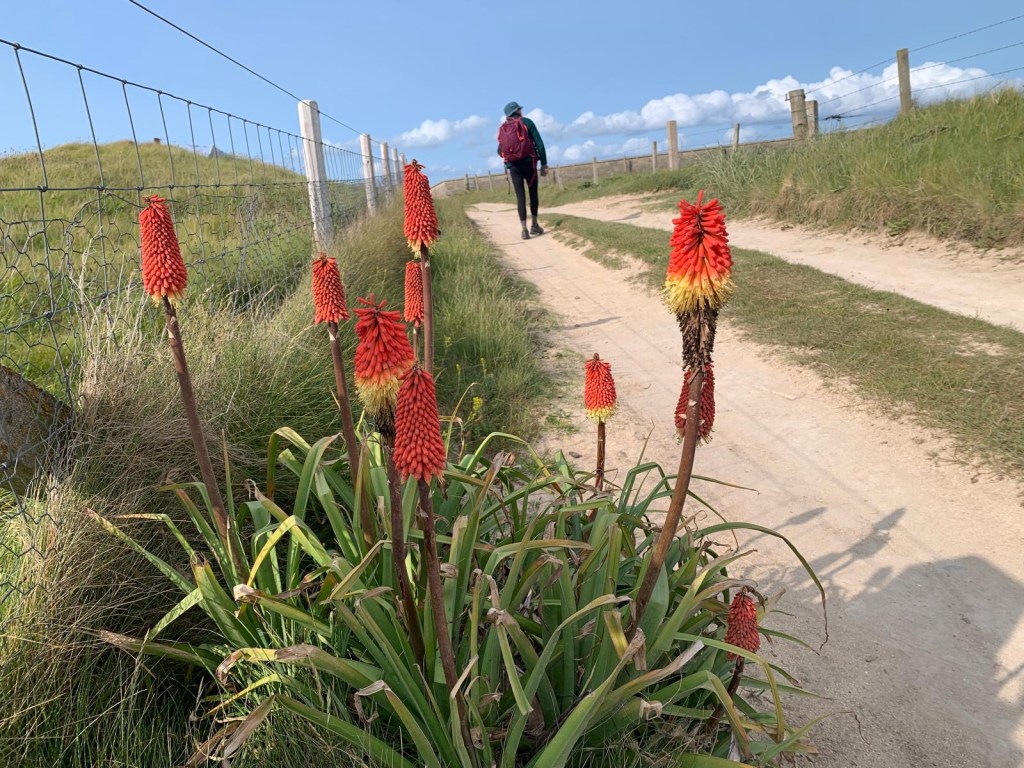
Then we went to our campsite on the west of the island, booked in and set up, and then took a long walk down the hill to the beach looking out to the North Sea.



June 8th
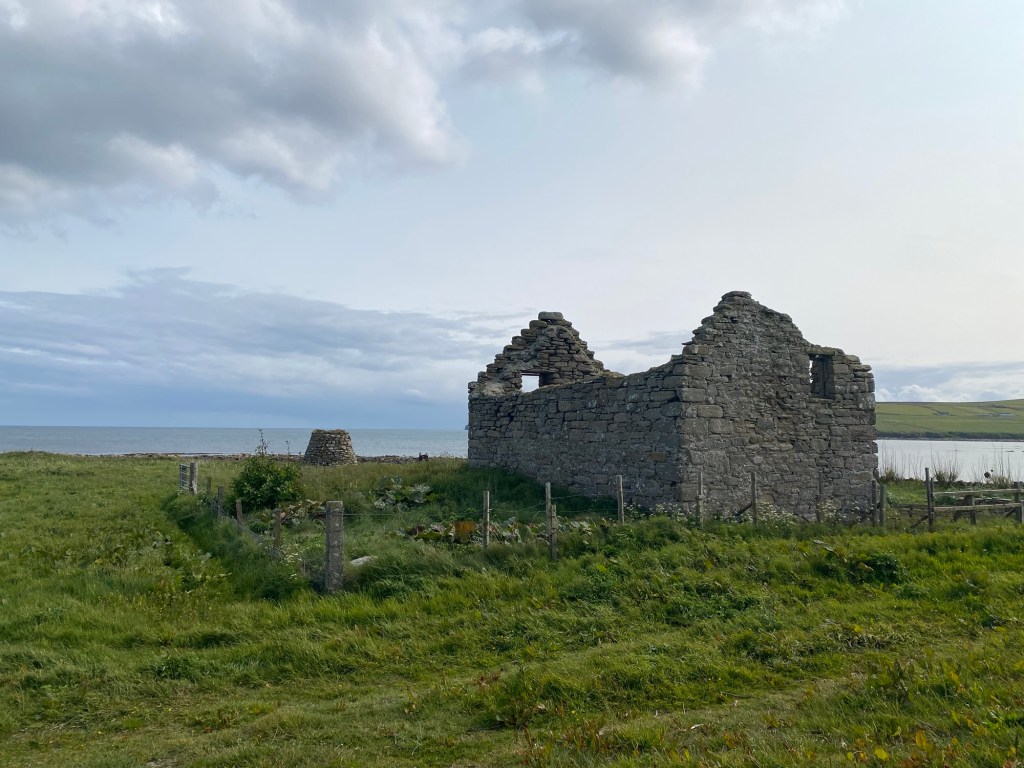
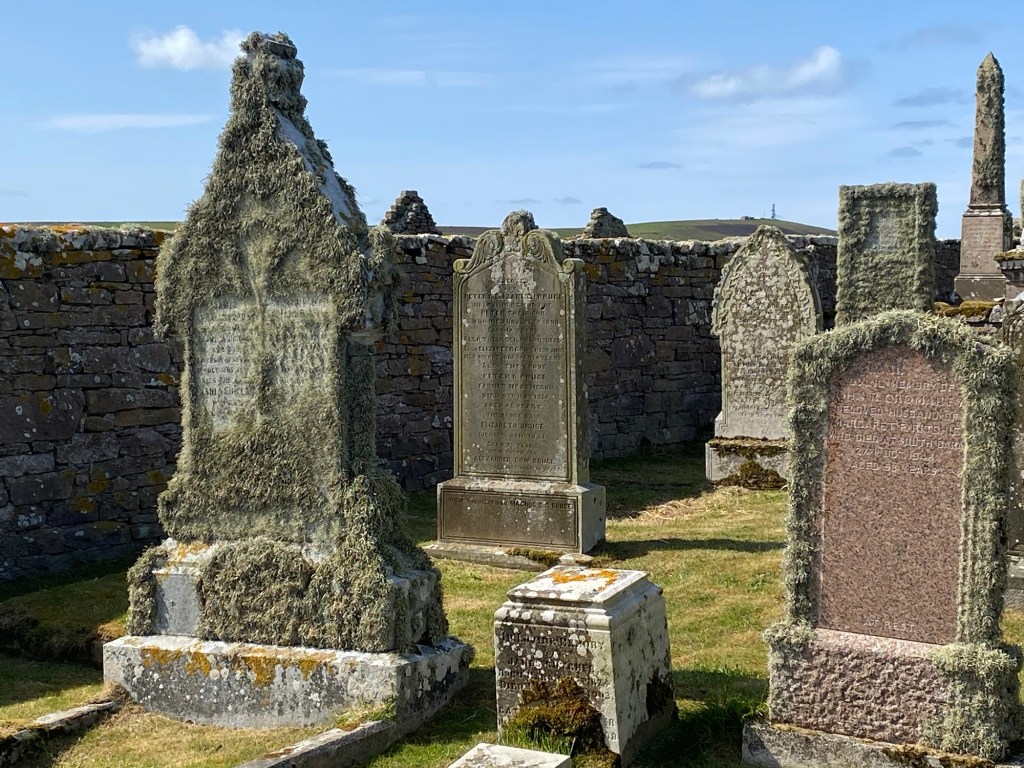
In the morning, we left our campsite and went back down the hill to visit the church and graveyard that were closed the day before. We are fascinated by old graveyards. This one is particularly mysterious, straddling the open ocean on the North Sea with both the stonewall and big sky as a backdrop. The oldest grave Guy found was 1813, but many graves were so old we couldn’t read them.

After a short stop there, we were on to Kirkwall to see the things we missed a few days before.

First stop was the Bishop’s palace, an intriguing ruin that housed Kirkwall’s first Bishop in the 12th century.
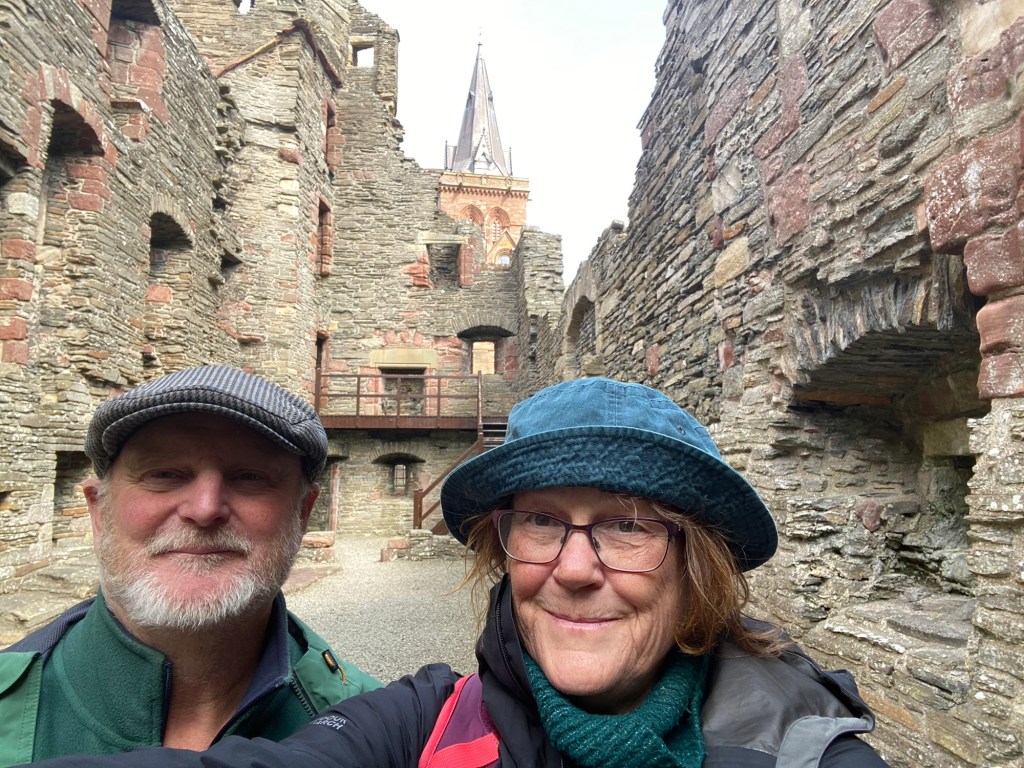
Then we visited the Earl’s Palace across the street. It was a wonderfully intact building, except for the top level that was in the process of being restored. We had the place to ourselves to wander before the tour bus crowd descended.
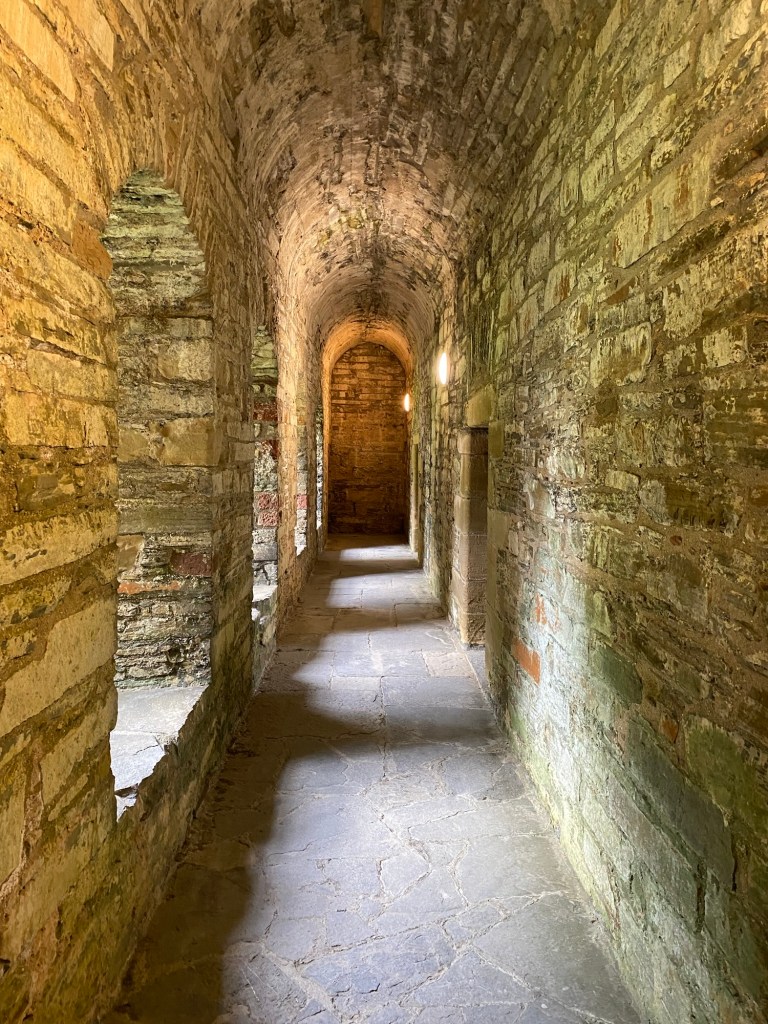


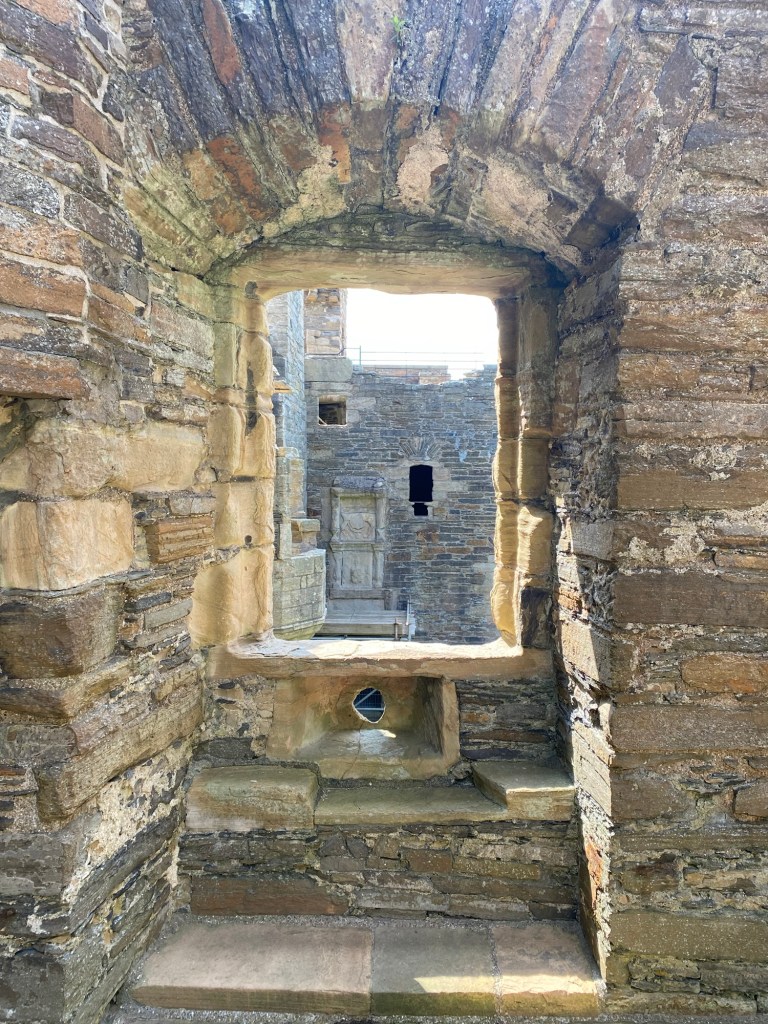
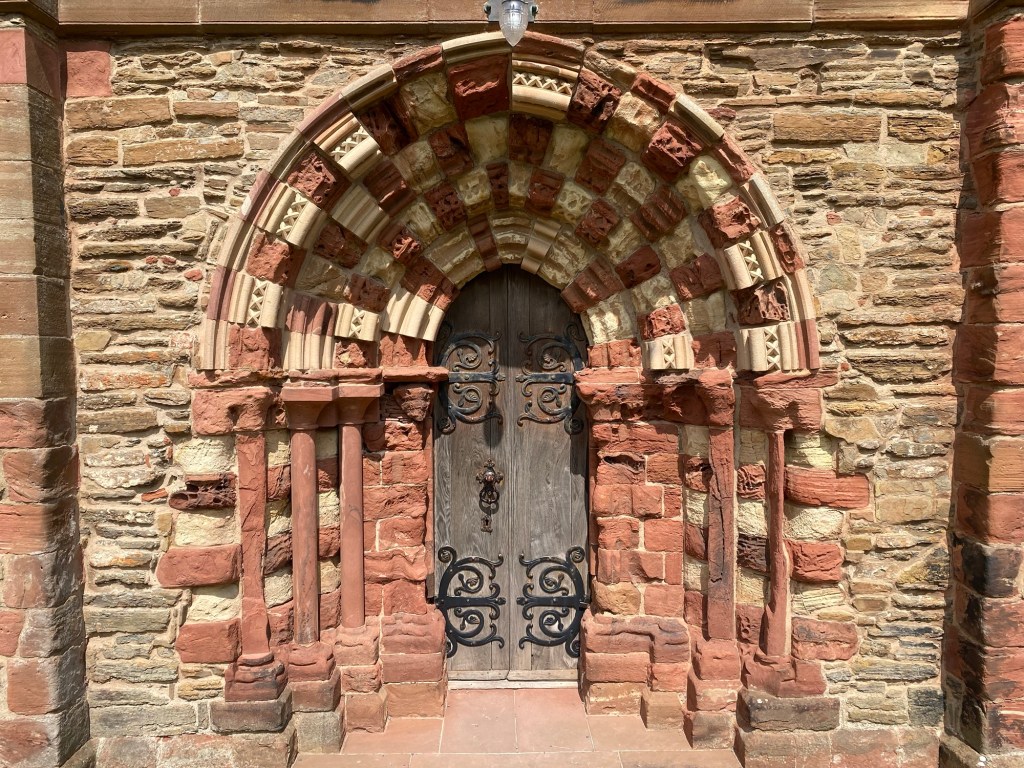
We topped off our old building tour with another visit to St Magnus Cathedral, built around the same time as the Bishops Palace but fully intact. St. Magnus Cathedral was built in 1137, mostly from red and yellow sandstone. “It is dedicated to St Magnus, Earl of Orkney in the 12th century, at a time when Orkney was part of the Kingdom of Norway. He was killed on the orders of his cousin and rival Hakon, and many miracles were reported after this death. In 1137 Magnus’s nephew Rognvald began construction of the ‘fine minster’ in honour of his saintly uncle; Magnus’s relics remain interred in a pillar of the choir. The cathedral has stood firm against Reformers, Cromwellian troops and wartime danger, and is the most complete medieval cathedral in Scotland.” (https://www.orkneymuseums.co.uk/our-museums/st-magnus-cathedral/).
What struck me about St Magnus Cathedral is its beautiful ruddy natural color and grand simplicity, sitting right there in the heart of Kirkwall for centuries. And it has an excellent graveyard.




Later in the day, we headed back out to Skara Brae to see the Neolithic village that people flock to see from all over the world. In 1850, there was a huge storm that uncovered this 5000 year old village. “The discovery proved to be the best-preserved Neolithic village in Northern Europe”. (https://www.visitscotland.com/info/see-do/skara-brae-prehistoric-village-p247671). It was super interesting and fascinating to see. You could imagine the villagers of that time going about their day to day business. There were passageways between the houses, beds and dressers, fire pits, fish pots, chairs and other artifacts discovered. Our visit was hurried since a huge tour bus of people were trailing behind us and we wanted to get through before it got too busy.

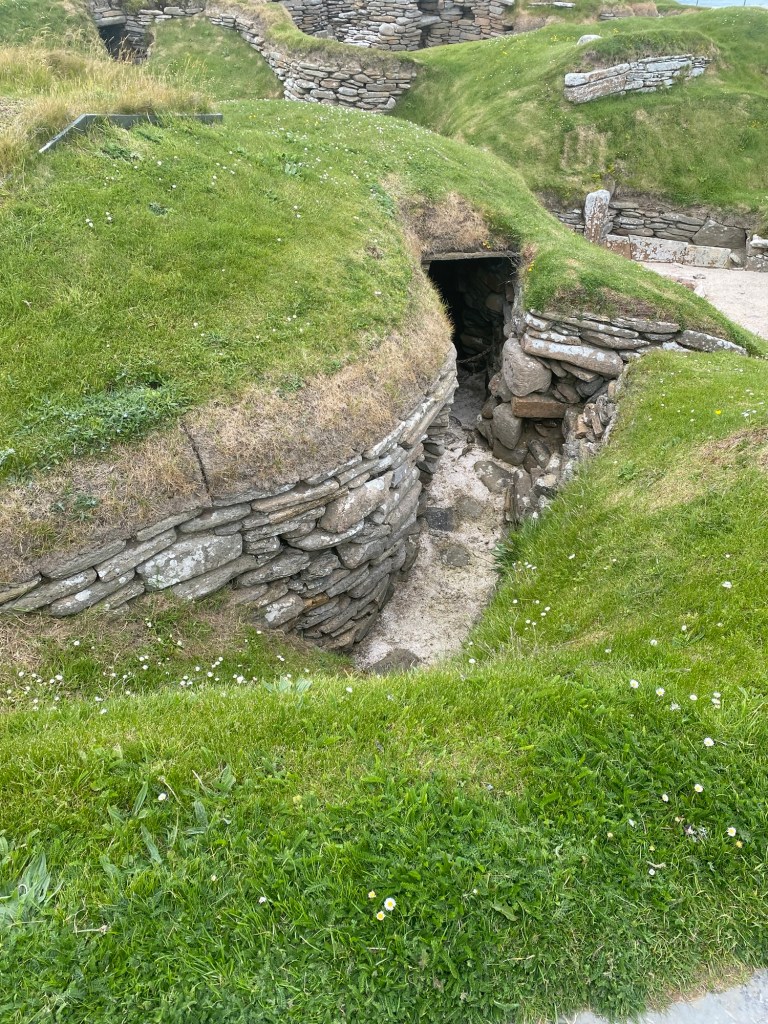


The backstory to this well preserved village involves what happened to the villagers 2500 years ago. Did they move on due to a massive sand storm? Or did village life here just gradually come to an end. (https://www.historicenvironment.scot/visit-a-place/places/skara-brae/history/)
After seeing Skara Brae, we spent some time on the beach below looking for sea glass and enjoying the break in the weather before we headed to our campsite. We were back at Point of Ness campsite in Stromness that night, positioned for our ferry the next morning back to the Scottish Mainland. Our short and magical time in the Orkney Islands was coming to an end.
 Guy and Joys' 2025 UK and Ireland Campervan Trip.
I canna see any goff courses… are ye sure yer in Scotland?
LikeLiked by 1 person
As usual, top marks for all your wonderful blogs, photos and sharing your highlights of your in depth experiences of traveling around Britain. Memorable times will abound in your minds for ever. 💕 “ Carry on “ as the Brits would say. Happy travels for the rest of your trip. X🥰x. On Tue, Jun 17, 2025 at 3:54 PM Guy and Joys’ 2025 UK and Ireland Campervan
LikeLiked by 1 person
Dear Caroline.
Thanks for that. There are certainly going to be a lot of memories to shuffle through in the next months. We are leaving Edinburgh and Andrew and Claire this morning. Had a lovely visit. Great hosts. Saying goodbye to Scotland this morning as we drive back into England in a few hours. Bittersweet but it’s the wind down to come home. Love to all and we will see you on July 2nd. 💜
LikeLike
Happy that you were able to meet up with Andrew and Claire. I have not seen them for many years ? Can you send me your flight details? 💕🤗💕🤗
On Thu, Jun 19, 2025 at 11:53 PM Guy and Joys’ 2025 UK and Ireland
LikeLike
Hi Joy, I wanted to say how much I am enjoying these blog posts and being able to travel with you vicariously. Your research on the locations and history of the many places is astounding and I can only imagine how much research it has taken of these wonderful places … the results must be rewarding and I can imagine you revisiting the series when you return to the Sunshine Coast.
The amount of stone work in it’s history, the remote solidarity of people and place is stunning. The two of you are going to be in incredible shape after all that walking … enjoy.
On a ‘home’ note … the 2025 Jazz Fest now come and gone was a success and we certainly missed your rock-solid volunteer coordination skills.
Thank you again for this escape from my never ending computer world.
Linda
LikeLiked by 1 person
Aw. Thanks Linda. It means a lot. It has been an amazing trip. Just spent a couple of days in Edinburgh. Leaving Scotland today and back into England. The trip is winding down.
Glad the Jazz Fest went well. Looks like it was good weather. Hope all well with you and you get a little down time this summer. Talk soon. Back on coast July 3d. 🌷
LikeLike