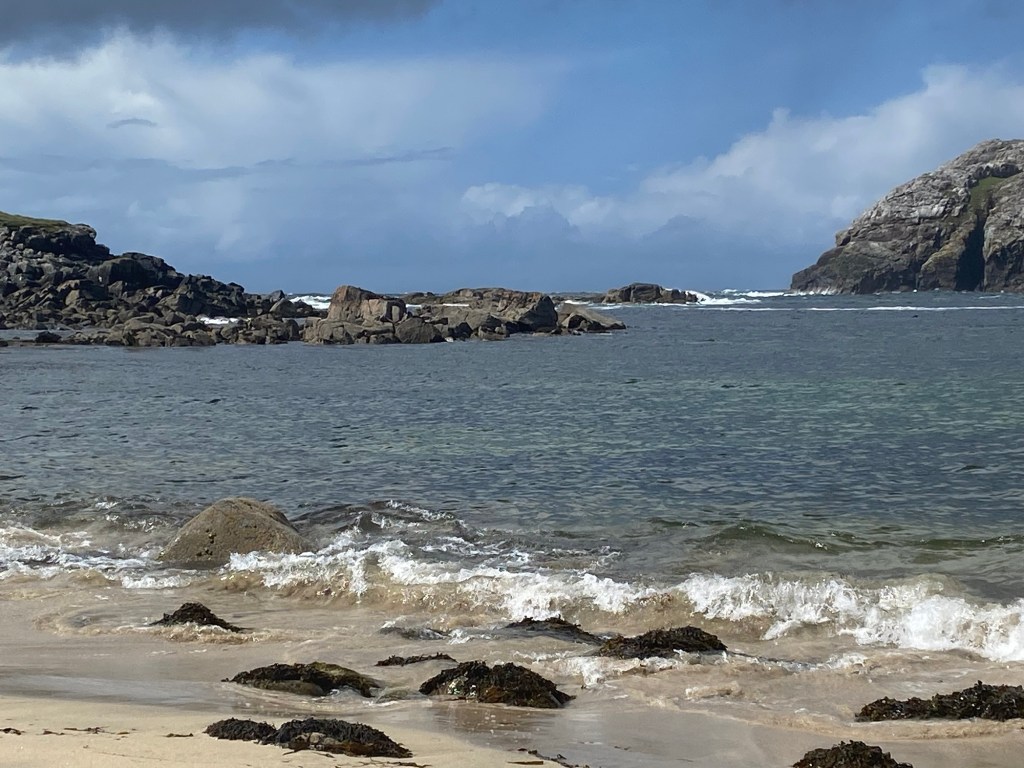
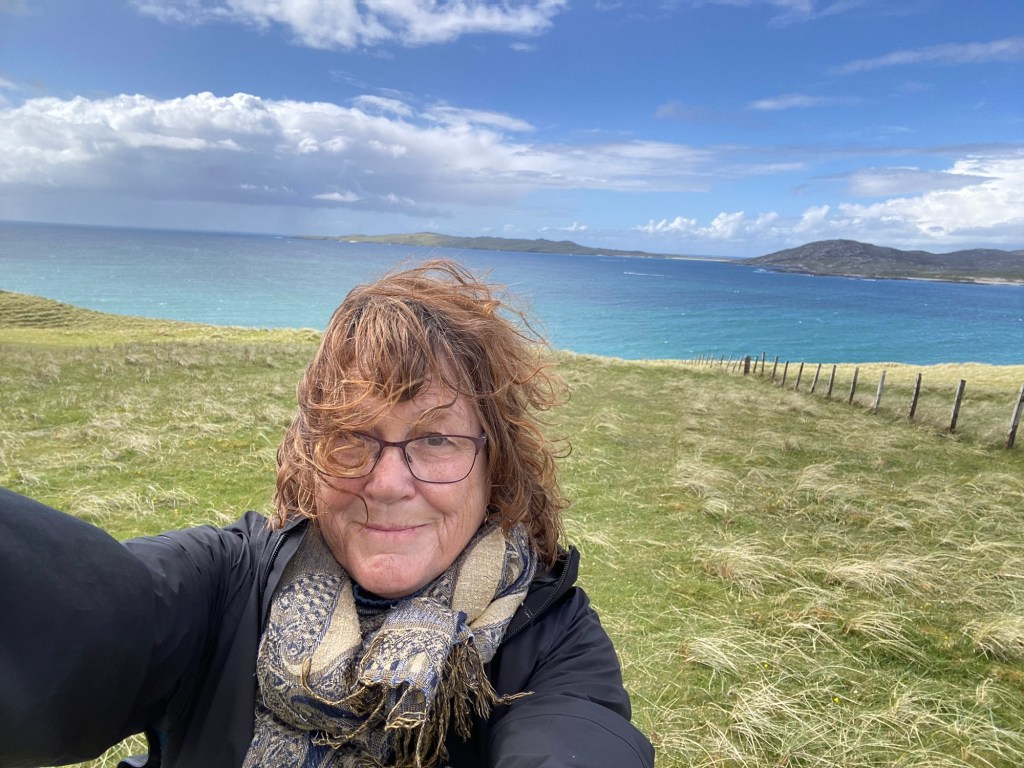
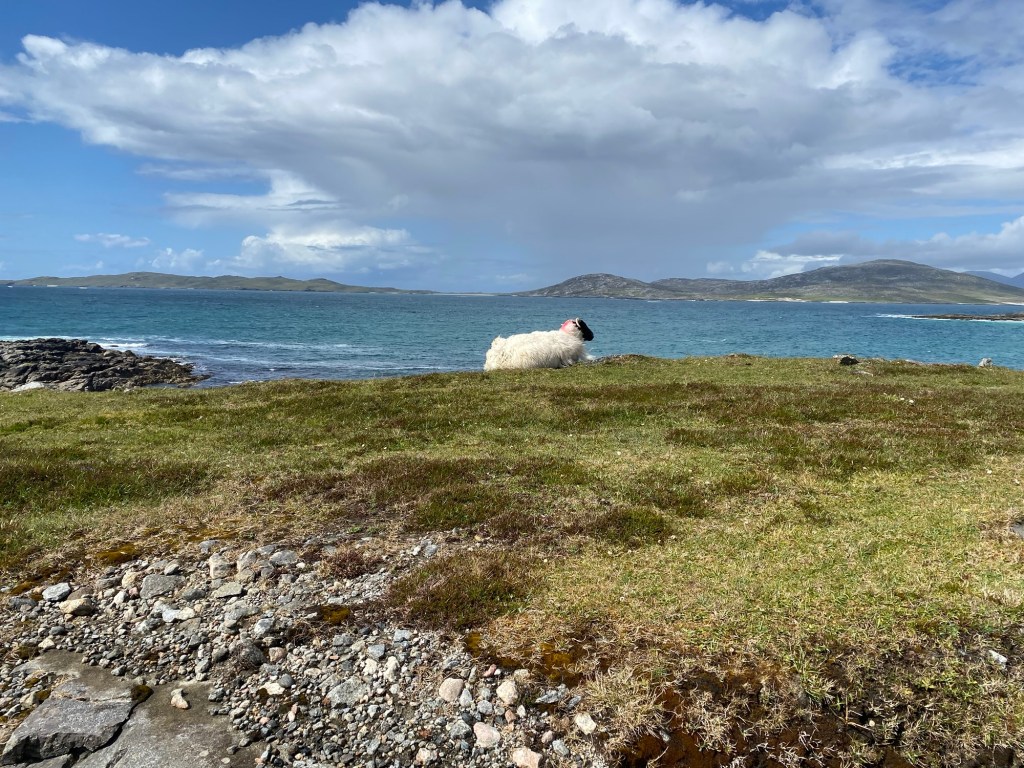
“All the world’s a stage” and it is rich with many actors.

August 11th, 2025

We’ve been back in Gibsons over a month now and well into everyday life. It is good to be home but each day takes us farther away from the carefree days of our journey. The hecticness of coming home has eased and there is time and clarity to make the final push to complete this blog. The ending is being delivered late but the journey needed completion and culmination. So here goes.

June 27th

We left the Yorkshire Dales and our friend Karen that morning. We were sad as we drove away. We hope she will come to British Columbia sometime to visit in the next years. Bye for now dear Karen.

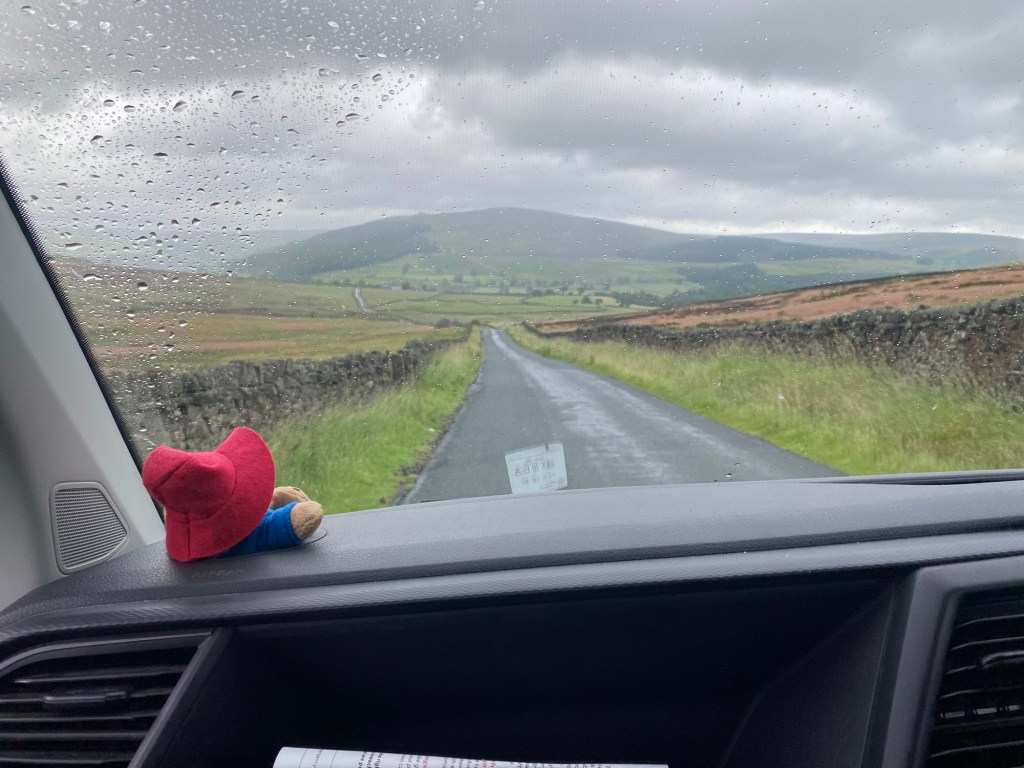
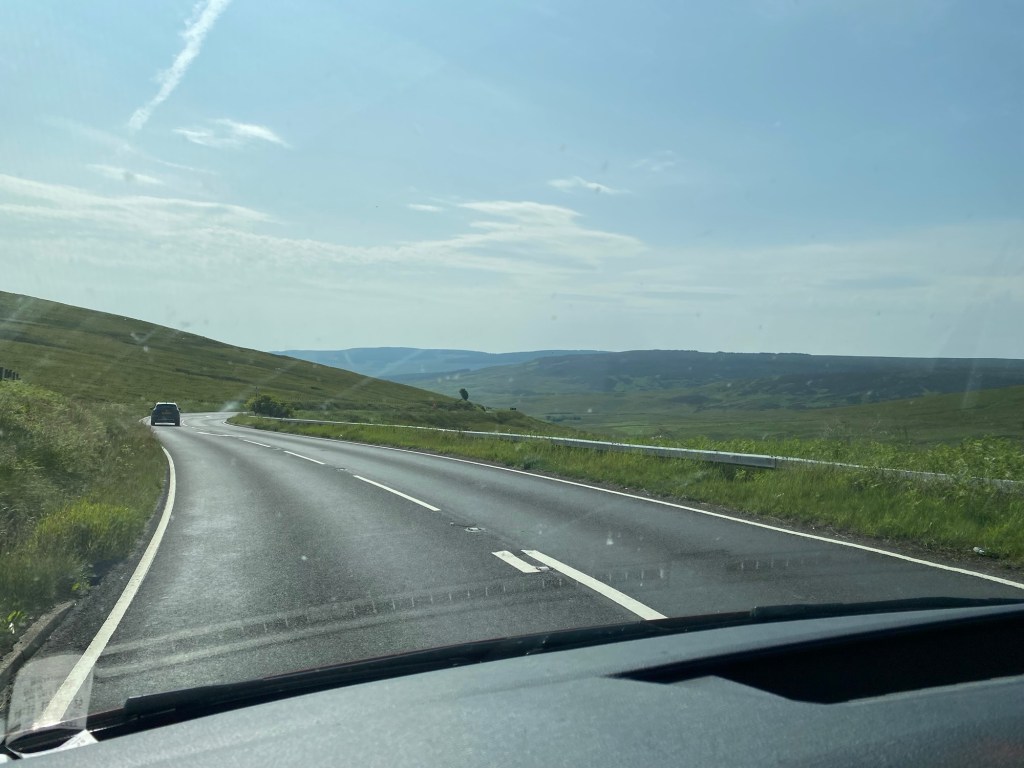
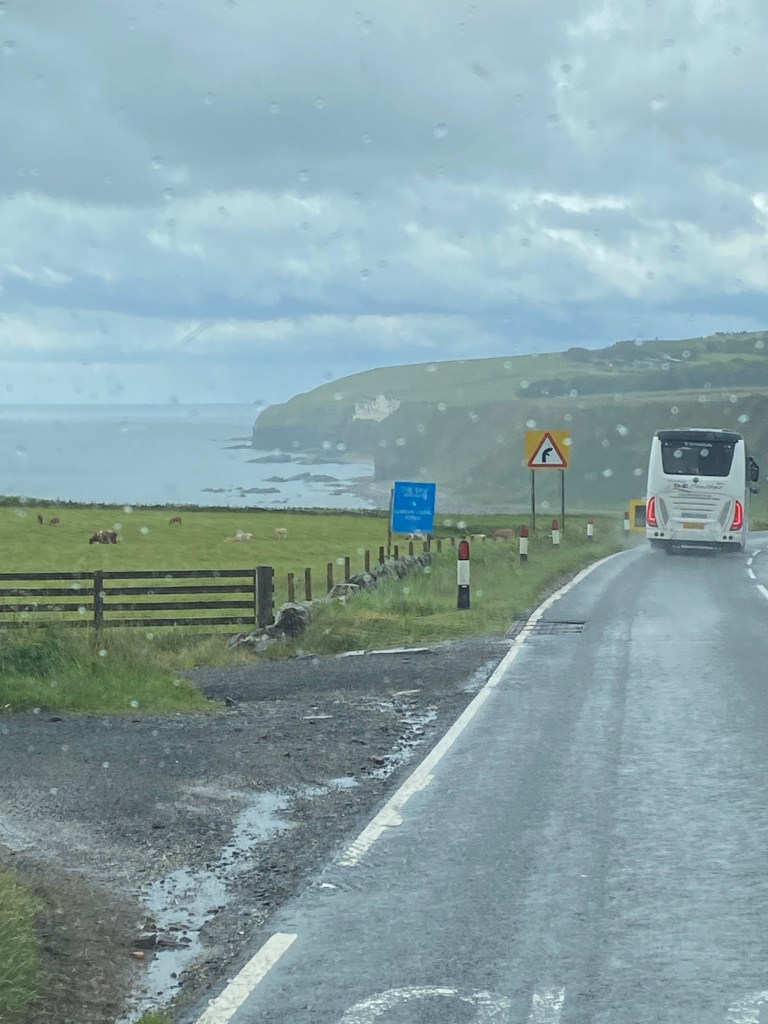
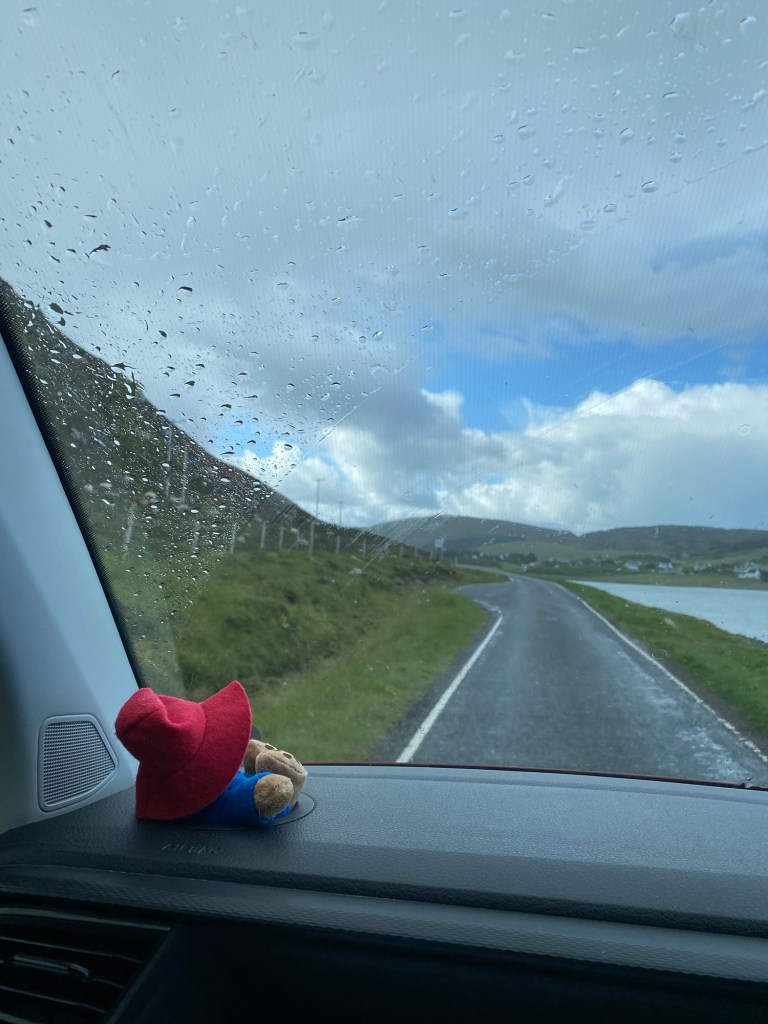
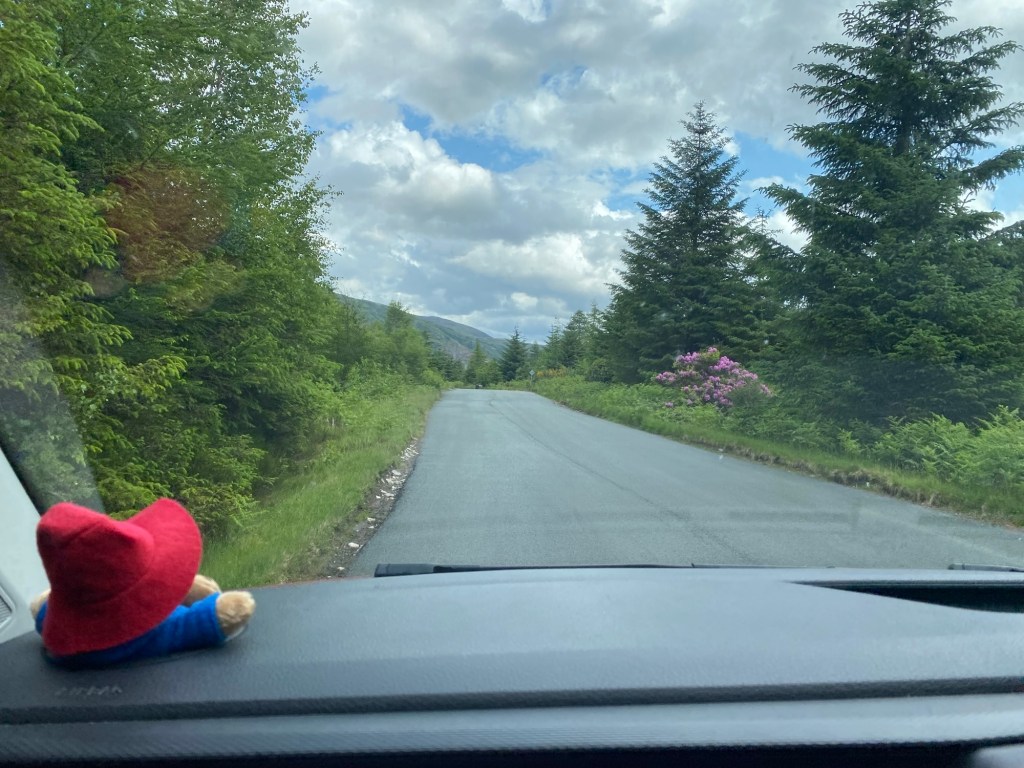
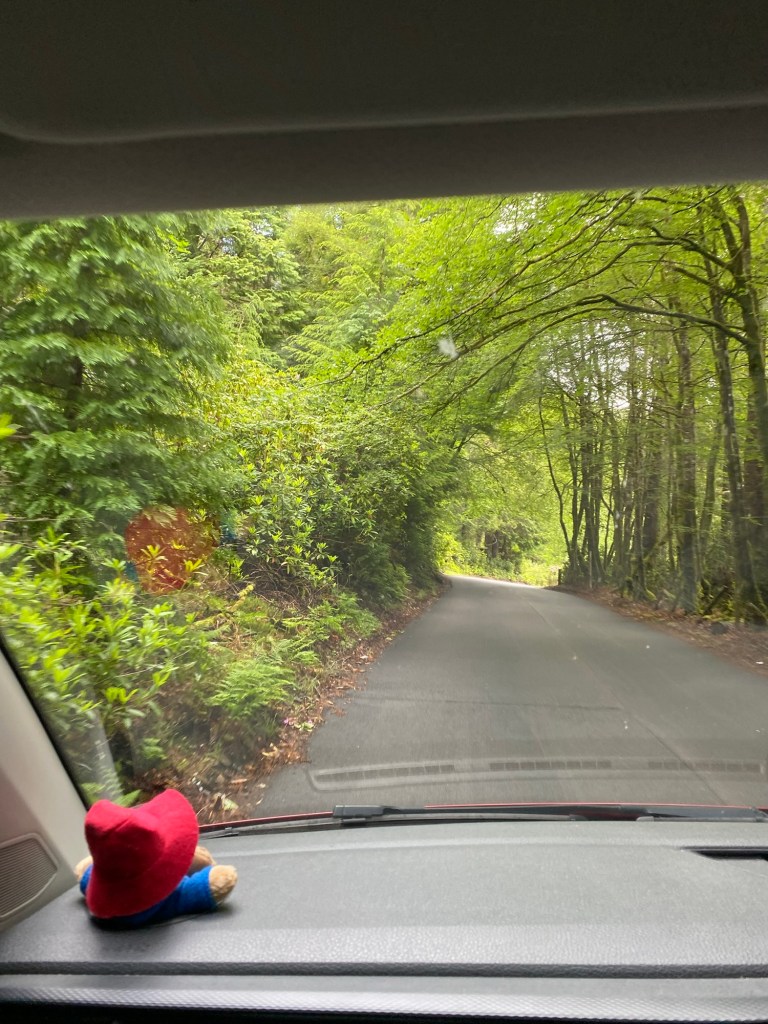
Off we set for Stratford Upon Avon, the birthplace of William Shakespeare. It was a three and a half hour drive, the first part on country roads, meandering through quaint villages. Near Leeds, it changed to the very busy motorway and a straight forward drive from there. We were well past any one track roads now. 🙂
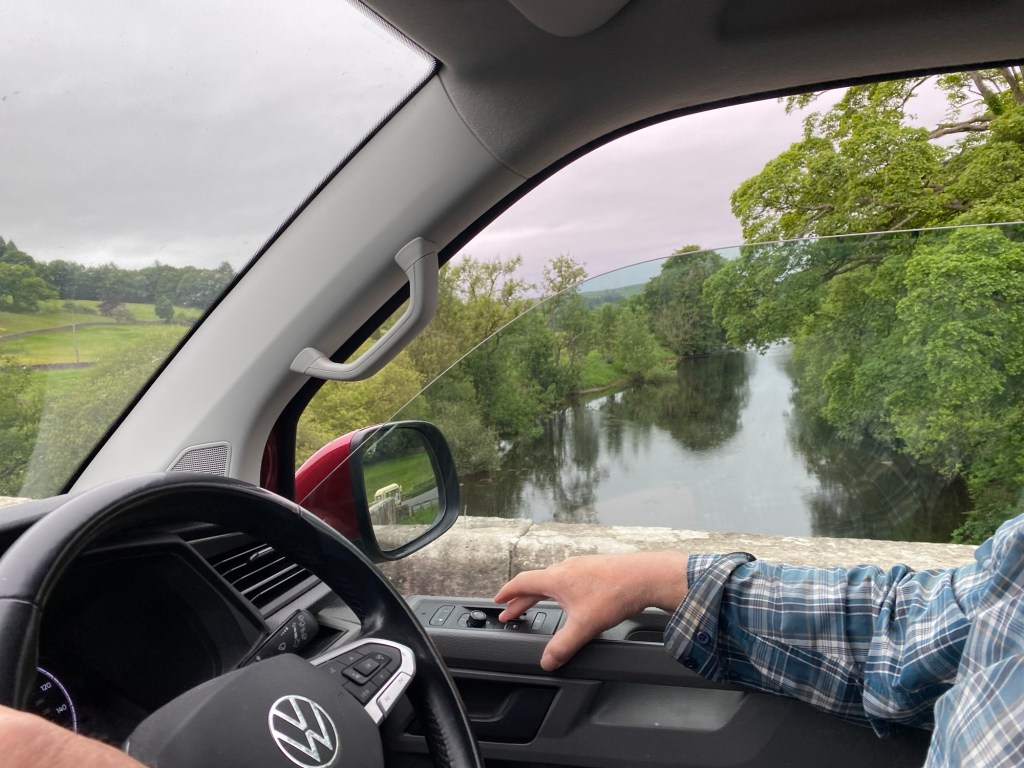
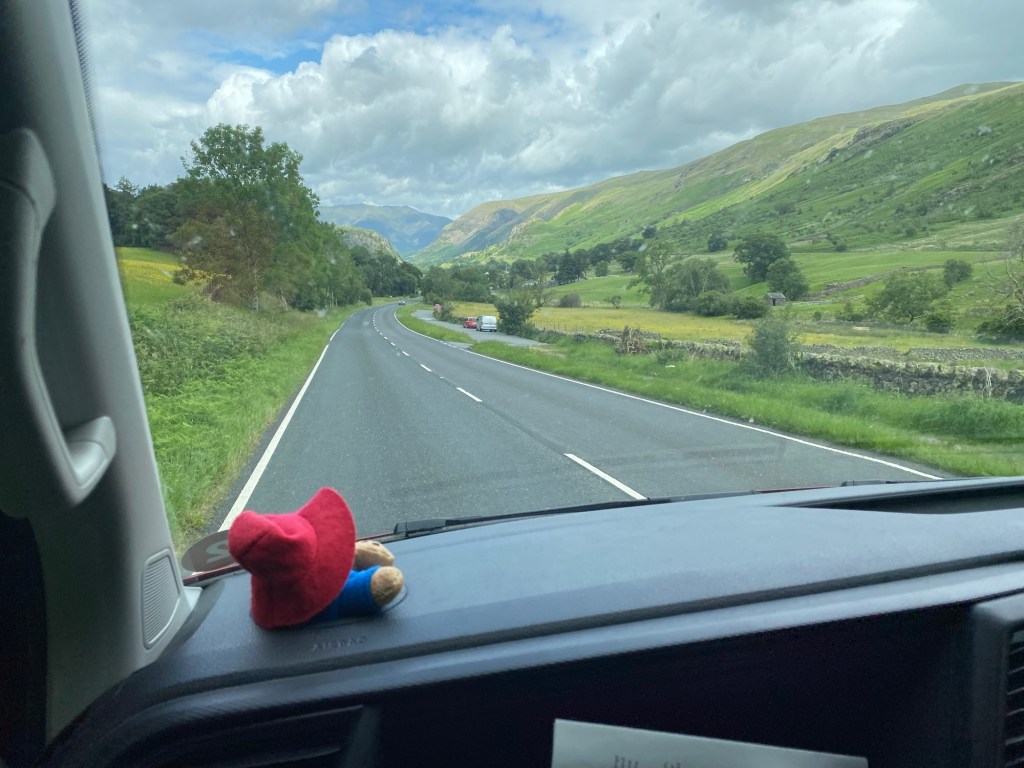
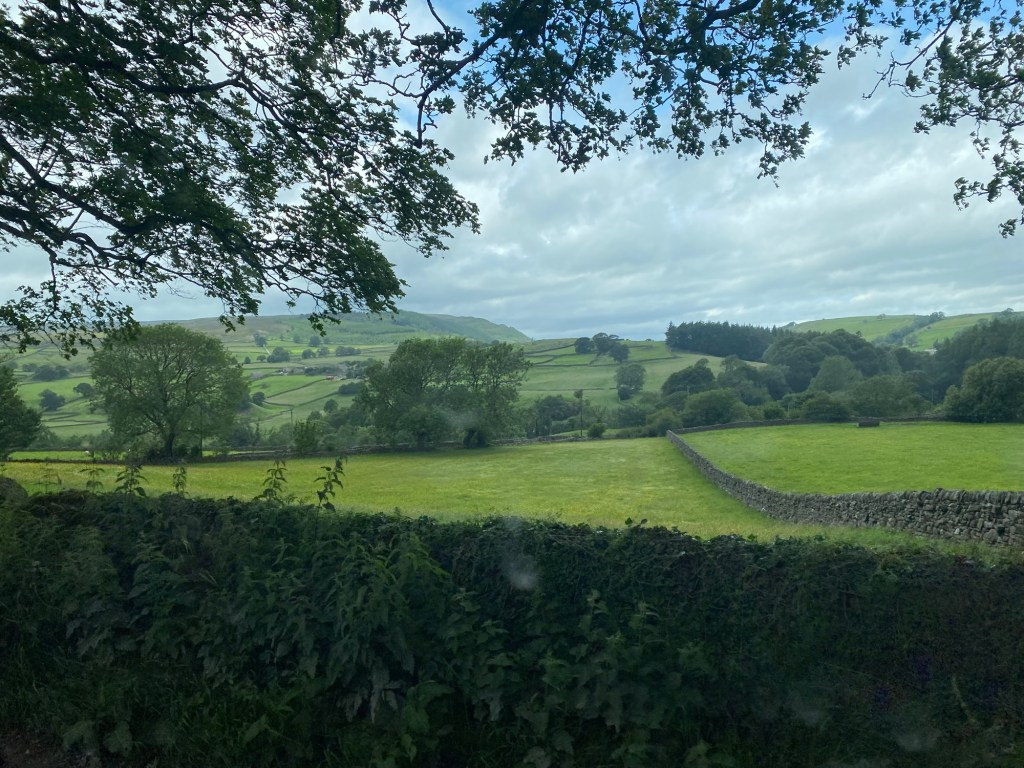
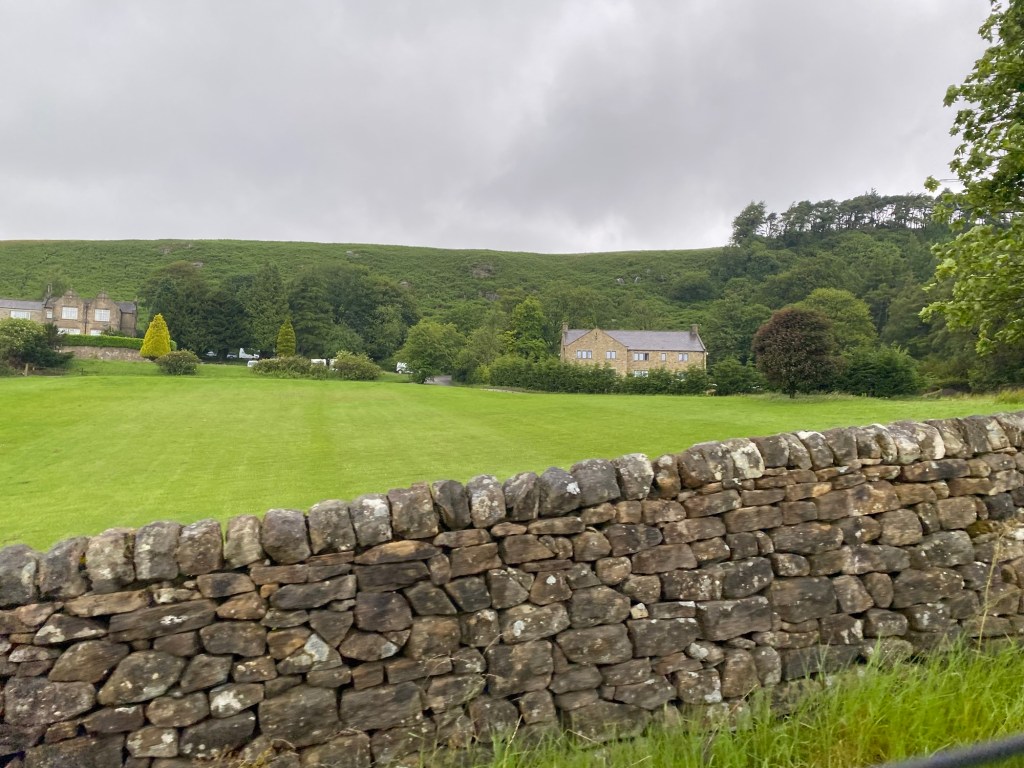
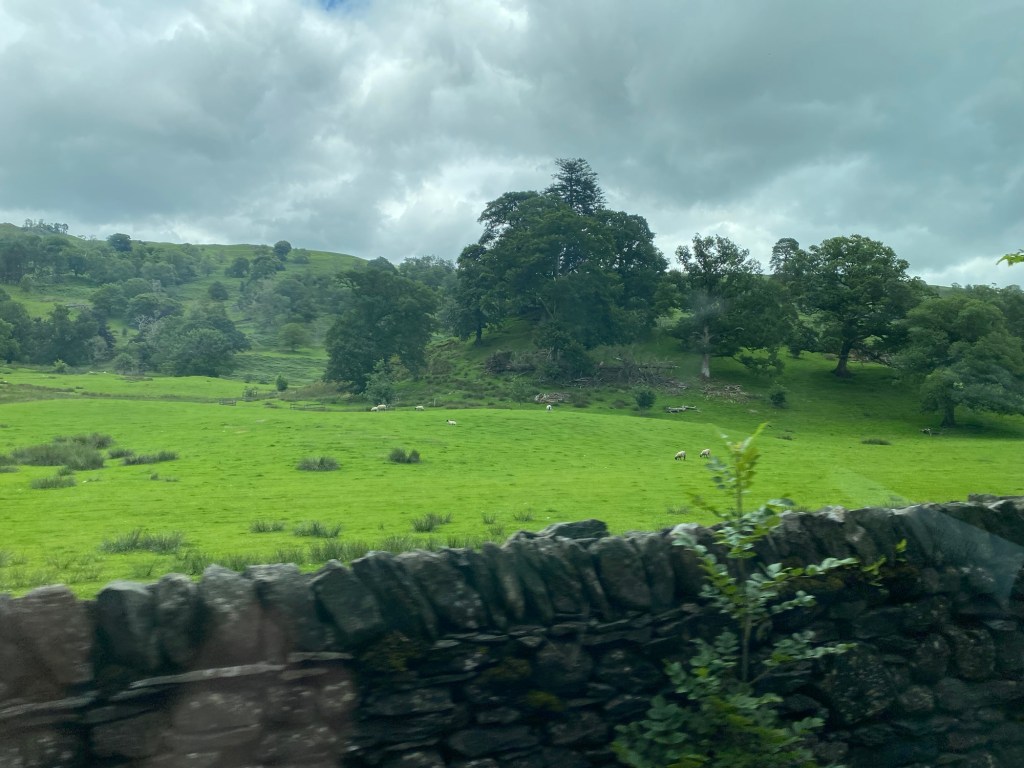
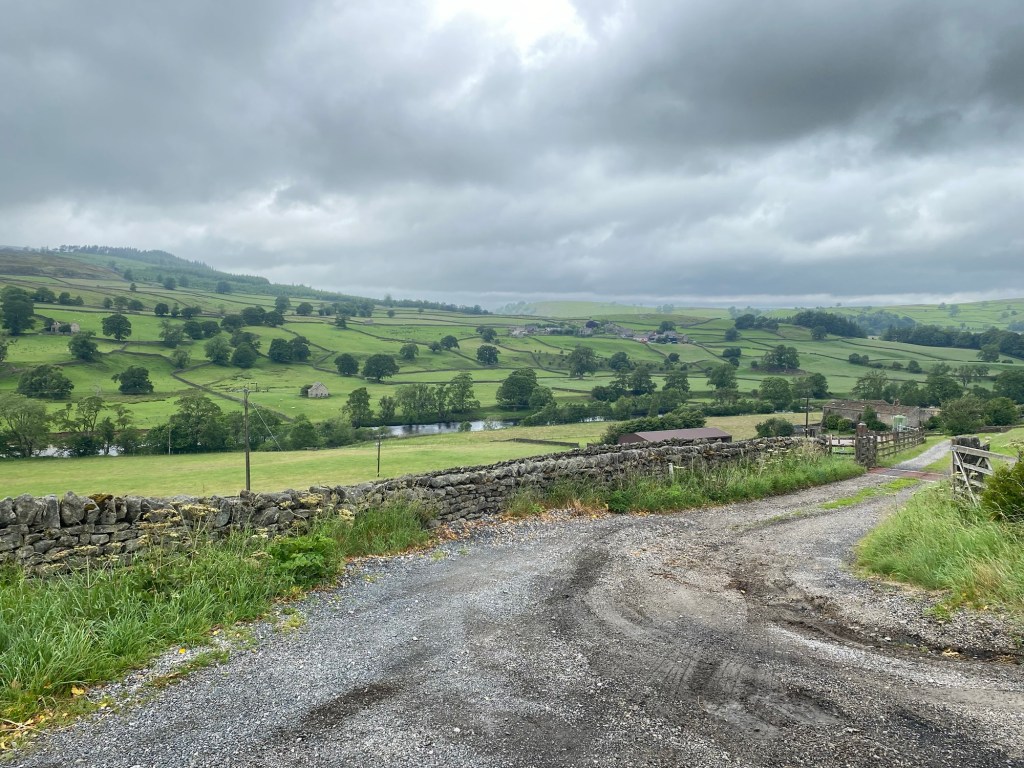
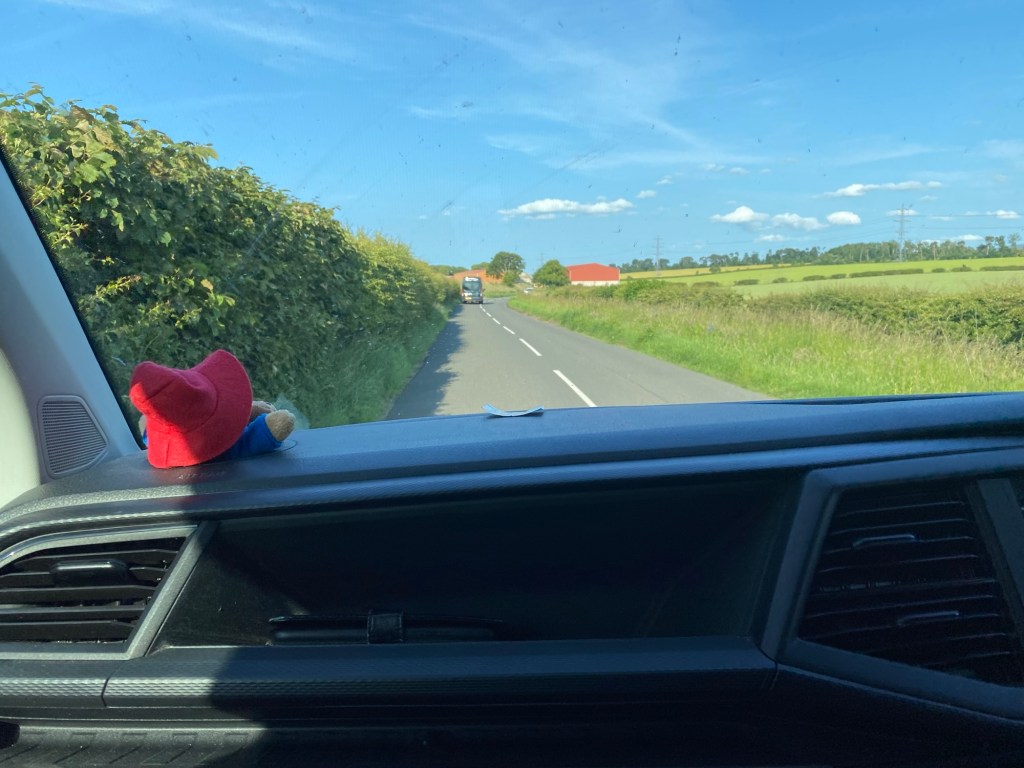
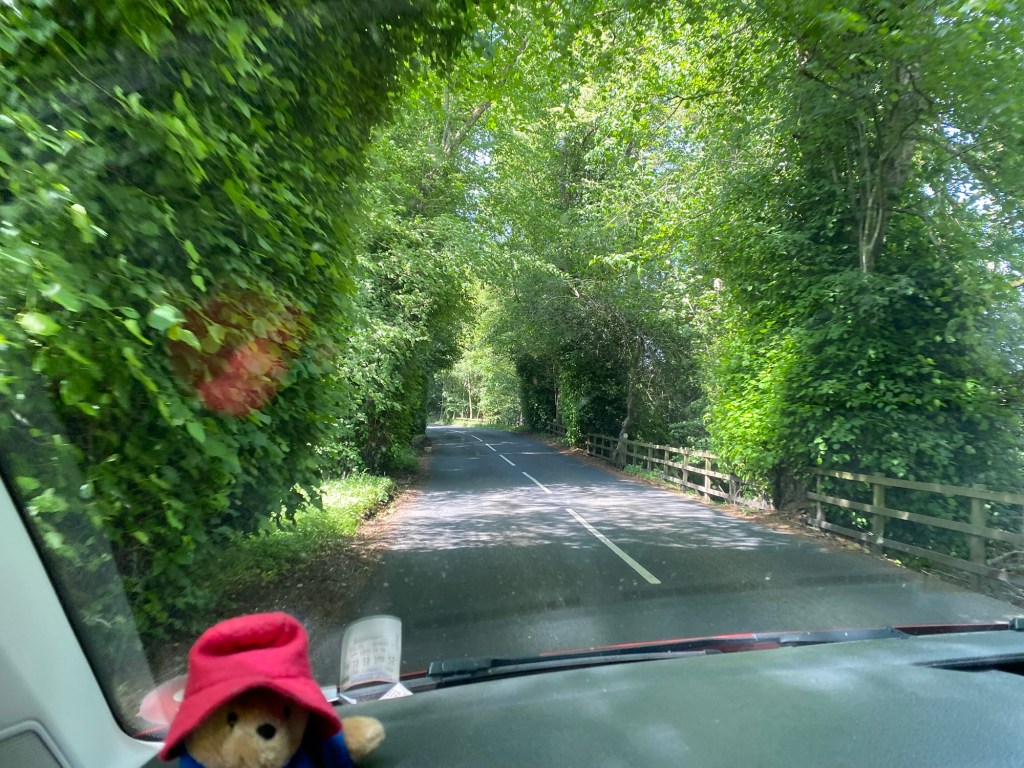
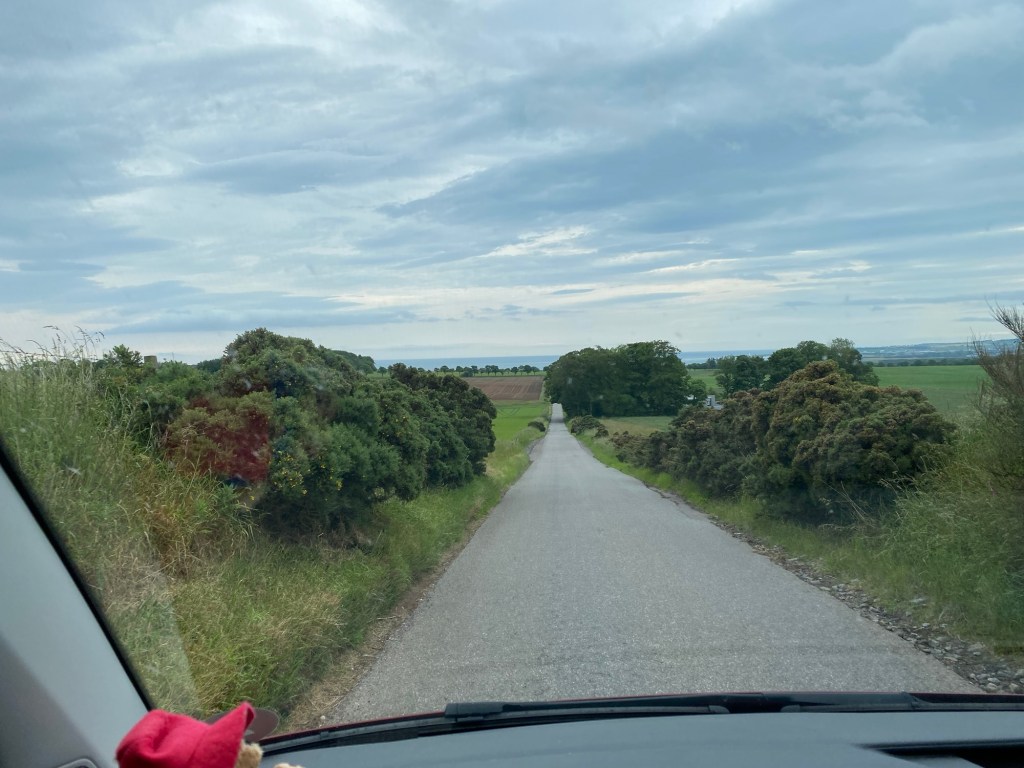
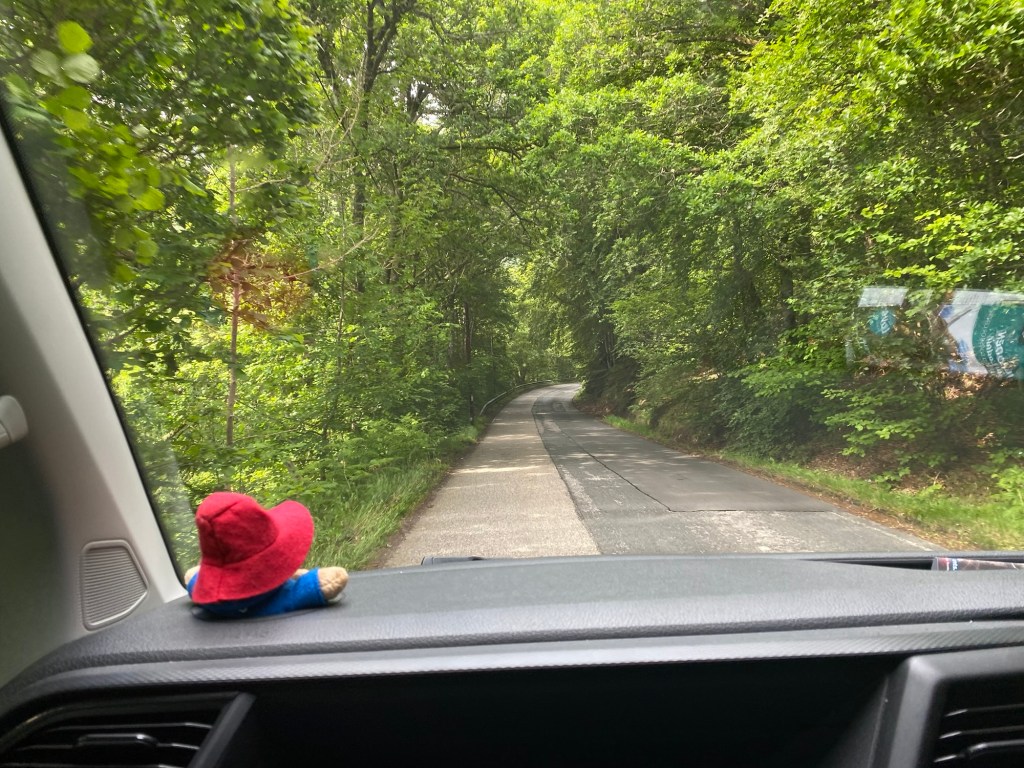
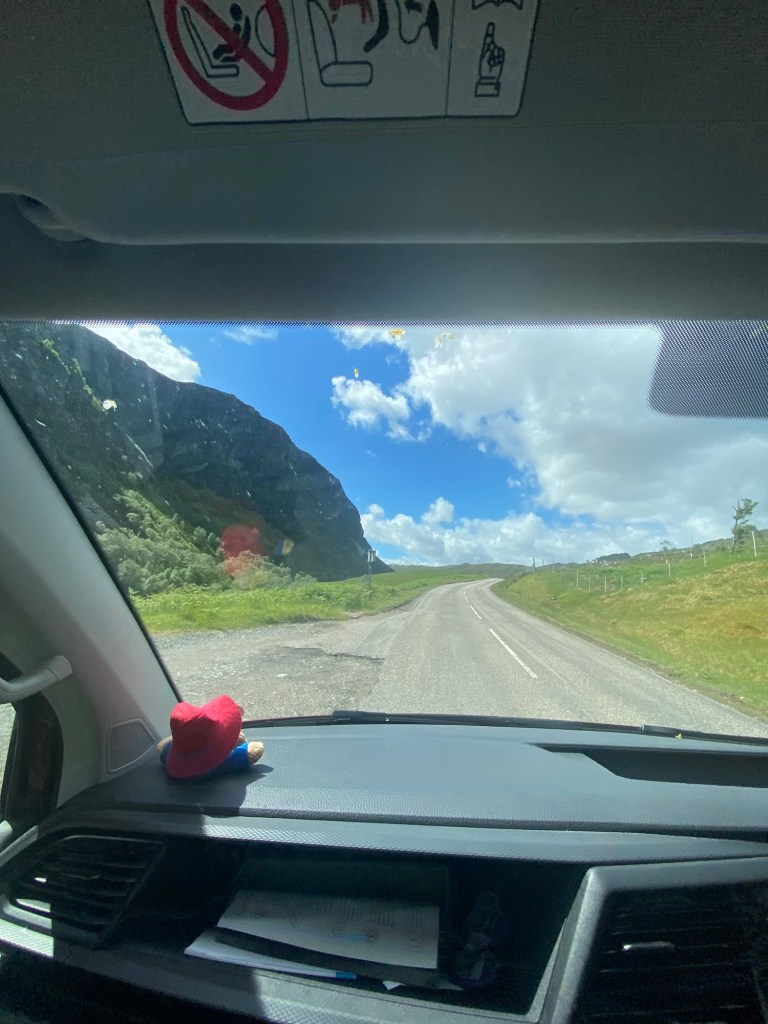
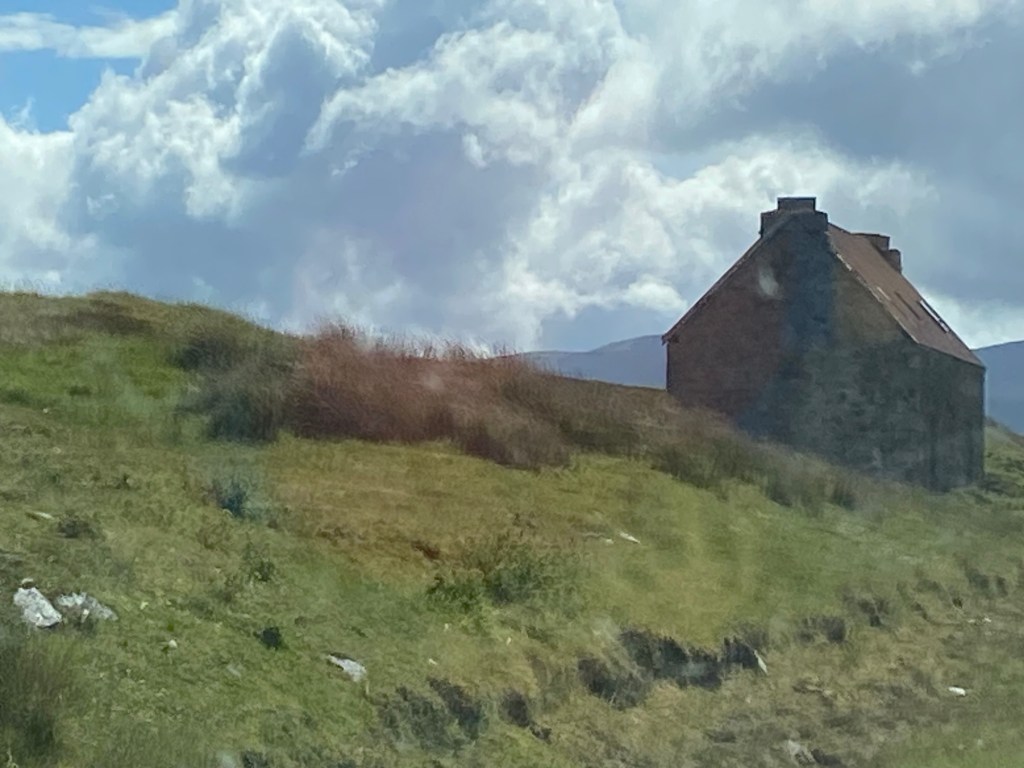
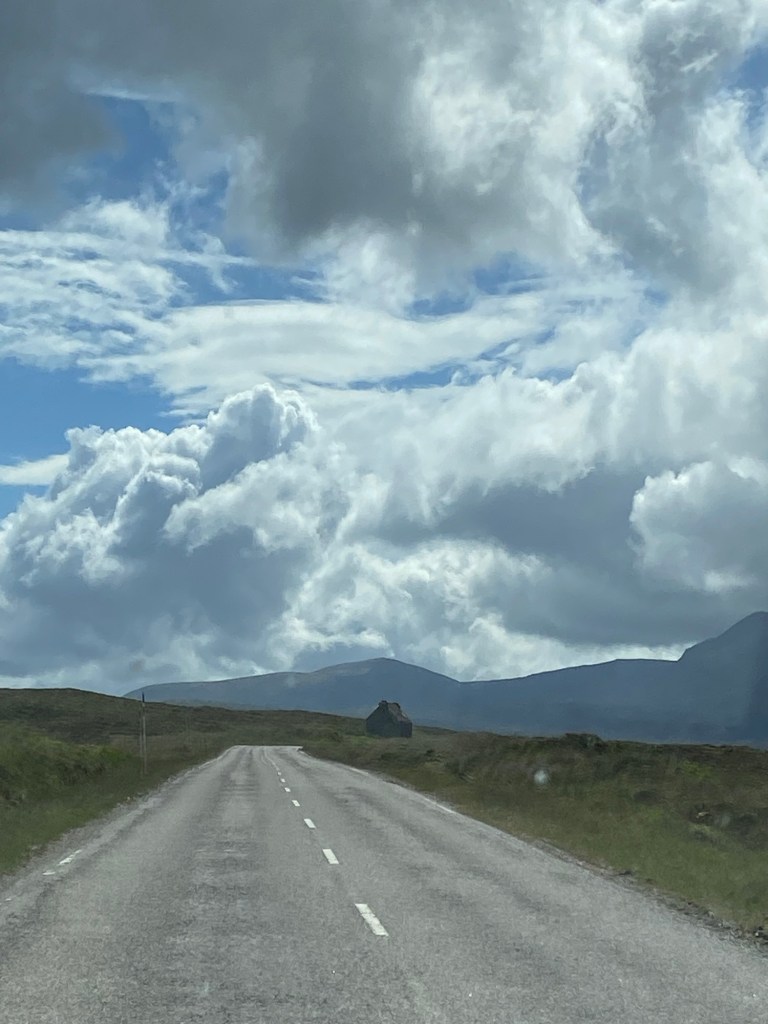
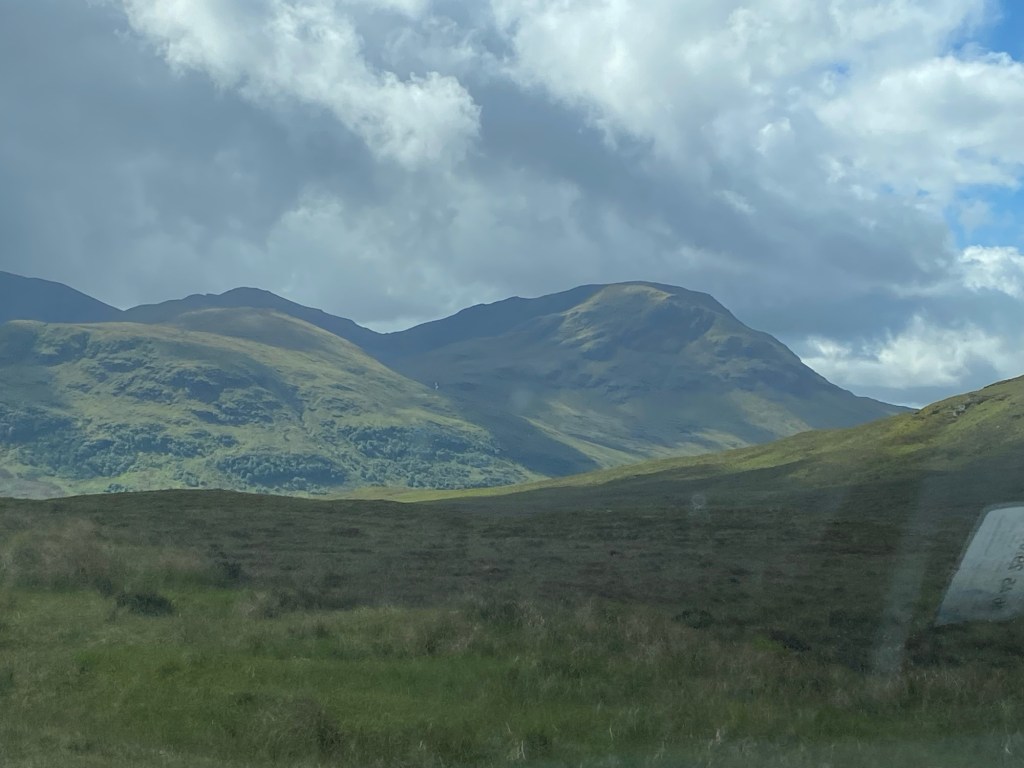
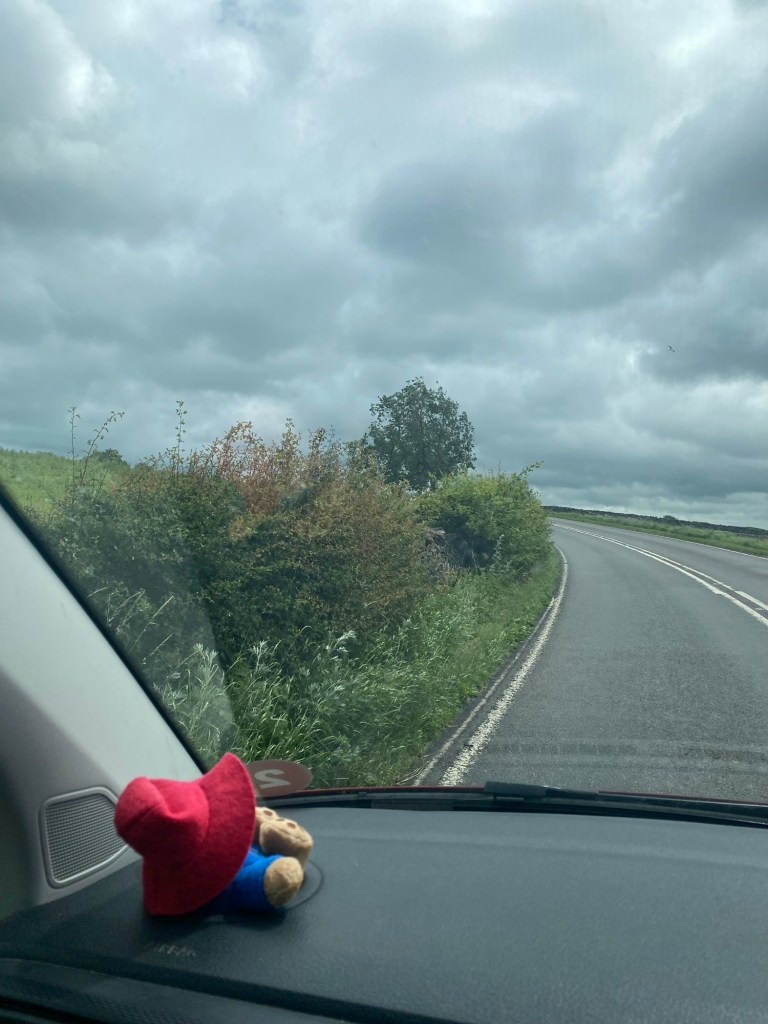
View on the drive

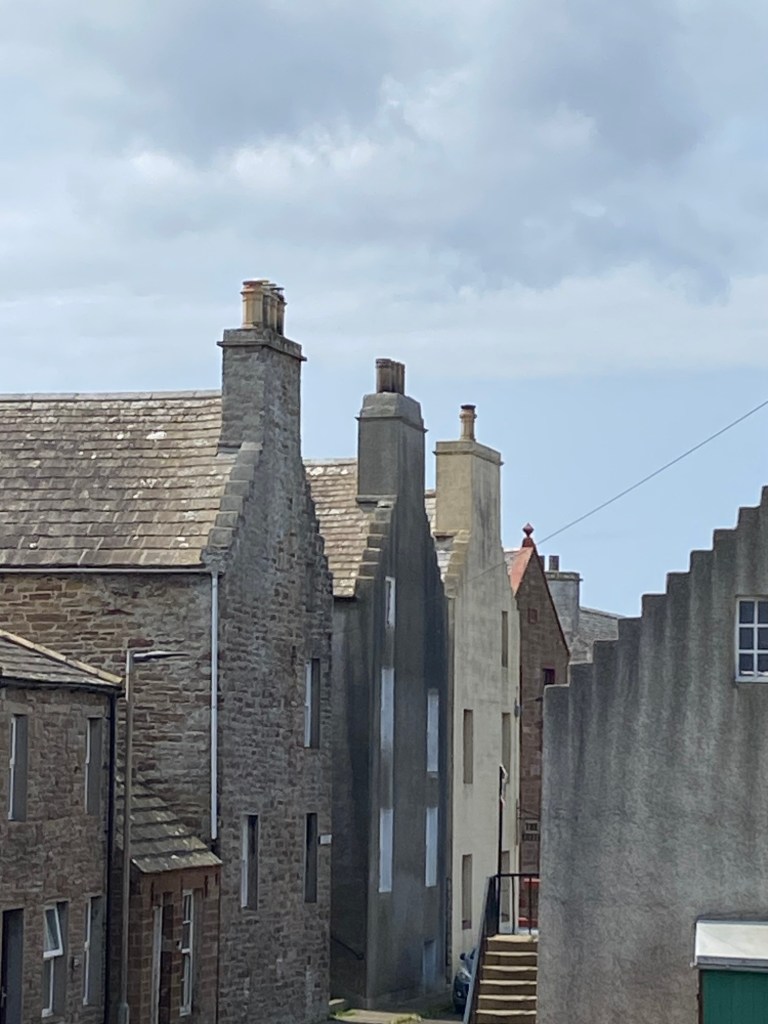
Once we arrived at Stratford Upon Avon, we parked Paddington and wandered the wonderful medieval village. William Shakespeare, the famous playwright and poet, was born here in 1564 and died here in 1616. Near the town centre on the River Avon was the Gower Monument built in 1888, a tribute to the famous Shakespeare. It is comprised of a bronze statue of him at the top with statues of characters from some of his plays imbedded in the base of the piece including Hamlet, Falstaff and Lady Macbeth.

Guy entered the scene. 🙂
The River Avon
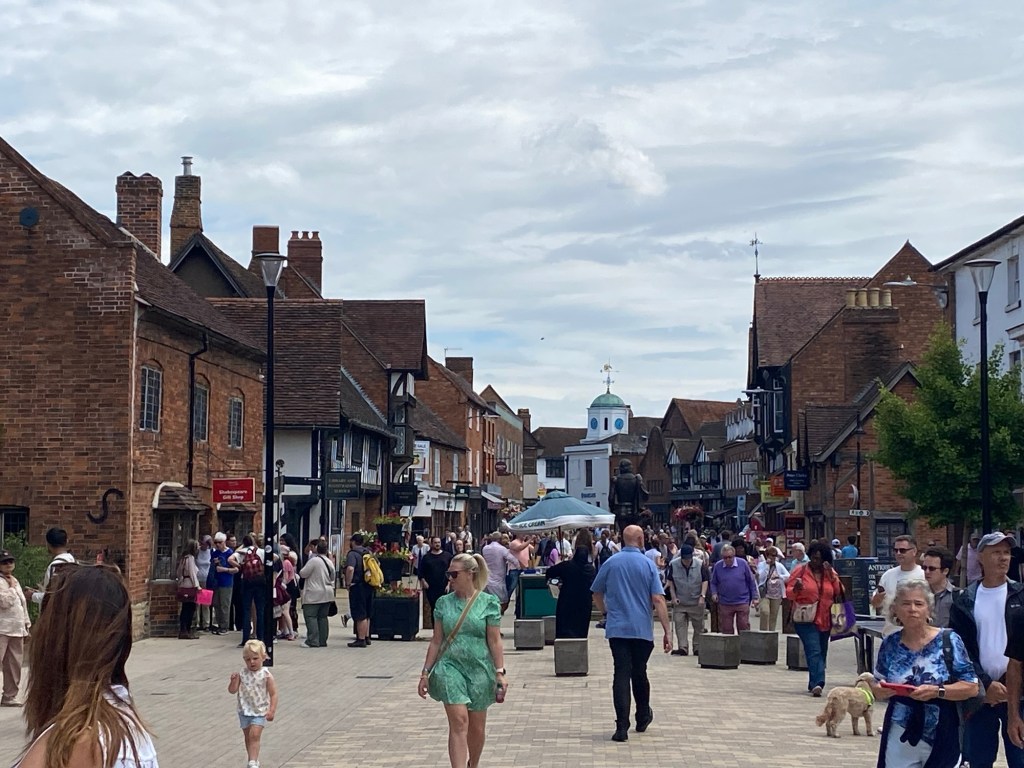
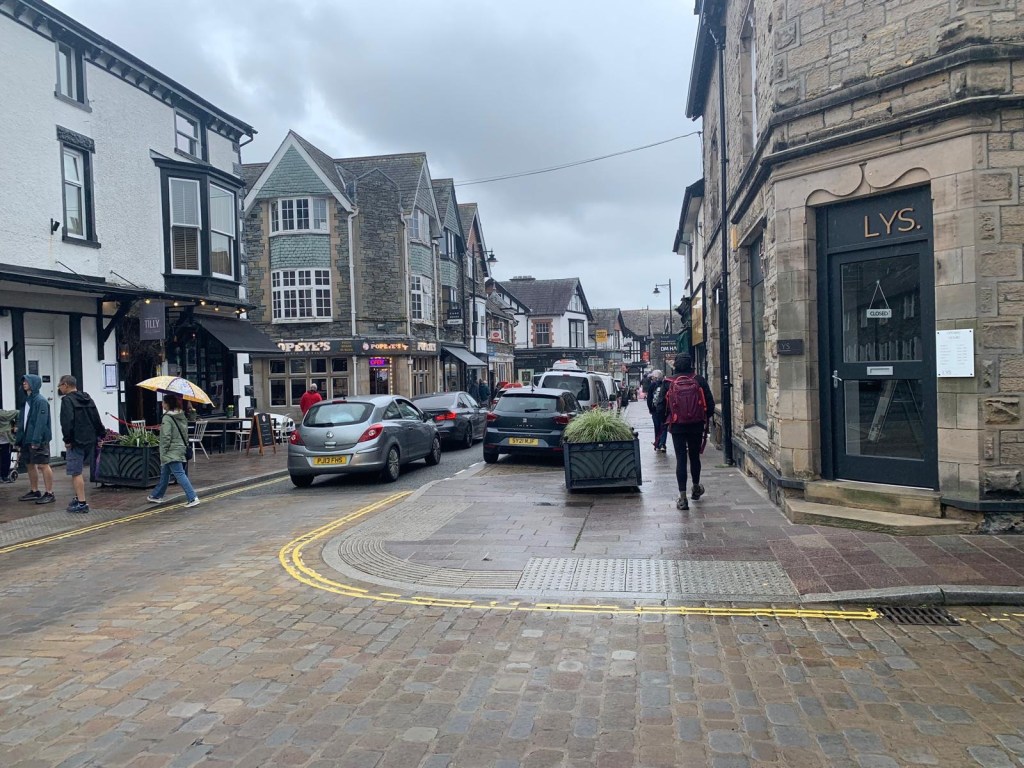
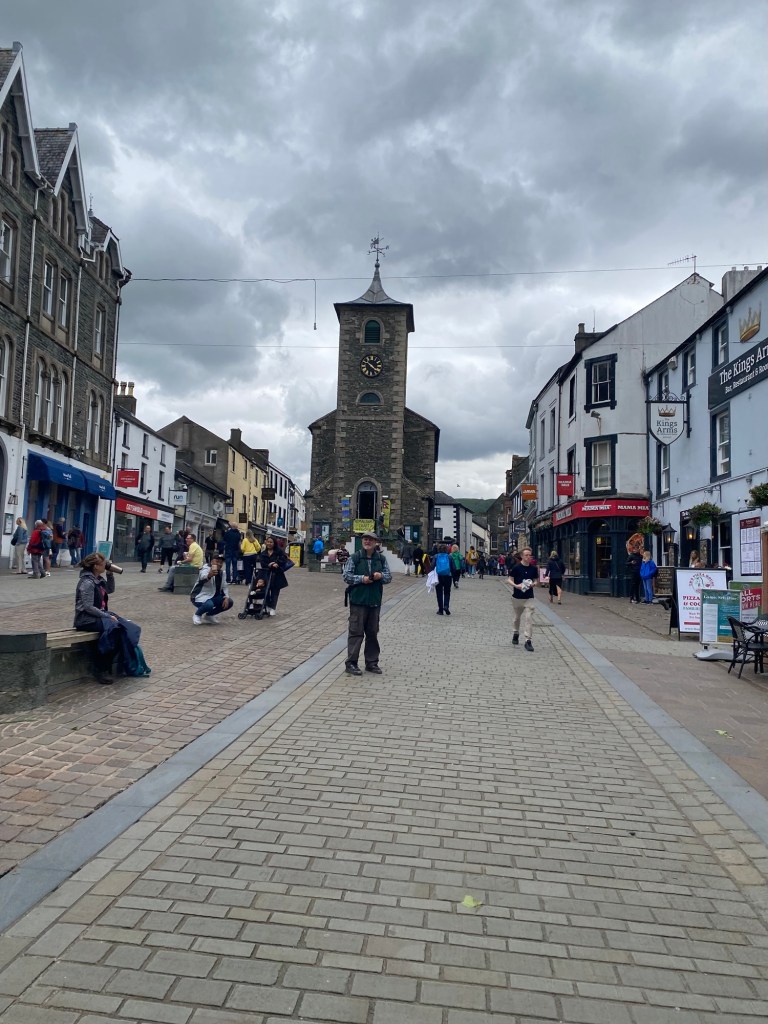
Stratford upon Avon’s busy street scape

We got takeout coffee at Brucester’s Coffee (named after the owner’s dog Bruce) and enjoyed the brew on the grass in Bancroft Gardens on the River Avon. Brucester’s coffee is set up in an old phone box. I asked the owner about it and he said that the town bought them likely from the phone company and then auctioned them off. This young man and his wife were able to buy one. They had the very creative vision to set the phone box up as a take out coffee place.

Since the 1980’s British Telecom has been decommissioning the red phone boxes and many are being repurposed but many sadly have gone to the scrap pile. It was so delightful on our journey around the UK to see them still scattered here and there in villages we travelled through.

Cute little coffee shop (in an old phone box). Very clever.

After enjoying our very well made coffees sitting on the grass and watching the world go by, we continued on to Shakespeare’s birthplace.

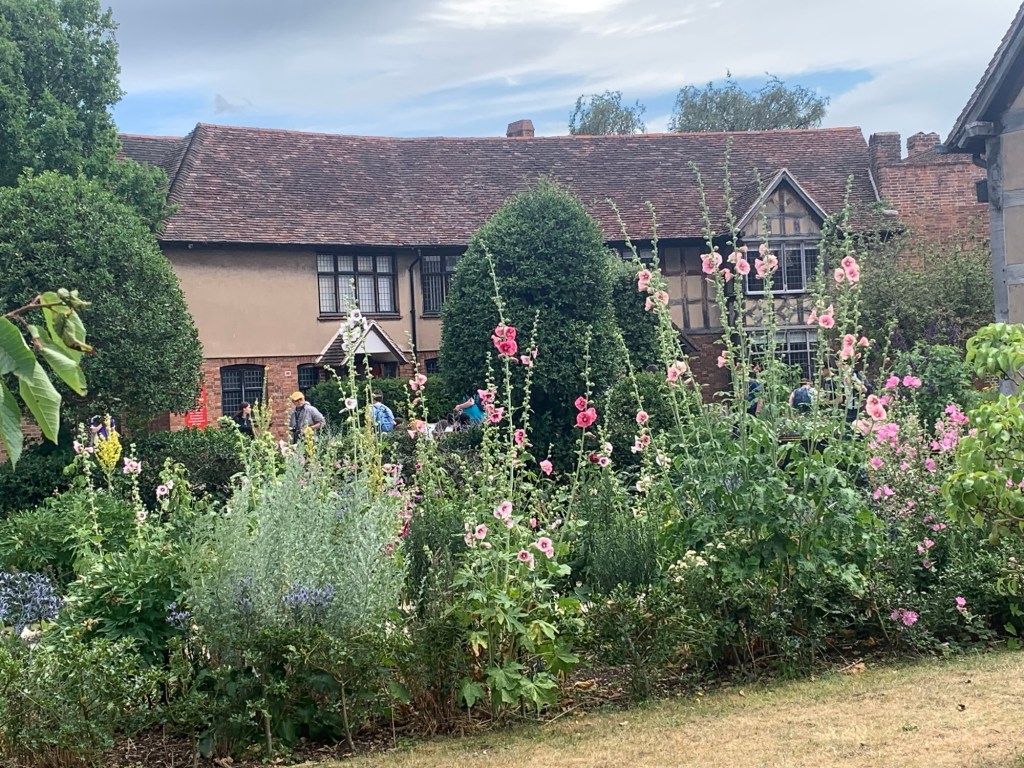
The exhibition went into the history of Shakespeare and his family and gave a sense of what it was like to live in the medieval town at that time. After some time in the exhibition we exited into the gardens and then toured the actual house where Shakespeare was born and grew up. It was fascinating.
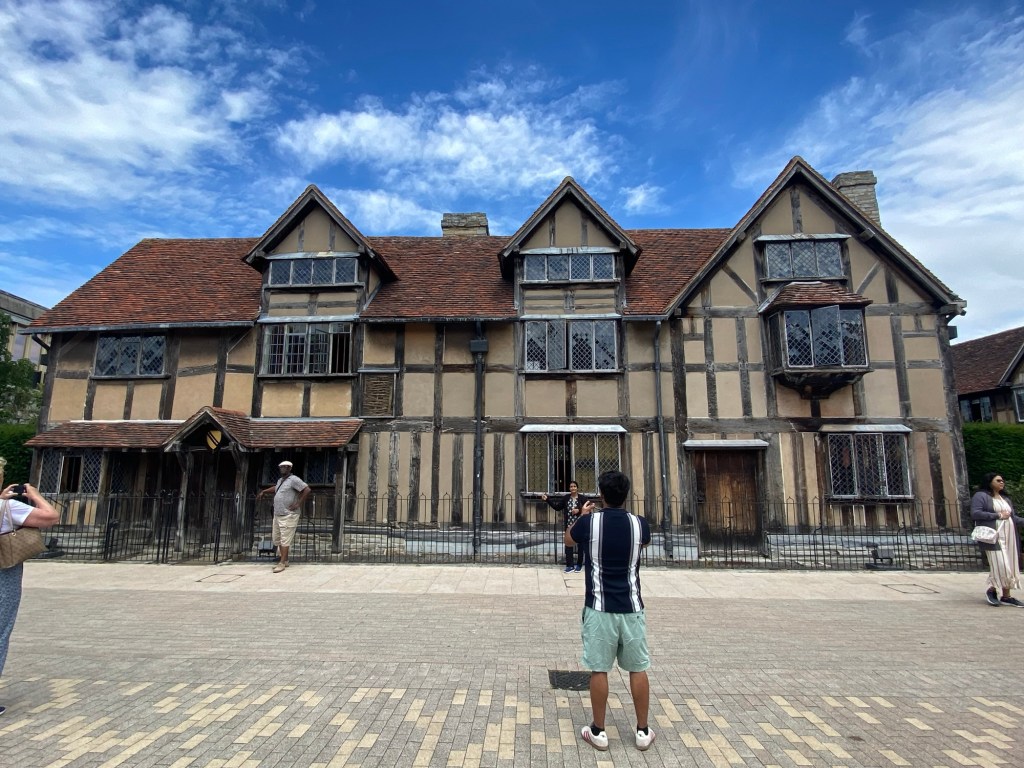
Shakespeare’s birthplace.
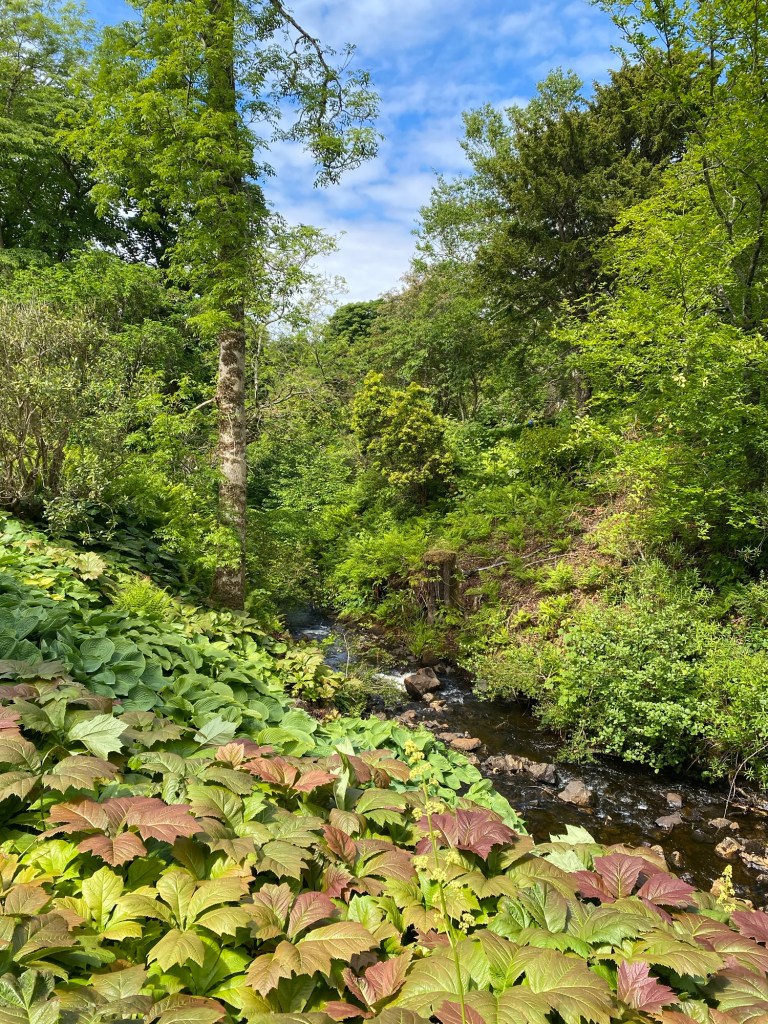
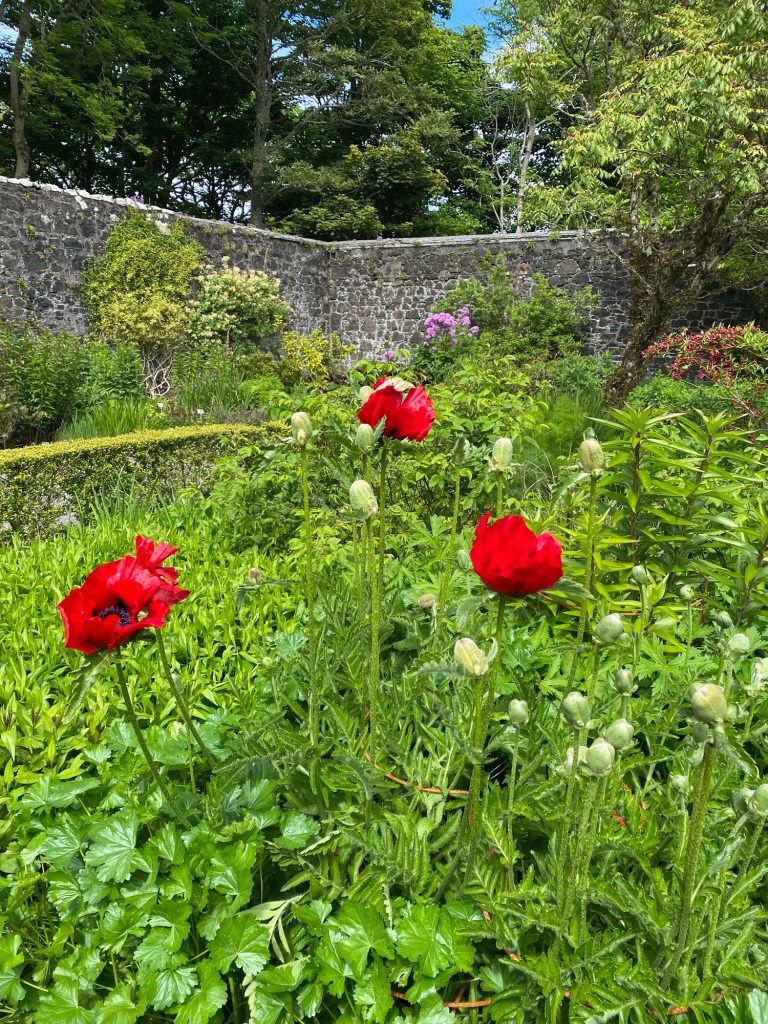
The Gardens.
Hollyhocks
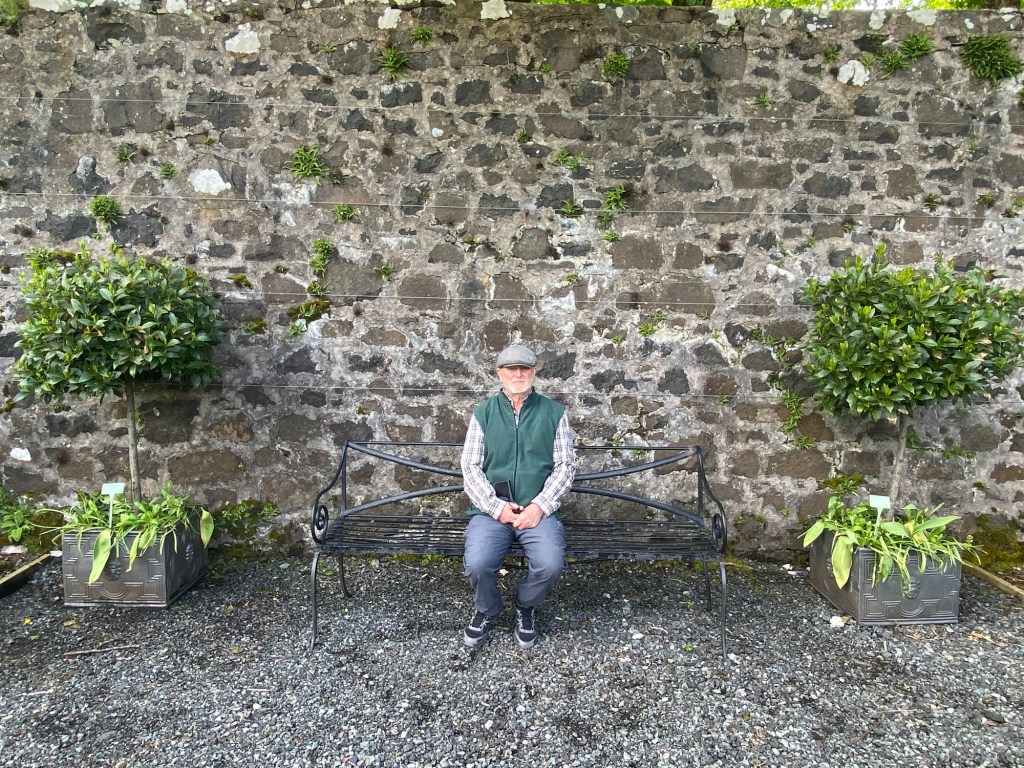
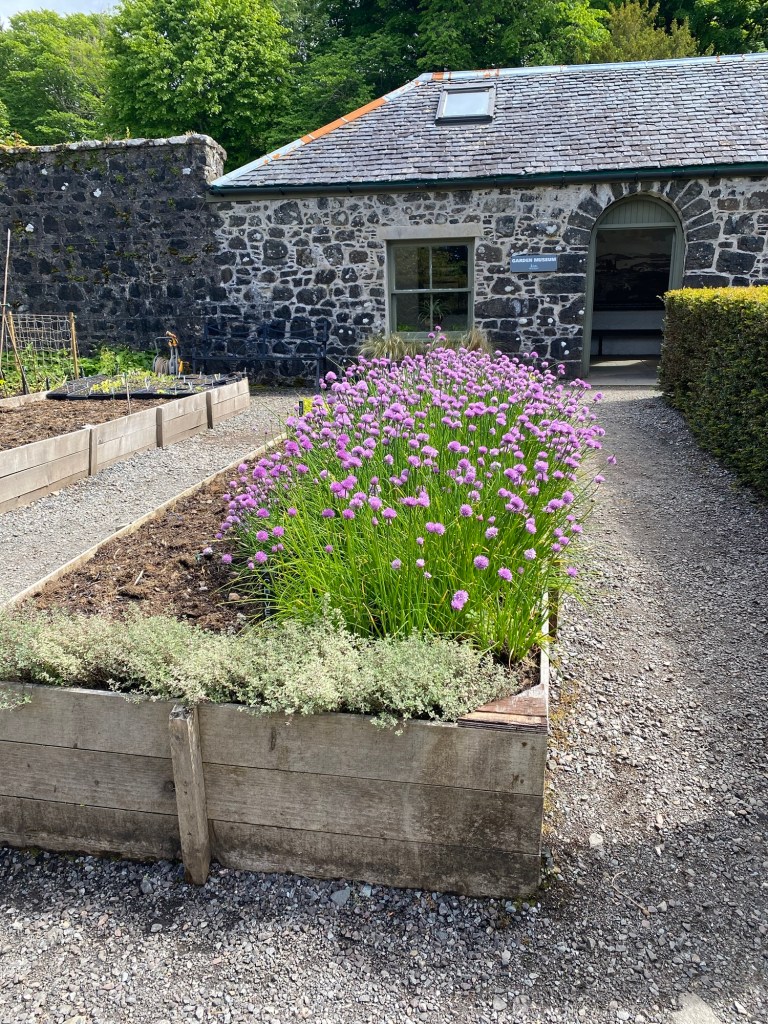
Well taken care of gardens behind the house.
Inside the house

Shakespeare’s father was a glove maker but also involved in government and civic duties. The family was middle class as shown by the large house. Shakespeare left the house when he was 18 when he married Anne Hathaway. Her cottage is on the other side of town. We had planned to walk to it but both of us were affected by the heat that day and chose a stroll through the village and under the trees along the Avon River instead.

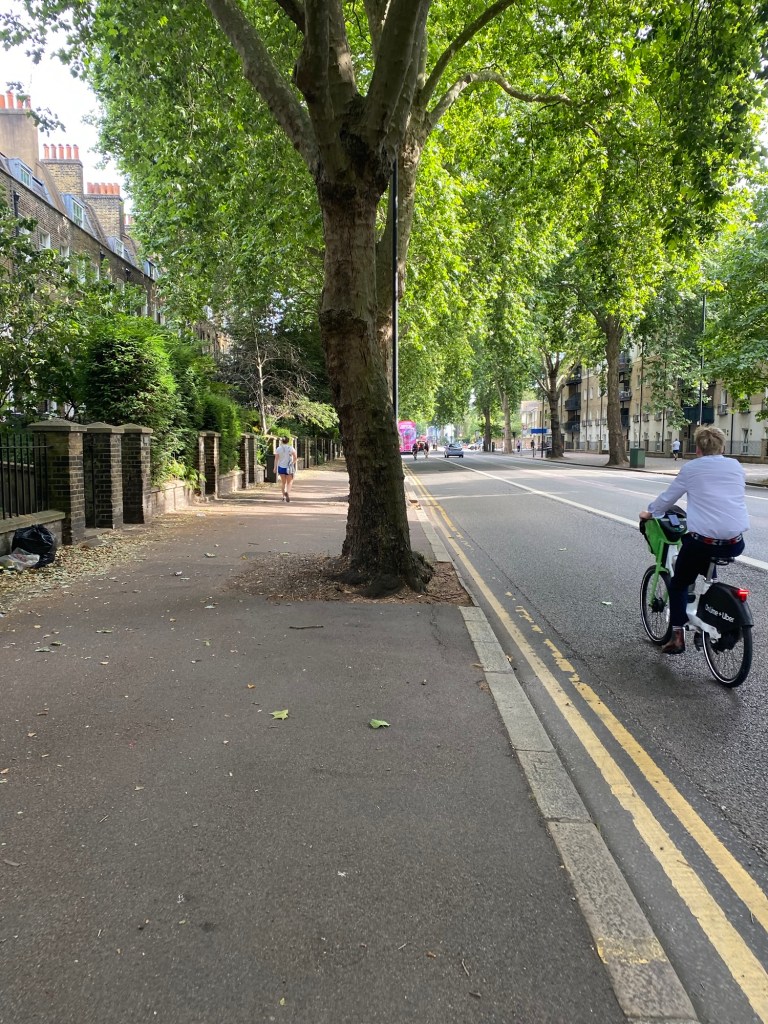
Street view.
Street in Kensington.
Tudor building.
Busy street packed with tourists.
The River Avon

We left Stratford Upon Avon about 4 pm and arrived back to Cheltenham to Guy’s sister Christine’s place about 5 pm. We drove into the driveway we had left 3 1/2 months on March 12th. It was surreal that our and Paddington’s journey had come to an end.

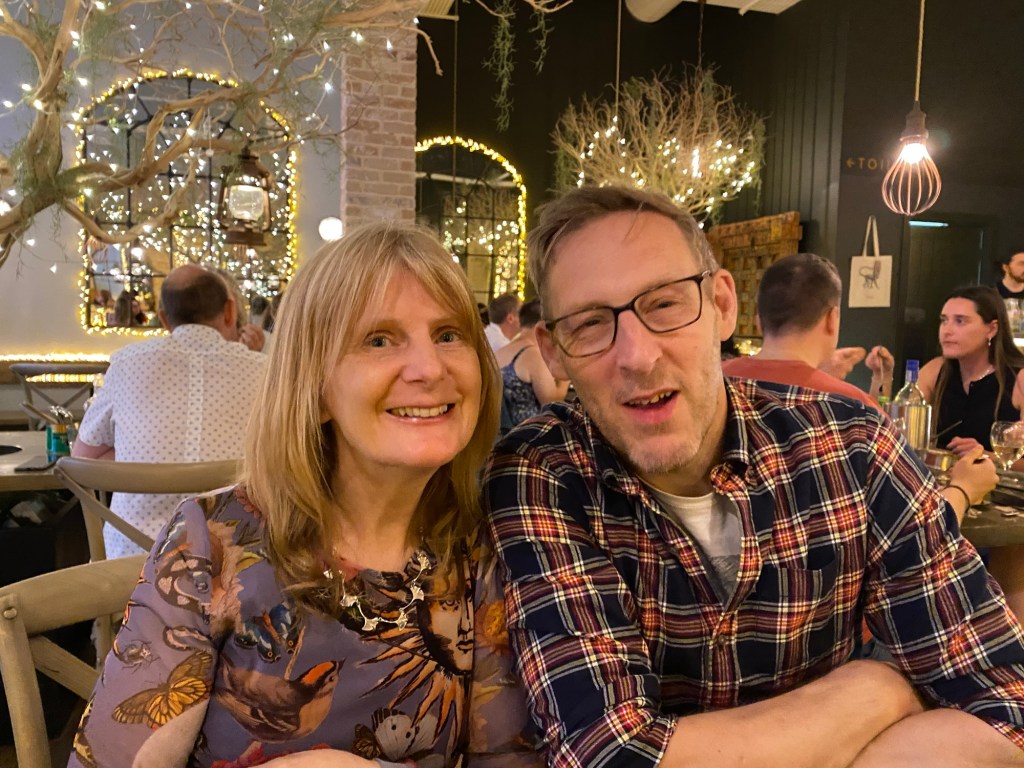
That night, we went out for dinner with Christine and Seb to an Indian Restaurant to celebrate the end of the long road trip and to treat our hosts for their generous hospitality at the beginning and end of the trip. We had a lovely time and the food was great.
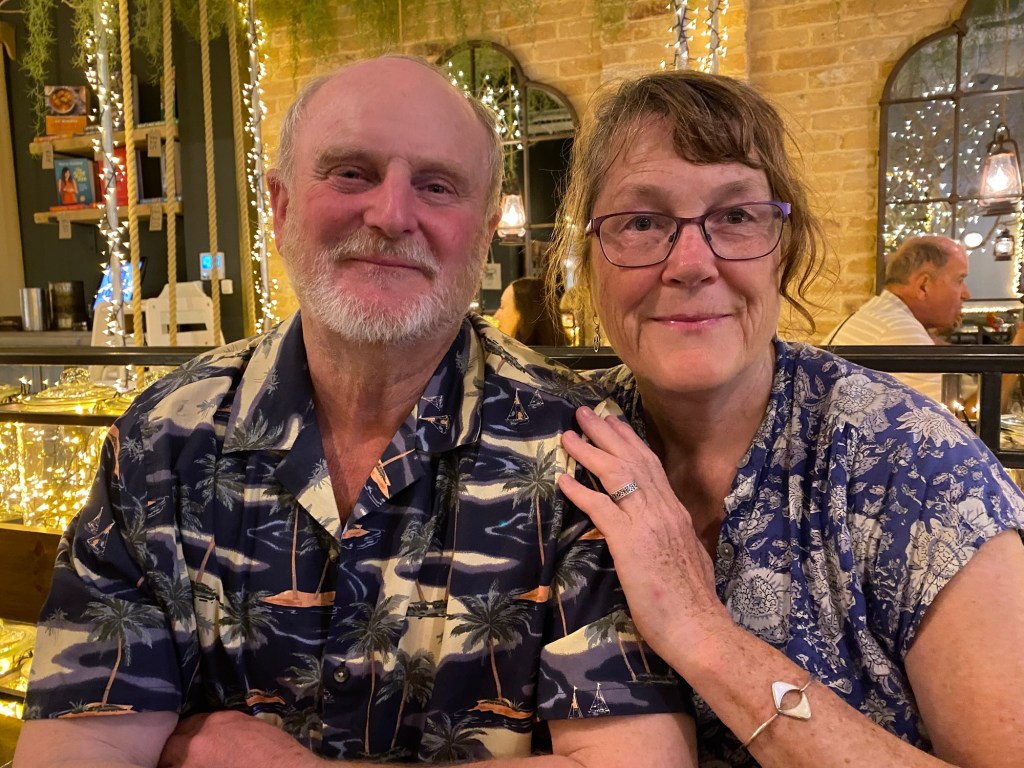
June 28th

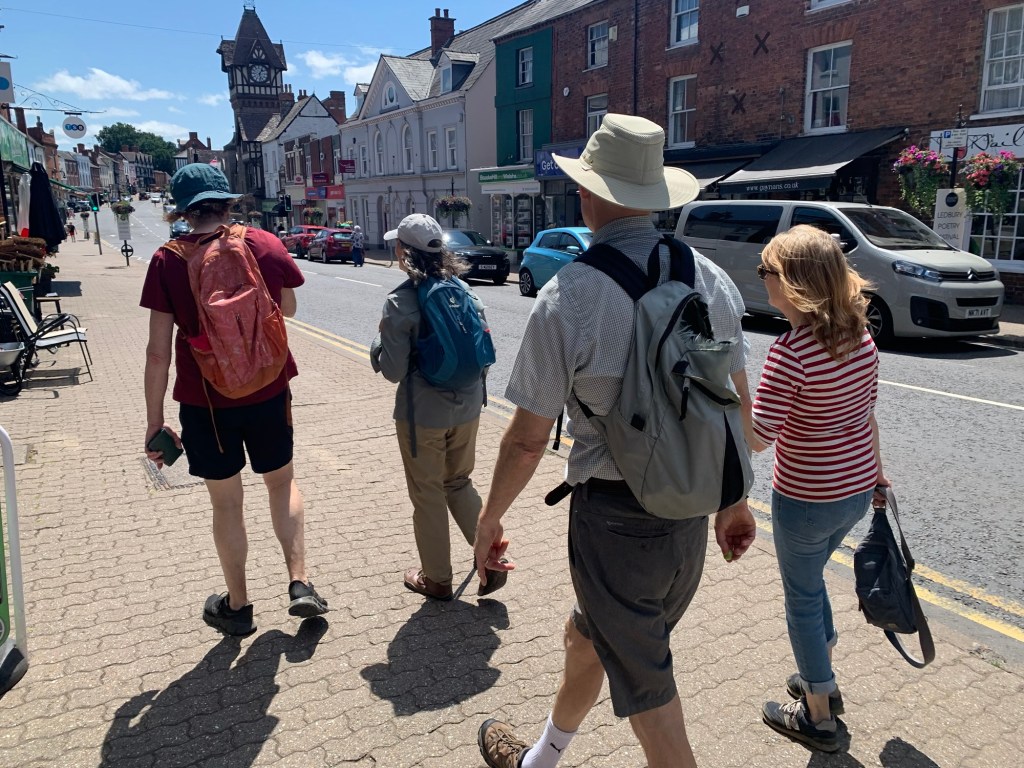
Earlier on in the blog. I wrote about our time in Kington in Herefordshire with our friends Sarah and Arch in early April. They met us again in the Brecon Beacons a while later. When we said goodbye then, we made a plan to meet at the end of the journey. We met in Ledbury, an hour drive for them from Kington and a 40 minute drive for us from Cheltenham. Christine joined us for the day.

Sarah and Arch lived in Ledbury for 10 years when they first came from Canada. Sarah is British and Arch is Canadian. They met in Vancouver, married and went back to England in 2002 or 2003. They have created a great life for themselves in the old market town of Kington where we stayed for a couple of days.

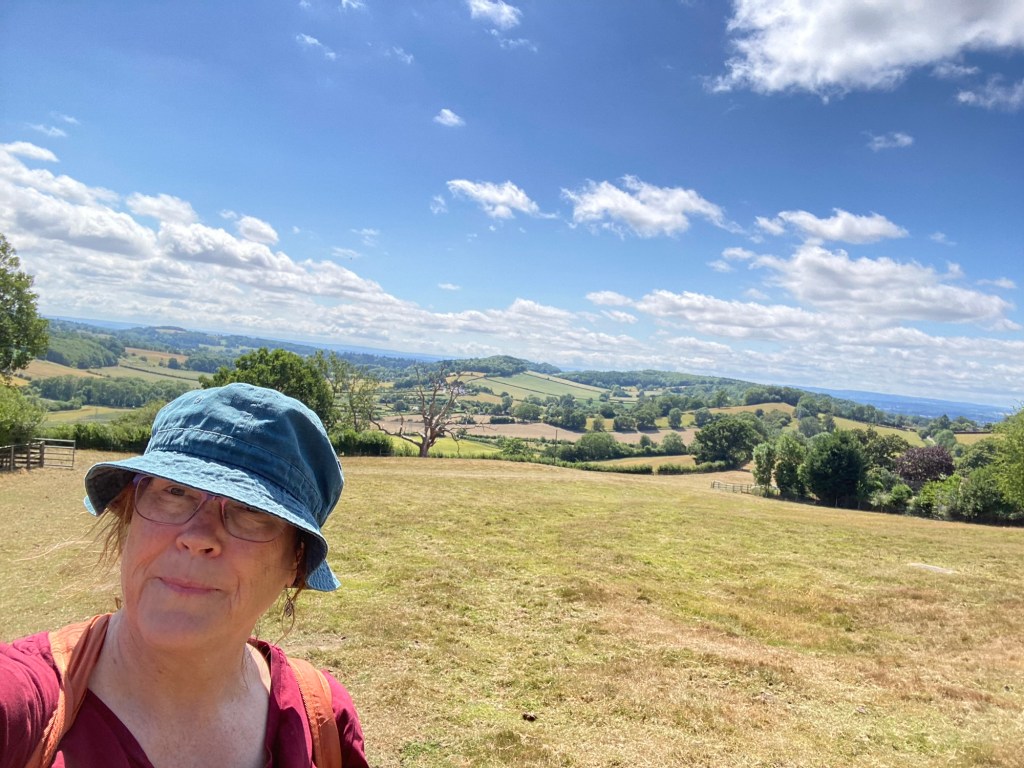
They are fond of their time in Ledbury and were happy to show us around. We wandered through the historical village and then they took us up into the hills where they used to live and on some trails with terrific views of the Malvern Hills.
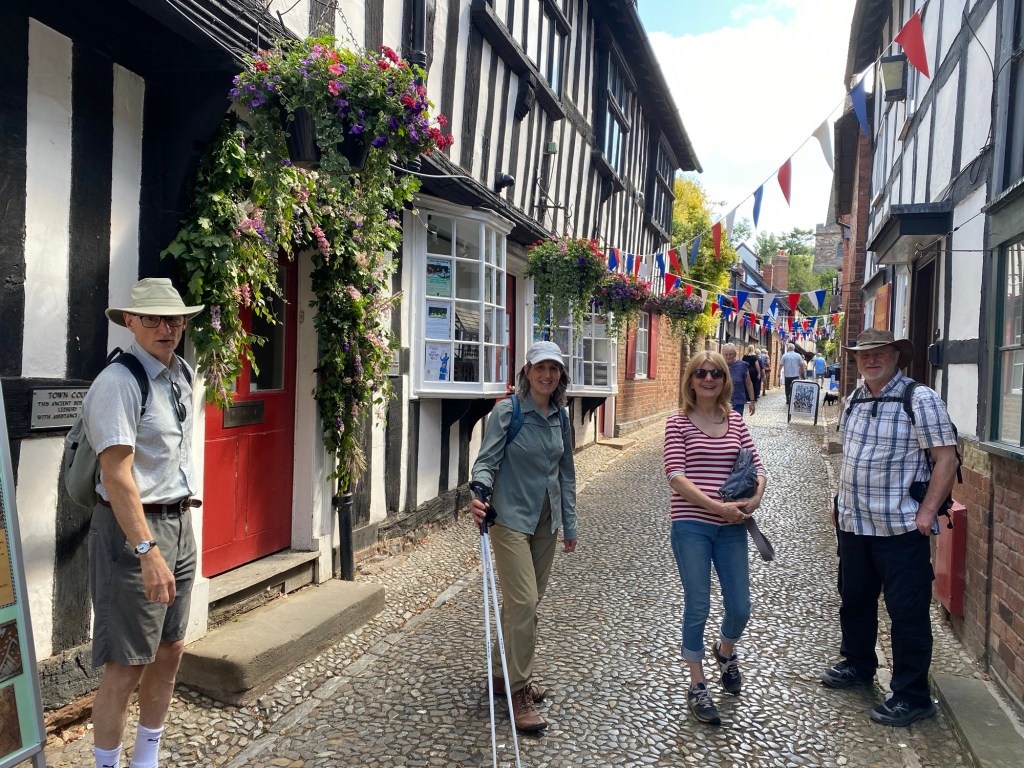
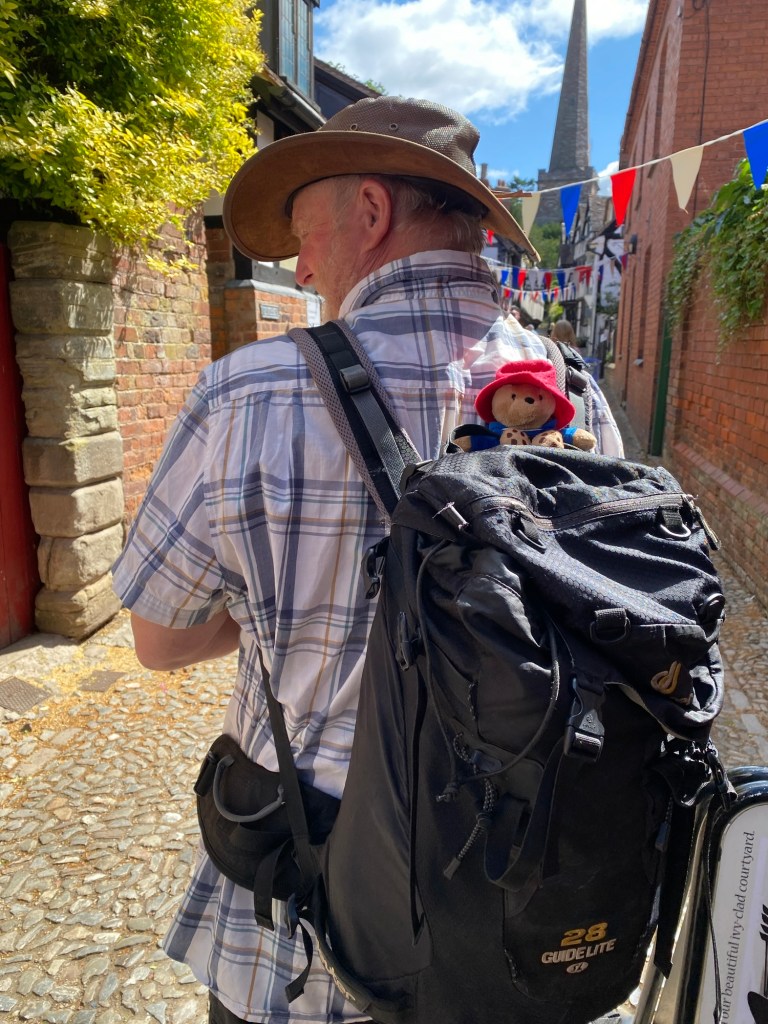
Quaint Ledbury streets.
Little Paddington enjoying himself.
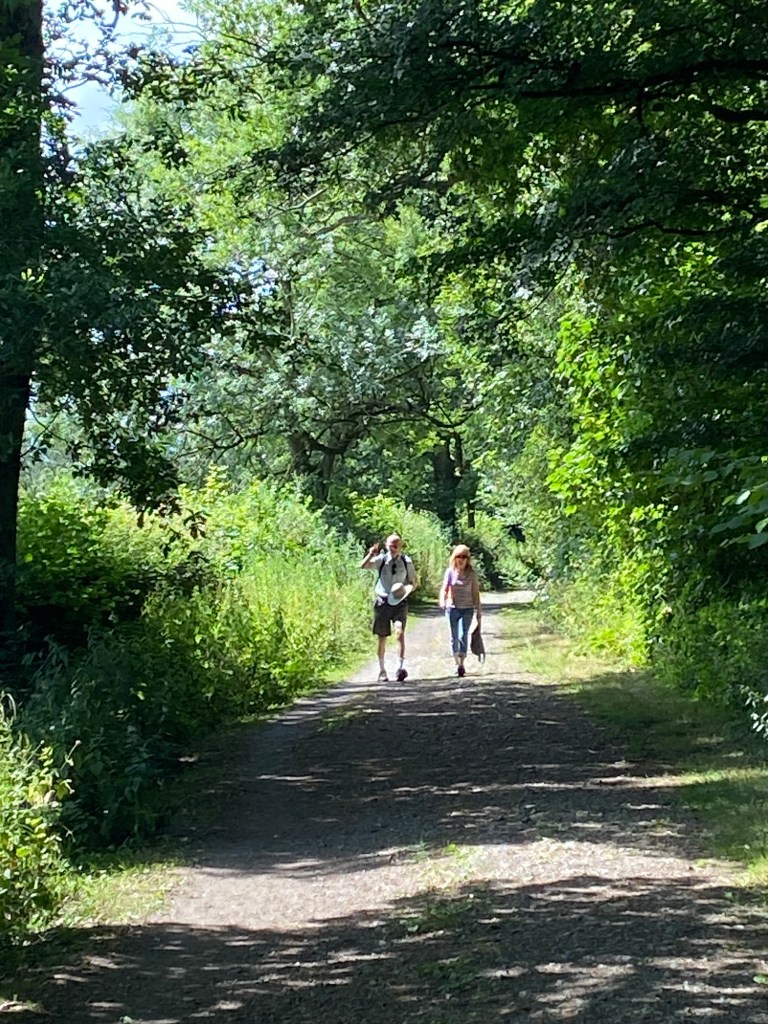
Shady trails.
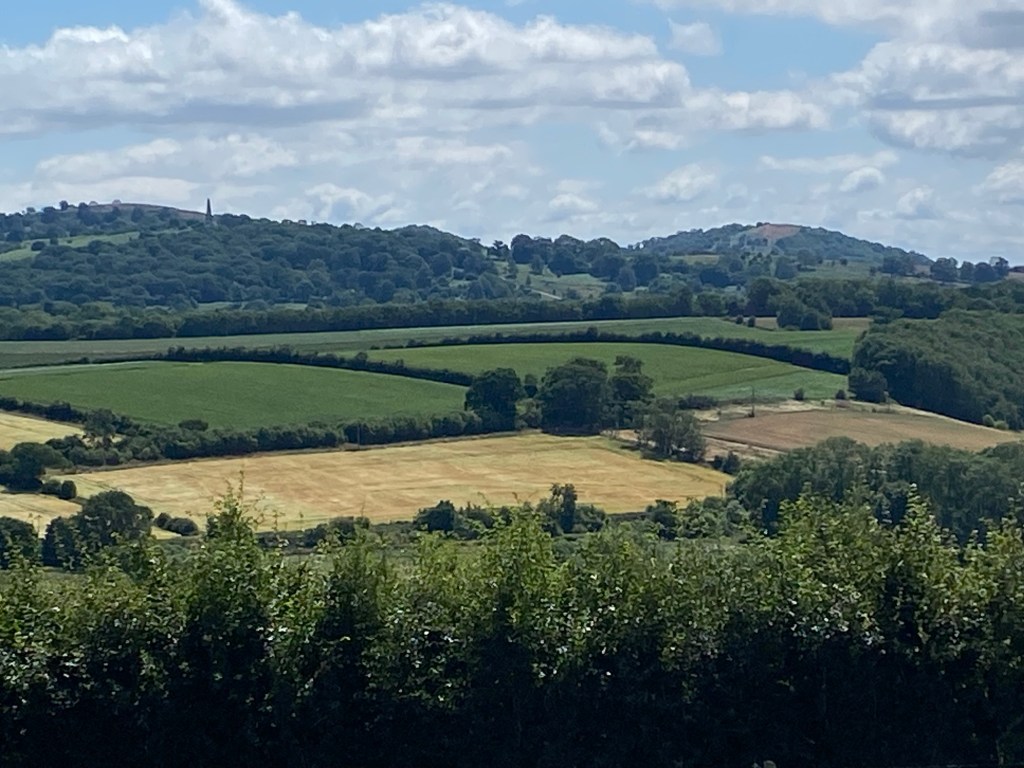
The Malvern Hills
Back in the town after the walk.

After our walk, we had to make tracks back to Cheltenham for a late afternoon family barbeque. Sadly, we bid our friends Sara and Arch goodbye for the last time this trip. We will definitely go back to Heredfordshire to see them when we visit England again.

The BBQ with Christine’s family included Christine’s partner Seb, her daughters Georgie and Charlotte (Guy’s nieces) their spouses Josh and Adam, and three daughters including a sweet little baby girl, and a playful wonderful dog. It was a nice opportunity to connect and catch up with this side of the family.

Guy’s nieces Georgie and Lottie at the BBQ.

June 29th

Today was cleaning and packing day. In the morning I scrubbed Paddington, getting the van ready for the handover back to the rental company the following day. It was a very reflective time cleaning with memories of the trip flitting through my mind. After I finished the inside, Seb washed the outside of the campervan beautifully. Paddington shone in the sun.

In the afternoon, I packed the suitcases having to weed out a number of items for Christine to take to the thrift so I could get the suitcases closed. Surprisingly, we had accumulated some stuff on the journey that we wanted to take home: Seaglass and rocks from the many beaches walked, my special mug that I bought in Suffolk at a thrift store in a village on the North Sea, Guy’s big mug from Stonehenge bought earlier in the journey, magnets for the fridge door from London and Bath and Corfe Castle and Anglesea in Wales, Ireland and the Orkneys in Scotland, Guy’s tweed blazer from the island of Harris, maps and brochures from everywhere, crockery bits that may or may not be old, and Christmas ornaments from Edinburgh and Stratford upon Avon that will remind us of the trip in the dead of winter. Those suitcases were tight.

That night we had a wonderful dinner in Christine and Seb’s garden, a perfect last night in Cheltenham.

June 30th

Up early, we tweaked the suitcases and then drove dear Paddington, our home for 3 1/2 months, back to the dealership across town. It was an emotional goodbye. Apparently the van is being retired after this season. We both agreed that if we lived in England, we might have considered buying the old boy. Thank you Paddington for being our great chariot and for being so reliable and keeping us comfortable the whole 6200 miles of our journey. We will miss you. 💜
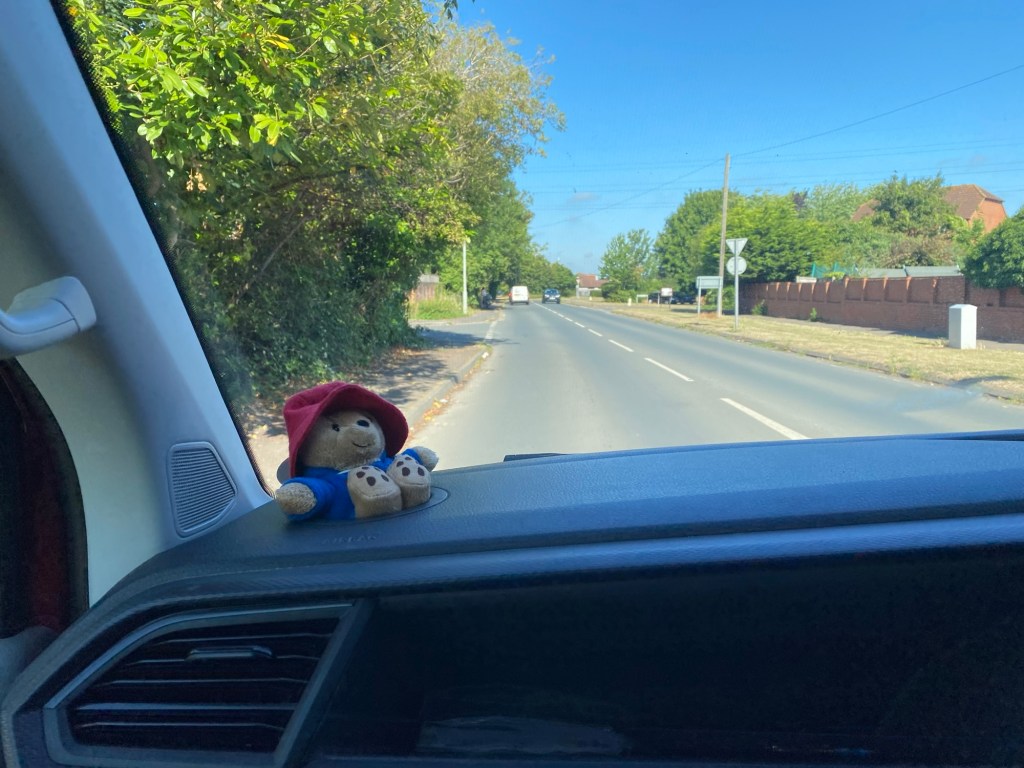
Last ride for little Paddington in big Paddington.
Sad to say goodbye to Paddington and our journey.
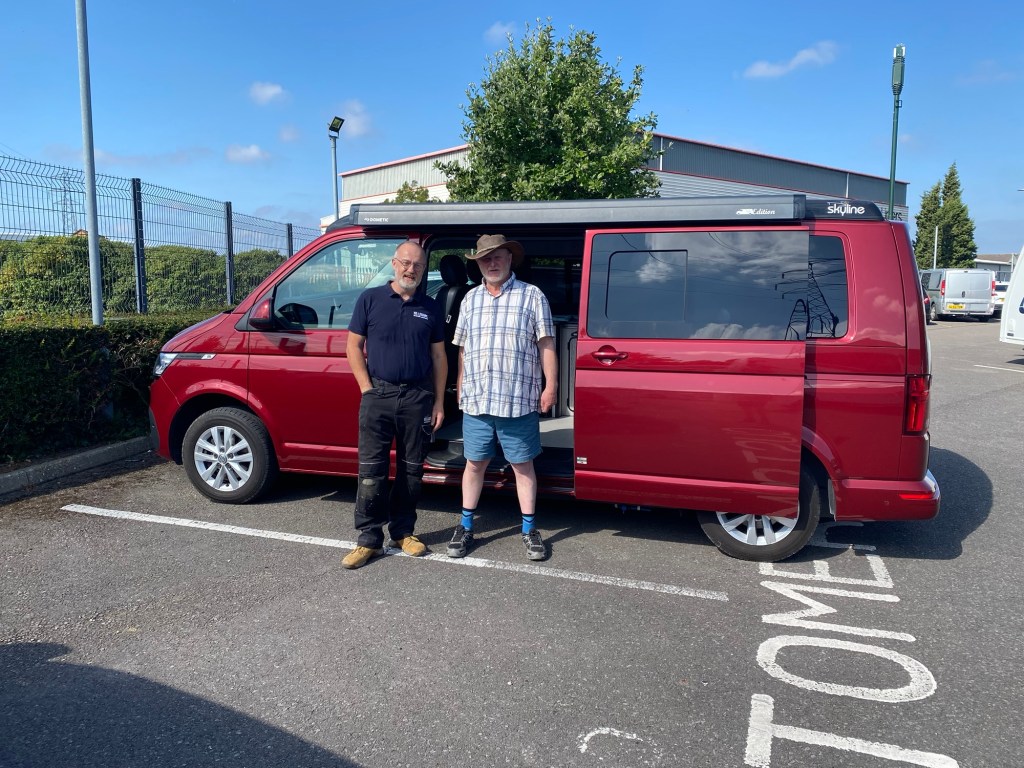
Guy and guy from M5 Leisure dealership at the handover.

Afterwards, we had lunch in Cheltenham at a cafe with a delightful outdoor patio. Then we went back to Christine’s, grabbed our suitcases and headed off to the train station. It was sad to say goodbye to Christine. It was truly heartwarming to see the siblings spend some quality time together over the last few months. Thanks for everything Christine!

Brother and sister.
On the train to London.
Scenery from the train.

We arrived at Paddington Station around 3 pm. The heatwave predicted for London the next few days was well underway. Thankfully, we knew our way around a bit more since our first stay in London at the beginning of the trip. We found our way to the underground and the Bakerloo Line to Lambeth where we were staying the next two nights.

We were warm and exhausted when we arrived at the hotel and more-so after we lugged our suitcases up the 3 flights of stairs. We settled into our very warm room and then went downstairs to the pub and enjoyed a cider and a bit of food and the air conditioning there. Note to self, make sure accommodations in the future have an elevator if we have lots of luggage, oh and air conditioning too.

July 1st

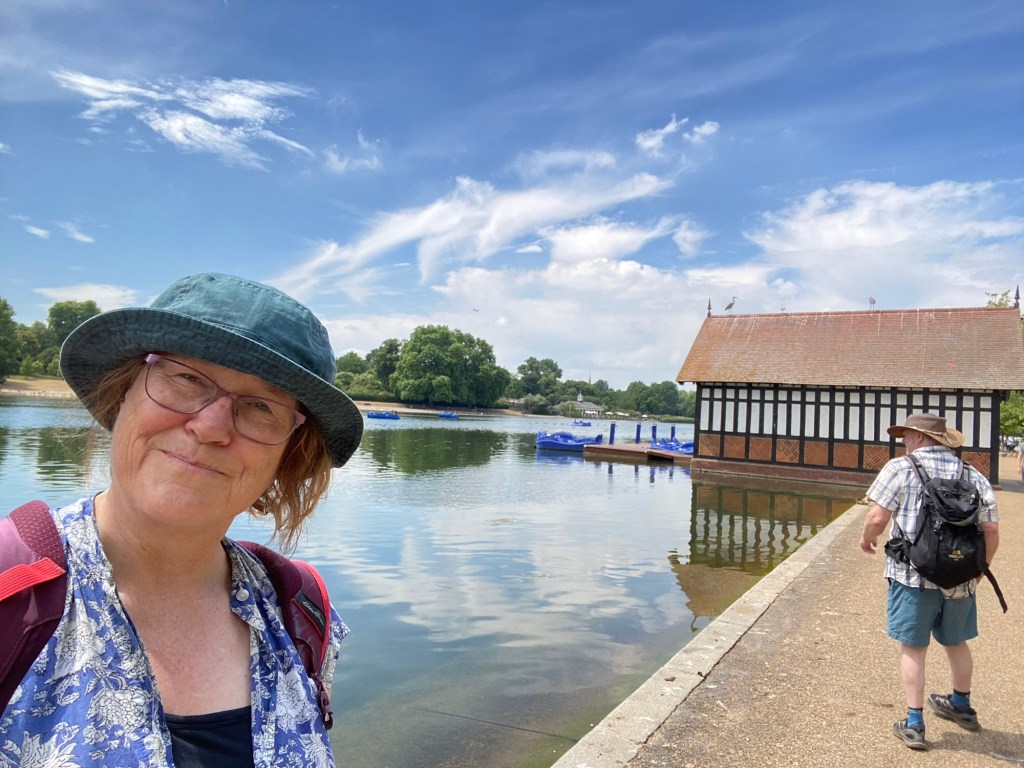
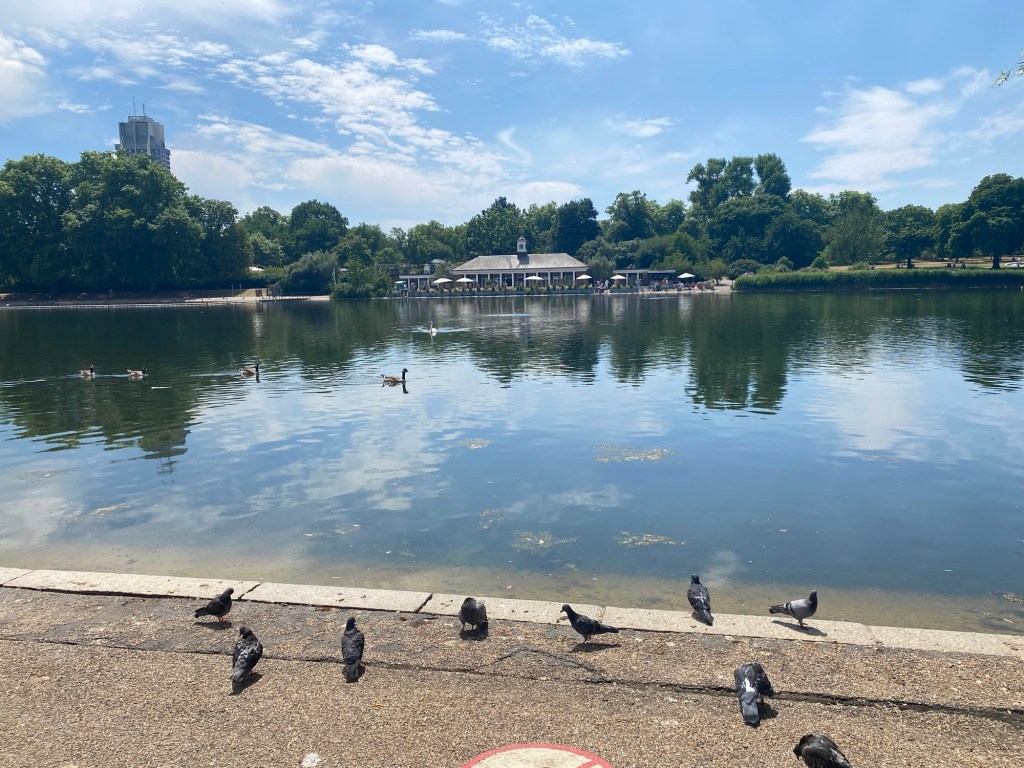
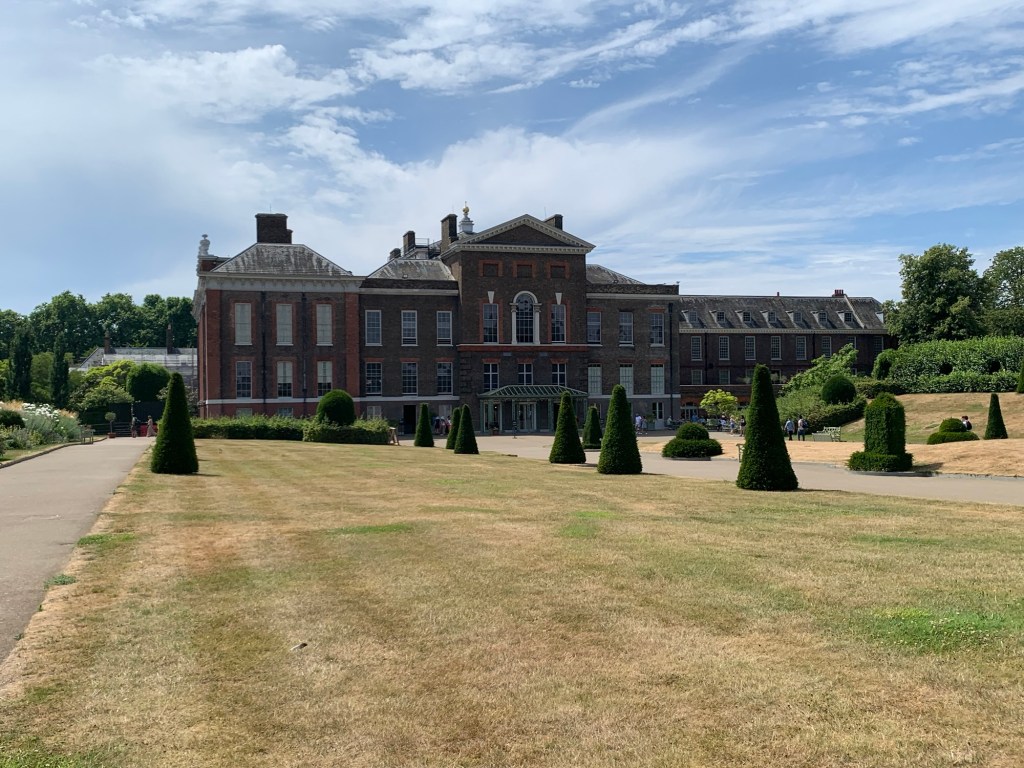
We spent a few hours on this very hot day with our London friend Susan in Hyde Park and Kensington Gardens, just wandering……….

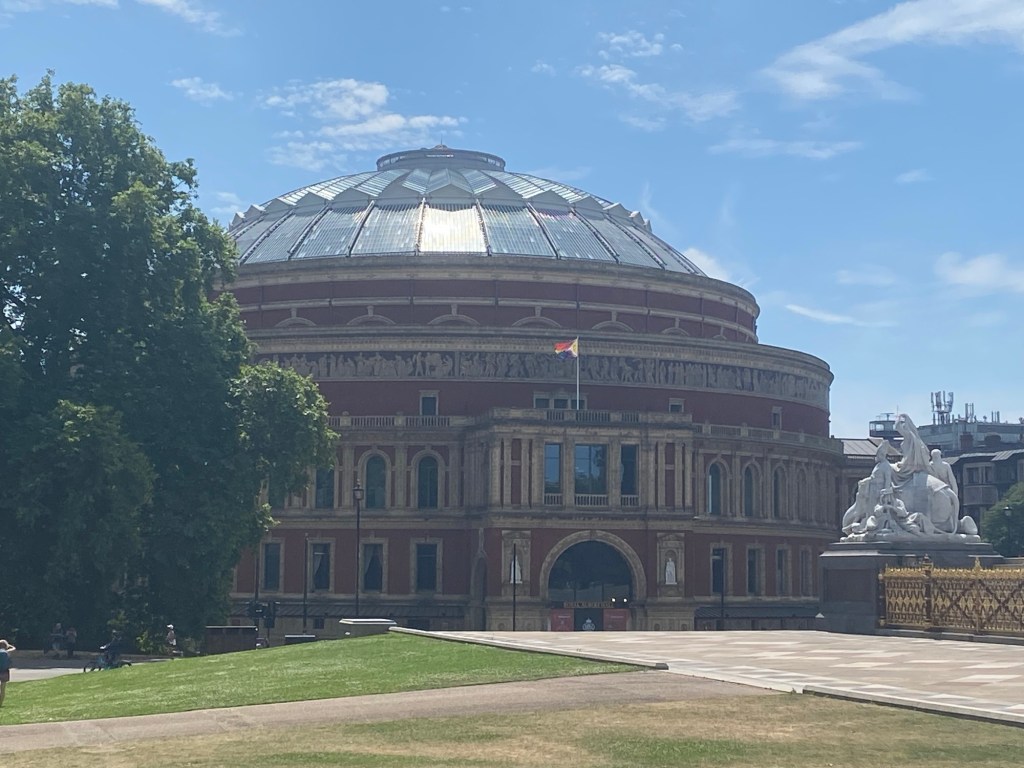
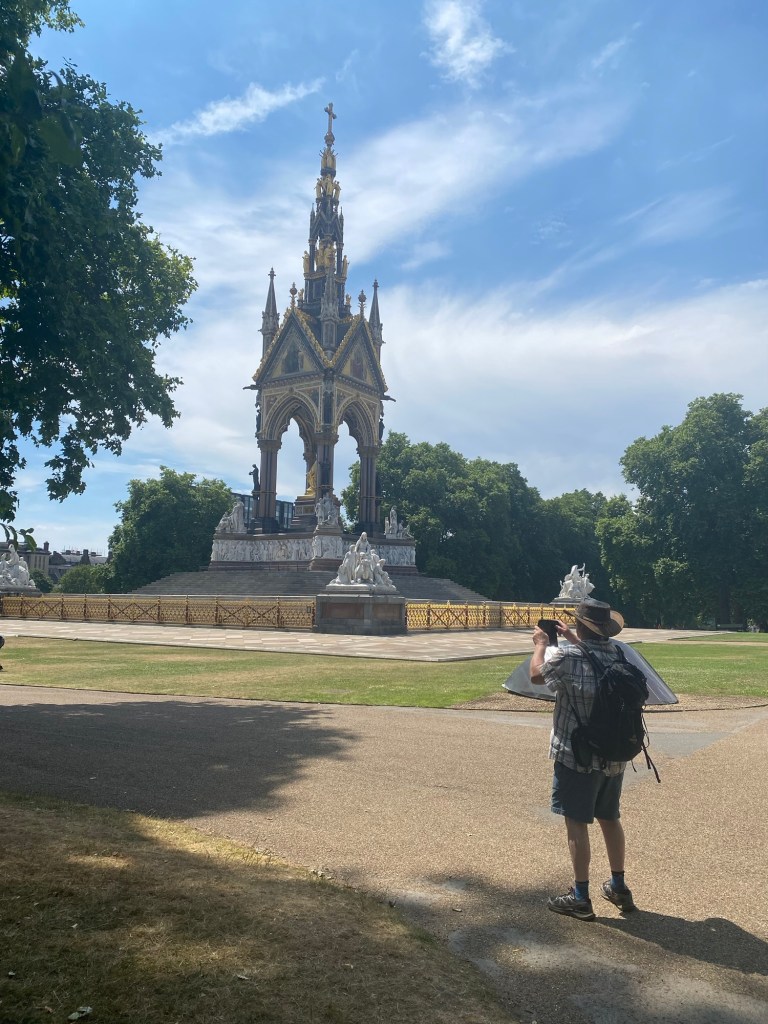
Guy walking in Hyde Park.
Royal Albert Hall
Prince Albert Memorial for the Husband of Queen Victoria. He died 1861.
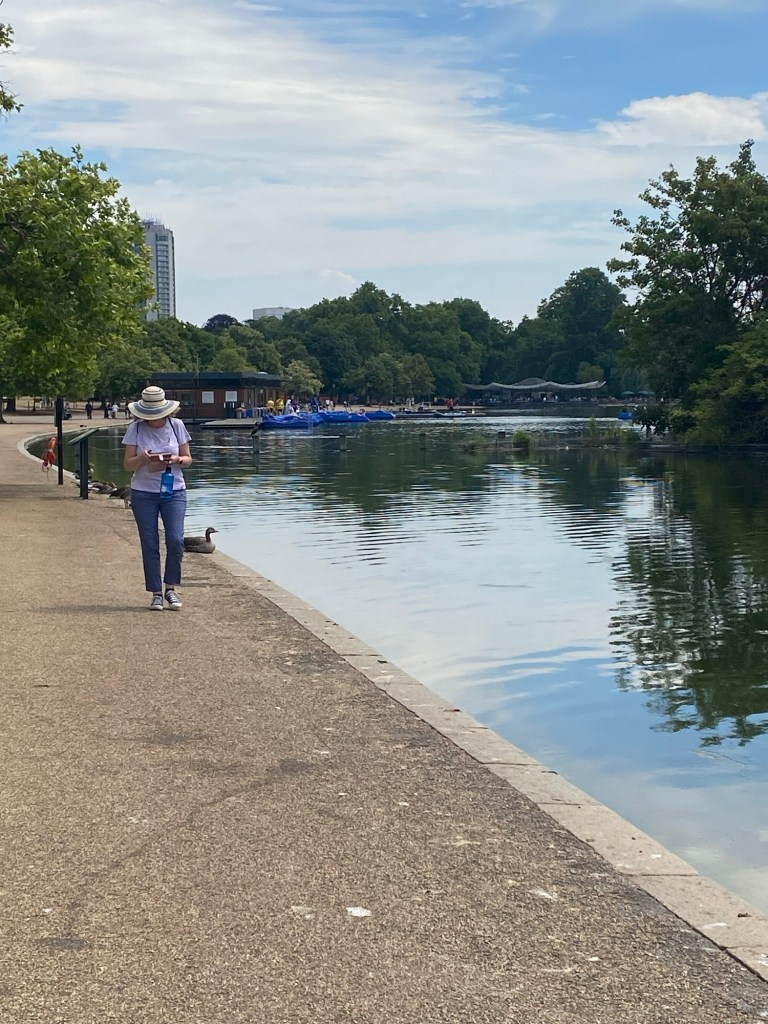
Susan in Kensington Gardens.
Walking in Kensington Gardens
Kensington Gardens
Kensington Palace.
In the gardens.
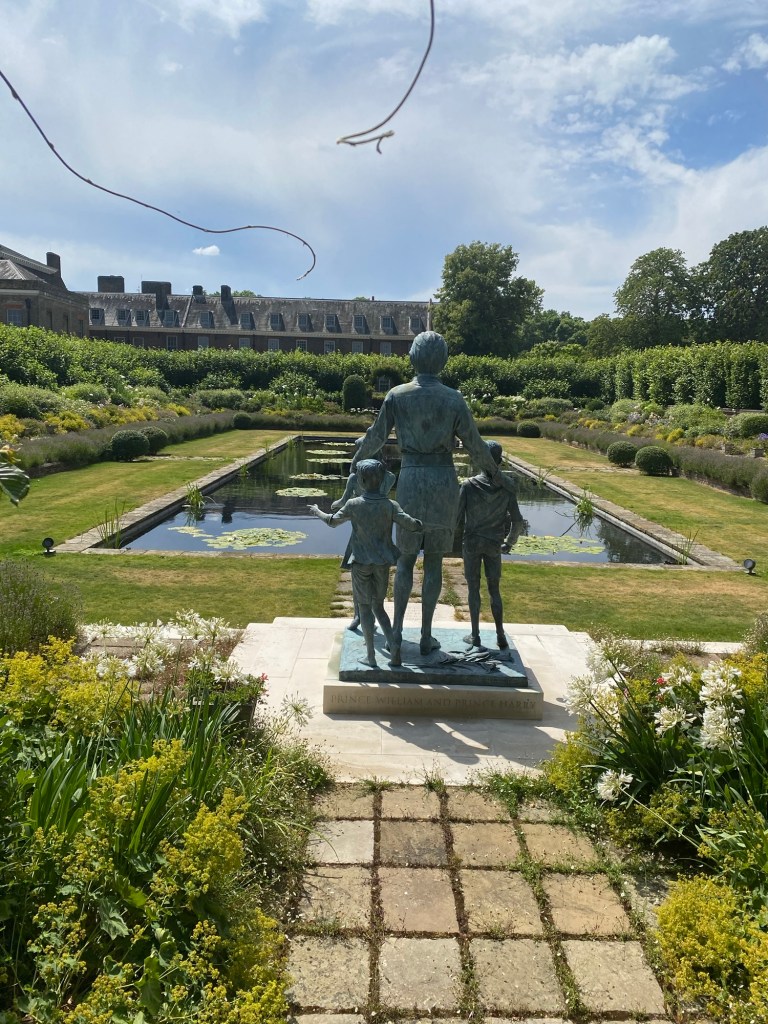
Tribute to Diana, Princess of Wales, outside Kensington Palace.

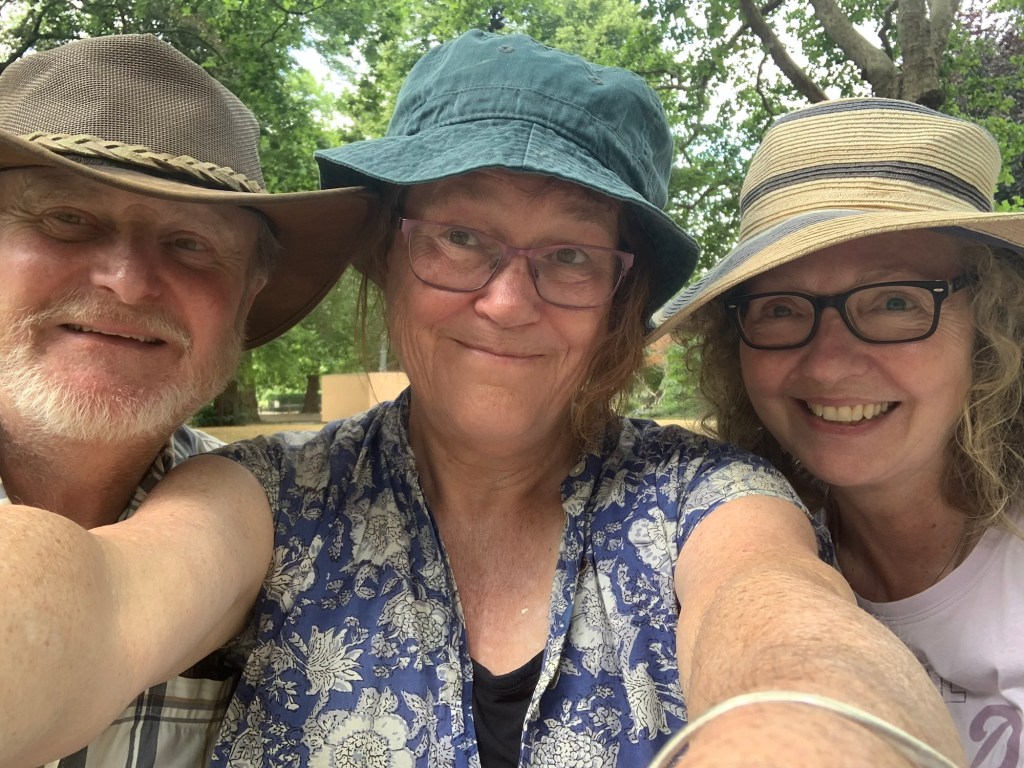
After a a few hours walking and talking in the parks, we bid Susan goodbye at the train. We were grateful for her taking the time to be with us at the beginning of the trip in London, up in Wales with our friend Tricia, and for our last full day in London. It was a lot of fun and Susan was a great tour guide in London.

Guy and I and Susan saying goodbye at the station.

We meandered the streets from Kensington Gardens back to Paddington Station and caught the Bakerloo Line back to Lambeth. We were feeling quite confident by now using the trains.

Later, we went out to the falafel place where we ate at the first night in London. Then we headed back to the sauna, aka our room, at The Ship. I finished packing making sure we were all set to go in the morning. Oh, and I had to handwash my clothes. I forgot to report that the day we left Christine’s in Cheltenham, the zipper got stuck on my suitcase. There was no way we could open it without damaging the case. I decided I would leave the suitcase alone until we got home. So I wore the same clothes until we got home to Gibsons. handwashing them every night. What a pain.

That night, sirens and traffic and people yelling in the streets went on until the wee hours with the whirring of the fan in the background. Not much sleep was to be had. 😬

Looking out the window in the morning in bustling Lambeth, south side of the Thames in London.

July 2nd

Our flight left London Heathrow at 2:10 pm. We left the hotel at 8:30 am, early we thought. But enroute on the Elizabeth line to Heathrow, the train suddenly stopped and the conductor told us we needed to get off and wait for the next train. No reason, no apology , just that we must get off. We waited for the next train for at least a half hour. We arrived at terminal 2 eventually.

Once we checked our bags, Guy’s backpack got a going over at security and they found our bag of beach glass that had caused concern. Once cleared, we had a nice breakfast and then made our way to the gate an hour before loading at 1:20 pm. The loading time came and went. An announcement came on that loading would be delayed due to the fact that the crew had not arrived yet. We waited close to an hour for their arrival and then loaded soon after. No reason was given. Maybe the captain slept in. 😃We arrived back in Vancouver around 5 pm after a pleasant flight. Caroline and Alex kindly picked us up. We stayed the night in Vancouver with them and the next day made our way back to Gibsons. And that was the end of our journey. Full circle!

All the World’s a Stage. And all the men and women merely players. They have their exits and their entrances…….”

This is a line from Shakespeare’s play “As you Like it.” After visiting Stratford upon Avon and the birthplace of Shakespeare, I was reminded of this well known line. It got me thinking about life and specifically our trip and the people that we met and spent time with over that four months. The actors on the stage of our trip are all the wonderful people that we visited and crossed paths with: Family who opened up their homes and hospitality to us, friends who met us and showed us the sites, people we met at our campsites that shared tips on the best road to take or best place to visit or expressed interest in Guy’s paintings, camp wardens who welcomed us warmly and shared a laugh, shop keepers who asked where we were from and where we were going , passerbys on the streets who happily gave us directions, train clerks who waived us on when we didn’t have the right train ticket, airport clerks who let my over 100 pound suitcase go through without additional cost, and of course the readers of this travel blog and the list goes on. It was a wonderful trip through the UK and Ireland. We saw many beautiful places and had many great experiences. What made this trip memorable , however, was the people, the actors on the stage of our 4 month trip. Thankyou one and all.

The End

Paintings from the Hebrides.

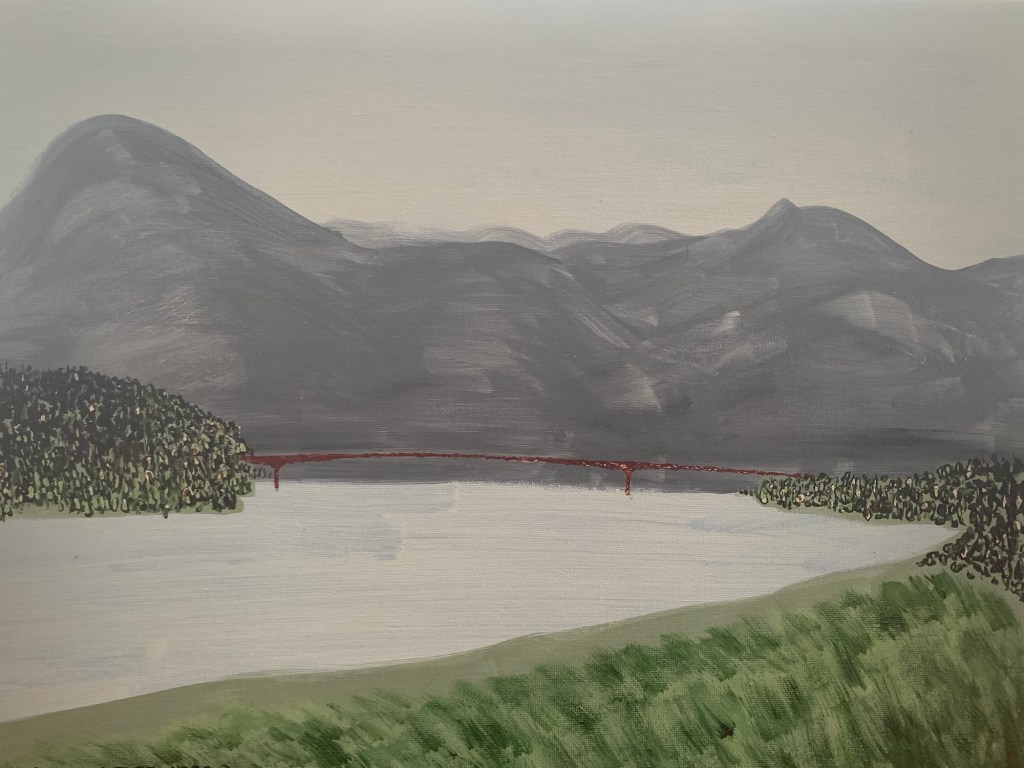
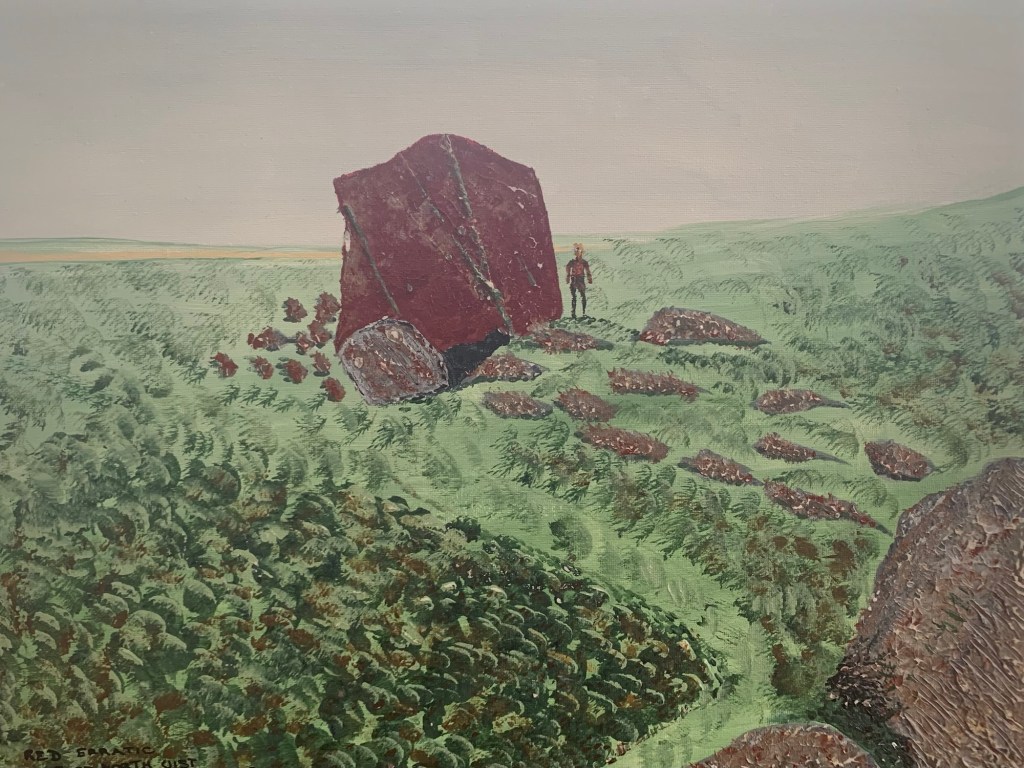
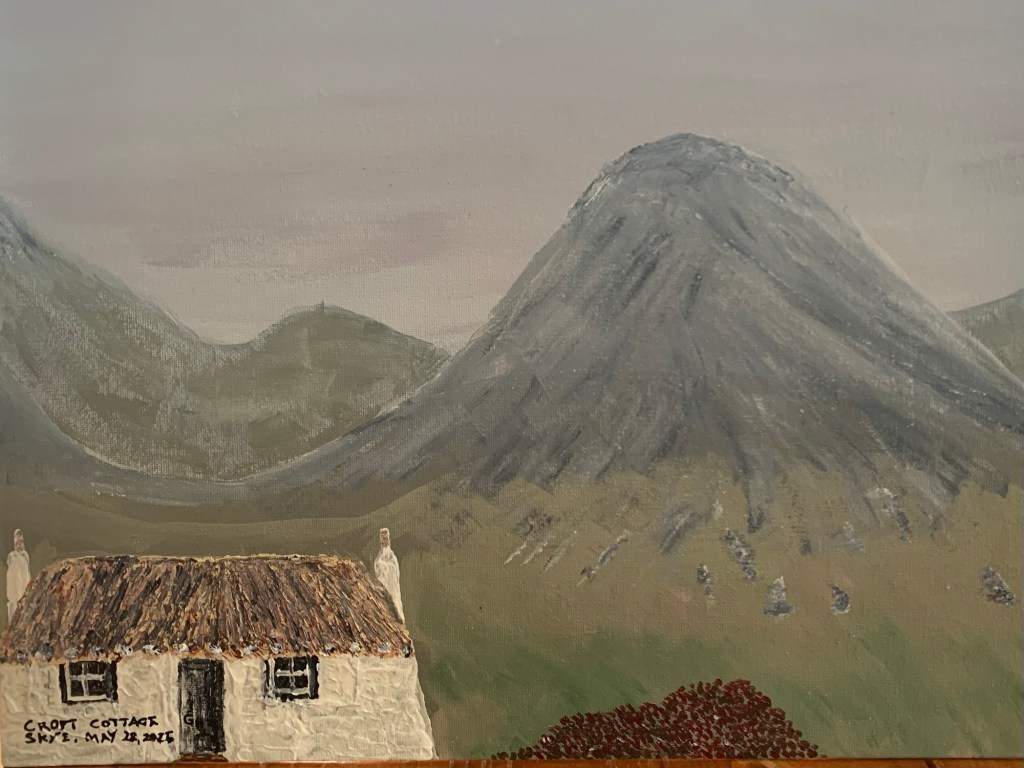
Here are Guy’s 11 painting of the Hebrides. It was on his bucket list to do 10 but there is an extra practice painting to total 11. Included are brief comments on each painting written by Guy.

The theme of these paintings is “Troubling”. The color red is used in instances in the paintings where red wouldn’t typically occur. The idea is to make the viewer of these paintings feel troubled since something is awry and hopefully, they will want to come back to have another look.

Practice Makes Perfect. Painted at Catherdaniel, Ring of Kerry, Republic of Ireland. May 3, 2025.

Comment: “Got restless with the Hebridean paintings plan for this month so this was a practice painting to get things rolling. A happy accident that the canvass stuck to another painting creating a wave effect. Enjoyed the experience. Glad to see I wasn’t that rusty.”

Sky Bridge. Painted on North Uist, Outer Hebrides. May 21,2025.

Comment: “Had to get my teeth into the first Hebridean painting. What’s more iconic than the bridge onto the Isle of Skye, the gateway to the Outer Hebrides. Painted the “bridge” freehand, slightly disconcerting to say the least. Kept this one very simple to emphasize the span.”

Red Erratic. Painted on Isle of Harris, Outer Hebrides. May 24, 2025.

Comment: “There is no such thing as a large red erratic, or is there? Love the boldness of the rock.”

The MacLeod Stone. Painted on the Isle of Harris. Outer Hebrides. May 24, 2025.

Comment: “Added cows as the stone seemed to be insignificant. The three seagulls were added to nullify a mistake when painting the height of the rock. Notice the cows’ red noses.”

Sheep Fence: Painted on the Isle of Harris. Outer Hebrides. May 26, 2025.

Comment: “Notice one red sheep. A bit troubling.”

Lady Stone. Painted on the Isle of Harris, Outer Hebrides. May 28, 2025.

Comment: “Lady Stone readily jumped on to the paintbrush. I was very pleased. This is a painting of the Callanish Standing Stones we visited on the Isle of Lewis.”

Croft Cottage. Painted on the Isle of Skye. Inner Hebrides. May 28, 2025.

Comment: “Thoughts of Flora MacDonald inspired this painting. My Aunt Adia said Flora’s croft was located next to hers north of Portree on the Isle of Skye. This painting is fictional, based on a typical Croft cottage on Skye. It has a brooding backdrop.”

Once Upon a Time. Painted on the Isle of Skye. Inner Hebrides. May 28, 2025.

Comment: “Abandoned cottage on North Uist near our campsite. The badger, next to the left side of the house, is symbolic of a dear friend “Badge” aka Karen Horrocks. The sky was done in a disruptive way to highlight the derelict cottage.”

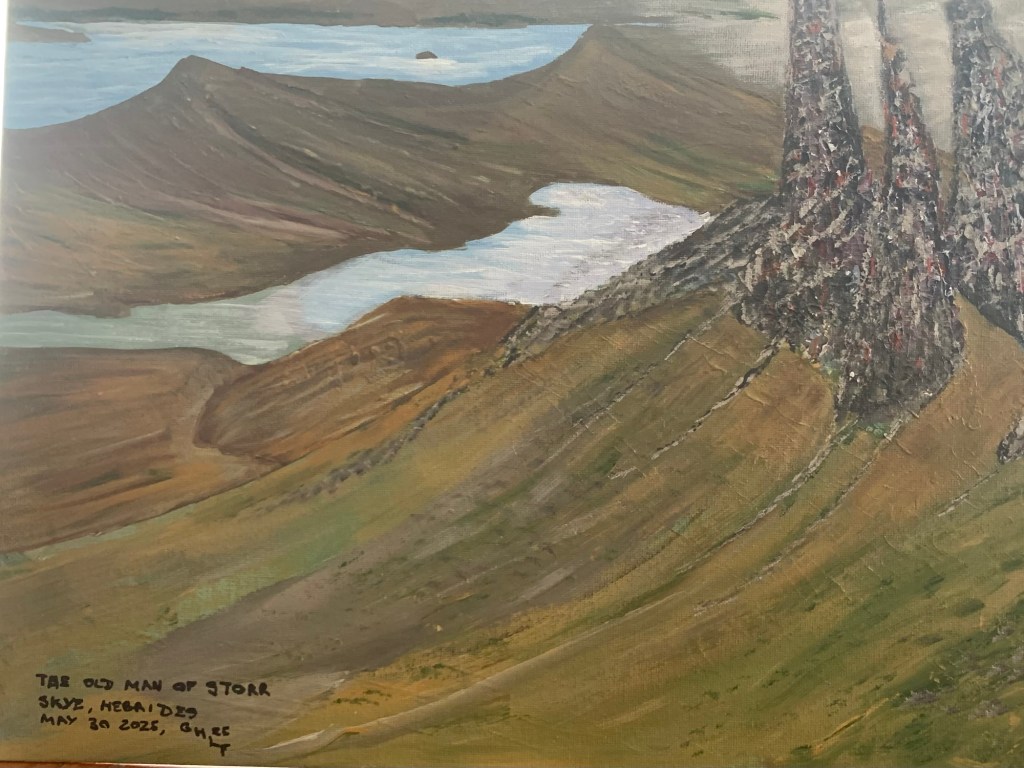
The Old Man of Storr. Painted on the Isle of Skye. Inner Hebrides. May 30th, 2025.

Comment: “A must see on Skye. Ridiculously busy. The three little people are a spoof on the number of people actually visiting it. Very inspirational to paint. Had the most fun with this particular painting and the depth that was created. There is a “troubling” red in the rocks.”

Angus. Painted on the Isle of Skye. Inner Hebrides. May 30, 2025.

Comments: “Under the gun to get 10 pictures done in the Hebrides before leaving the Hebrides. Hence the liberty of my own creation. I made it up. The angus cow has red horns.”

Thats not Paddington is it? Painted on Isle of Skye. Inner Hebrides. May 30, 2025.

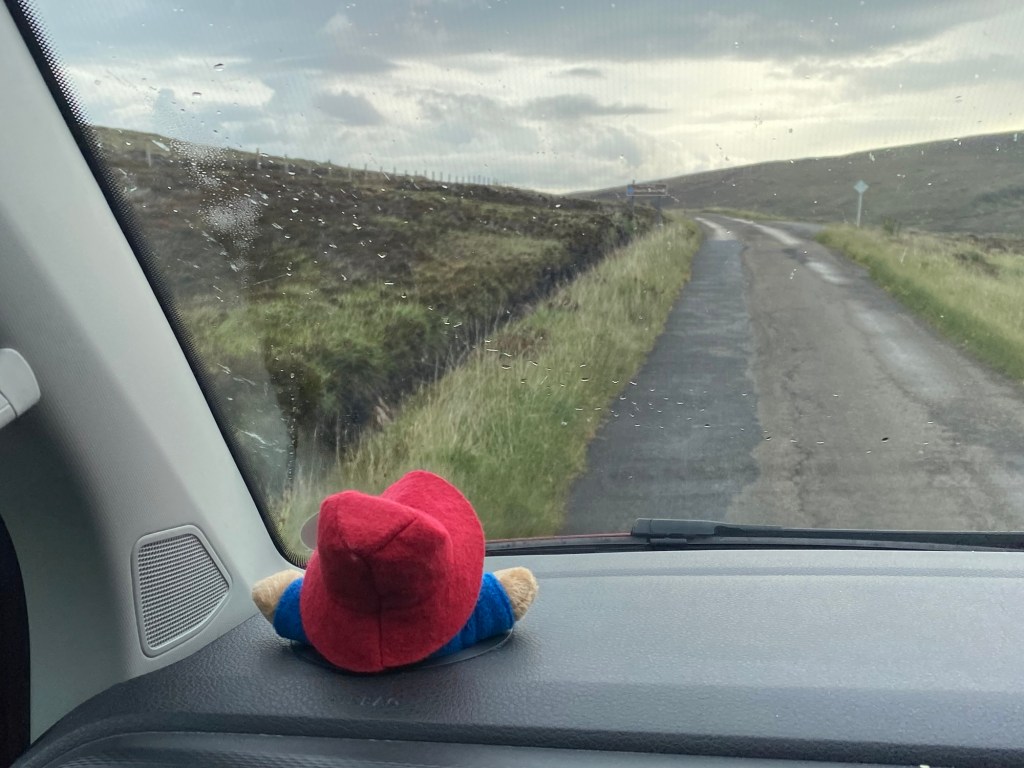
Comment: “Saw a rock formation looking like our mascot Paddington on the Isle of Lewis. Couldn’t resist using the rock formation as a painting subject. Subtle red hat for theme.” (see Paddington in the foreground on the right).

Lakes and Dales.

June 22nd

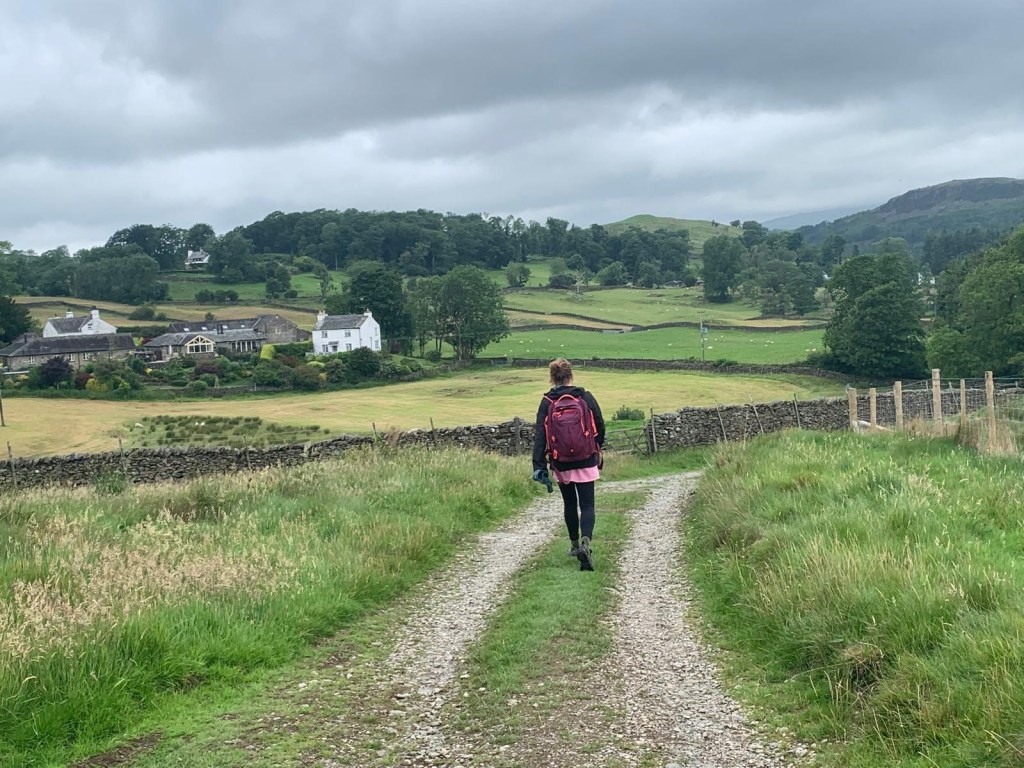
The name of our campsite, Windermere Camping and Caravanning Club Site, was a little misleading. The site was in the countryside, about a 15 minute drive from Windermere. This turned out to be a good thing since Windermere is the tourist mecca of the Lake District and very busy.

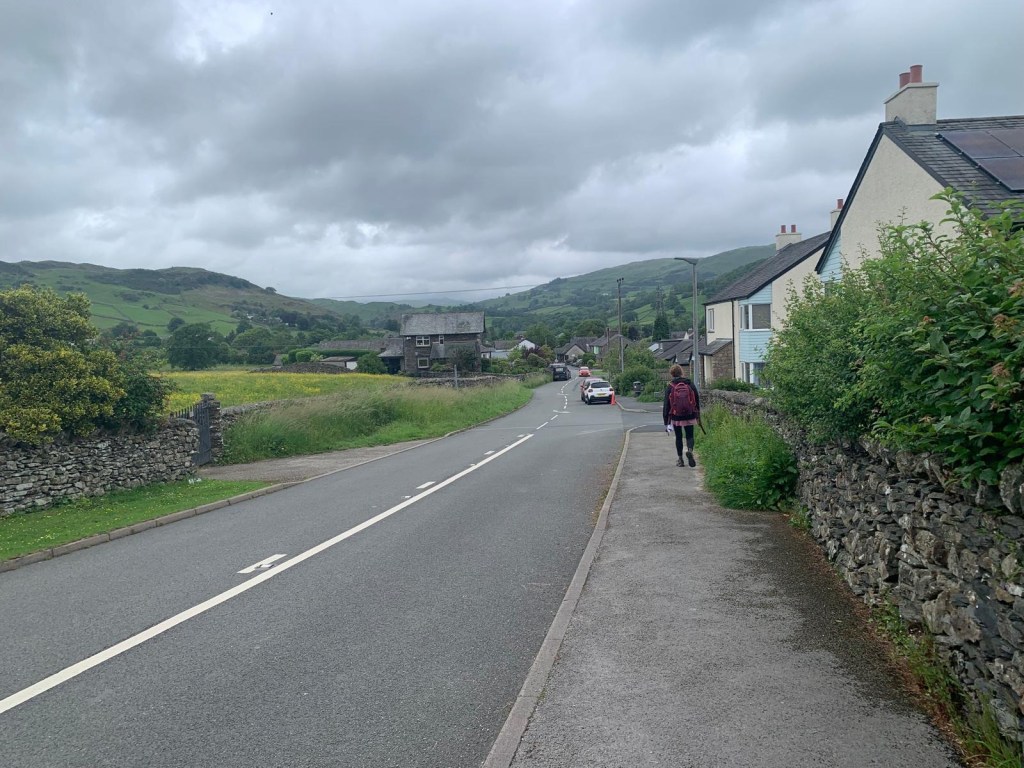
In the morning after breakfast, we had a lovely walk from the campsite through the countryside into the small village of Staveley.

The village of Staveley.

From Staveley, we caught the train to Windermere, a ridiculously short 6 minute trip. It was the right decision to get the train and leave Paddington behind as parking is a premium in the Windermere area.

As we exited the station, the skies opened and it poured with rain. We stopped by the tourist bureau and then beelined to a pub for lunch. Since it was Sunday, the pub was serving a roast beef dinner. This is typical of many pubs all over the UK to serve roast dinners on Sunday. Guy was in heaven. Look at the size of that Yorkshire pudding!! I was happy with my curried chick peas and rice. 😁

After lunch, we walked around Windermere. It’s a quaint and historical little village but as I said, very busy with tourists. Windermere straddles Lake Windermere, the largest lake in the Lake District.

We headed in the direction of Bowness on Windermere, a little village a half hour walk away from Windermere village. It is here we planned to see the World of Beatrix Potter, an exhibition about the writer and her books. We were told it would be interesting for adults but the presentation was more geared towards young people.

Here is a little background on Beatrix Potter, a writer whose books are a huge draw to this part of the UK. She was born in 1866 in London and died in 1943 at 77. Her first picture book Peter Rabbit was turned down by publishers so she self published the book and it sold out quickly. Publishers ultimately offered her a book deal, likely getting wind of its popularity. Beatrix Potter was able to buy a farm called Hilltop, in Sawry in the Lake District. Sawry is on the other side of Lake Windermere. It is here that she found inspiration for her further books. She was also a conservationist and ended up donating 4000 acres to the National Trust. Her hope was that the precious Lake District landscape would stay intact for perpetuity. (https://www.nationaltrust.org.uk/discover/history/people/beatrix-potter)

On the way back from the Beatrix Potter exhibition, we got caught in a torrential downpour and hid out under the trees in a park. It was like a fire hose had let go. Once it subsided, we walked back to the train station and got the bus instead. We couldn’t have taken a train because they were cancelled for the rest of the day. We were thoroughly waterlogged by the time we made it back to Paddington but at least it wasn’t cold.

Smiling in the rain.

June 23d – Lake District

We took a drive mid morning up the lake past Windermere to Keswick passing by Ambleside and Grasmere. The scenery was some of the most stunning we have seen on the journey so far.

Keswick is a village close to Derwentwater Lake and it is the northernmost village in the Lake District. A vibrant town with all the essentials including cafes and restaurants and a live theatre venue on the lake, it is also close to dozens of walking trails. We had coffee then a walk around the town.

Then we headed down to the Lake where we found a nice trail. The views up the lake were incredible, the green of the hills shining in the light that made its way between the clouds.

Then we drove back to Windemere and the scenery was a feast for the eyes the whole way.

June 25th

We bid the Lake District goodbye in the morning. The Yorkshire Dales and the village of Skipton were our next stop.

Off we go.
Threatening clouds
Hello Skipton.

Skipton is a charming market town and as the sign says, the “Gateway to the Yorkshire Dales.” The canal that runs through Skipton is the Leeds and Liverpool Canal, a major waterway linking the two cities, 127 miles long. The 200 year old canal is a draw for both walkers and boaters. (https://canalrivertrust.org.uk/canals-and-rivers/leeds-and-liverpool-canal) We wandered along the canal and the city streets, went by the Castle but it was closed, visited an old church, had lunch and did some grocery shopping.

Canal boats for rent in the Leeds and Liverpool Canal.
Street beauty
Canal boat homes.
A view up the canal.
Skipton shops.

Later in the afternoon, we drove into the countryside to our campsite Howgill Lodge Camping where we were staying for three nights.

Our campsite is down this road.

June 26th

We went on a nice walk from the campsite over to the next town Appletreewick through the woods and along the river.

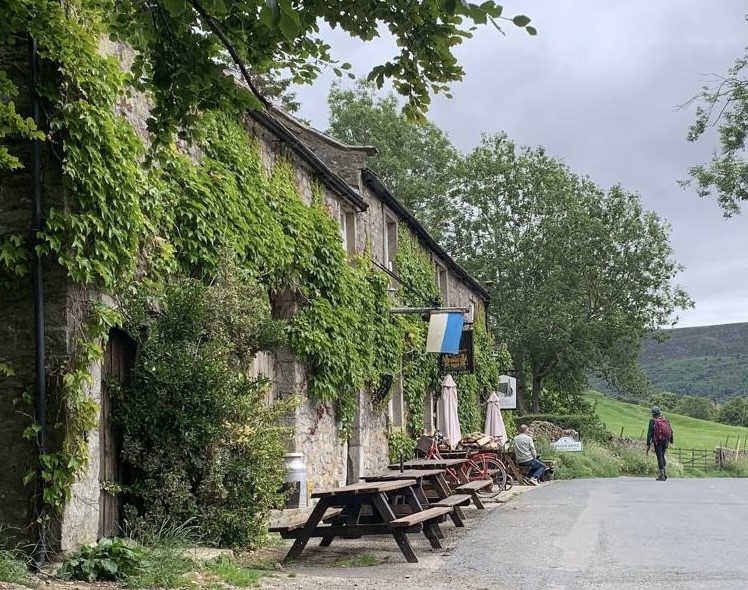
The Craven Arms

We stopped at the Craven Arms for a drink. We sat at the picnic table looking out to the Dales. The ancient old pub and scenery was like from a set on one of those British shows my mom watches. The Craven Arms building dates back to the 16th century. It was originally a farmhouse but gradually became a pub likely owing to the fact that that the woman of the farmhouse brewed ale which became popular for workers in the area including sheep herders. (http://www.craven-cruckbarn.co.uk/history.html)

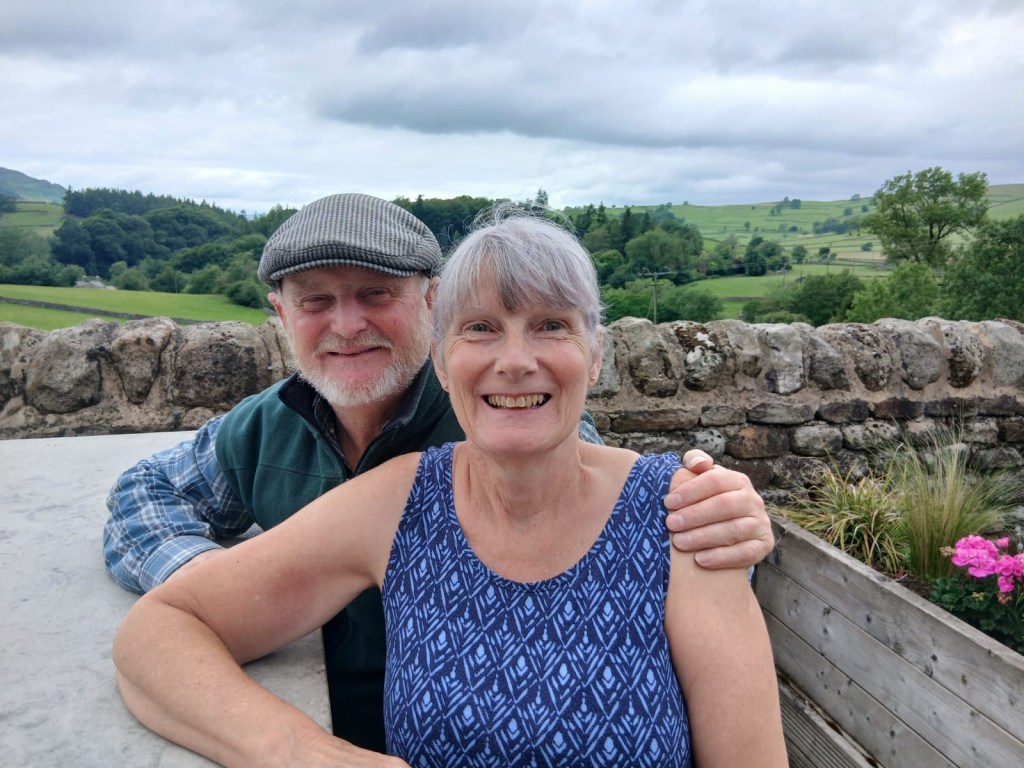
Once refreshed, we walked back in the direction of our campsite. We were meeting our friend Karen who had driven out from Milton Keynes to spend a couple of days with us. We met her at the cafe a short distance from the campsite. We had coffee and cake on the terrace overlooking the Dales. It was a breathtaking view.

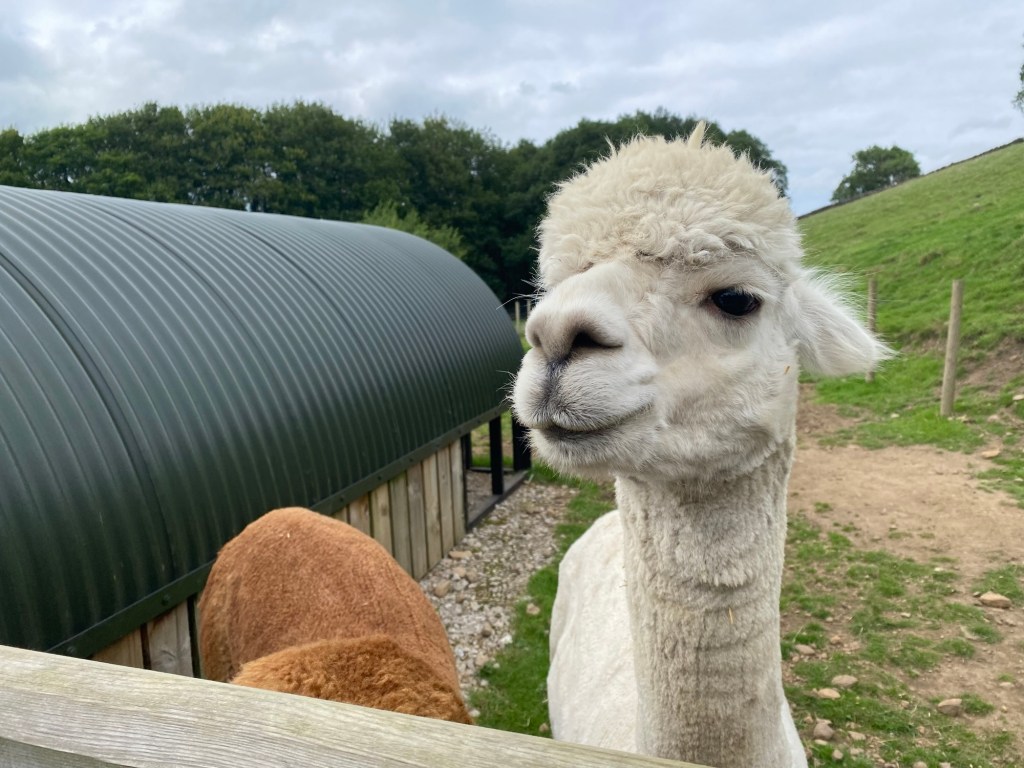
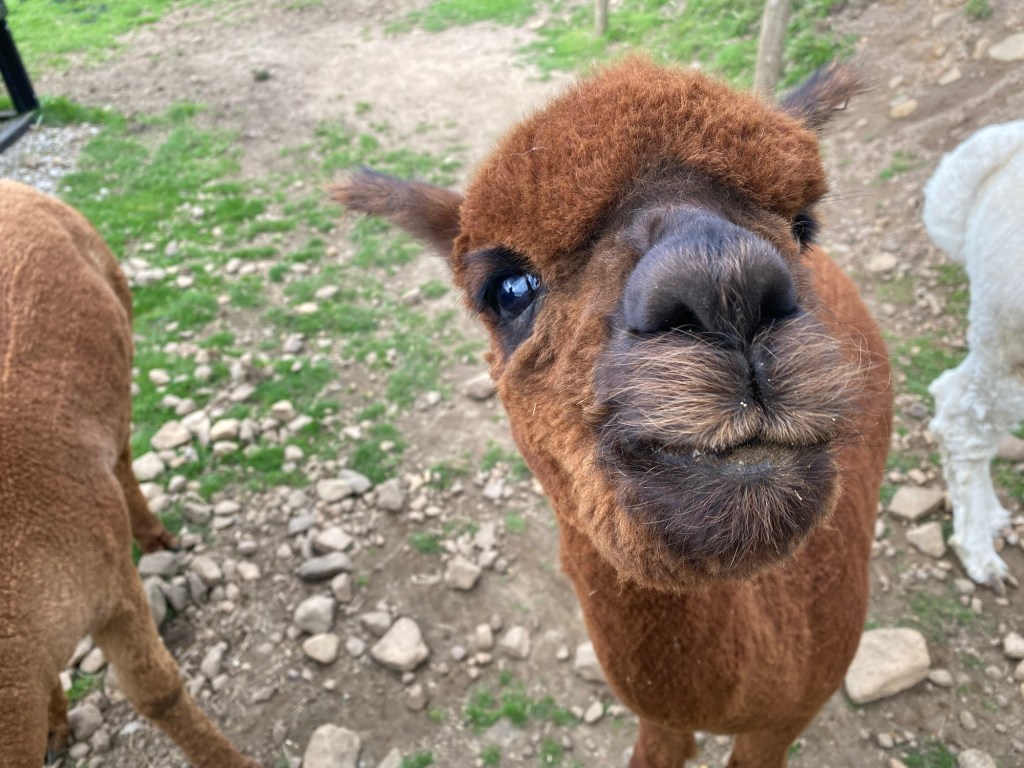
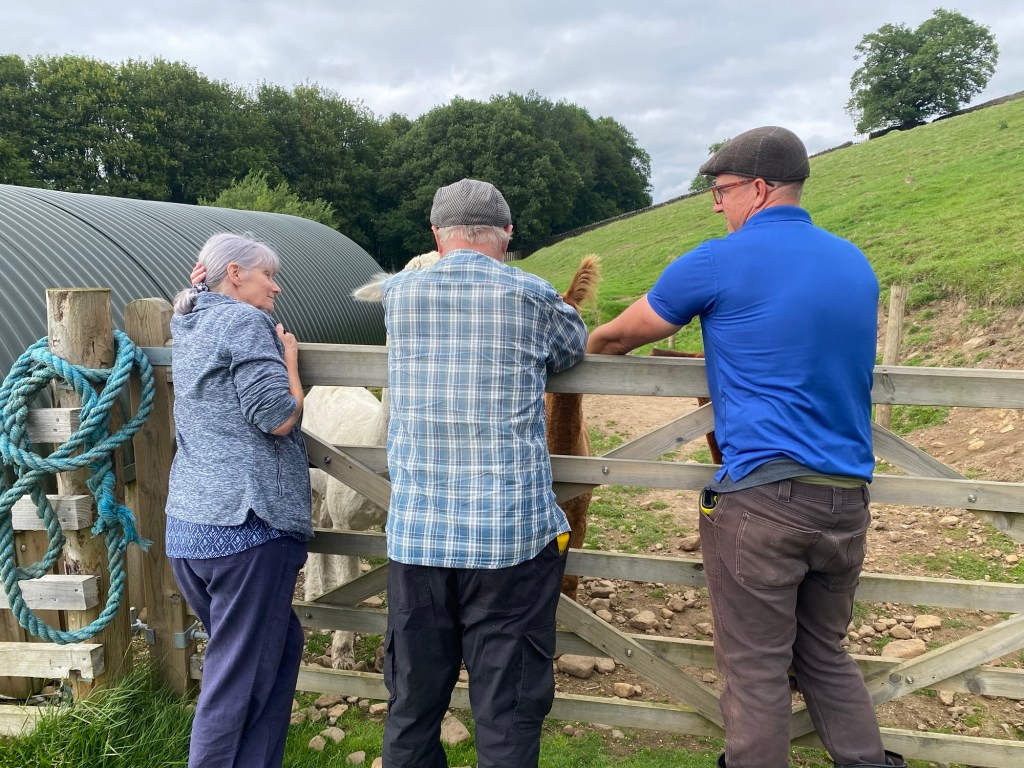
Before dinner, we were invited by the groundskeeper at the campsite to help feed the Llamas that lived at the site. These gentle creatures were hungry and ate the feed right out of our hands. Karen actually bought some Llama wool at the campsite reception which she is going to spin on her loom and then knit into something. Some of the wool is from the Llamas we met.

Meet Jack
Alfie
Dougie
The groundskeeper talking about the Llamas.

In the evening, we met a lovely couple who were camping below us. The fellow Johnny Malloy was an absolute hoot. An avid footballer, he represented England at the over 75’s Football World Cup in 2024. He was also an amateur comedian and had us all laughing as his wife stood nearby patiently. He told one funny story after another and kept us all entertained. They were such a friendly and fun couple. I told Johnny I would give him honourable mention in the blog so if you are reading this Johnny, a big hello from Canada to you and your wife Maureen. (Is Maureen correct? I couldn’t remember for sure. Apologies if not).

June 27th

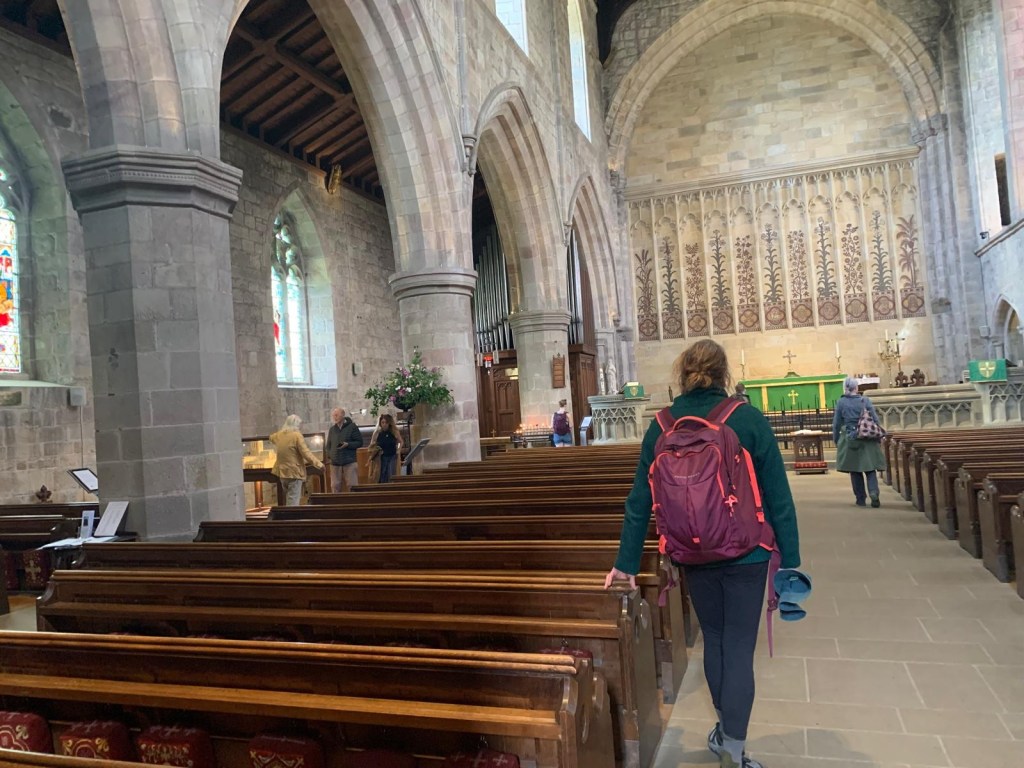
We woke up to heavy rain that continued most of the morning. We had coffee and breakfast, Guy wrote in his Diary, Karen read, and I worked on the blog until the rain subsided. Then we had an early lunch in the camper and set off to Bolton Abbey, a fifteen minute drive away. The scenery was lush and green and gentle, dotted with gems of history like centuries old bridges and the Abbey, a jewel of architecture and beauty.

A bit of history on Bolton Abbey, it was a priory until the 1500’s when Henry XIII implemented an act to dissolve all monasteries. The one end is a gorgeous ruin and the other end is a church that survived the dissolution and that still holds services to this day.

Inside of the church

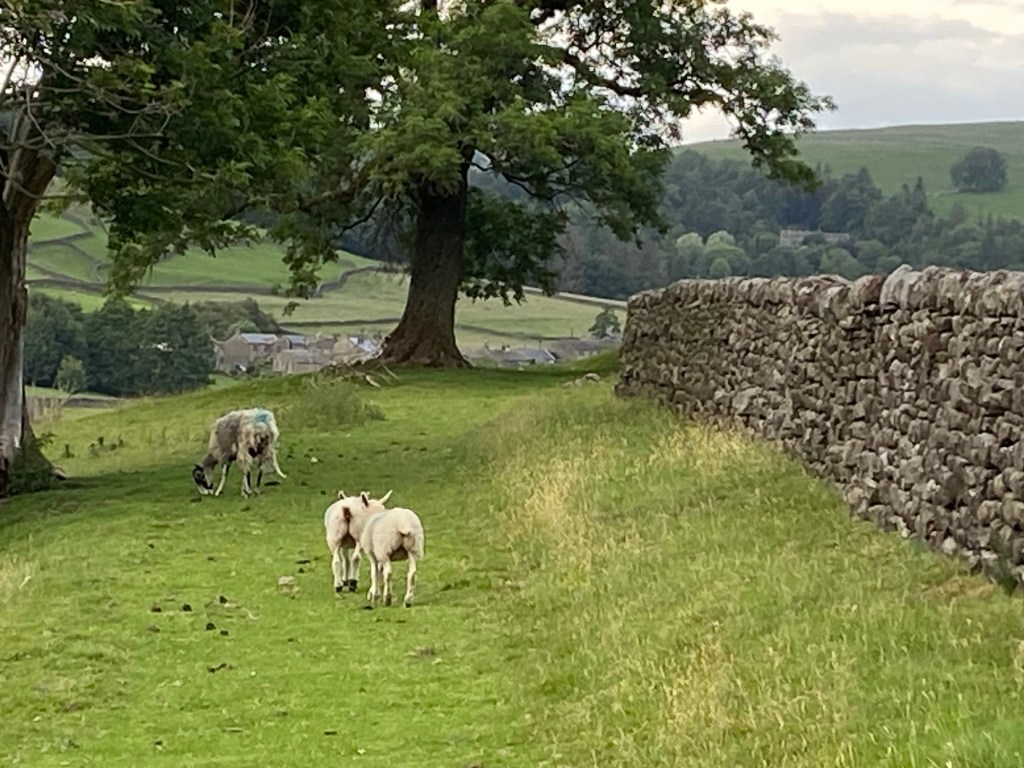
After visiting the Abbey and having a walk along the River Wharfe, we drove to the Craven Arms for supper. The pub was packed but they found us a little table in the back where we had a reasonably good meal. Once back at the campsite, we took a walk along the lane above the property and found a footpath through a farmers field, passing sheep and catching fabulous views of the dales as the sun went down.

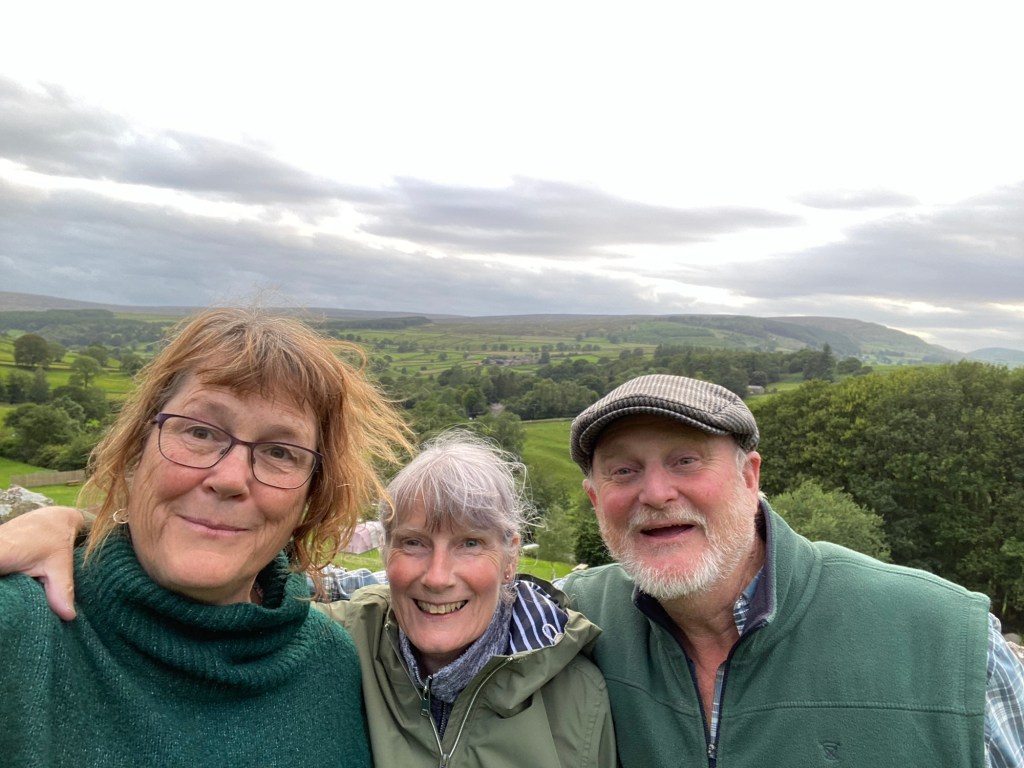
The Yorkshire Dales is a place I won’t soon forget and like so many of the places we’ve been, I wish we had more time to explore the hills and villages there.

Next blog, we visit the Bard’s birthplace and complete the circle at Cheltenham. Stay tuned.

Home and End of Journey
July 16th

We flew back into Vancouver on July 2nd staying overnight with family and headed back to the Sunshine Coast midday on July 3d. It’s been a busy time playing catch up on the domestic front but thankfully we had a great house sitter and awesome garden help while away. We enjoyed our trip but it was wonderful to be home to see family, the animals, and our house and garden.

The last 14 days or so of our journey was quite full so I was unable to keep up with my blog entries. Some may know that during the first week of our trip, my laptop died. I have been doing the blog on my phone. It has been onerous so I was happy to be at my desk at home and be able to type on a large keyboard with two hands to complete the blog. Well, I guess I was so used to writing the blog on my phone that typing it on the computer was not working for me. So I’m back to tapping on my phone with one finger to complete the blog and wrap things up

Following is the first of the final blog entries of Guy and Joys 2025 UK and Ireland Campervan Trip. Thanks for bearing with me and my long blogs. Thanks too for all the support and words of encouragement along the journey. You my readers, are the best.

OK, on to the final days of our adventure, finally.

June 18th

We left Montrose fairly early so we could have a reasonable amount of time to see around Edinburgh. We found a park and ride just south of the city, where we left Paddington and took the short train ride into the city. It was a perfect location, just a 20 minute drive from Guy’s cousin Andrew and his wife Claire’s place, Greenhead Farmhouse. We would be staying with them for a couple of nights.

Road sign to Edinburgh. My great grandmother’s parents Janet and Alexander Thomson are from Dunfermline.

As we exited the train station in downtown Edinburgh, I could feel the city’s towering regal, ancient presence. It echoed the feeling of many of the towns and cities we’ve visited, but Edinburgh was ramped up to the next level of grandeur.

We crossed the street and went for coffee before starting our exploration of the city. Afterwards, we walked along part of the Royal Mile to the start of the trail to Arthur’s Seat. This popular hill is an old extinct volcano. The walk offers spectacular views of the city and the countryside surrounding Edinburgh. It was busy on the trail with locals and tourists. We made it up to the top, got our photo opps, and blasted down. I don’t linger in high places. 😆 I fell on the way down on some loose rocks but did a terrific recovery.

Guy at the top of Arthur’s Seat
Spectacular views out to the Firth of Forth, an inlet of the North Sea.
Joy on the way up to Arthur’s Seat.
Coming down.

We took the road less travelled down from Arthur’s Peak and added a half hour, Stanley Parkish looking addition to our descent. Once down, we passed Holyrood Palace and stopped in for a cold drink and a snack at the cafe there. Holyrood Palace is the official residence of the British Royals when visiting in in Scotland “and is a setting for state occasions and official entertaining”.https://en.wikipedia.org/wiki/Holyrood_Palace

Holyrood Palace

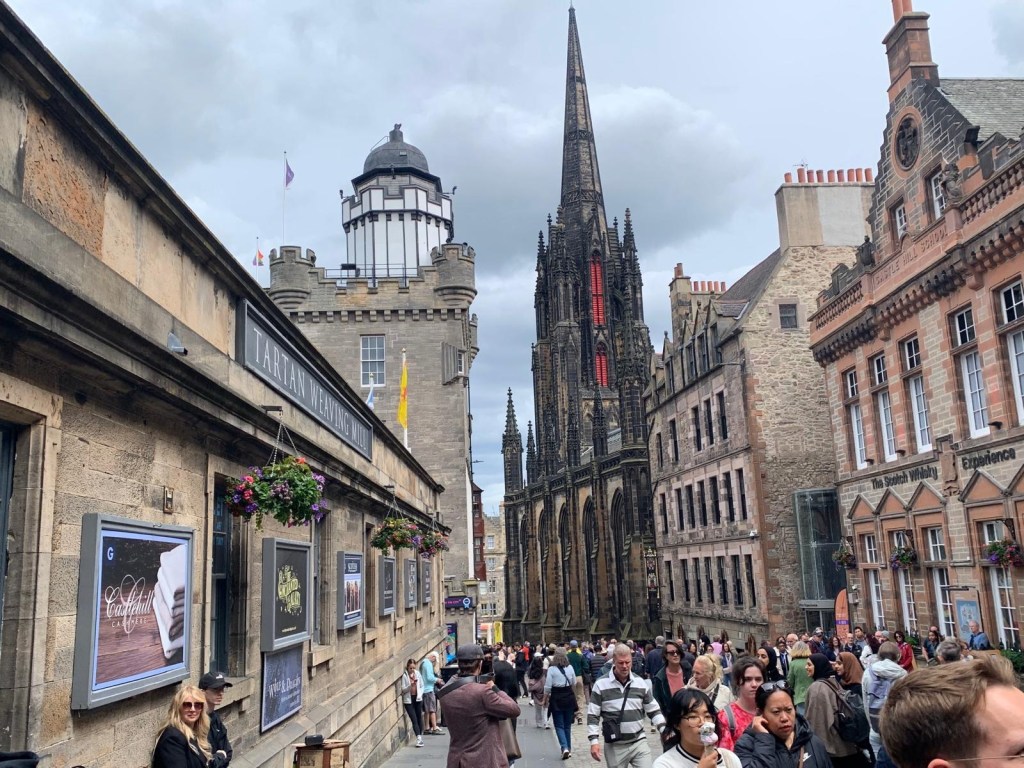
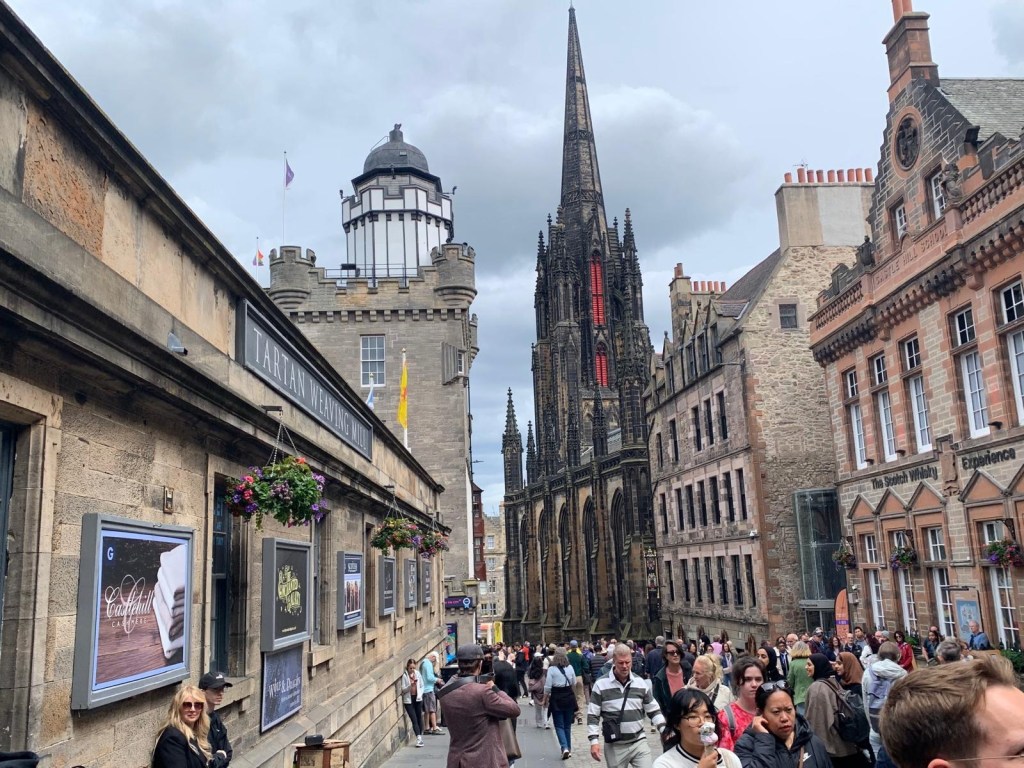
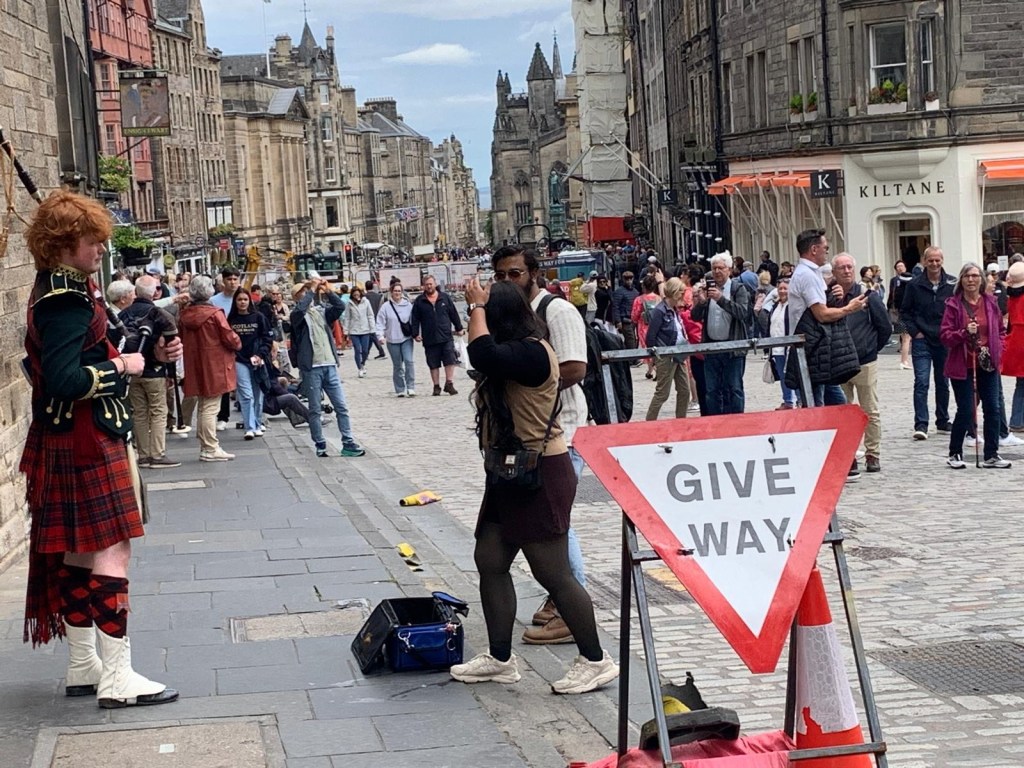
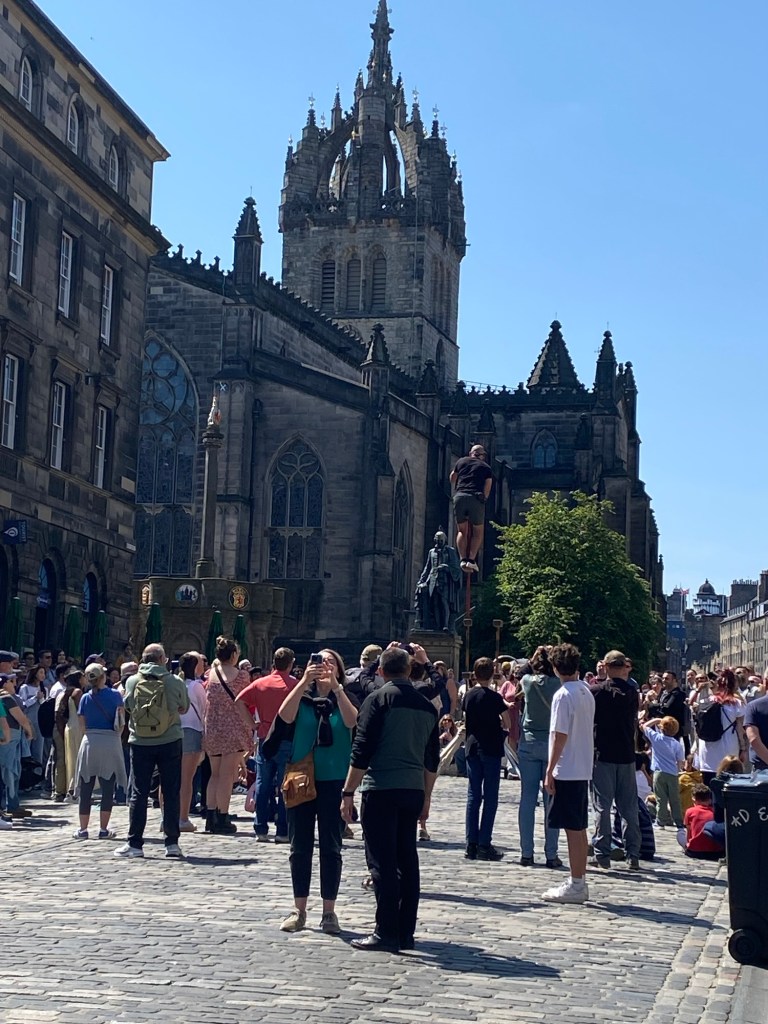
We wandered back up the Royal Mile, named such because the street links Edinburgh Castle and Holyrood Palace. The length of the walk was absolutely jam packed with tourists but I was still entranced by the “oldy worldy” beauty of the city.

We walked through the crowds and hopped a train back to the park and ride to pick up Paddington. Once off the major roads out of Edinburgh, we were on quiet country roads to Andrew and Claire’s house in East Lothian.

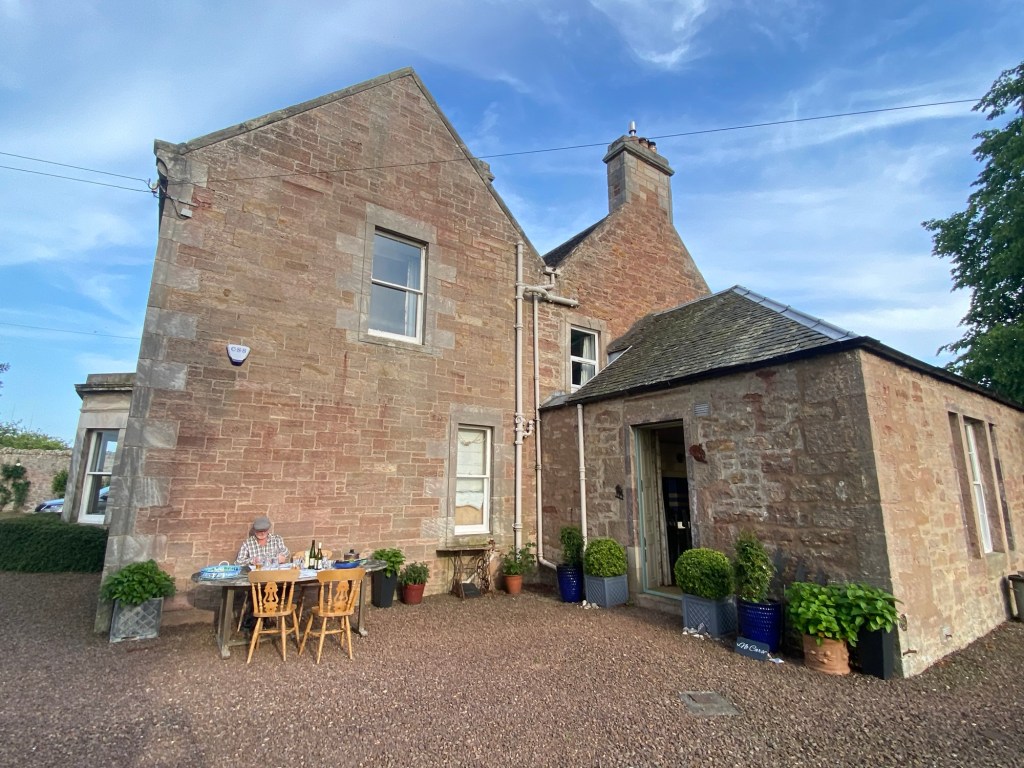
We had a warm welcome then chatted and toured around their beautiful country house and garden. Then we were treated to a wonderful vegetarian dinner.

That night, the sunset out the kitchen window looking westward was stellar.

June 19th

In the morning, we went back to the park and ride, left dear Paddington and caught the train back into Edinburgh. It was 10 am and the city was already heaving with people. We had a coffee then hiked up the 120 or more steps of Warriston’s Close, popping out onto the Royal Mile near Edinburgh Castle.

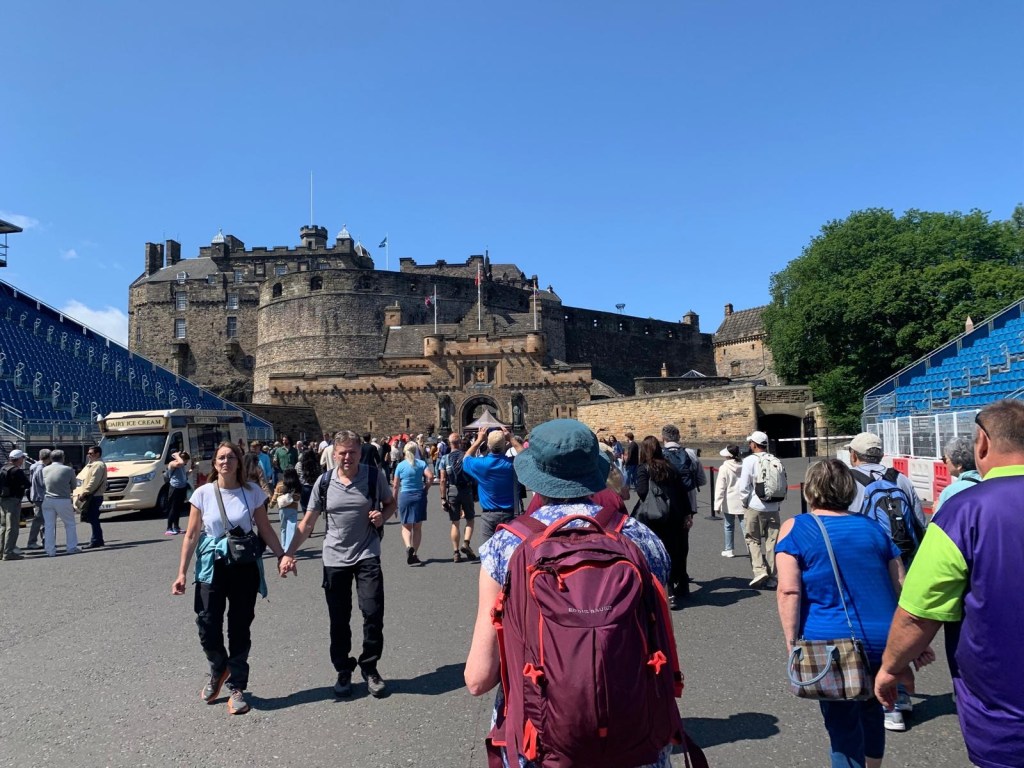
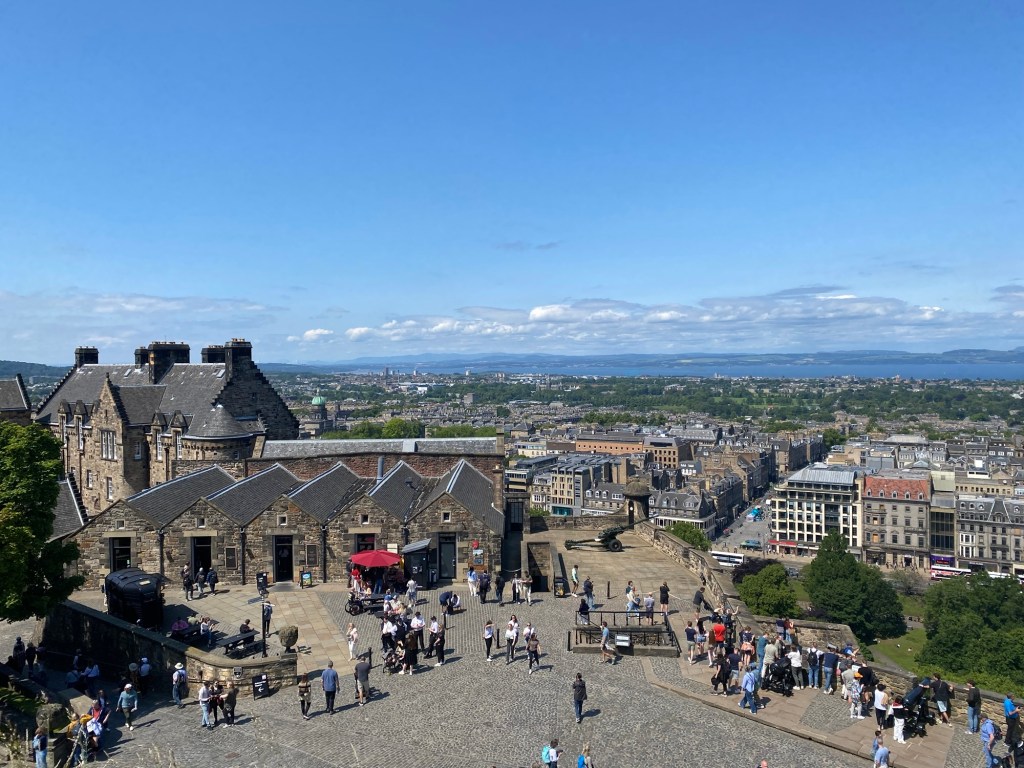
We spent a couple of hours wandering the Castle grounds and interiors as well as the museum there. Edinburgh Castle, like Arthur’s Seat, has excellent views of the city.

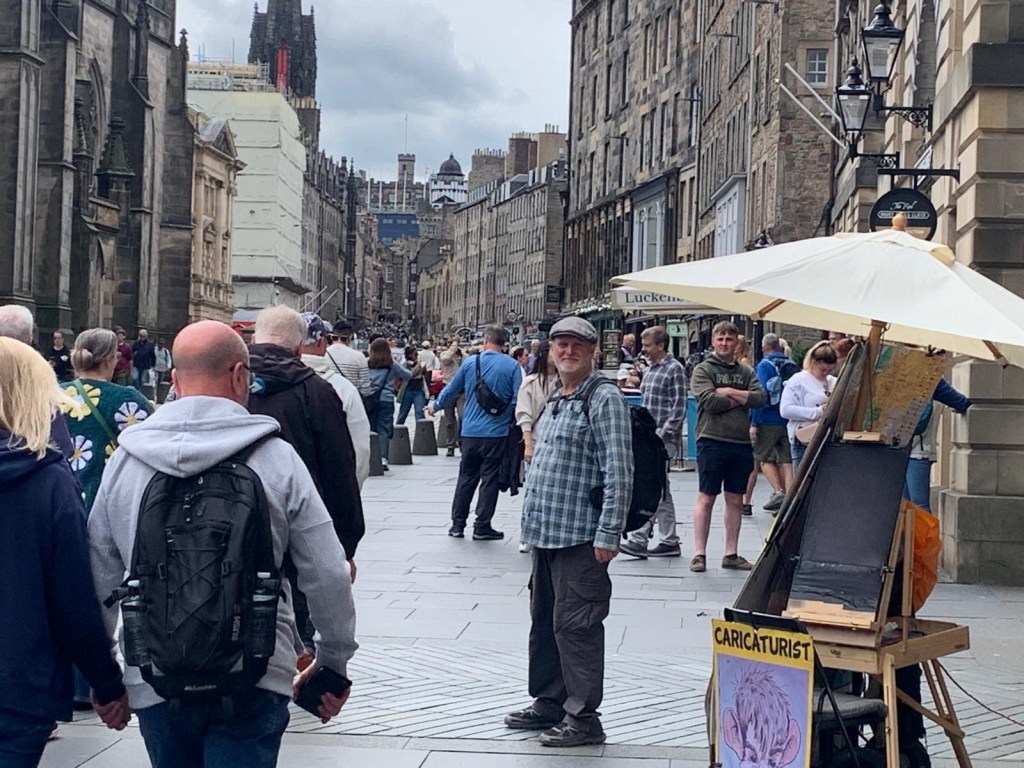
Afterwards, we wandered the crowded streets.

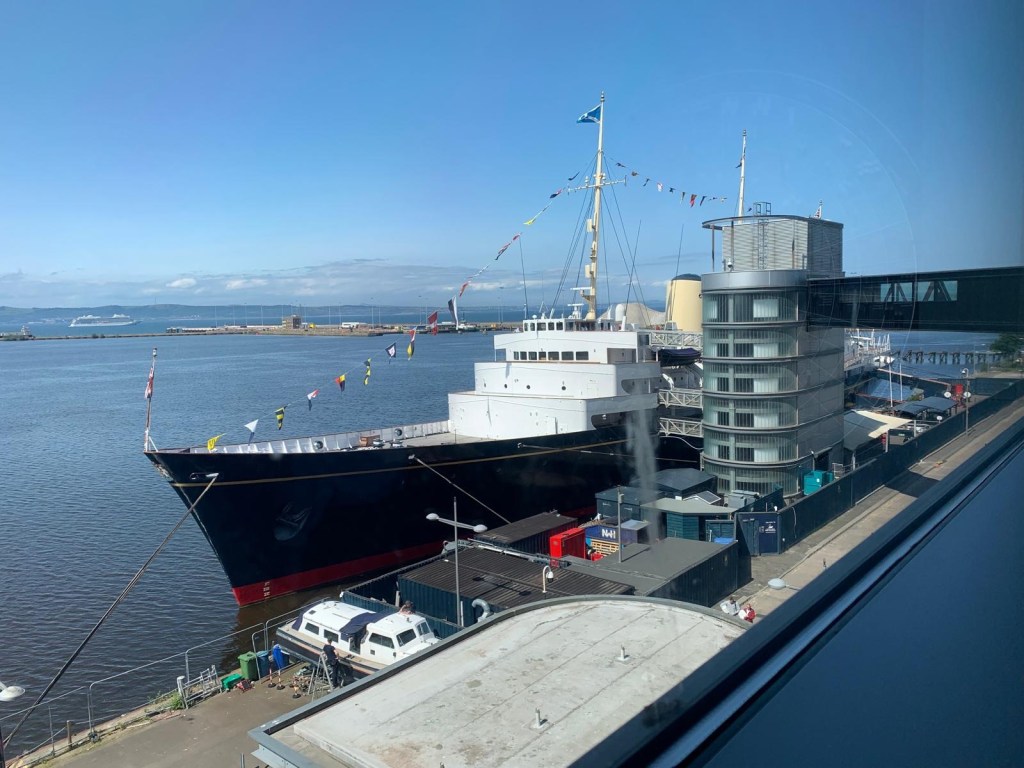
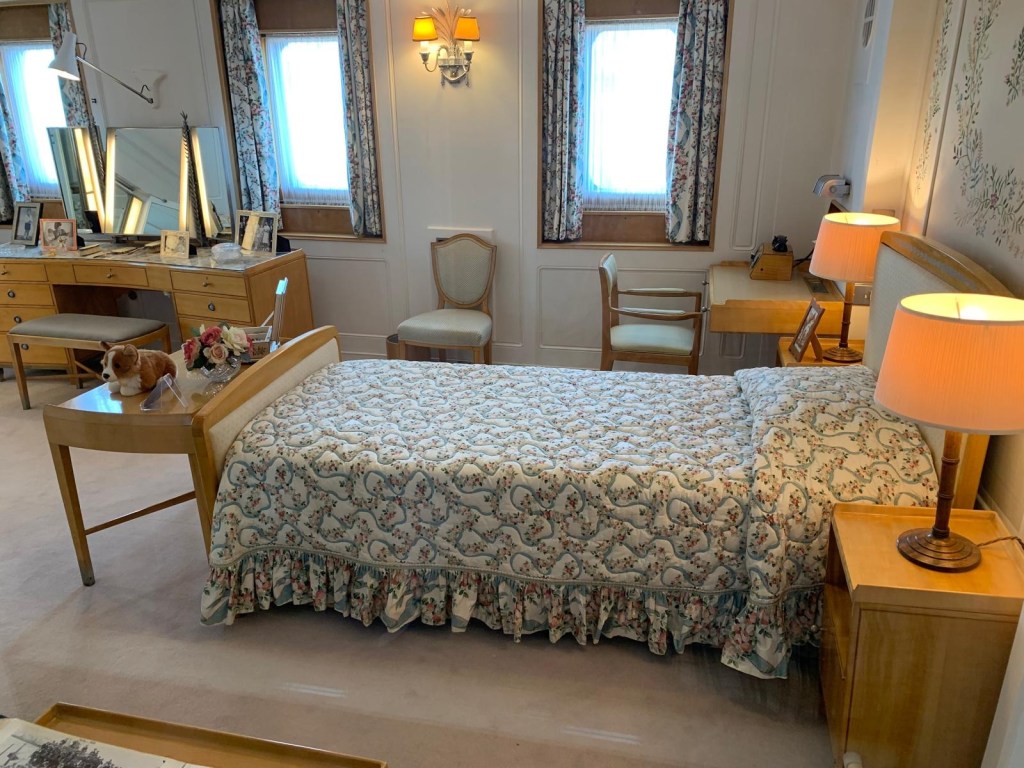
In the afternoon, we had a one hour walk down to the harbor where the HMY (Her Majesty’s Yacht) Britannia, the Royal yacht, decommissioned in 1997, was docked. We took a self guided tour through the Britannia. It was fascinating to see where the Royals spent time when on holiday or on official visits. For 43 years, the HMY Britannia sailed the world and tallied up 1 million nautical miles before it was docked forever. John Major’s government ended funding to keep the Britannia in service. The Queen cried at the ceremony on the day of the decommissioning in 1997. Royalist or not, one would find the ship impressive. The engine room was a masterpiece in itself. Everything was perfectly cleaned and polished and glistening and one could have happily dined there. 😄

Guy on the bow of HMY Britannia at Leith in Edinburgh.
The state dining room where world leaders were hosted.
Sitting room
Queen’s bedroom.
Queen’s office
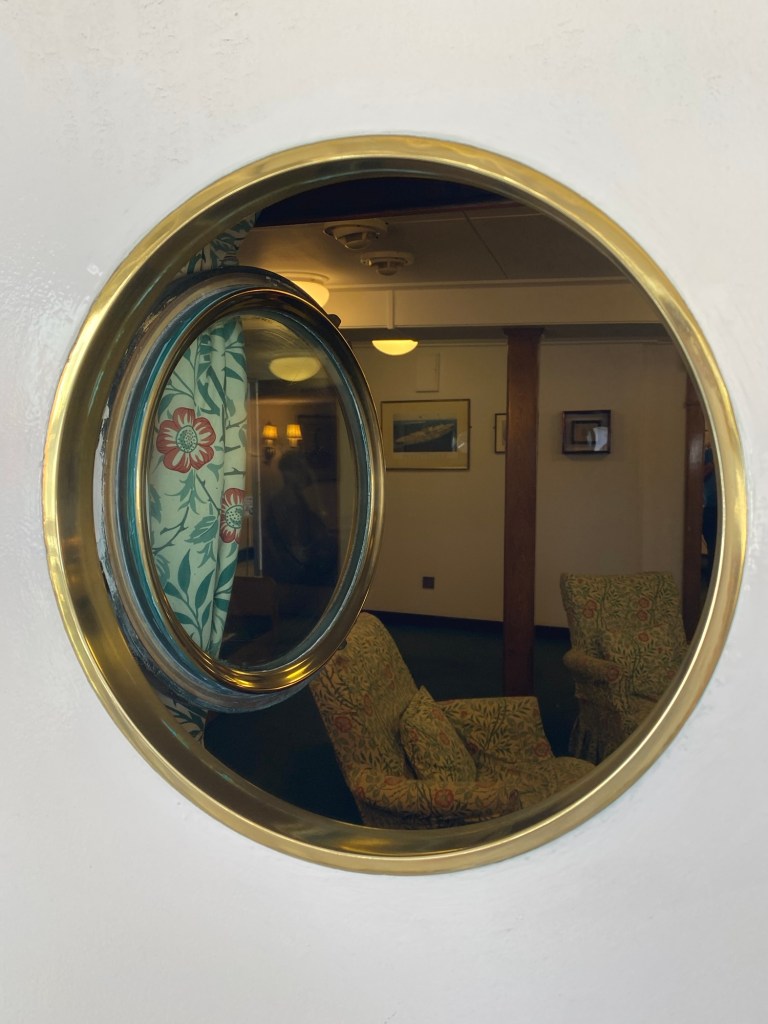
Peek a boo. Looking into the captain’s sitting room.
HMY Britannia – The top deck is now a cafe.

After a very enjoyable second day in Edinburgh, we made our way back to Andrew and Claire’s where we had a beautiful El fresco dinner in their garden. The breeze on this warm summer evening was welcome.

Beautiful Greenhead Farmhouse
Dinner in the garden.

We hit the hay reasonably early as we planned an early start to Northumberland in the morning.

View of the countryside from our bedroom window.

June 20th

In the morning, Claire and Andrew got up early to see us off. It had been a lovely couple of days. It was great to see the cousins meet again after many, many years and talk a bit about family history. We were grateful for their hospitality.

Goodbye to Andrew and Claire and Greenhead Farmhouse.

And on the road we went, making our way to Northumberland and Chester’s Roman Fort. In September 2023, while I was doing the Camino in Spain, Guy and his friends hiked Hadrian’s Wall. This trip, Guy wanted to go back and see Chester’s Roman Roman Fort and Museum again.

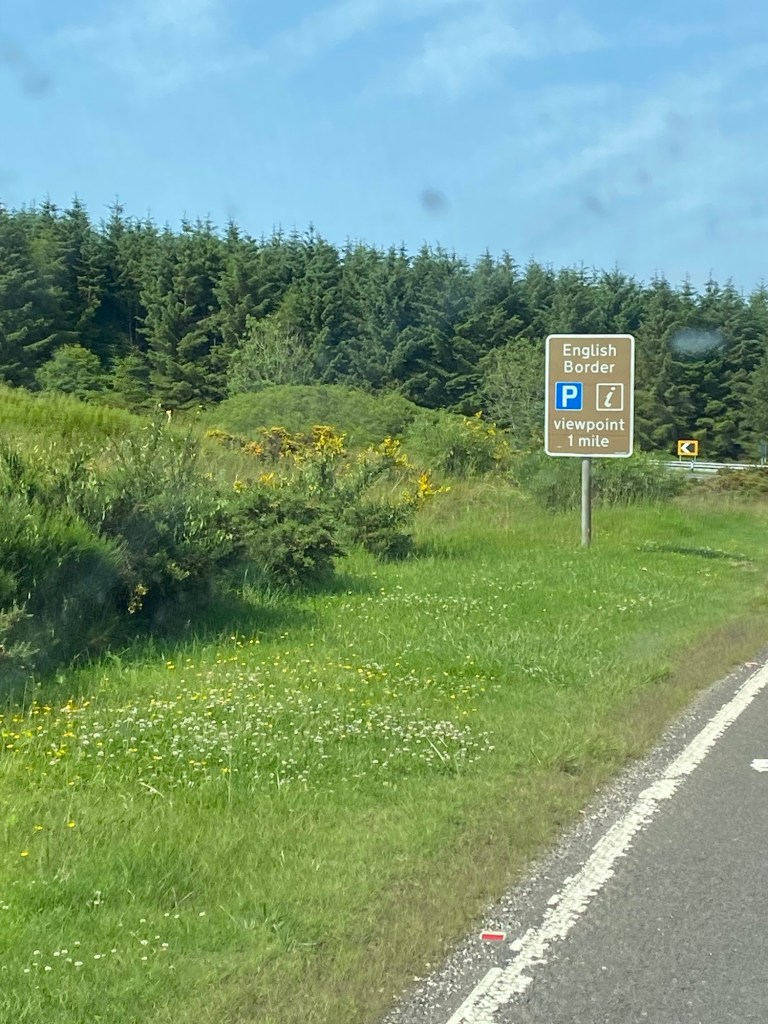
During the drive from Edinburgh to Northumberland, we crossed the border back into England. It was a poignant moment because crossing this point meant we were well on our way to completing the circle of our journey.

Approaching the border.
The Border
Just after the border. Back in England.

After a couple of hours driving through beautiful countryside, we arrived at Chesters Roman Fort. It is the “the most complete Roman cavalry fort in Britain…..Around 500 cavalry troops – the elite of the Roman auxiliary forces – were based here”. (https://www.english-heritage.org.uk/visit/places/chesters-roman-fort-and-museum-hadrians-wall/things-to-do/#section2)

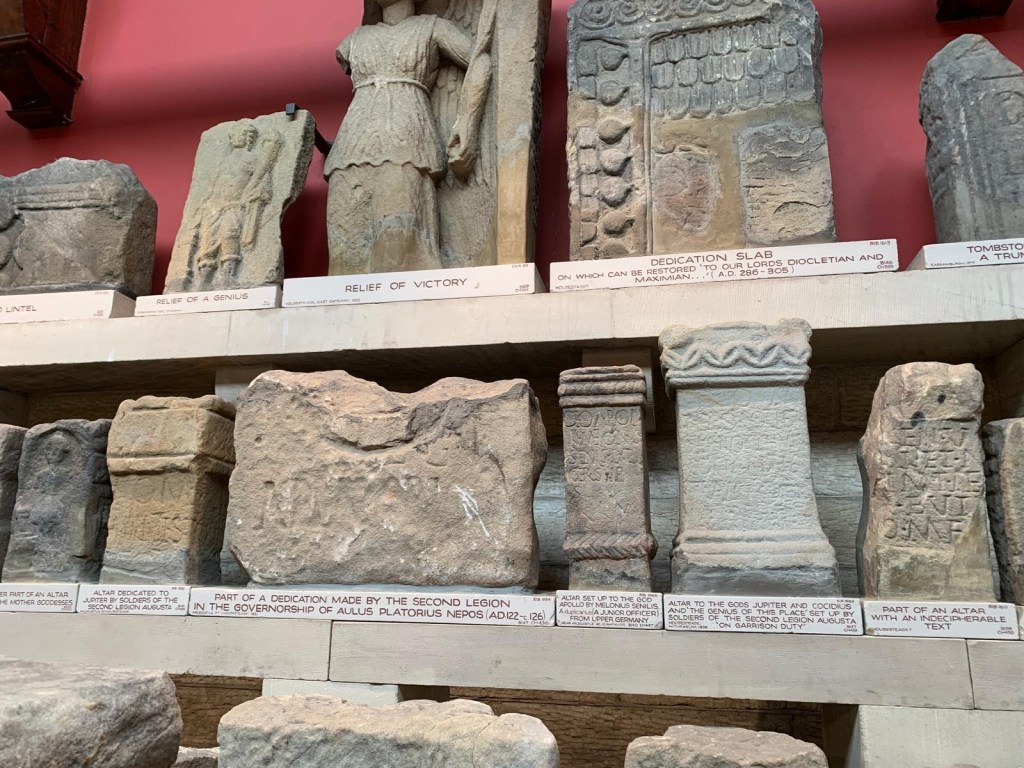
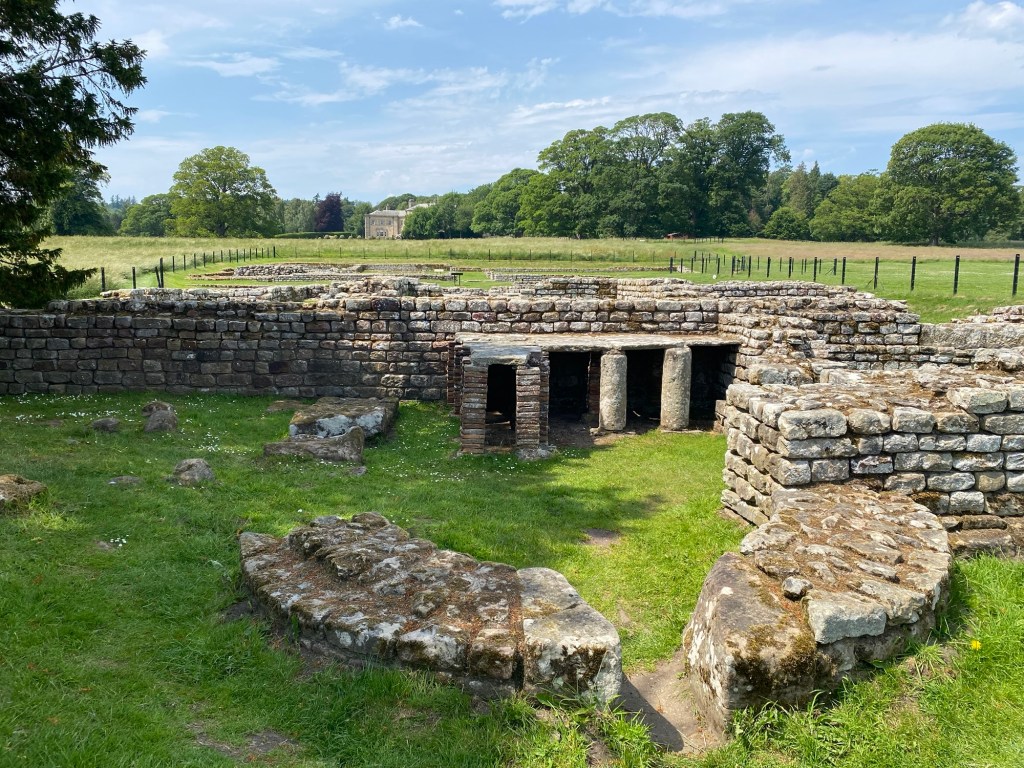
Chesters Roman Fort is on Hadrian’s Wall and includes an impressive bathhouse ruin on the banks of the North Tyne river. There is also the fascinating Clayton Museum on site full of Roman relics found by an original owner of the land, on his own land and on other sites on Hadrian’s Wall.

Roman finds in Clayton Museum at Chester’s Roman Fort
Soldiers’ and Horses’s quarters.
Ruins of Roman baths on North Tyne river.
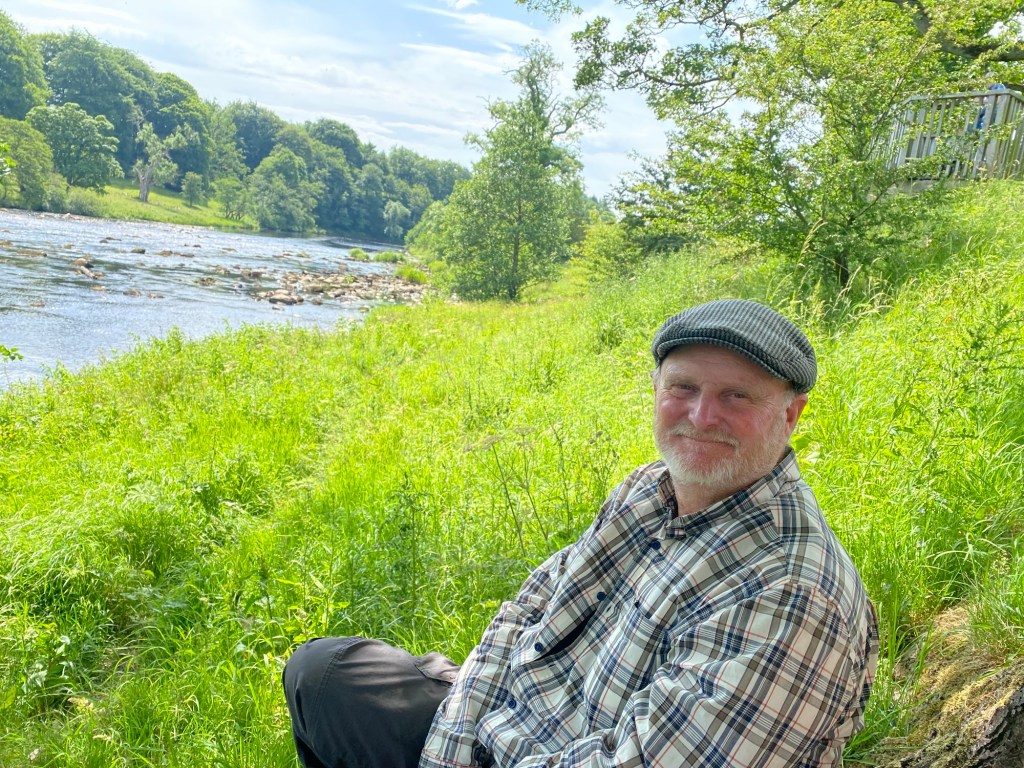
Guy resting on the bank of the river.
The Commandant’s house
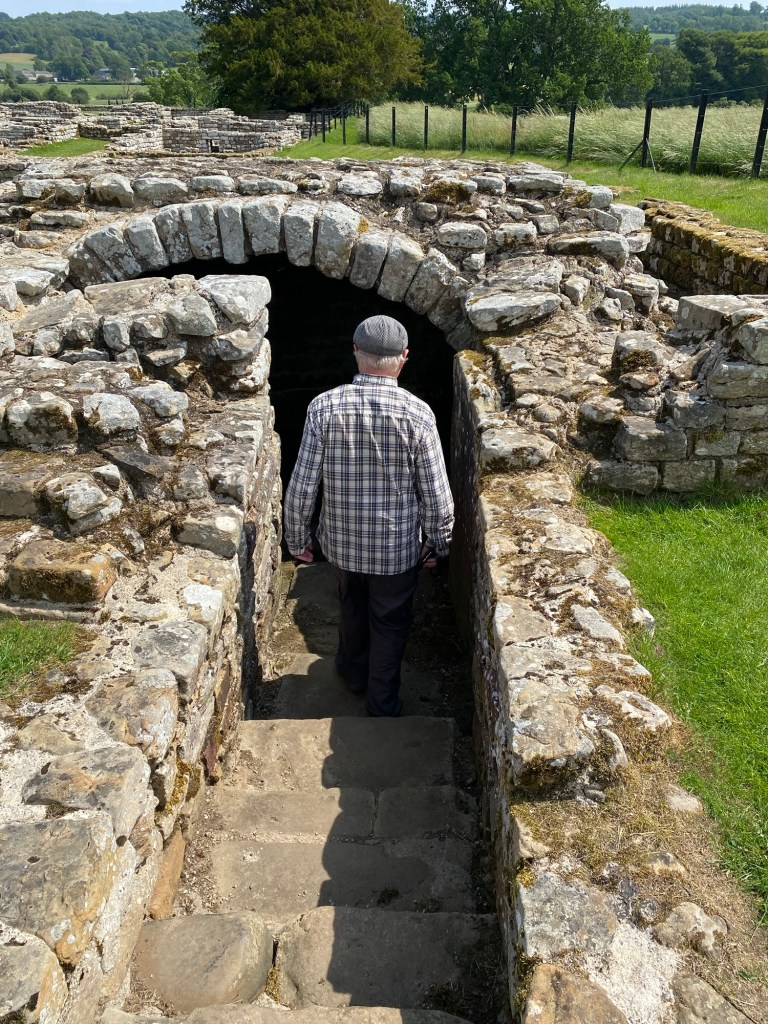
Guy going into the Roman bank.
The countryside near Chester’s Roman Fort in Northumberland

We had a number of hours at the fort including the last hour with Guy napping underneath a tree and me staying cool on a bench in the shade. Later, we headed in the direction of our campsite, Bellingham Camping and Caravanning Club Site. We stopped off for groceries in a quaint little village whose name I do not recall and then drove to our campsite over very scenic roads. Northumberland is a truly glorious landscape.

June 21st

In the morning, we headed to the Sycamore Gap Memorial on Hadrian’s Wall. It was a pretty drive of less than an hour.

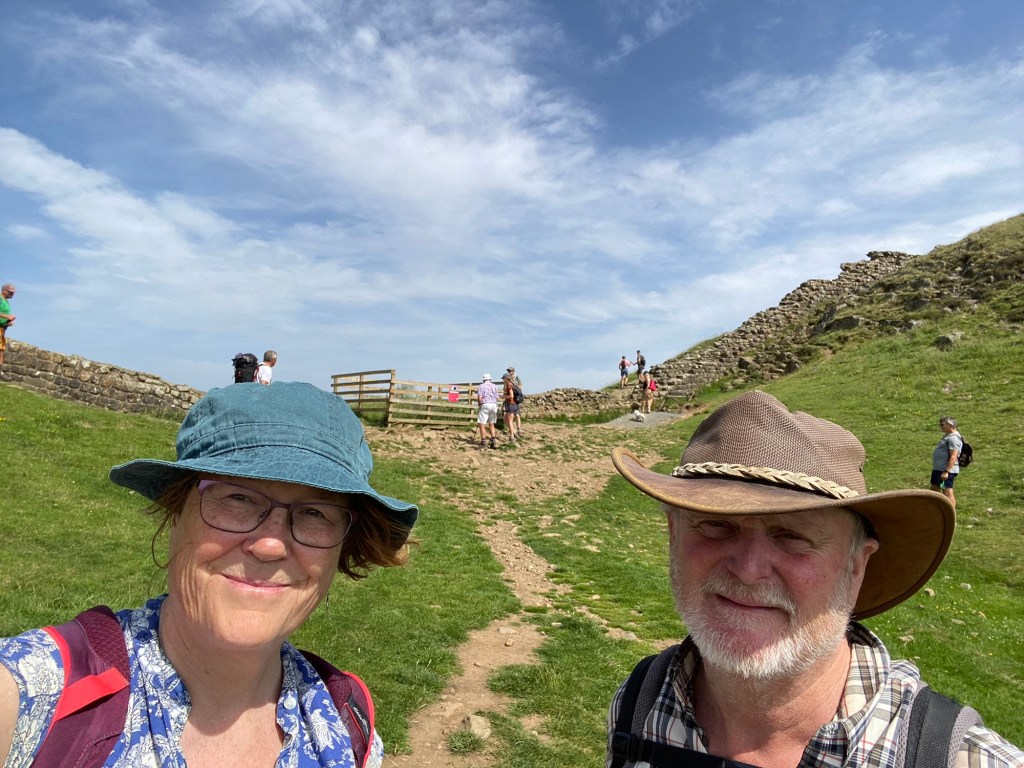
The Sycamore Gap is an area along Hadrian’s Wall that for 150 years was home to a Sycamore tree. It was the most photographed tree in England. In 2023, a couple of idiots felled the tree to the dismay of many. Guy and his friends happened to see the Sycamore tree one week before it was felled. He wanted to go back to see the stump and its new growth as well as show me some of Hadrian’s wall. It was a nice hike out to the Gap and I got a sense of Hadrian’s Wall and the Sycamore’s place in this very picturesque landscape.

Guy hiking down to the memorial.
New Life. There is hope.
You know who with Sycamore Tree memorial in behind.

After visiting the Sycamore Tree Memorial and Hadrian’s Wall, we journeyed to Windemere in the Lake District where we would be staying for a couple of days.

Folk and fun

June 13th

We bid goodbye to Dingwall and the Inverness area and made the 2 hour plus drive to Old Meldrum near Aberdeen to see my cousin Jill’s family. Enroute, we had a nice lunch at a roadside cafe. Then we headed into Old Meldrum to have a look around. We found a local distillery and whiled away an hour there and Guy enjoyed a dram. Then we had a walk to a local park and sat on a bench under a big tree for an hour in the breeze. It was a warm afternoon.

Guy enjoying a dram of whiskey.

Later in the afternoon, we headed to Peter and Olivia’s place.

My cousin Jill died almost 5 years ago of cancer. She left behind her husband Peter and daughter Olivia. When planning this trip, I let Peter know we were coming to his neck of the woods and he graciously offered for us to stay with him. I hadn’t seen Peter in years. I had seen Olivia a few times when she came with her mom Jill to visit her mom Karen (my dad’s sister) in Vancouver.

Waiting a few minutes in the yard for our hosts to come home.
The garden and the fields around their home.

It was a great evening of catch up with Peter, Olivia and her boyfriend Nathan. Peter is an electrical engineer and works for a company near Aberdeen. He often travels in Scotland with his work. Olivia is training to be a radiologist at the University of Glasgow. Nathan works on the offshore rigs and windmill farms servicing them as well as other related work in Aberdeen.

And then there is Martha, their little dog who I took to immediately, after she stopped barking. There was something about my voice. It is similar to my Aunt Karen’s and might have been confusing for her. She turned out to like me in the end and I loved her. Quite the little character.

June 14th

It was a leisurely morning having coffee and chatting. The weather was foul so I think we were waiting it out. But it didn’t lift so we made our way out anyway to an estate and gardens, had lunch, a wee tour of the museum and the house. By this time, the rain eased off and we had a nice walk on the trails on the estate.

We capped off the day with dinner out at a pub. It was good fun.

June 15th

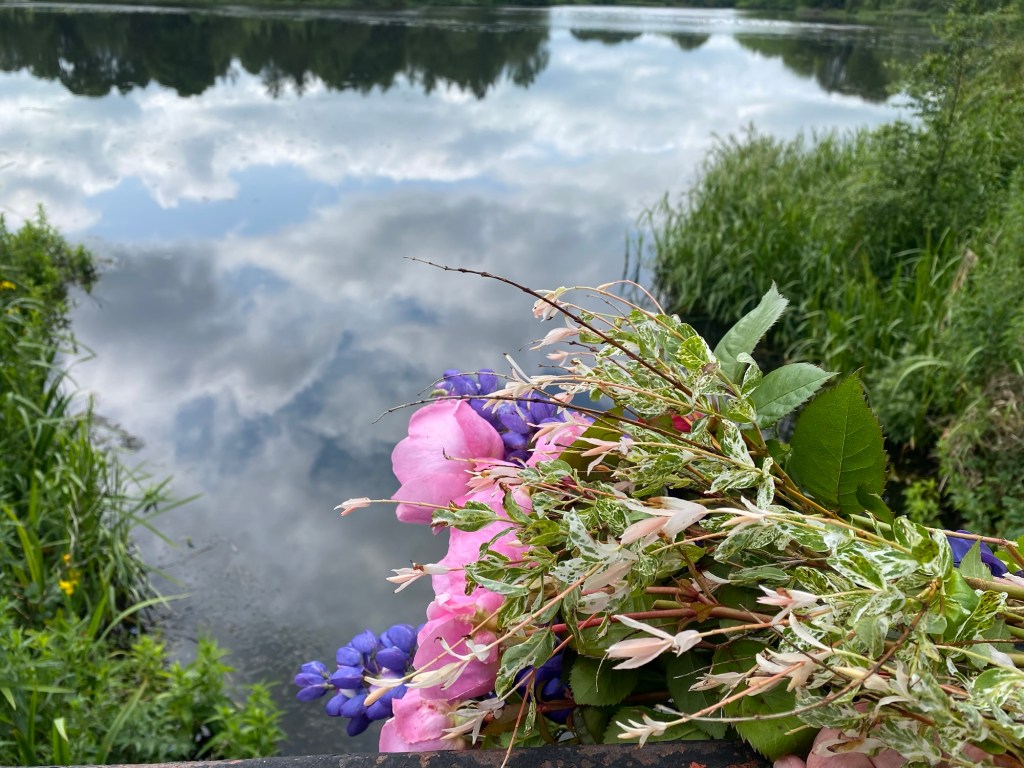
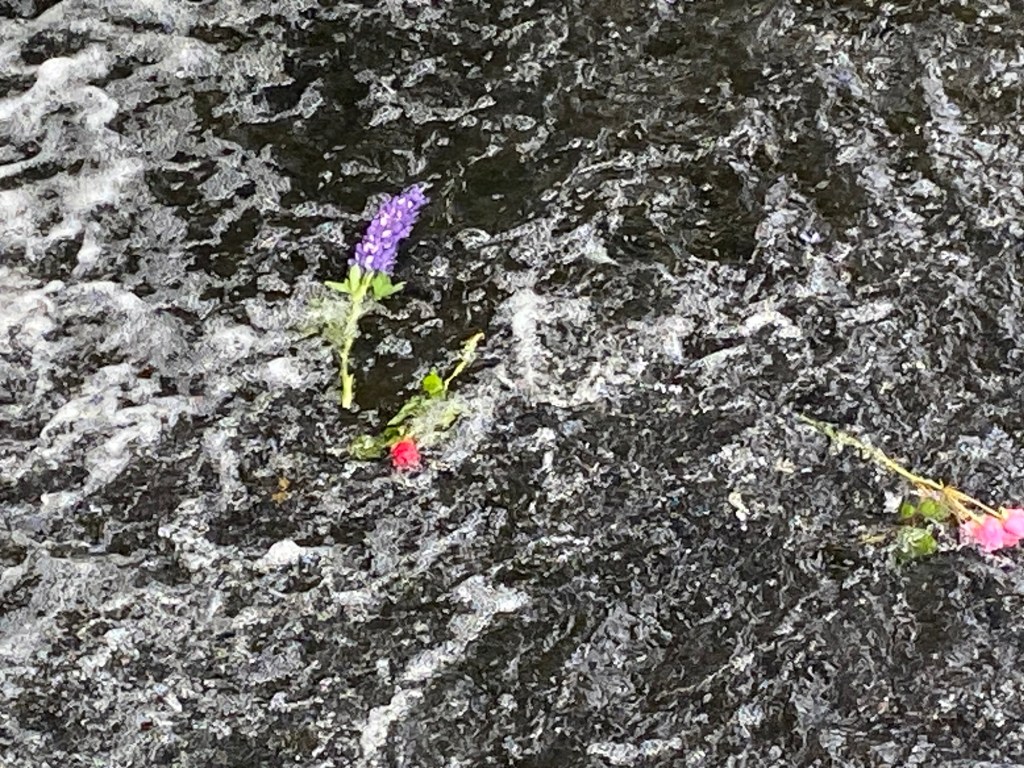
In the morning, Peter, Guy, Martha and I were off for a walk to Haddo Park where Jill’s ashes were scattered. Jill walked there often when Olivia was a baby. Guy went out into the garden and picked a beautiful bouquet of flowers. I wanted to drop some flowers on the pond in memory of my cousin.

Lovely Martha.
Haddo House.

In the afternoon, we drove into Aberdeen and had lunch at Peter’s parent’s home. It was great to meet Dennis and Anita. I forgot to take a picture of them.

June 16th

We were up early to get ready for our drive to Montrose, a 1.5 hour journey. We said our goodbyes to Peter and Olivia and Nathan as it was Monday and they were all off to their respective jobs. Afterwards, we were alone in the house for an hour or so with Martha. Guy worked on his diary and I packed and tidied. Martha saw the bags and knew we were going. I was sad to say goodbye to her and the family. It was a wonderful time of connection and I wish them all the best on their individual paths. They are good people!

Sweet little Martha.
Just about to leave.
Bye bye Balgove Cottages.
On the road again.

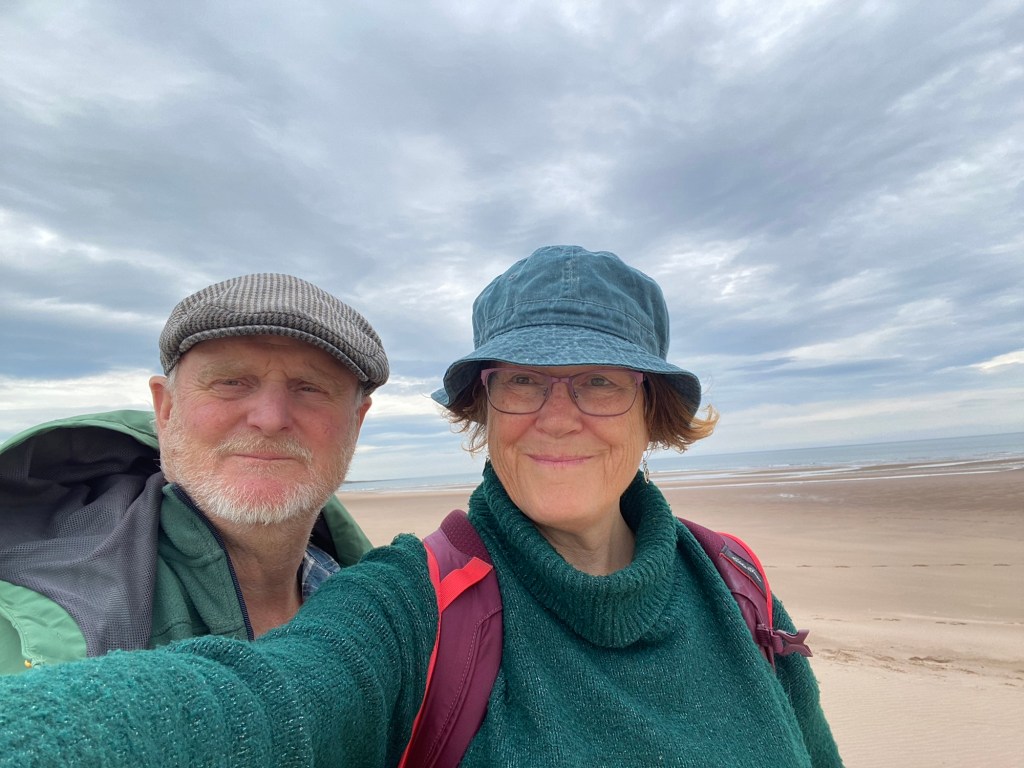
We arrived in St. Cyrus just north of Montrose around 11 am. My grandmother’s father, my great grandfather Henderson, grew up just north of Montrose in a little place called St Cyrus. It is on the North Sea and has a long beach and dunes and is a bird nesting area. His parents worked in the fisheries there. He came over to Canada in his 20’s, married and had a family in Vancouver. My Aunt Karen gave directions as to the general location of where he was raised in St. Cyrus. The whole area is so beautiful and it is actually a designated Nature Reserve. It’s very popular for walkers and naturalists.

Thought this could be his house but it’s a rock wall.
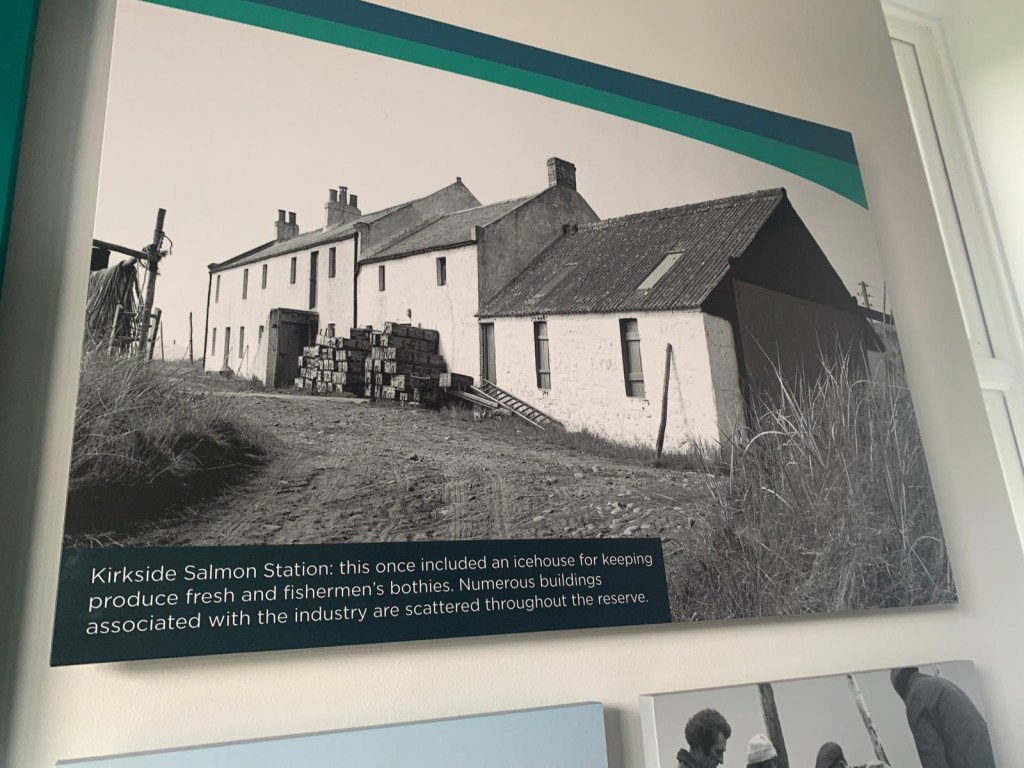
One of the buildings of the old fishing station.
Picture and info of the old fishing station.
Possible location of my great grandfathers house?
Or up here?
Or in this field?
St. Cyrus’s stunning landscape.
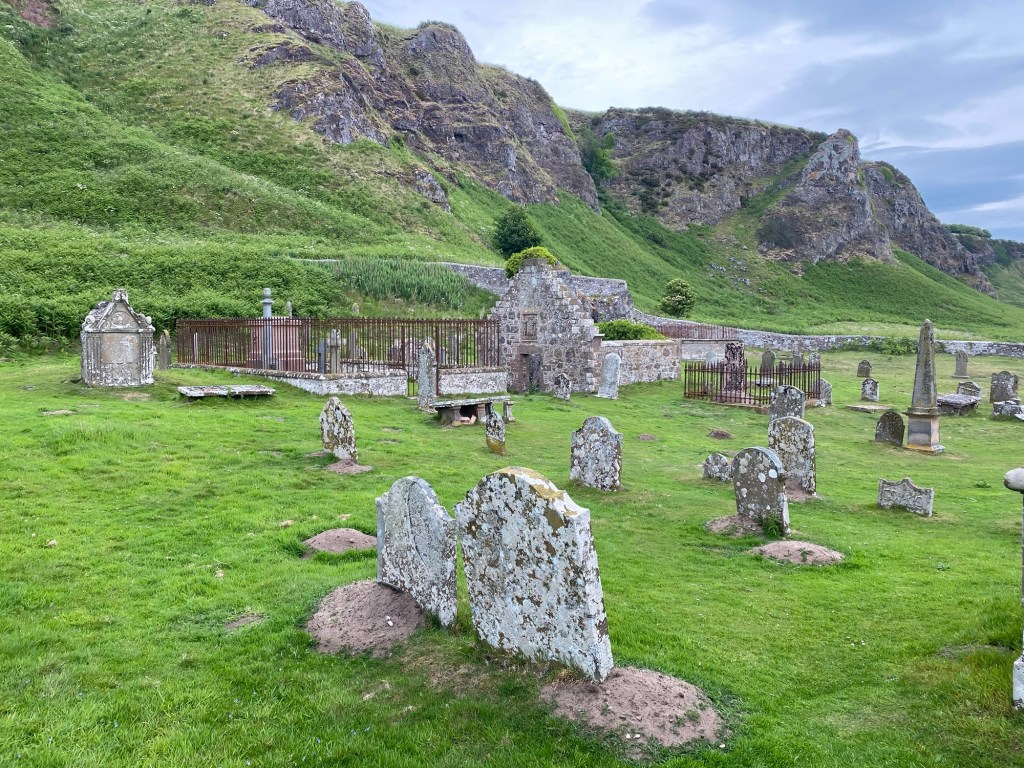
Nether Kirkyard at St. Cyrus
Nether Kirkyard.
Nether Kirkyard.
Beach at St. Cyrus.

A key part of the directions from my aunt about my great grandfathers house location was that it was on the dirt road up to the left after Steptoes junkyard. Sounded intriguing. When I was visiting Peter in Old Meldrum, he too said that if we had time, we should check out Steptoes. So after our walk at the beach, we went to Steptoes. Guy was in heaven. He loves a good junk or thrift shop. So do I to be honest. 😁

He left two little glass medicine type bottles that he collects.

After some wonderful hours at St. Cyrus we made our way to the town of Montrose. We had a guesthouse reserved there for two nights. We booked in and then headed out to Montrose playhouse to see the movie, The Salt Path. It is about a couple that hike the South Coast Path in Devon and Cornwall after they lose everything, including their farm, in a bad investment scheme a friend encouraged them to get involved in. It’s a true story written by Raynor Winn. She kept an account of the journey. After they completed the walk, the book got published and became a bestseller and now she has another farm. I gave the movie a 6/10. Guy gave it at 7/10. I read the book so had high expectations.

We walked back to the guesthouse along the High Street and got a flavour of old Montrose.

High Street in Montrose
Montrose
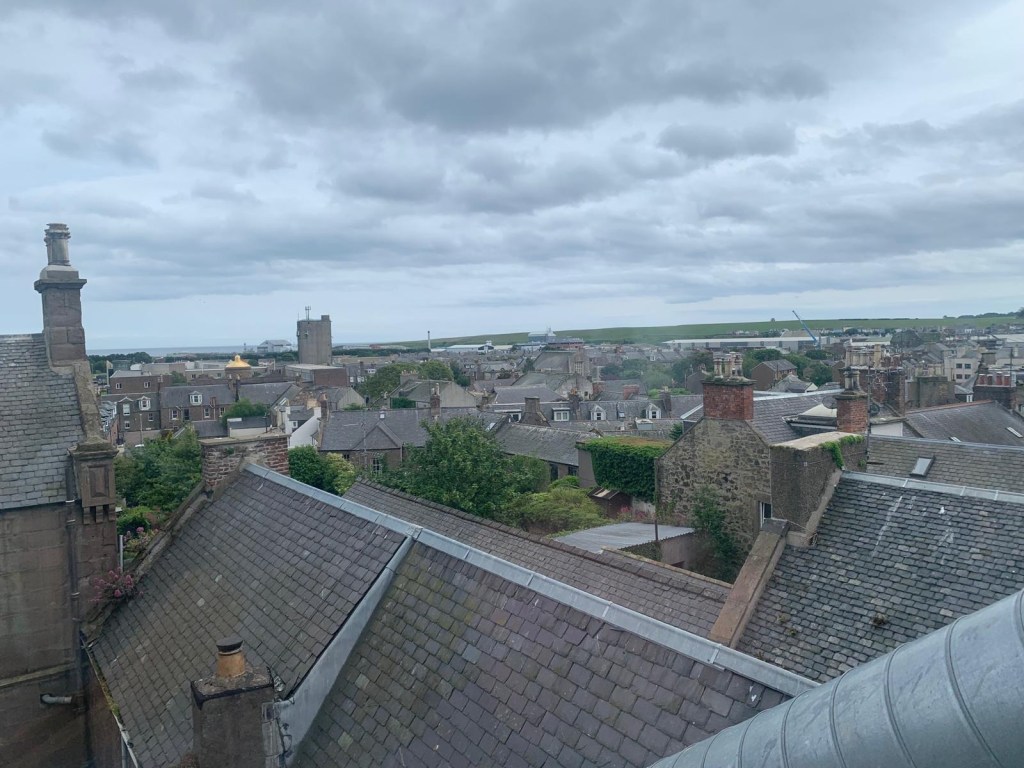
Rooftop view from our guesthouse.
Garden wall at guesthouse.

June 17th

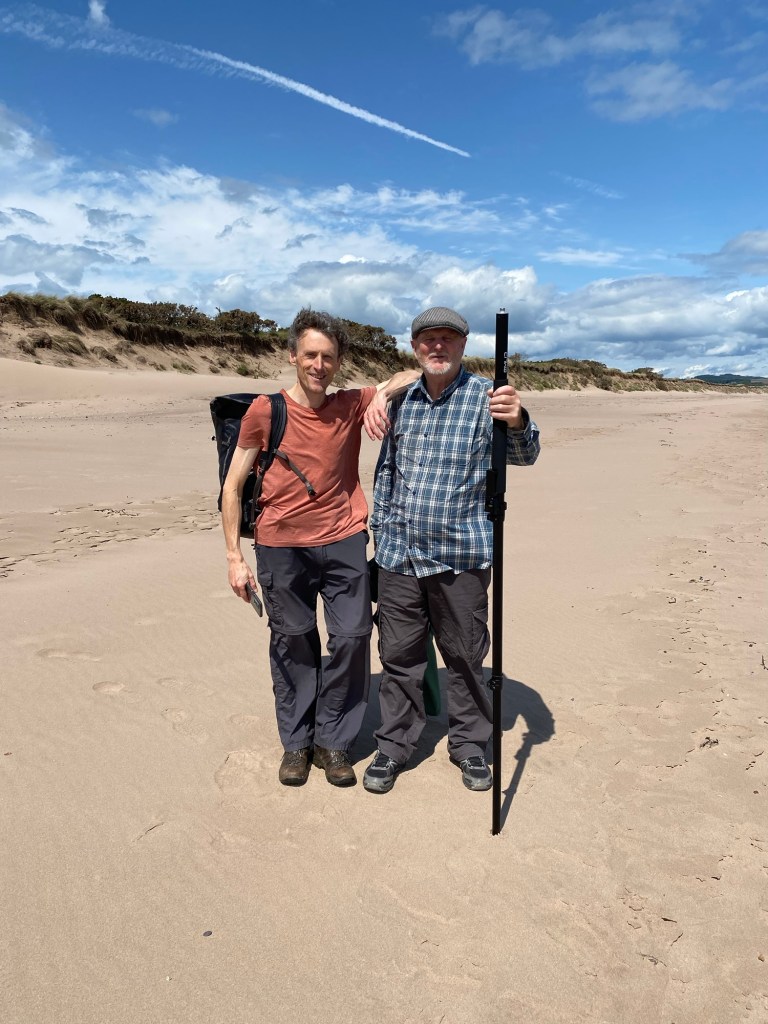
We met Guy’s cousin Nick at the Montrose Railway Station at 11 am. He came in from Glasgow that morning, a two hour train ride. He knew we would be in Montrose so he combined some work he needed to do there with a visit with us. We had lunch at a cafe on Montrose Beach. Then we set out to the beach so Nick could get the work aspect of his trip out of the way.

Nick is a Coast Change Advisor for NatureScot. He travels all over Scotland looking at and measuring beach erosion. He had to take measurements for about 400 metres up the beach. It included taking measurements on a hole or two on the golf course above the beach. He was right near the golfers at one point. They must have been curious about what he was up to. Guy and I walked the beach while Nick was working. On the way back down the beach, Guy carried the measuring pole and Nick input the figures into his cell phone. The information would be analyzed later.

Coming onto Montrose Beach.
Nick taking measurements above the beach.
Guy and Nick with measuring pole.
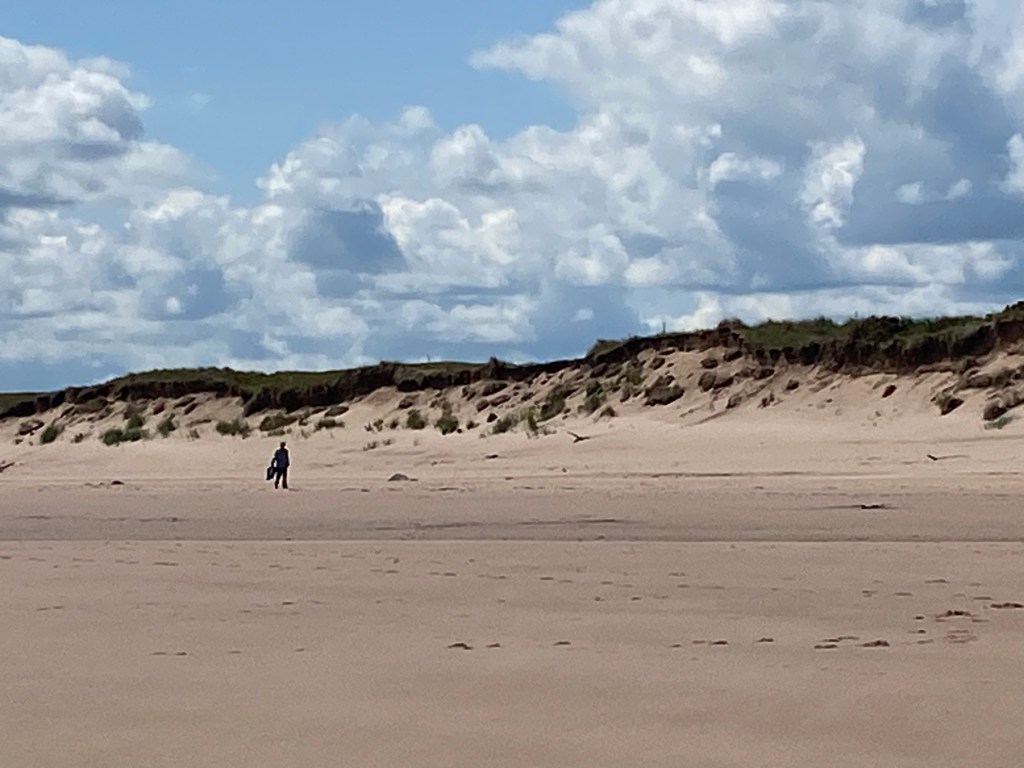
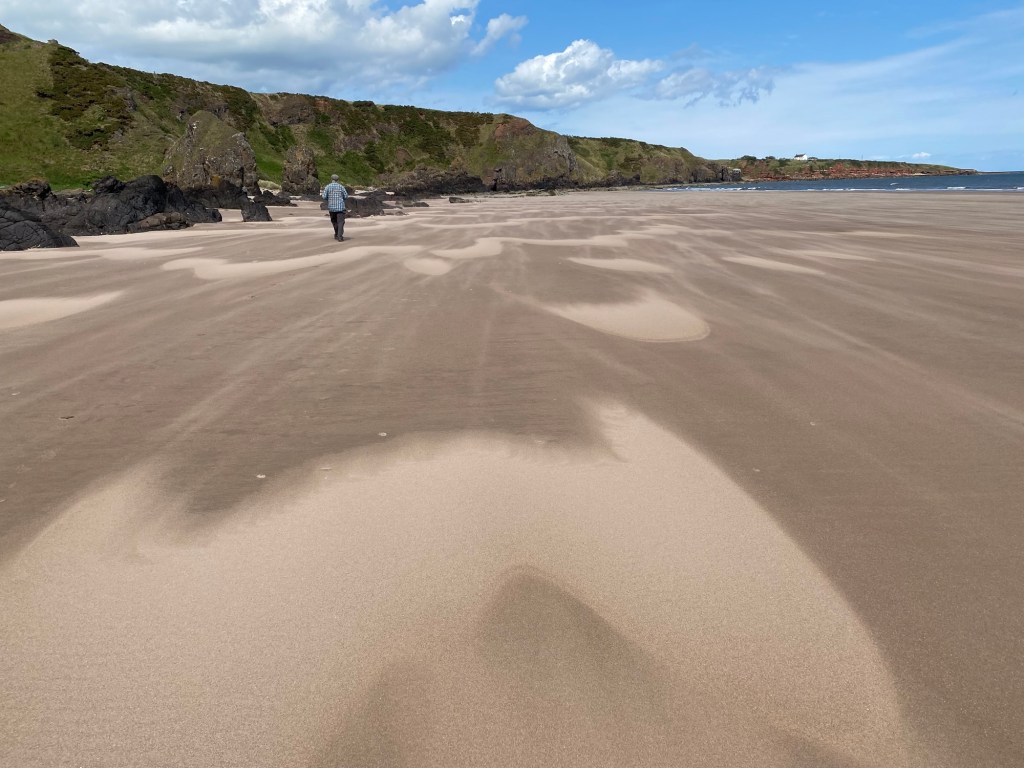
Beautiful sandy long beach.
Guy in the distance.
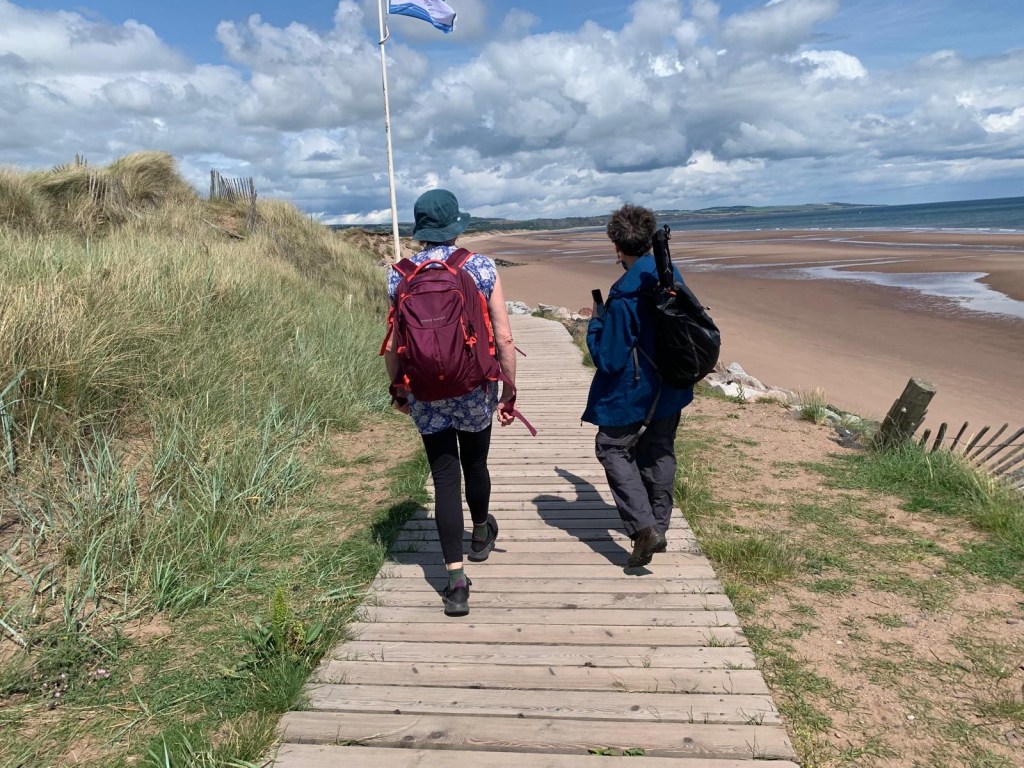
Joy walking the beach.

After Montrose Beach, we drove back to St. Cyrus. Nick likes that area and hadn’t been in awhile, and Guy and I were happy to spend more time there.

Enroute, we stopped by #1 Mill Street in Montrose where my great great grandparents retired to from St. Cyrus.

Great great grandparents home in Montrose.
#1 Mill St. Montrose for sale.
Guy and Nick trying to take flight.
Beach at St. Cyrus
Rocks at the beach Guy wanted to check out.
Cottage on the hill looking out to the Bay.
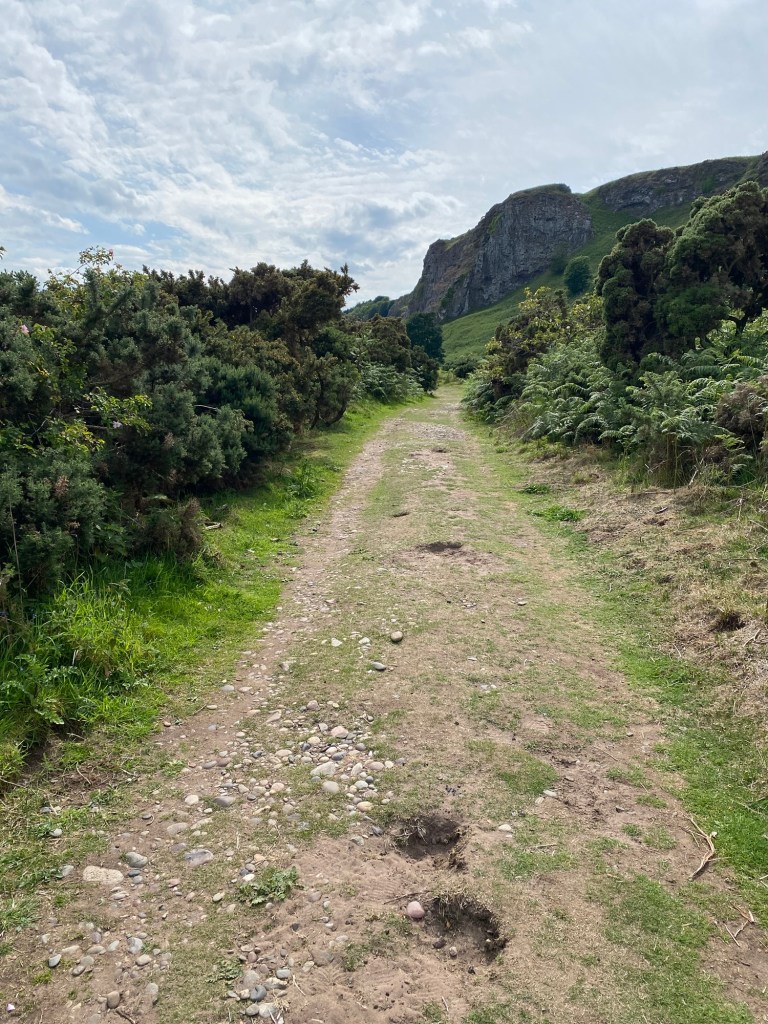
Walking path away from beach.
Cottage near the dunes.
Viaduct coming out of St. Cyrus.

We took Nick back to the train in the late afternoon after a really great few hours together. He was going to St. Andrew’s for more work. Guy and I were both sad to wave goodbye. The goodbyes of the trip had begun.

Back to the Rock

June 9th

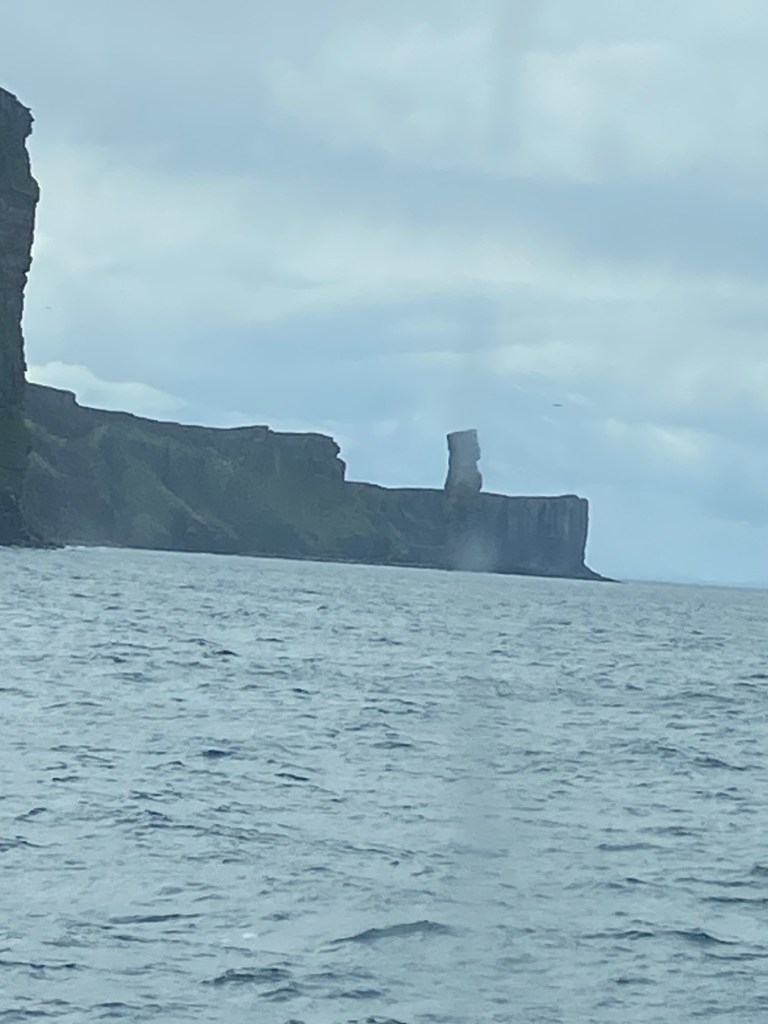
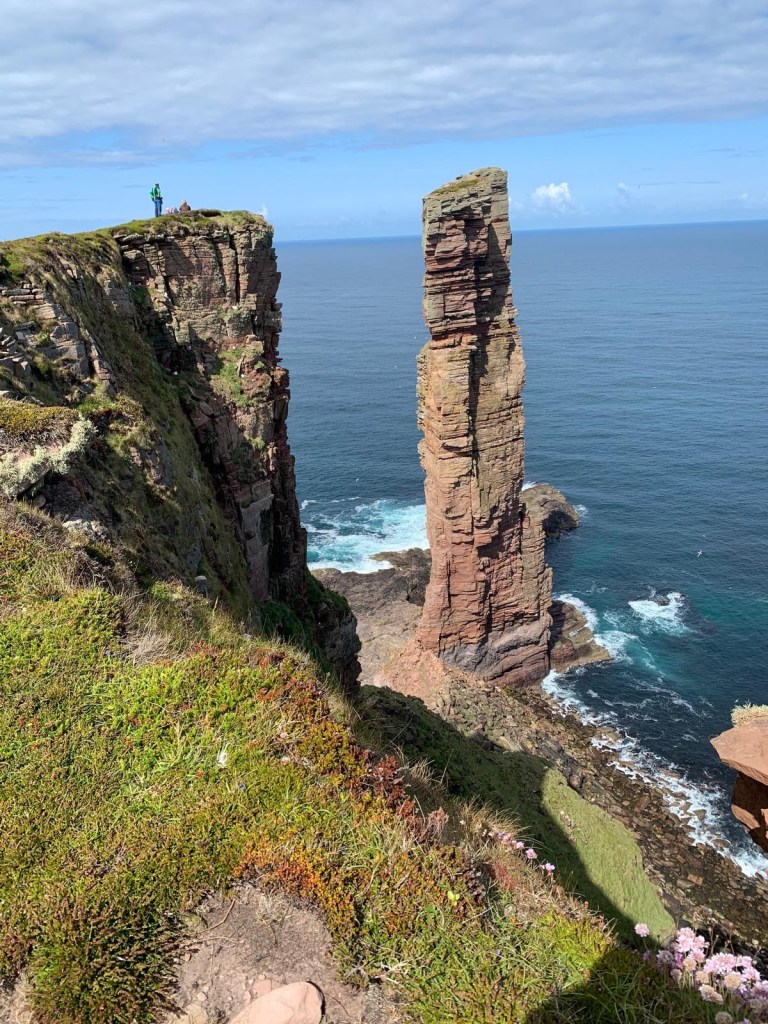
We left the Orkneys on the 11 am boat from Stromness to Scrabster. The seas were calm so the boat went the regular route around the Old Man of Hoy. It was great to see it from this vantage point as I barely looked over the cliff to see it when we hiked to it a few days before. 😬

Old Man of Hoy from the ferry

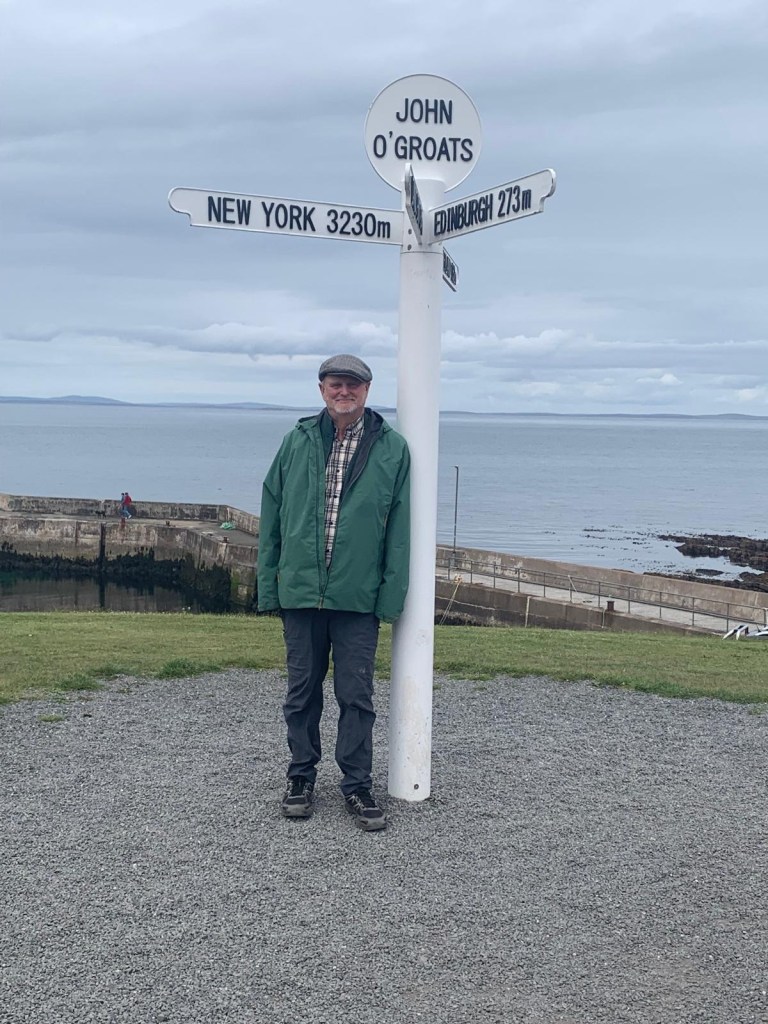
Once off the ferry, we headed to John O’Groats, the most northern settlement on mainland Great Britain. It’s on the top of Scotland on the east side. We got the picture of the sign post which is like the one at Land’s End in the south of England. The distance between the two signs is 874 miles. John O’Groats is a major tourist mecca. I know I am a tourist too and part of the problem, but I just had to get away from the hurly burly. We had a walk out to the beach and the headlands nearby. It was what the doctor ordered. 😄
That night, we camped in Wick, a small town an hour away from John O’Groats. It was the beginning of our descent down the east coast of Scotland.
June 10th

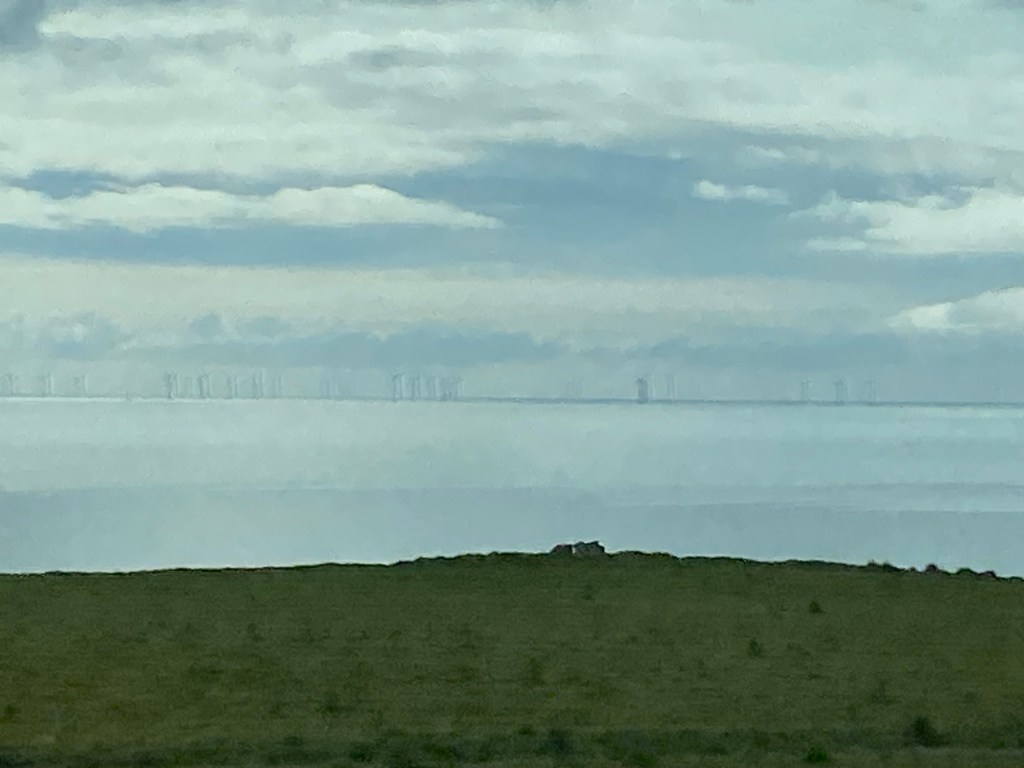
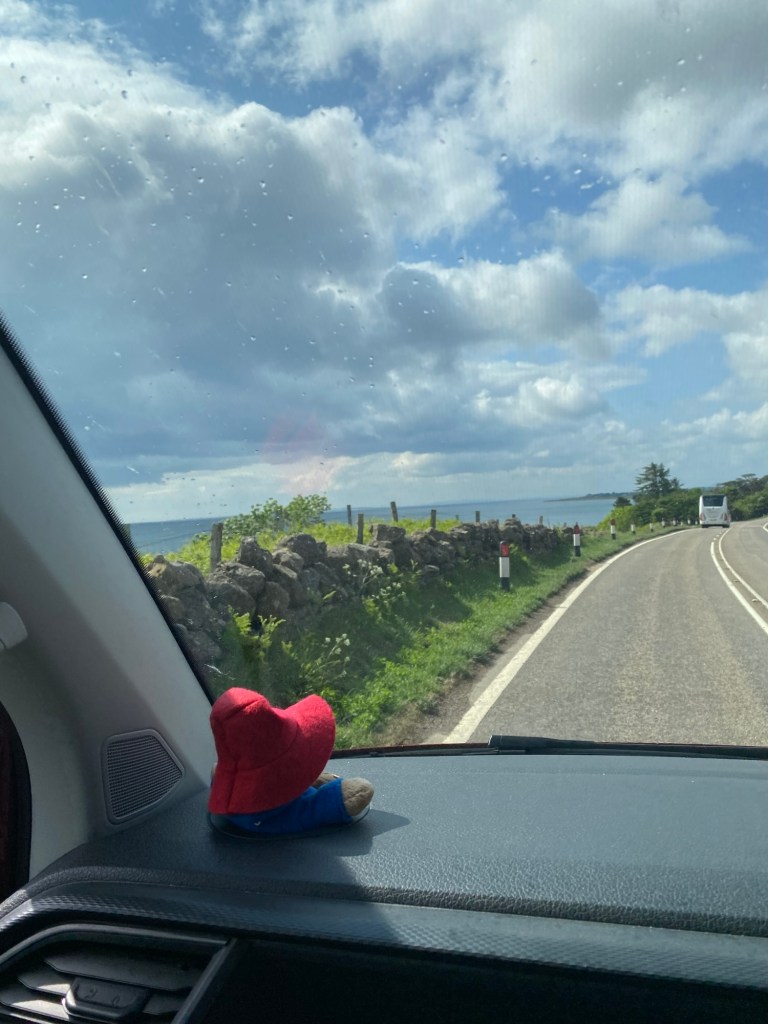
We set off to Inverness, a two hour drive with a midway stop planned at Dunrobin Castle and Gardens. It was a dreary drive initially in the rain down the rugged coast. We could see windmill farms far out in the sea.

A gloomy morning as we set off.
Windmills farms out in the North Sea.

But the sun did come out after a while, as it often does, just in time for our visit to the castle and gardens.

Sun did make a showing.

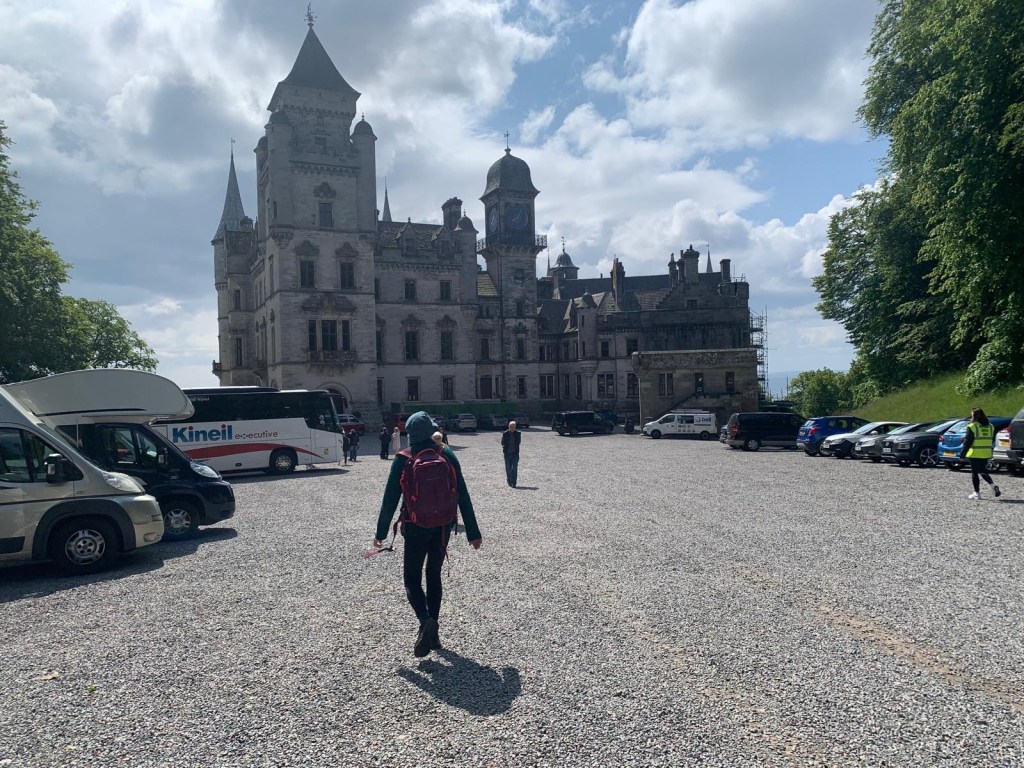
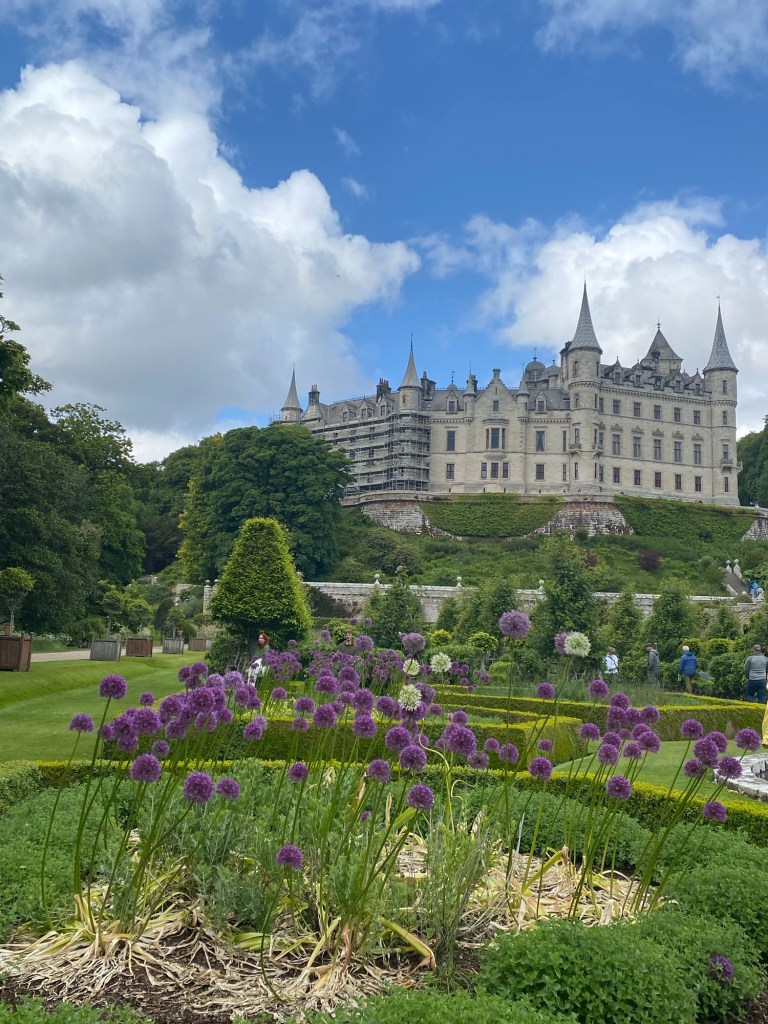
Dunrobin Castle and Gardens is a massive estate, straddling a hill above the North Sea. The gardens and castles are grand and beautiful like so many castles and gardens we have seen.

On the way to the castle.
Dunrobin Castle
View from Terrace
Classical Gardens look good from afar but weeding needed. 😄

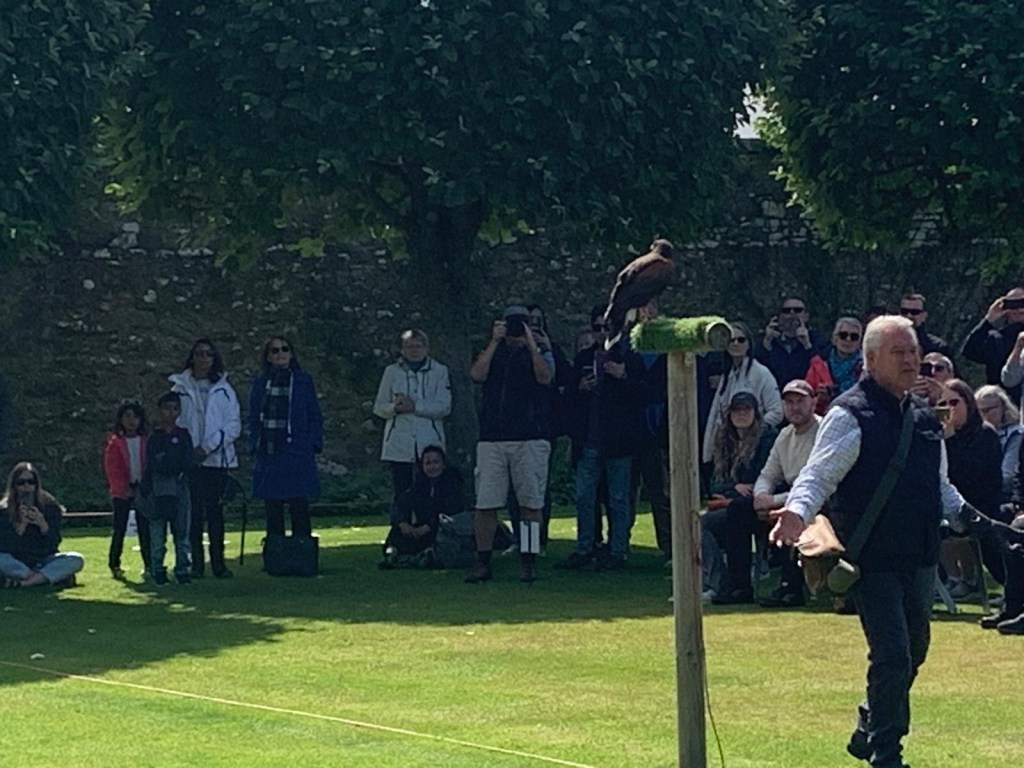
The best part of the visit to the castle was the Falconry Session. Falconry is an age old way of hunting using falcons. A Falconer brought his trained birds and gave a demonstration for about an hour to a large crowd. No hunting occurred thank goodness, just commands and flight. We tried to get good pictures but the falcons were so fast the pictures are blurred or blank due to not snapping fast enough. It’s unbelievable how a bird can be trained to listen to commands. And they all have their own cheeky personalities. They zoomed around the castle gardens and then headed back to the trainer when called, flying at super fast speeds just above the audience heads. They ducked just in case.

In the afternoon, we made our way to Dingwall Camping and Caravanning Club site 20 minutes outside Inverness.

June 11th

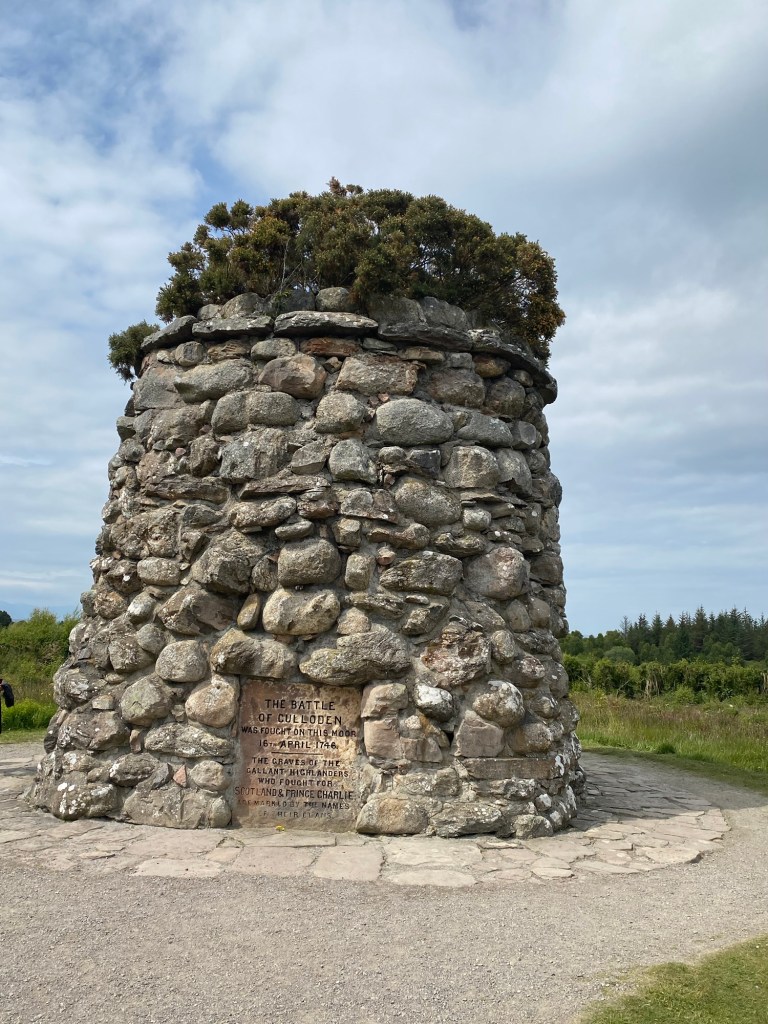
We spent a good chunk of the day at Culloden Battlefield. The Battle of Culloden was a major event in Scottish history. I’m going to take a crack at explaining this battle after doing some internet research. The trajectory of events that culminated in the eventual battle on Culloden Moor on April 16, 1746 is very complicated.

James Francis Edward Stuart from the Stuart line, was the claimant of the throne of the Kingdom of England, Scotland and Ireland from 1701 to 1766, after his father, King James II died in 1701 in excile in France.

James Francis Edward Stuart married and had a son Charles Edward Louis John Sylvester Maria Casimir Stuart, otherwise known as Bonnie Prince Charlie. He led the movement to bring his father to the throne. The people that supported getting James on the throne and restoring the Stuart monarchy were called Jacobites. The name James in Latin is Jacob thus the supporters of James were called Jacobites.

With the support of the French and the Jacobites, Bonnie Prince Charlie planned an invasion of England to defeat the government. A failed attempt made him go to Scotland where with the Jacobite forces, he battled the government forces in Culloden in a brutal fight that lasted 45 minutes or so. Hundreds were killed that day with the Jacobite fighters taking the brunt of it. This ended the Stuart dynasty permanently. Afterwards, any Jacobite supporters or those suspected as so were persecuted and murdered. And Bonnie Prince Charlie, he fled the Battlefield. He was helped by another Scottish hero, Flora MacDonald who hid him in the Hebrides until a French ship came to his rescue and took him back to Europe where he lived out his days. (https://en.m.wikipedia.org/wiki/Battle_of_Culloden) (https://en.m.wikipedia.org/wiki/Charles_Edward_Stuart)

I know this explanation of the Battle of Culloden is lengthly, and it’s not total. It was honestly a way for me to get things straight in my mind since many of the castles and other sights we have visited in Scotland refer to this battle and doing a little research and writing it down has brought some clarity. If I got any points wrong, I’m happy if folks point it out. Also I need to declare that I hate war and don’t mean to glorify it or condone it. Seems battle is so much a part of history in Scotland.

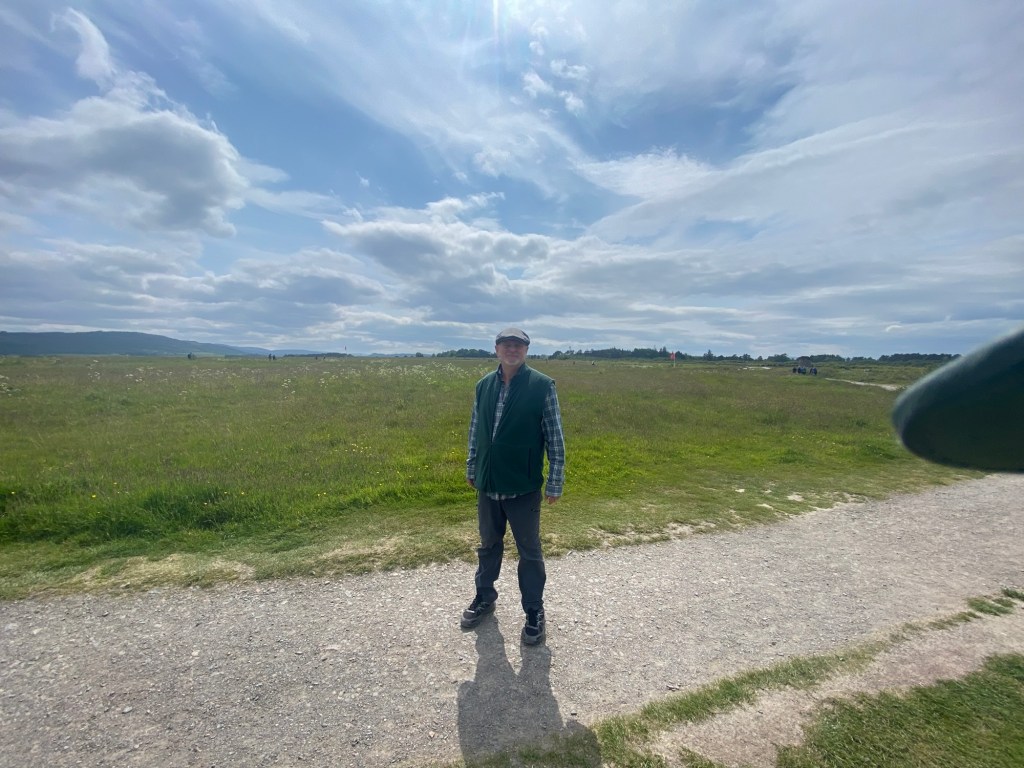
Guy on the battlefield
Joy on the battlefield. A beautiful place where many perished.
A memorial for all the lives lost in the Battle of Culloden.

June 12th

On the road to Loch Ness

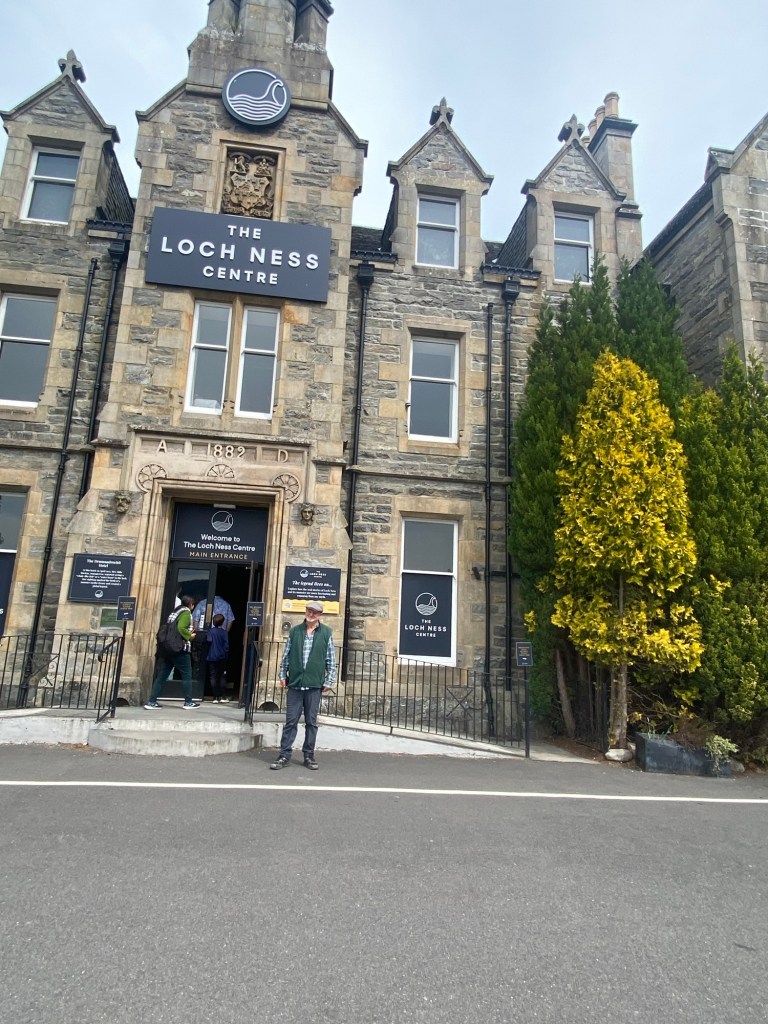
Today we were off to the Loch Ness Centre to learn about the Loch and the Loch Ness monster. In this neck of the woods, the Loch Ness monster is more commonly referred to as “Nessie”. The likely myth of the infamous and mysterious creature that swims the depths of the lake and has appeared once and awhile through the last 100 years or more is a big tourist draw to the area, approximately 200,000 visitors a year. (https://www.heraldscotland.com/news/23401071.loch-ness-visitor-centre-recruiting-1-5million-upgrade/)

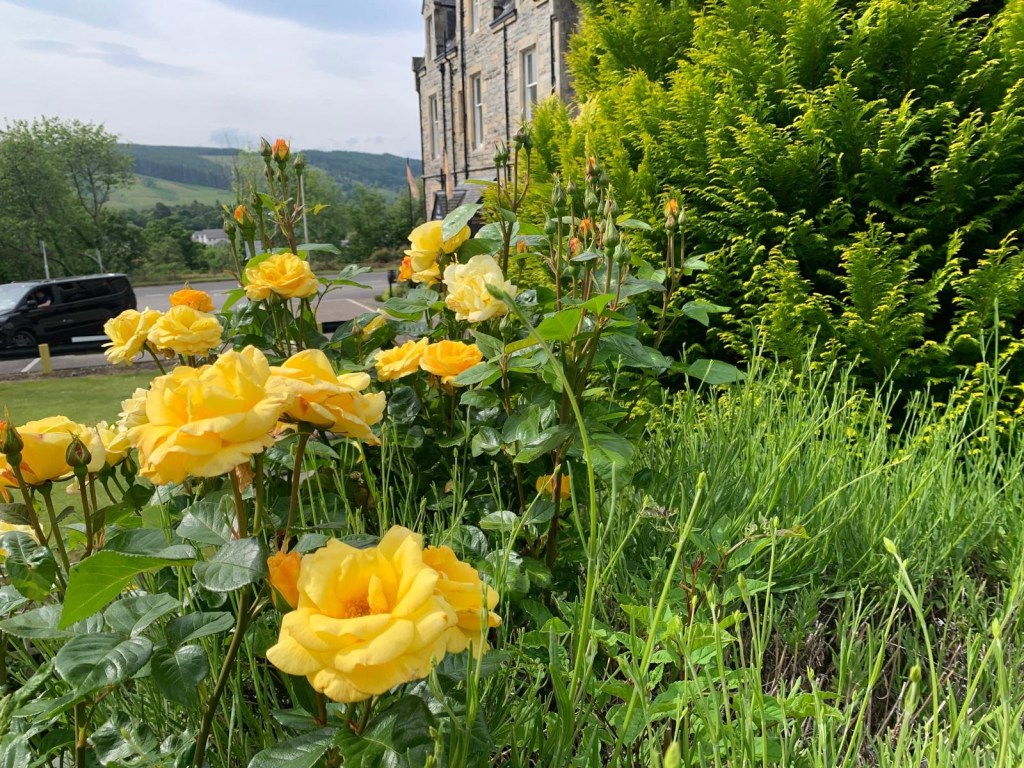
Pretty yellow roses outside the Loch Ness Centre. (Added to blog for a bit of color😃)

Loch Ness is a fresh water loch that runs 23 miles long and its deepest area is 755 ft. Due to its size and depth, it wins for the lake with the greatest volume of water in the British Isles. (https://www.highlandtitles.com/blog/loch-ness-guide/)

But is it a habitat where a huge reptile can thrive? That is the question the Loch Ness Centre grapples with. They portray how since the first reported sighting in 1933, the hordes have flocked to the area to maybe get a glimpse of Nessie. Researchers and divers have spent hours looking and analyzing data but nothing concrete has turned up.

Just before we left the Loch Ness Centre after learning about the loch and the sightings and the research, we were asked a question: Does the Loch Ness Monster exist? The answer options were “Nonsense”, “Possibly”, and “Yes”. Guy chose “Nonsense” and I chose “Possibly”. I’ve been hearing about the Loch Ness monster since I was a little kid, like I’ve always heard of Santa. A part of me wants to still believe. 🤩

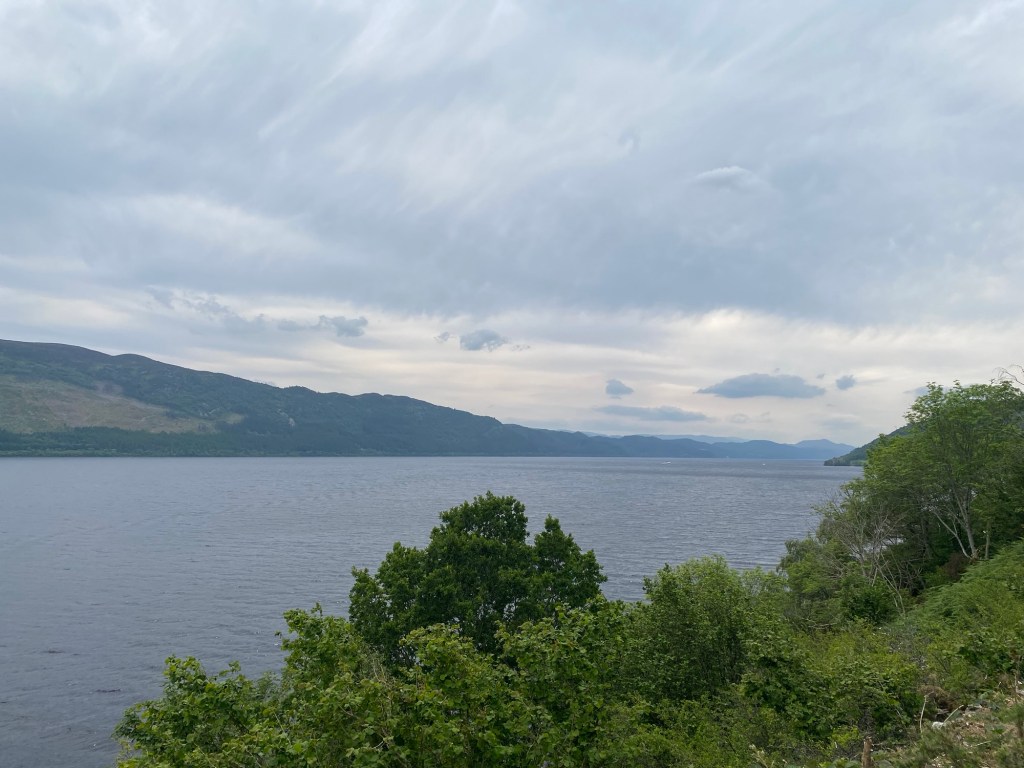
After the Museum, we drove out to Urqhart Castle to see it and to catch some good views of Loch Ness. The castle, however, was fully booked for the day. So we went and had lunch and then drove the length of the lake back to Inverness, stopping along the way for photos.

Loch Ness
No sign of Nessie

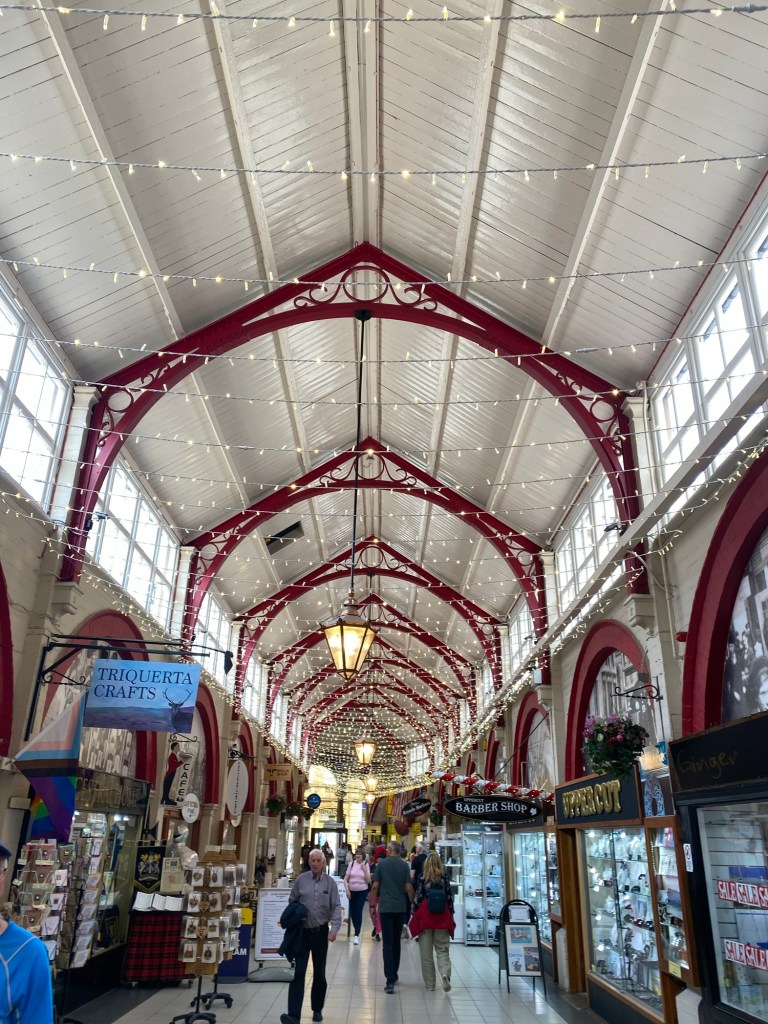
We spent the rest of the afternoon at Inverness, walking around the lovely picturesque city. Guy got some new pants on a sale and we visited the Victorian Market and had an afternoon coffee and cake. Then we walked the canal back to our car park and headed back to Dingwall for the evening.

The Victorian Market
Victorian Market
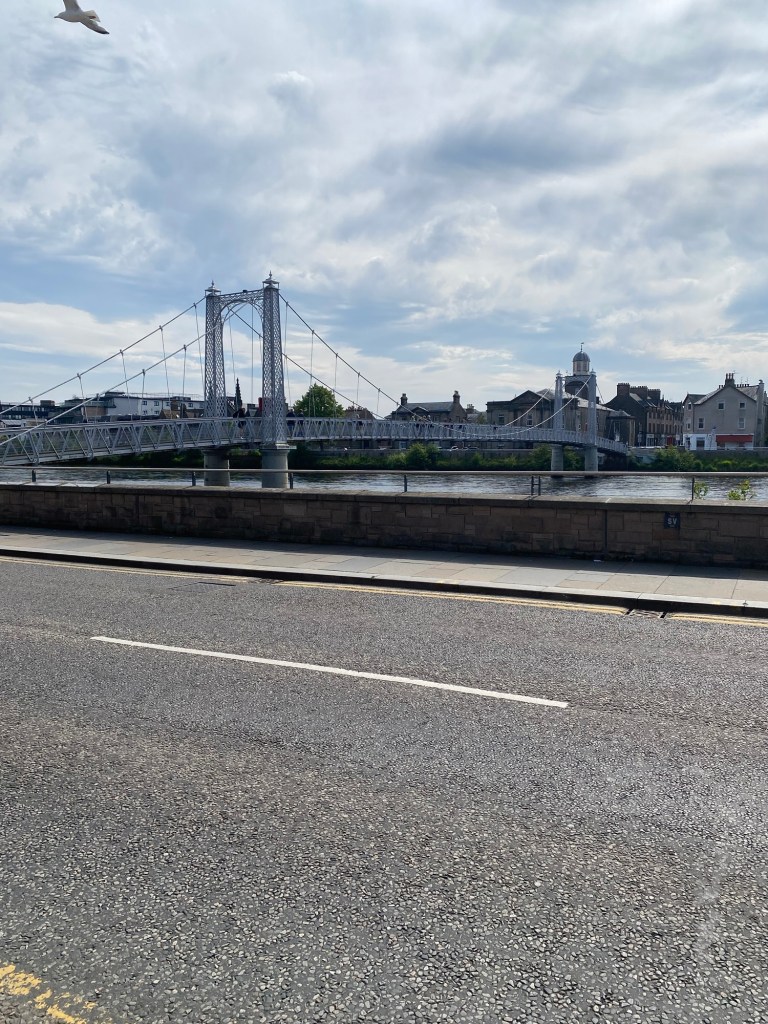
Pedestrian bridge over the River Ness
Guy going over the pedestrian bridge.
Joy by the canal.
Inverness Castle under renovation.
View across the canal.
Guy by the canal in Inverness.

A Hoy and other wonders.

June 5th

We left our campsite at Point of Ness around 8:30 am to get the 10 am ferry from Houton on Orkney Mainland to Lyness on the Isle of Hoy. The boat docked at 10:30 am and we went directly to the Scapa Flow Museum that was conveniently near the ferry terminal.

On the road to the ferry to Isle of Hoy
Boarding the ferry.
Scapa Flow Museum

We enjoyed our time at the Scapa Flow Museum learning about Orkney Islands and the body of water called Scapa Flow, that was so integral to the British Royal Navy operations in the first and second world wars.

After the museum, we drove in the direction of Rackwich Beach on the other side of Hoy, where we would be camping for two nights. We had two stops planned enroute. The first was Betty Corrigal’s grave. When looking up on the net to find things to see and do on Hoy, Betty Corrigal’s grave came up. Information says that in the 1700’s when Hoy resident Betty Corrigal was 27, she had an affair with a sailor and became pregnant. Afterwards, the man abandoned her. Being pregnant and not married was frowned upon by the people of the Hoy community. She tried to commit suicide two times and the second time was successful. She was buried in a field and forgotten. In the 1970’s she was finally given a tombstone that states “Here Lies Betty Corrigal”. It truly is the loneliest of places. There is now a white picket fence around her grave and someone left Betty flowers recently.

Betty Corrigal’s grave
“Here Lies Betty Corrigal”

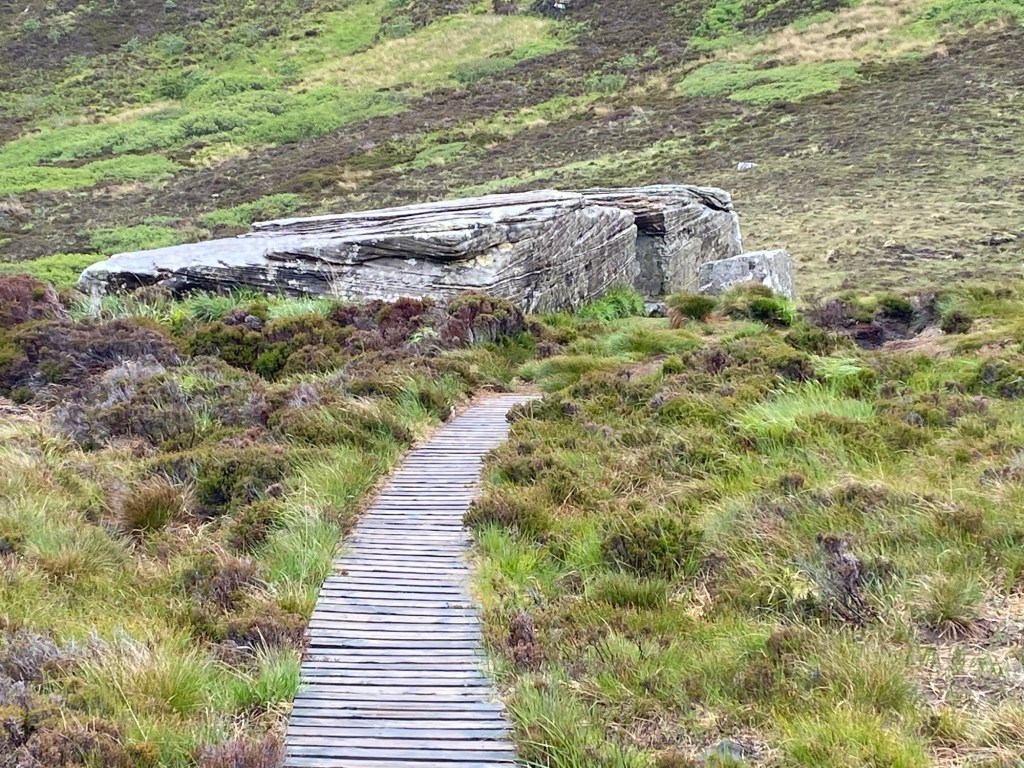
Just down the road 20 minutes or so was the other “have to see” on Hoy, the Dwarfie Stone.

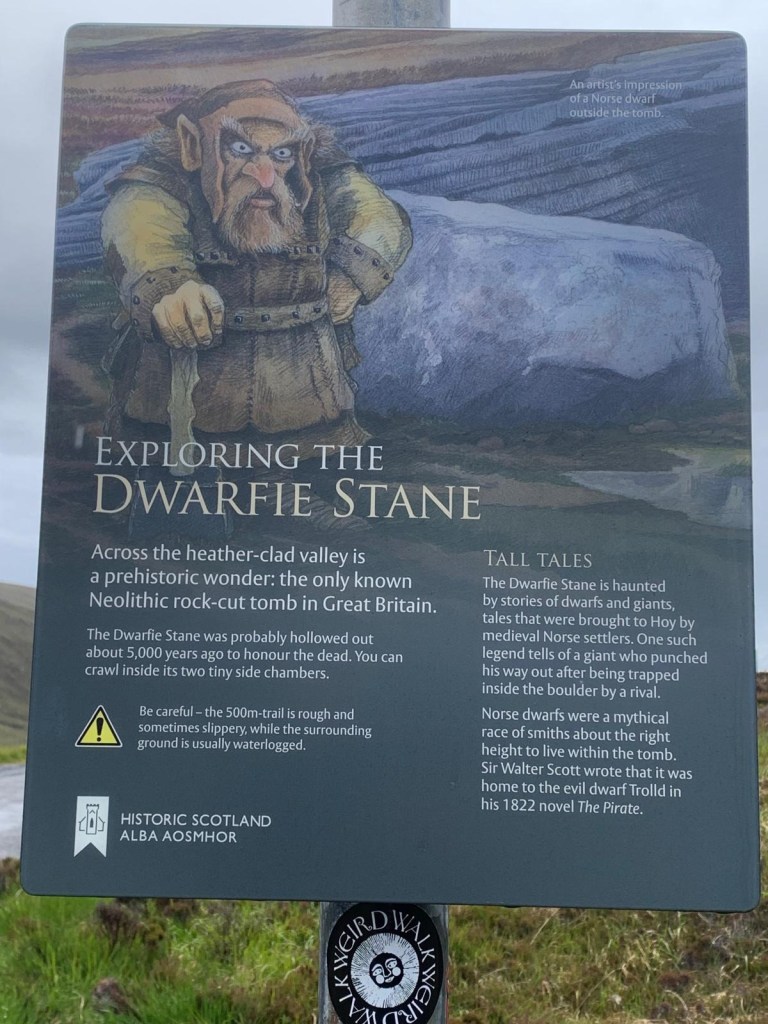
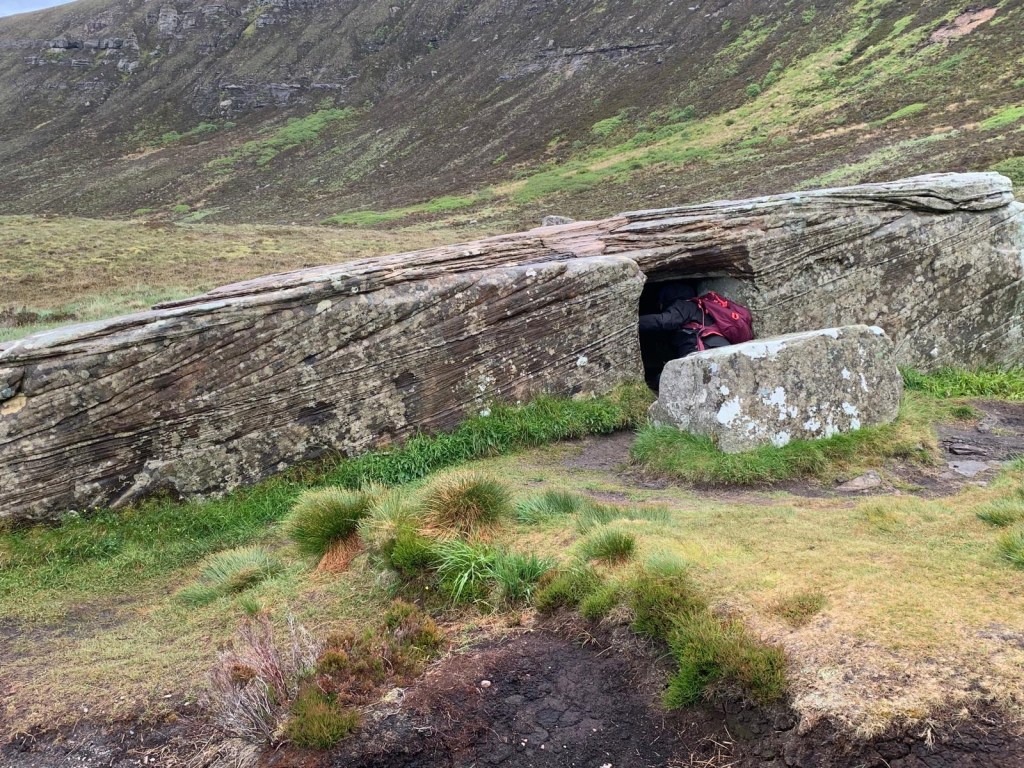
The Dwarfie Stone is a burial chamber on the side of a glaciated valley just 10 minutes before our campsite at Rackwick beach. Its chamber was cut out of the rock 5,000 years ago. It apparently is the only chamber on the Orkneys not built out of stacked rocks and may also be the only one built that way in Britain. (https://en.m.wikipedia.org/wiki/Dwarfie_Stane).

There are myths too about the Dwarfie stone, involving dwarfs and giants.

The acoustics in the chamber are ethereal.

Joy singing in the chamber.
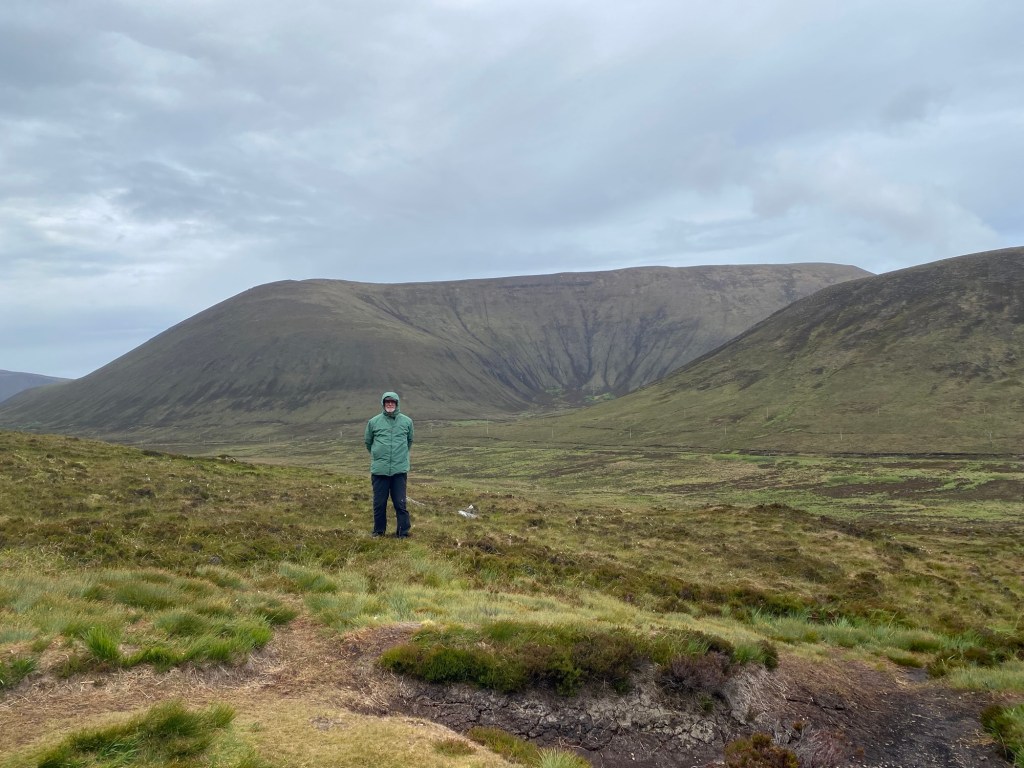
Landscape around Dwarfie Stone.

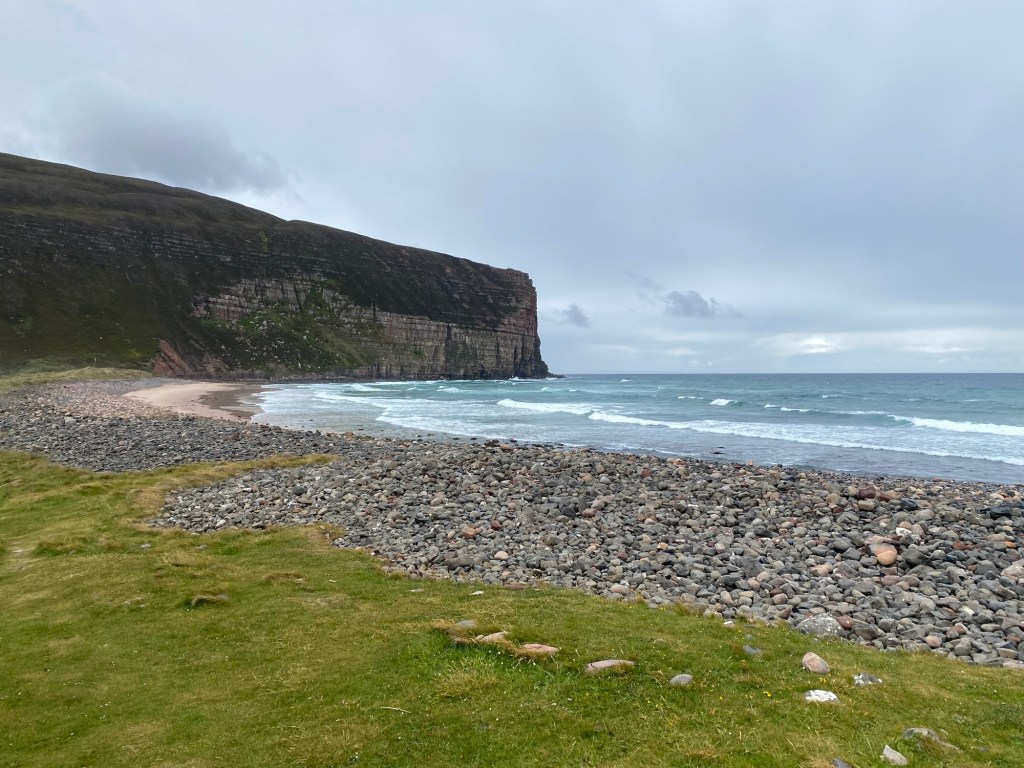
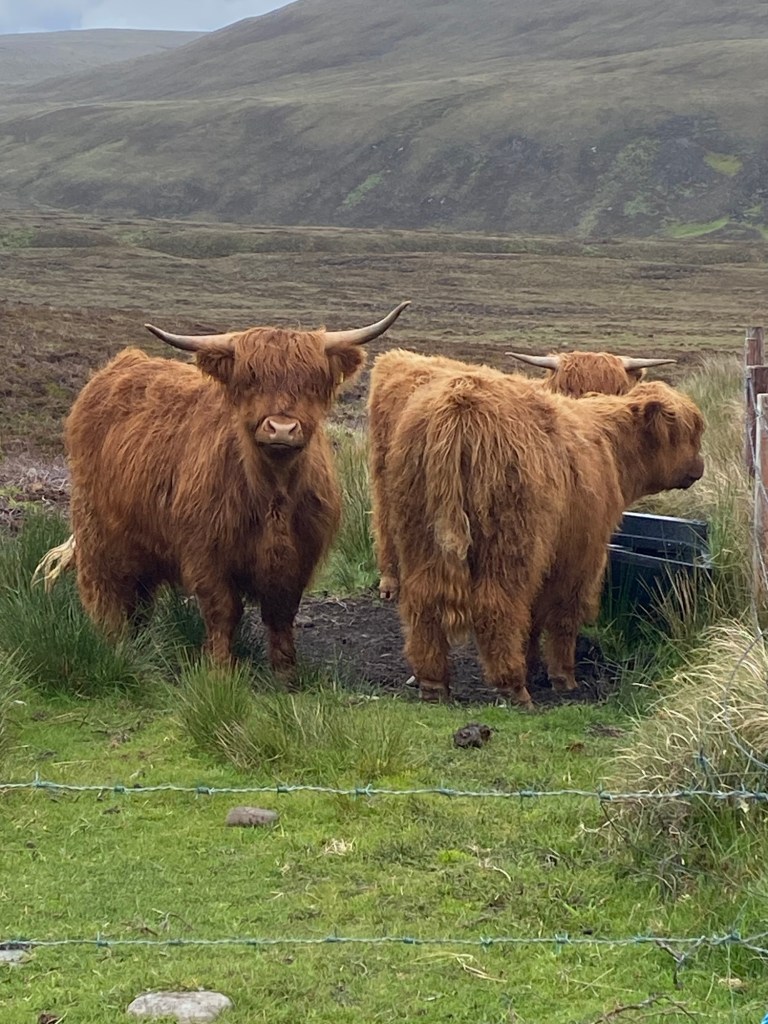
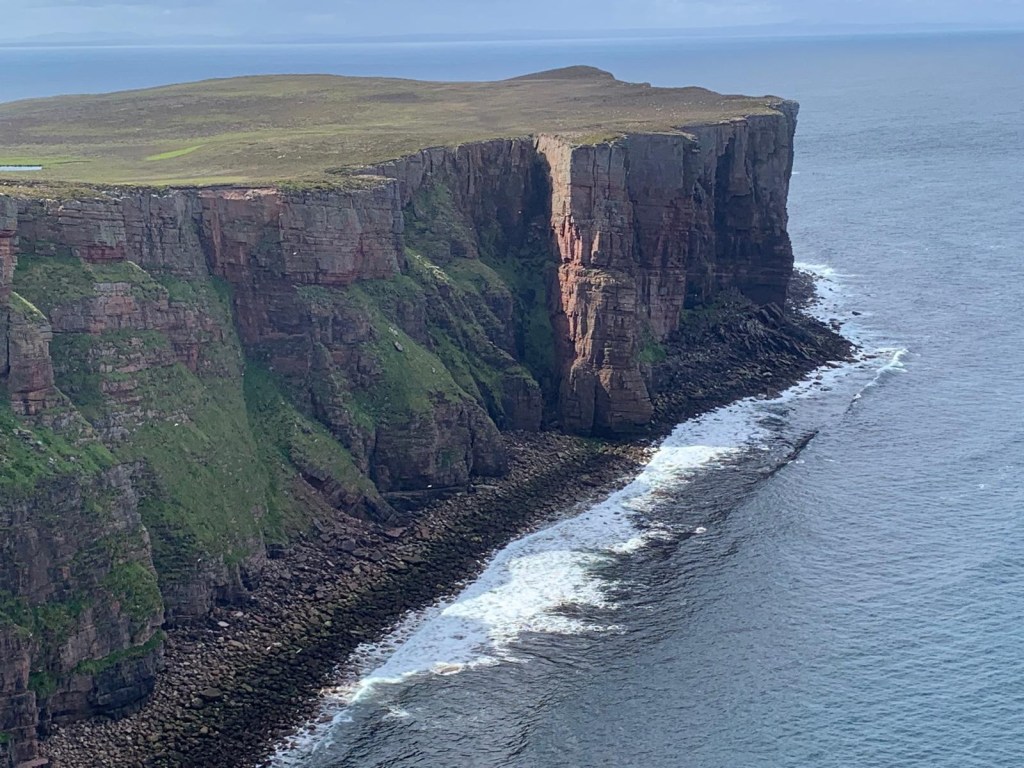
We drove the last little way to our campsite and were blown away by the stunning location near the beach between massive cliffs, old stone cottages scattered on the landscape, with highland cows and sheep in the fields.

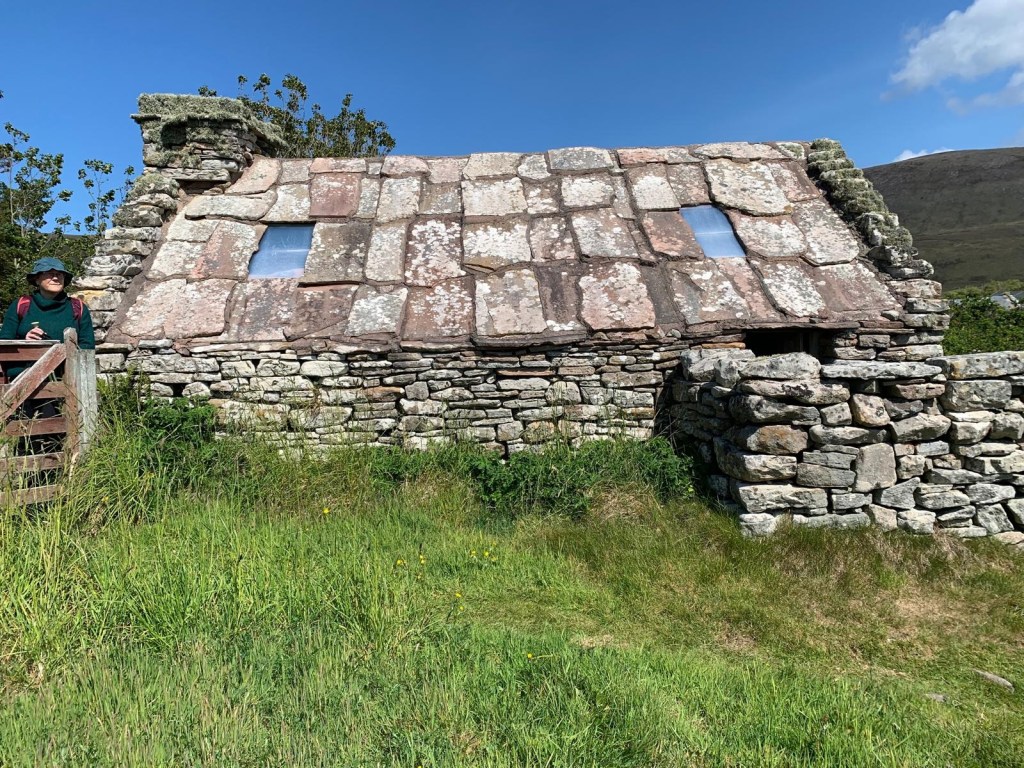
Abandoned crofter cottage. They are everywhere here.
Highland cows
A recreational Bothy (a simple rustic shelter) for hikers and campers.
Simple accomodation inside the Bothy
Sheep grazing near the beach.
The powerful Pentland Firth, looking back to mainland Scotland.
View of the land surrounding Rackwick Beach.
Old Man of Hoy is around that side of the Island.

June 6th

In the morning, we hiked to Old Man of Hoy. It is a 137 m red sandstone sea stack, one the highest in Britain. It has been climbed many times through the years. Most people though hike out to it from Rackwick Bay, as we did.

The head of the trail was just near our campsite. The projected time of the hike was 2-3 hours depending on the pace and conditions. It was a beautiful sunny day with a very slight breeze. The trail was good but had a few areas close to the cliffs that made me nervous. Guy was fine and happy to see the Old Man of Hoy and get some pictures. All in, it took us about 2 hrs 15 there and back.

After the hike, we came back down into the village and took ourselves on a self guided tour of the little folk museums there. There were no attendants. We just let ourselves in and saw inside an old crofter house and outbuildings as well as the old schoolhouse. It was very interesting to see how village life might have been a couple of hundred years ago.

We had a rest back at the camper-van and then a walk down to the beach enjoying the sun and the views before we set out the next morning back to Orkney mainland.

June 7th

Our ferry was leaving Hoy at 9 am. We left the campsite at 7:30 am and didn’t meet one car on the half hour drive across the island.

Once back on Orkney, we were headed to the Orkney Island of South Ronaldsay. It is reached by island hopping via the Churchill Barriers.

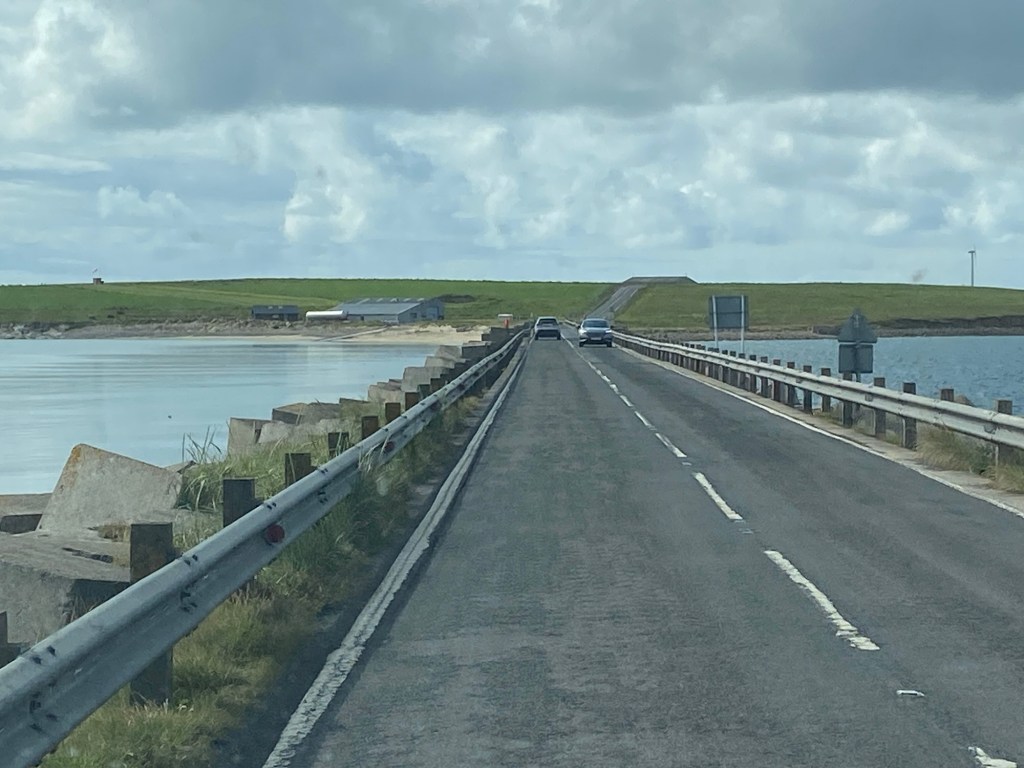
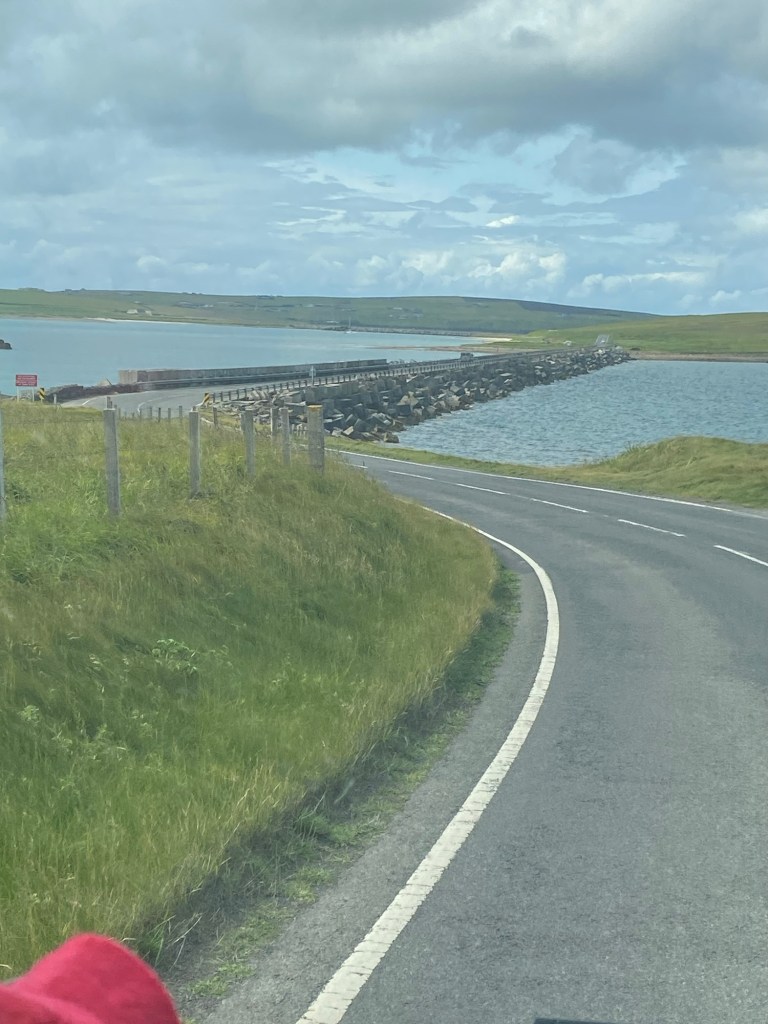
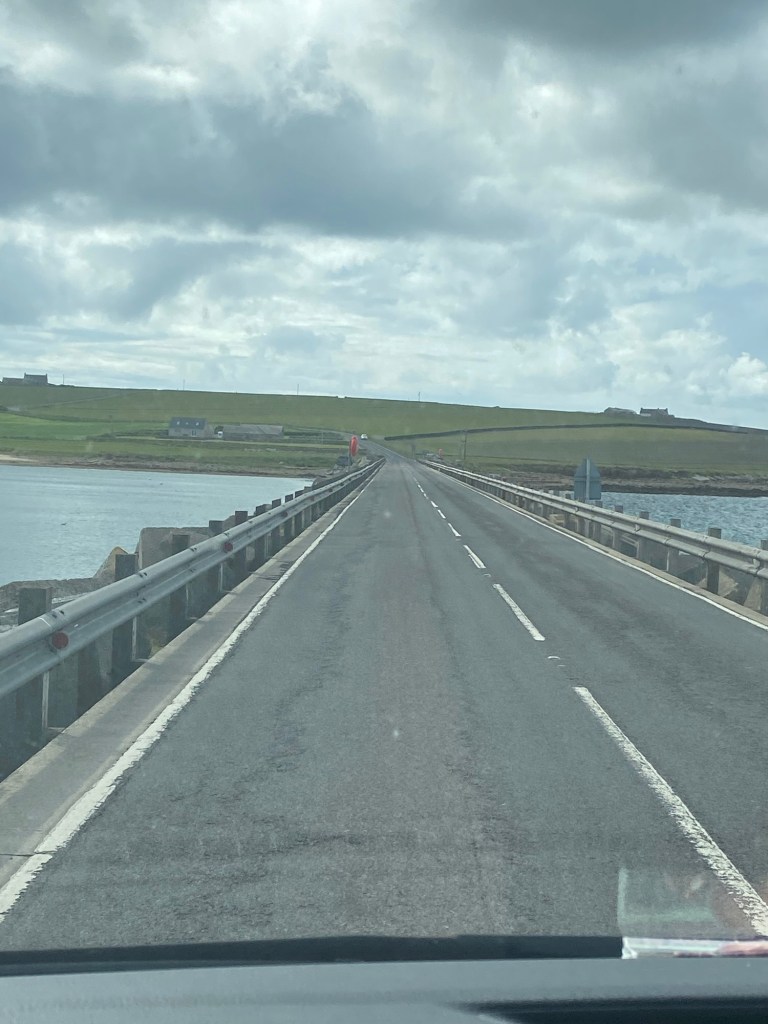
The Churchill Barriers are a series of structures commissioned by Winston Churchill in the Second World War. There were deemed necessary after a German submarine, in 1939, snuck through the passage between Orkney Mainland and the island Lamb Holm, into Scapa Flow. It torpedoed the HMS Royal Oak, a British Naval Ship, killing 835 people. The submarine was able to quickly sneak out after its operation.

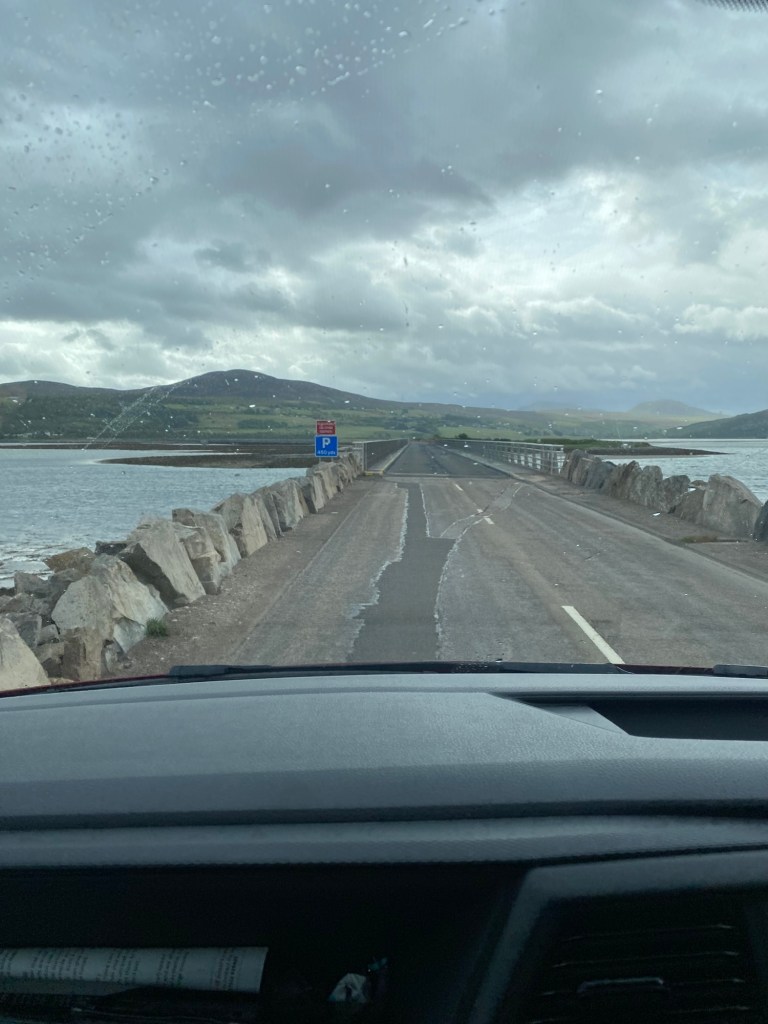
The barriers construction would block water passage between the islands at 4 locations of Lambs Holm, Glimps Holm, Burray and South Ronaldsay, and add a level of security to Scapa Flow. The barriers also offered the islanders connection to the Orkney mainland, as roads were constructed on top of the barriers in 1946. It would certainly change island way of life forever.

We crossed the first Churchill Barrier between Orkney mainland and Lambs Holm to visit the infamous Italian Chapel.

Churchill Barrier #1

The Italian Chapel was built by Italian prisoners of war during World War II who were involved in the building of the Churchill Barriers. They had rudimentary accommodation and conditions but apparently no place to worship. After protest, they were given the ok to build this church led by one of the prisoners who was an artist. The chapel described as “highly ornate” has beautiful murals painted by the prisoners of war. The church is visited by a 100,000 people a year and is a sign of friendship between the Orkneys and Italy. (https://www.secret-scotland.com/place/italian-chapel)

Italian Chapel
Beautifully painted ceiling and altar.

We continued on to the Fossil and Heritage Centre on the Island of Burray, going over Churchill Barrier 2 and 3 to get there. It’s a great little museum and the little cafe attached is excellent.

Churchill Barriers #2
Churchill Barriers #3

After a fun and informative time at the Orkney Fossil and Heritage Centre, we drove the last Churchill Barrier on to South Ronaldsay.

Churchill Barrier #4

We stopped in St. Margaret’s Hope, a little village on the island for a look around.

Then we went to our campsite on the west of the island, booked in and set up, and then took a long walk down the hill to the beach looking out to the North Sea.

View from our campsite looking out to the North Sea
View from campsite.
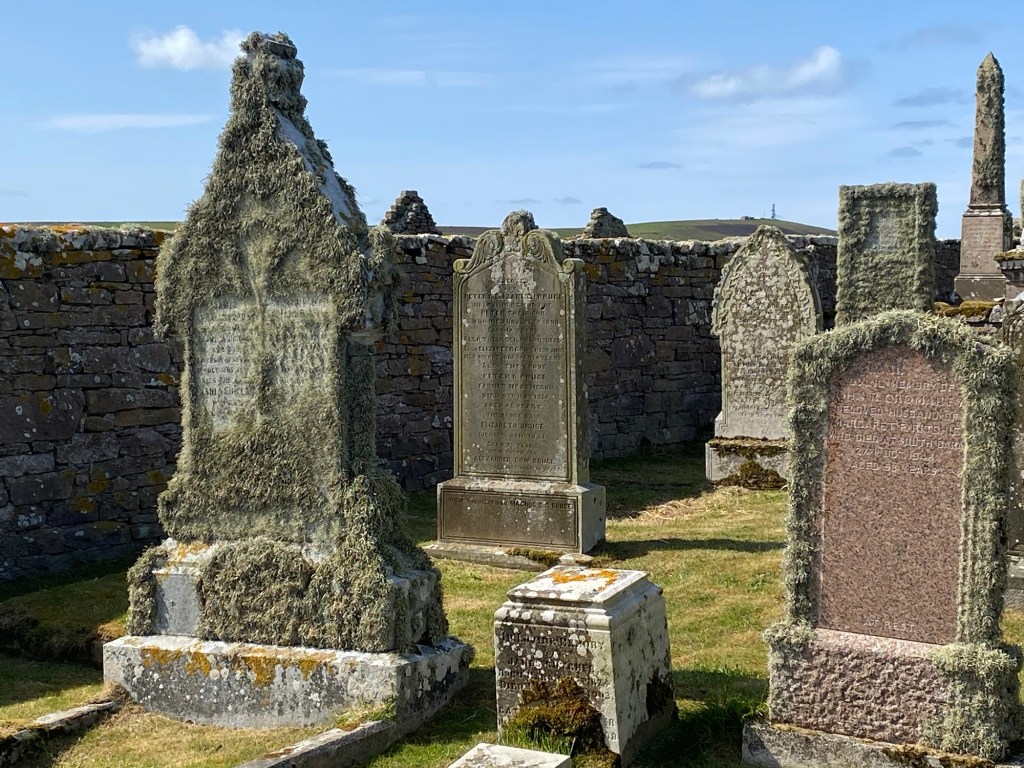
Old church and graveyard down by the beach
Beach near the campsite
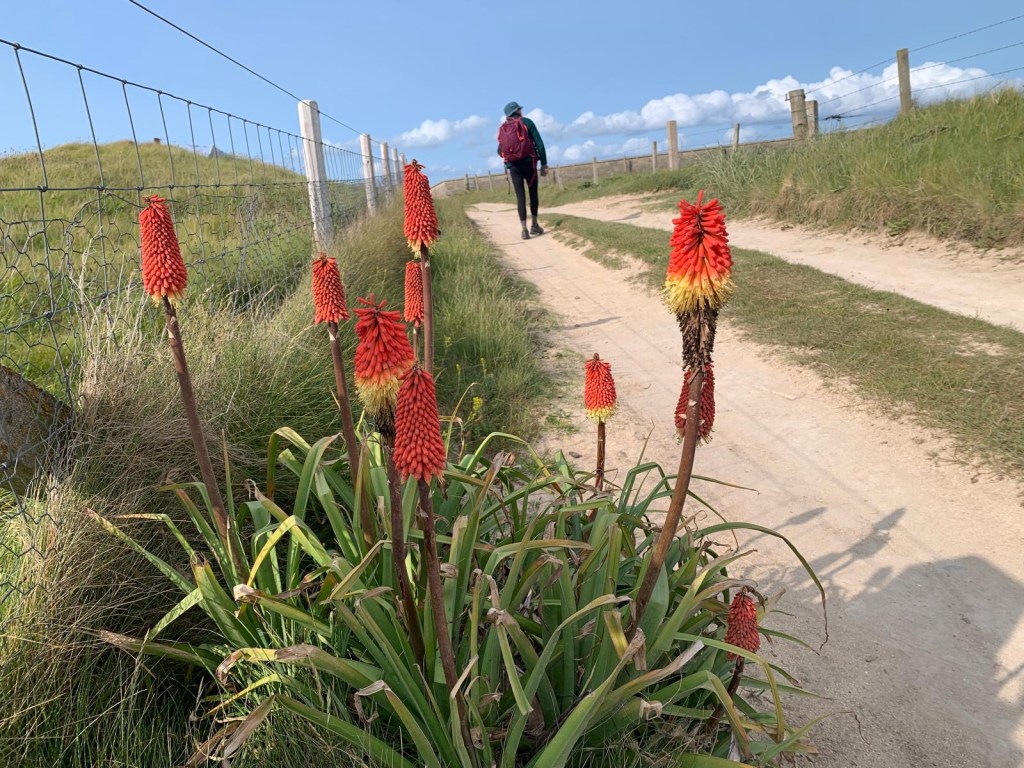
Red hot fire poker.
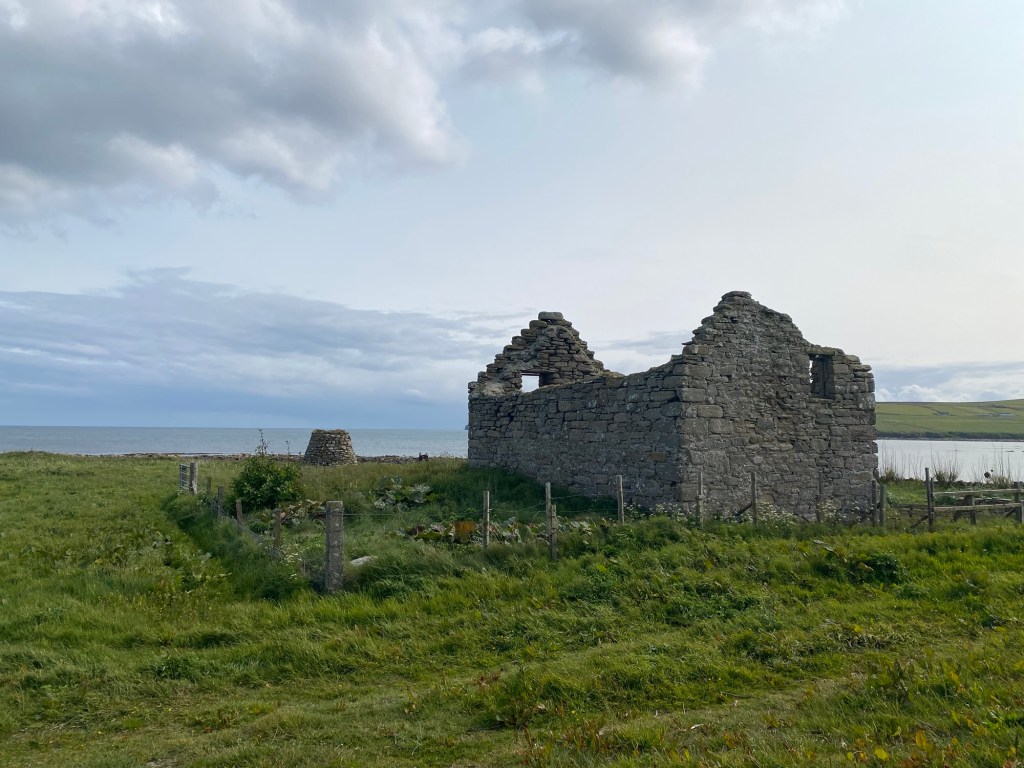
A ruined cottage.
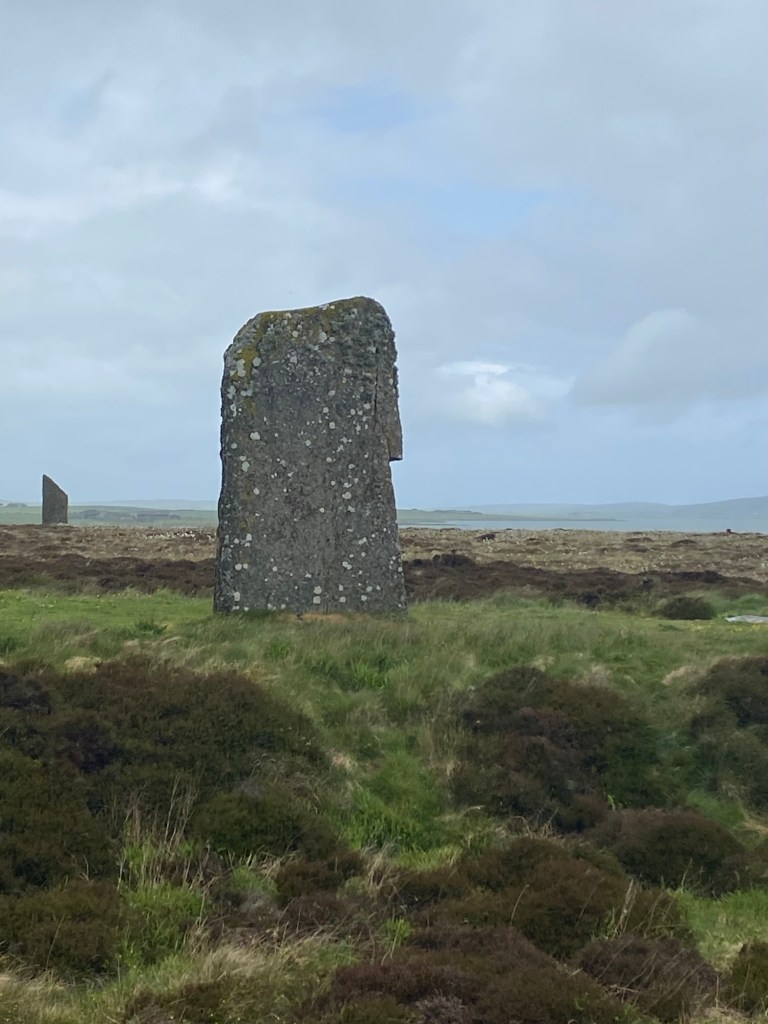
A standing stone in a field on the way to the beach.

June 8th

In the morning, we left our campsite and went back down the hill to visit the church and graveyard that were closed the day before. We are fascinated by old graveyards. This one is particularly mysterious, straddling the open ocean on the North Sea with both the stonewall and big sky as a backdrop. The oldest grave Guy found was 1813, but many graves were so old we couldn’t read them.

After a short stop there, we were on to Kirkwall to see the things we missed a few days before.

First stop was the Bishop’s palace, an intriguing ruin that housed Kirkwall’s first Bishop in the 12th century.

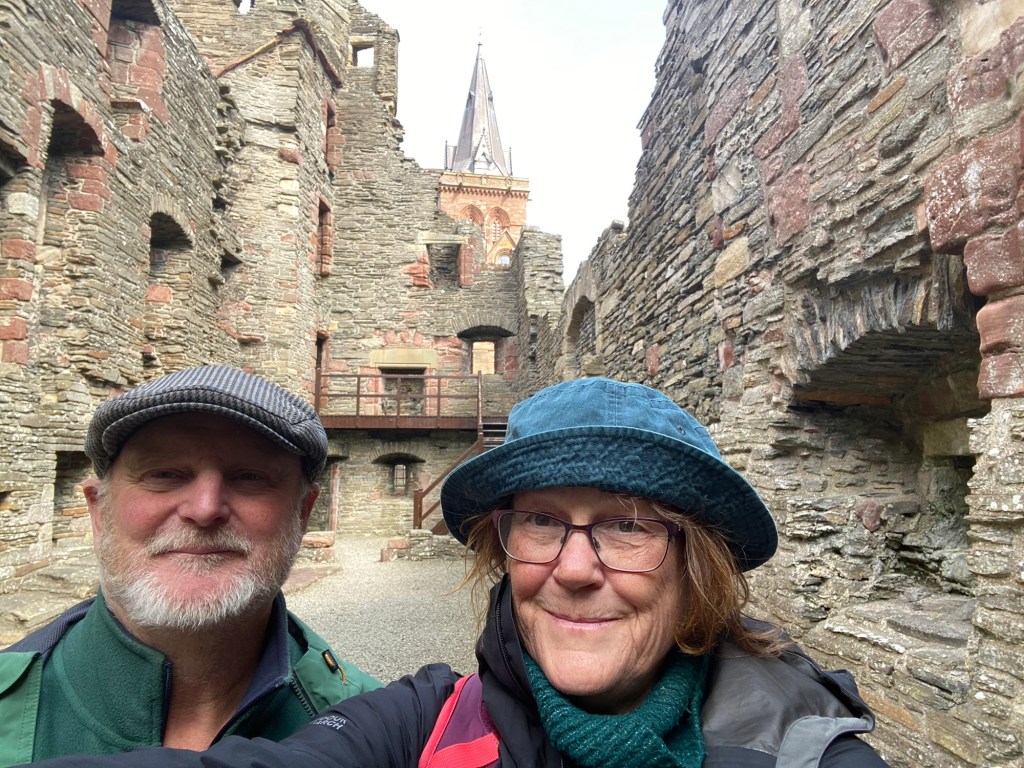
The Bishop’s Palace

Then we visited the Earl’s Palace across the street. It was a wonderfully intact building, except for the top level that was in the process of being restored. We had the place to ourselves to wander before the tour bus crowd descended.

We topped off our old building tour with another visit to St Magnus Cathedral, built around the same time as the Bishops Palace but fully intact. St. Magnus Cathedral was built in 1137, mostly from red and yellow sandstone. “It is dedicated to St Magnus, Earl of Orkney in the 12th century, at a time when Orkney was part of the Kingdom of Norway. He was killed on the orders of his cousin and rival Hakon, and many miracles were reported after this death. In 1137 Magnus’s nephew Rognvald began construction of the ‘fine minster’ in honour of his saintly uncle; Magnus’s relics remain interred in a pillar of the choir. The cathedral has stood firm against Reformers, Cromwellian troops and wartime danger, and is the most complete medieval cathedral in Scotland.” (https://www.orkneymuseums.co.uk/our-museums/st-magnus-cathedral/).

What struck me about St Magnus Cathedral is its beautiful ruddy natural color and grand simplicity, sitting right there in the heart of Kirkwall for centuries. And it has an excellent graveyard.

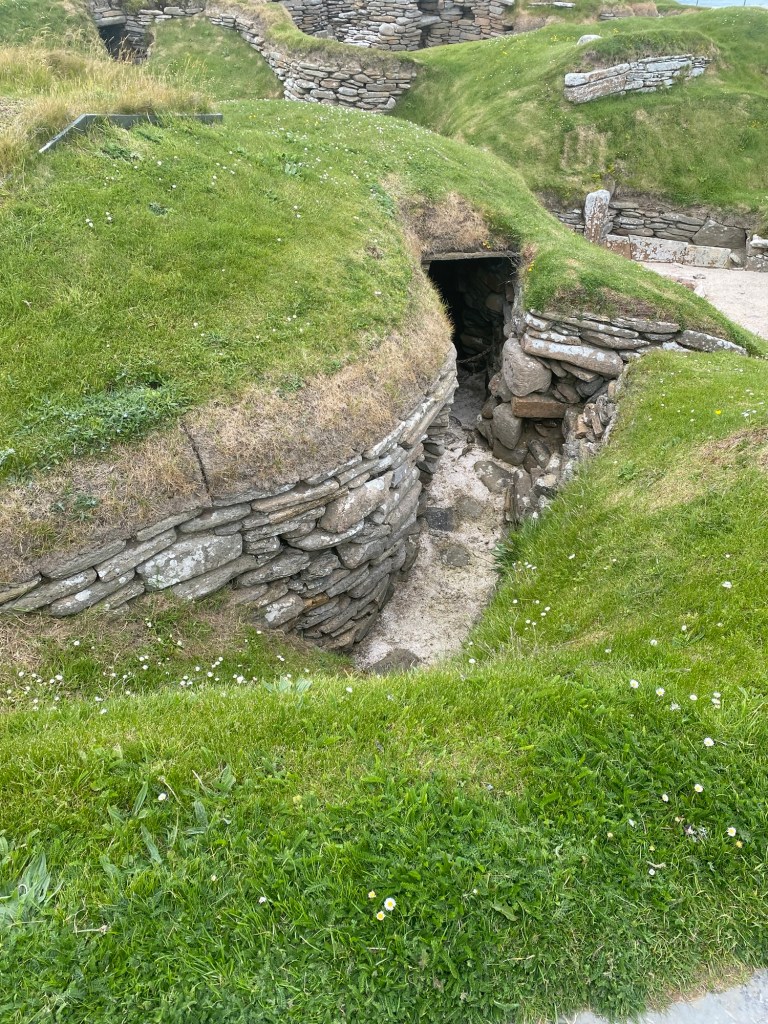
Later in the day, we headed back out to Skara Brae to see the Neolithic village that people flock to see from all over the world. In 1850, there was a huge storm that uncovered this 5000 year old village. “The discovery proved to be the best-preserved Neolithic village in Northern Europe”. (https://www.visitscotland.com/info/see-do/skara-brae-prehistoric-village-p247671). It was super interesting and fascinating to see. You could imagine the villagers of that time going about their day to day business. There were passageways between the houses, beds and dressers, fire pits, fish pots, chairs and other artifacts discovered. Our visit was hurried since a huge tour bus of people were trailing behind us and we wanted to get through before it got too busy.

The backstory to this well preserved village involves what happened to the villagers 2500 years ago. Did they move on due to a massive sand storm? Or did village life here just gradually come to an end. (https://www.historicenvironment.scot/visit-a-place/places/skara-brae/history/)

After seeing Skara Brae, we spent some time on the beach below looking for sea glass and enjoying the break in the weather before we headed to our campsite. We were back at Point of Ness campsite in Stromness that night, positioned for our ferry the next morning back to the Scottish Mainland. Our short and magical time in the Orkney Islands was coming to an end.

Windy and Wild North Coast and Orkneys.

June 1st

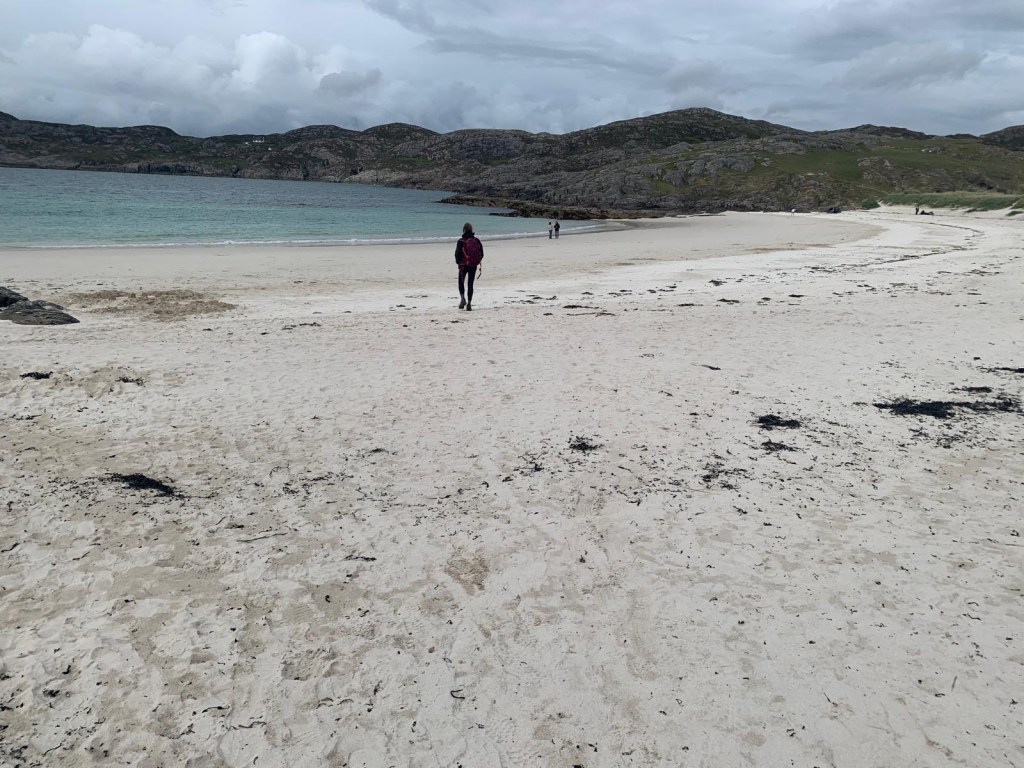
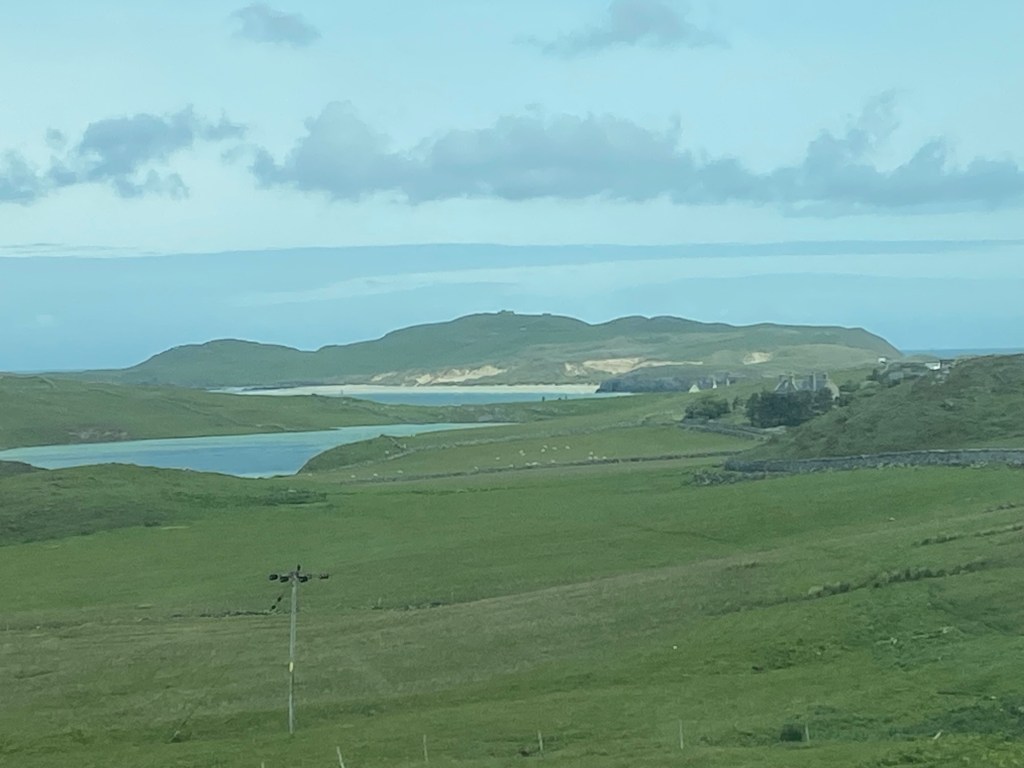
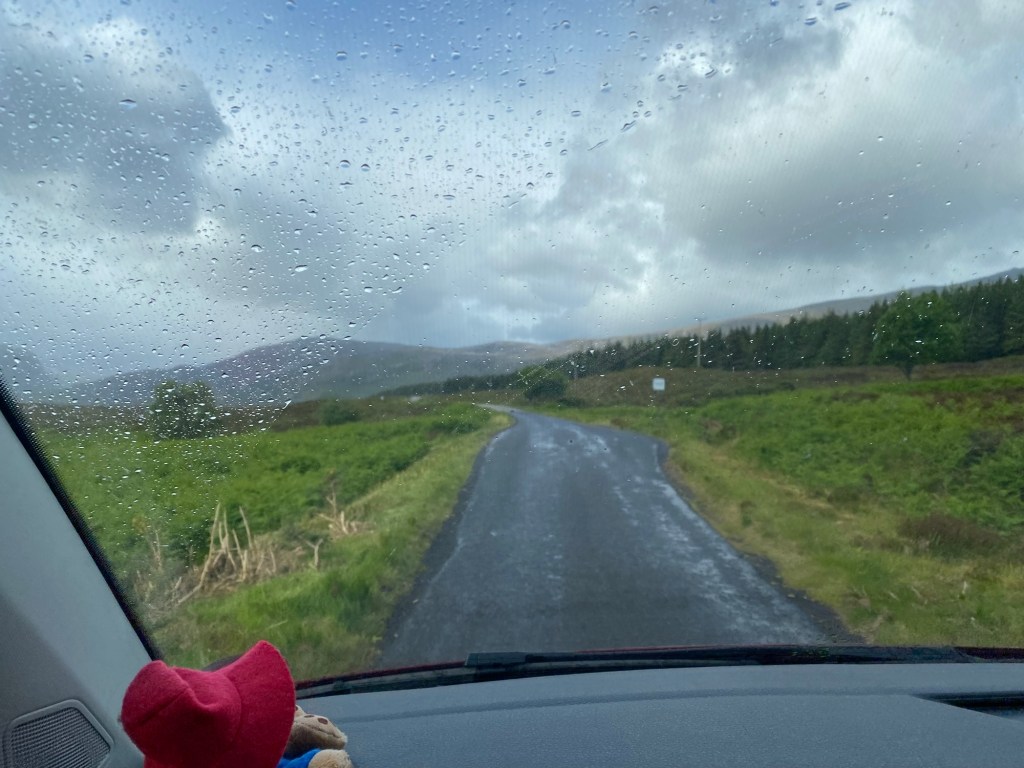
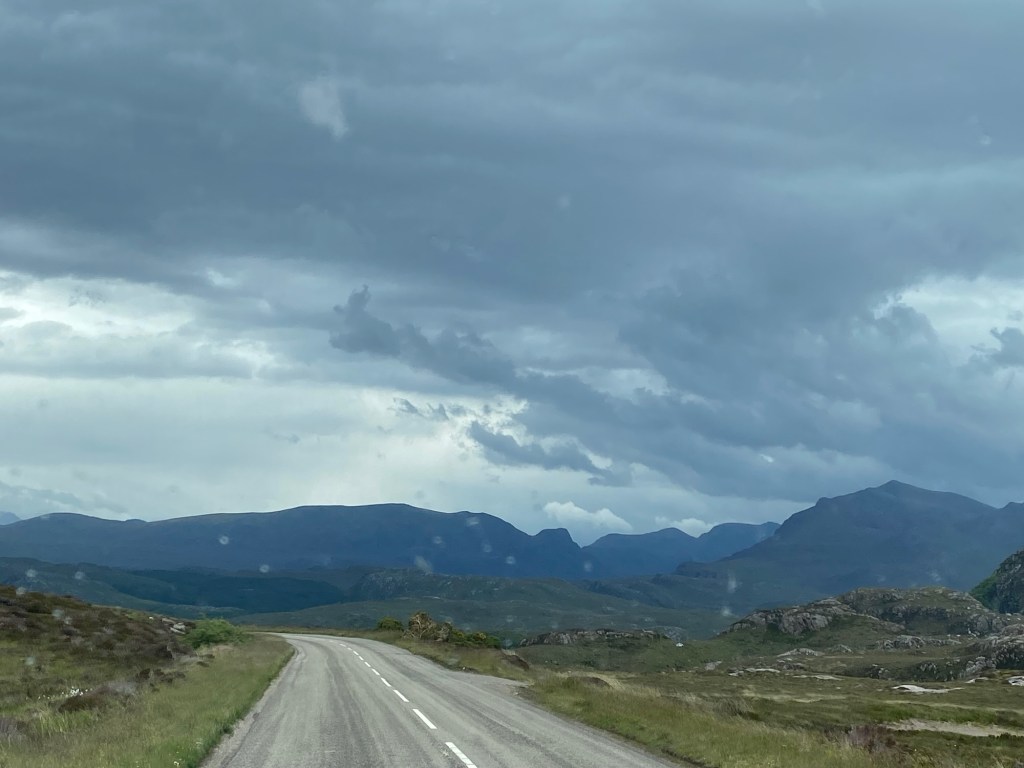
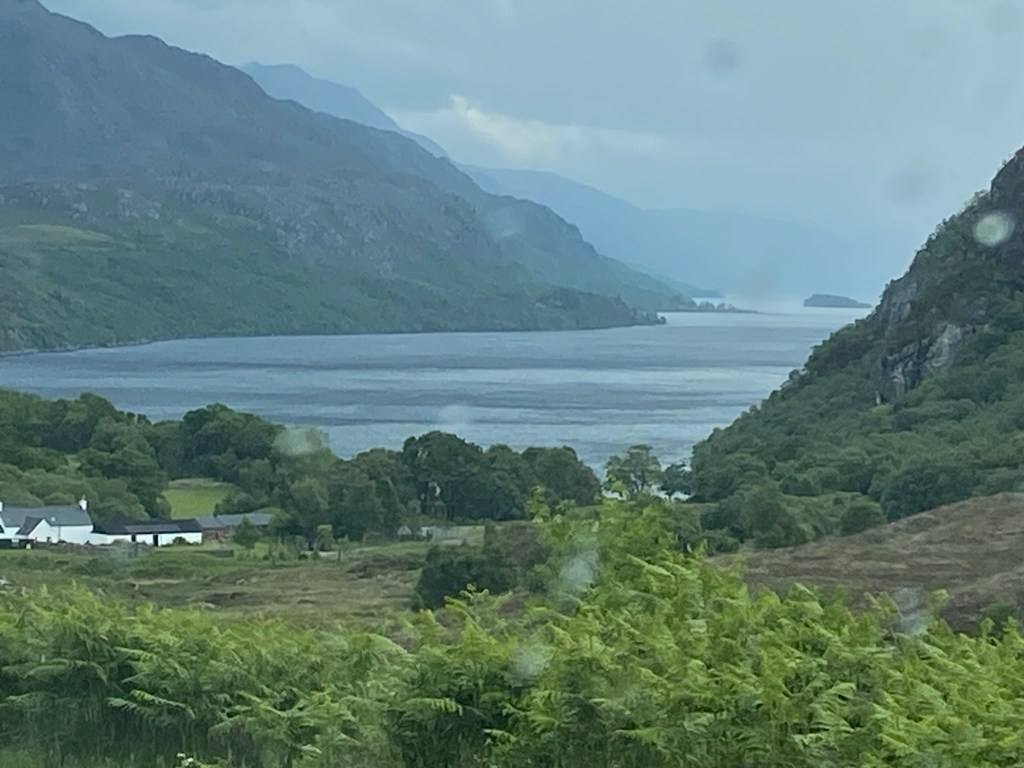
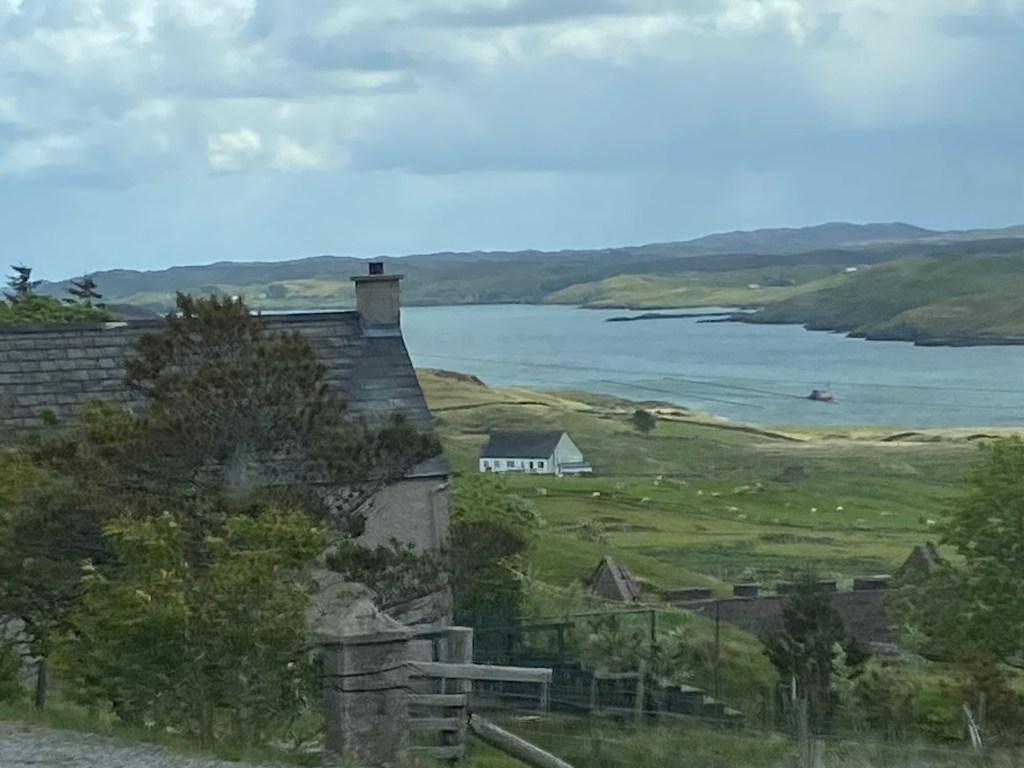
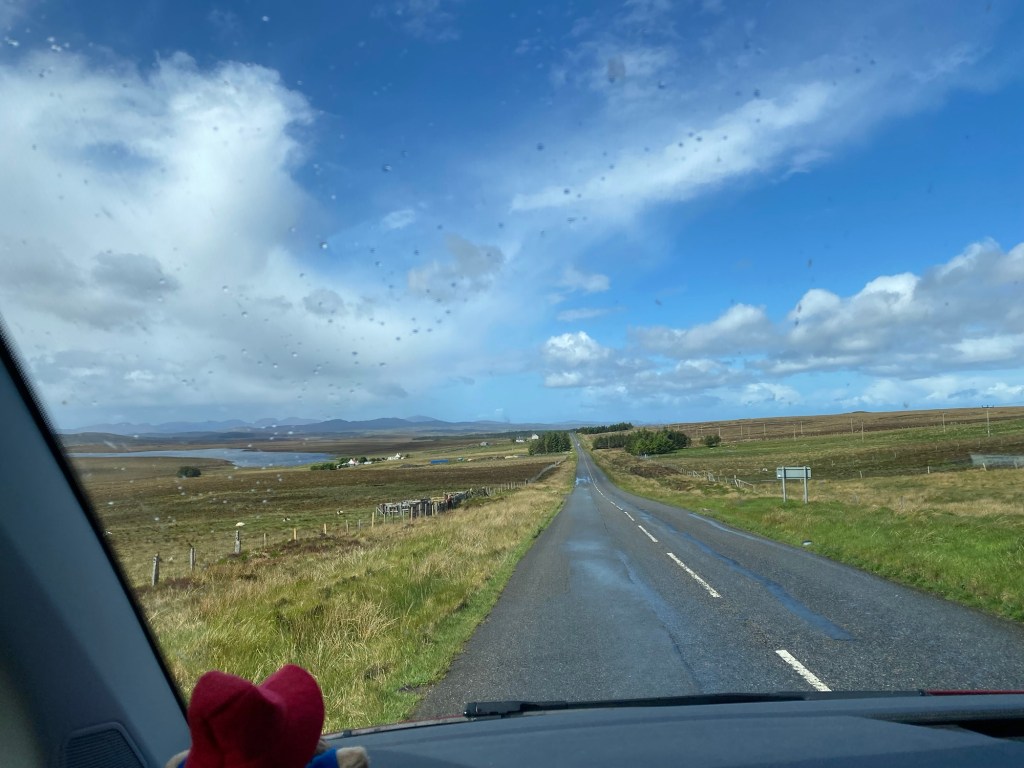
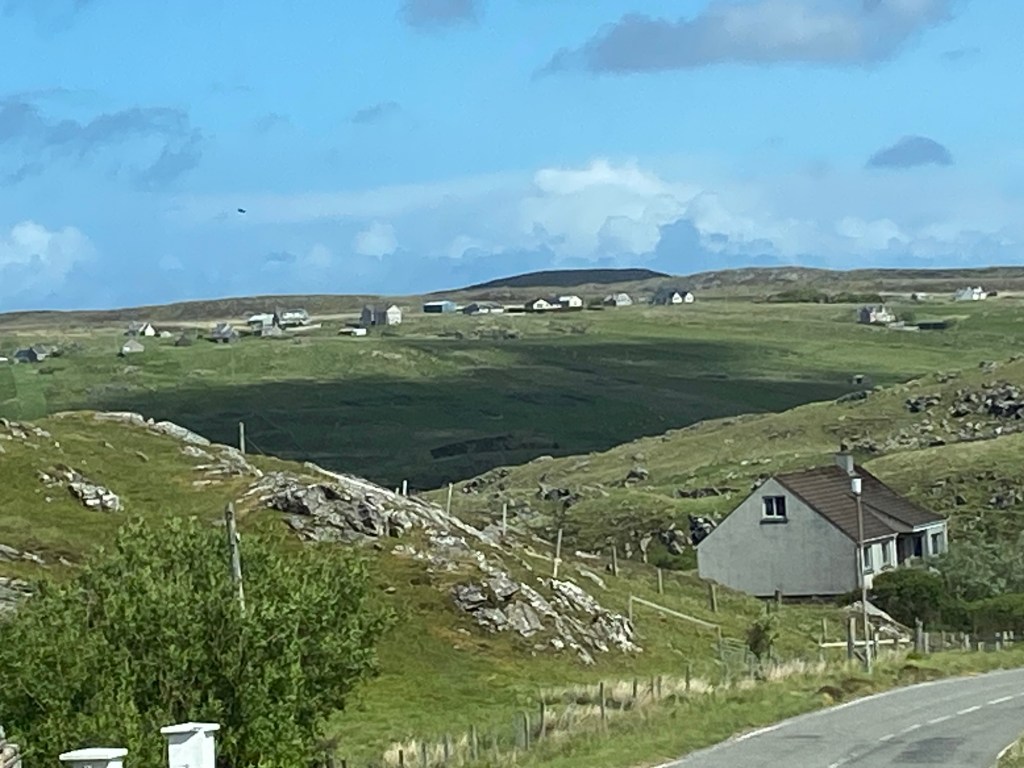
We set off around 10 am from Poolewe to Achmelvich Beach, still on the west coast near Lochinver. The drive was spectacular. The photos say it best.

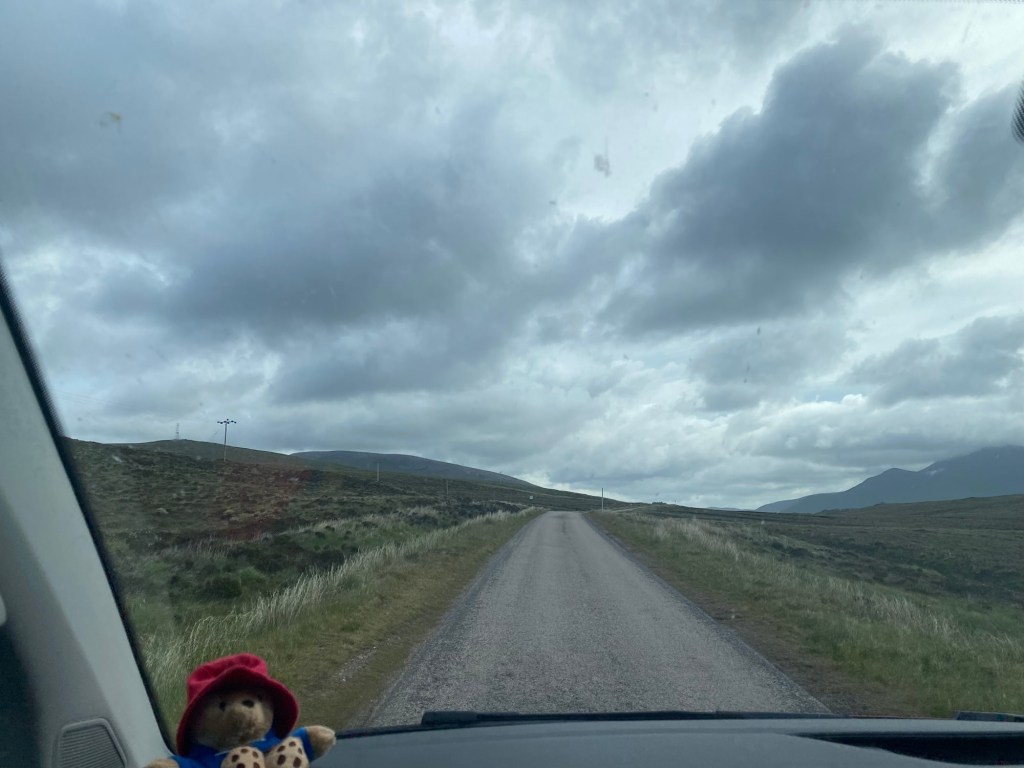
The drive down to our campsite at Achmelvich Beach from the main road was one of our more interesting one’s, single track, narrow, winding and few passing places. Thankfully we didn’t meet any other cars in precarious spots. Once set up, we went for a beach walk just before the heavy winds and rain started to descend. It would be another night with the pop up part of the camper down.

At Achmelvich Beach.

We had fish and chips from the pop up chippy on our site for dinner. It was a cozy night in the camper-van, sheltered from the wind and rain.

June 2nd

The drive to Durness on the northwest coast of Scotland was about 2 hours. We were very excited to have made it this far. The road was spectacular through an eerily remote part of Scotland with a lot of single track roads.

We arrived in Durness, a little village that sits atop the North Atlantic. We went to Cocoa Mountain cafe in Balnakeil, down the road from Durness. After we got caffeinated, we saw around some local art galleries.

We booked into our campsite, had lunch and then walked the beach below the site. It had interesting rock formations and beautiful sand.

Guy at beach at Durness

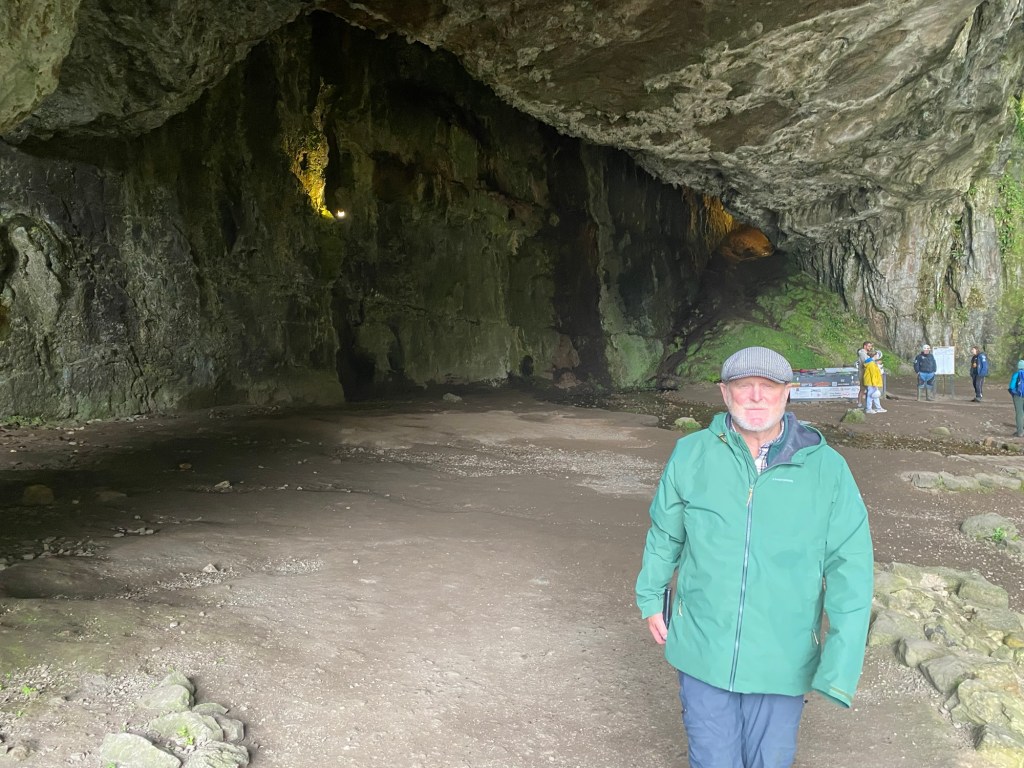
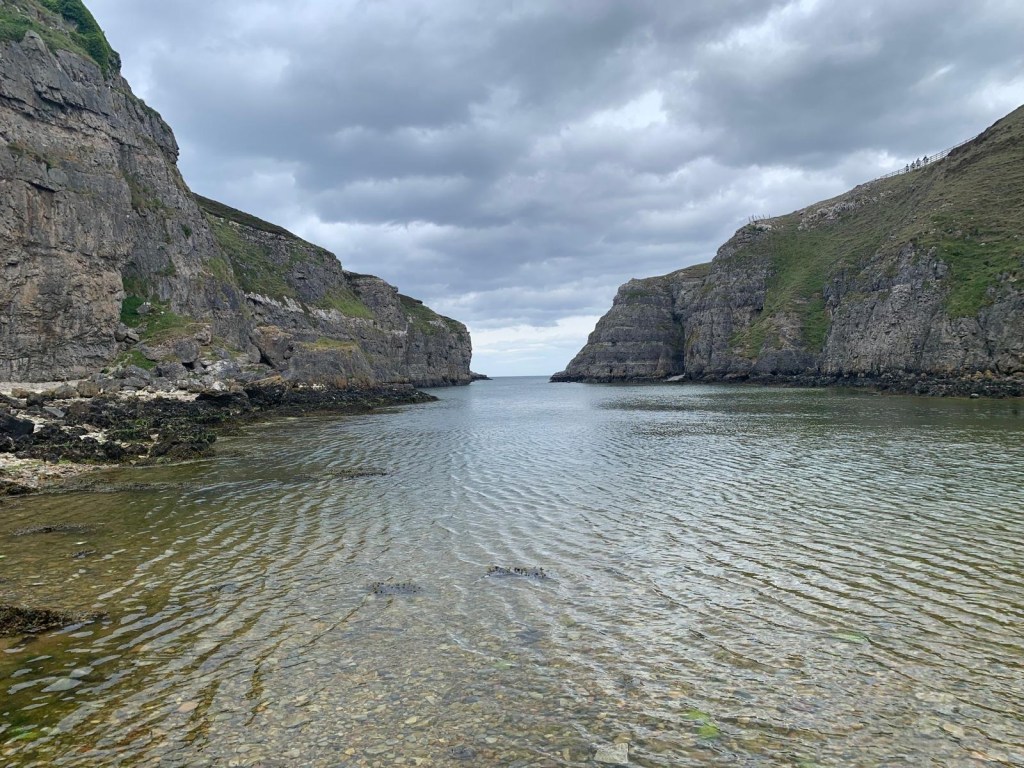
In the afternoon, we visited the Smoo Caves. It was a little touristy but well worth seeing. The Smoo (apparently meaning hole or opening in Norwegian) Caves are both sea water and fresh water caves. Many artifacts have been found in the caves but mostly from Viking and Norse and medieval origin. Remnants of boatbuilding and fishing activity were found there. The large and cavernous natural phenomena provided a secure and sheltered place for its occupants during the Viking Era. (https://hiddenscotland.com/listings/explore-the-spectacular-smoo-caves)

Very protected little bay into Smoo Caves

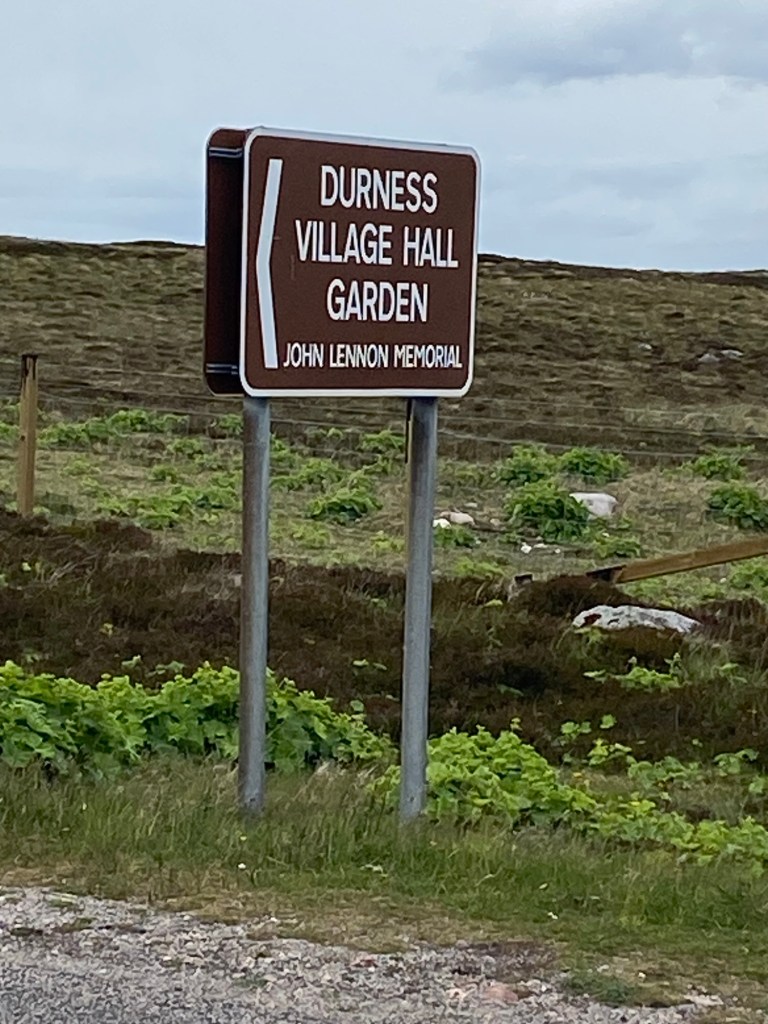
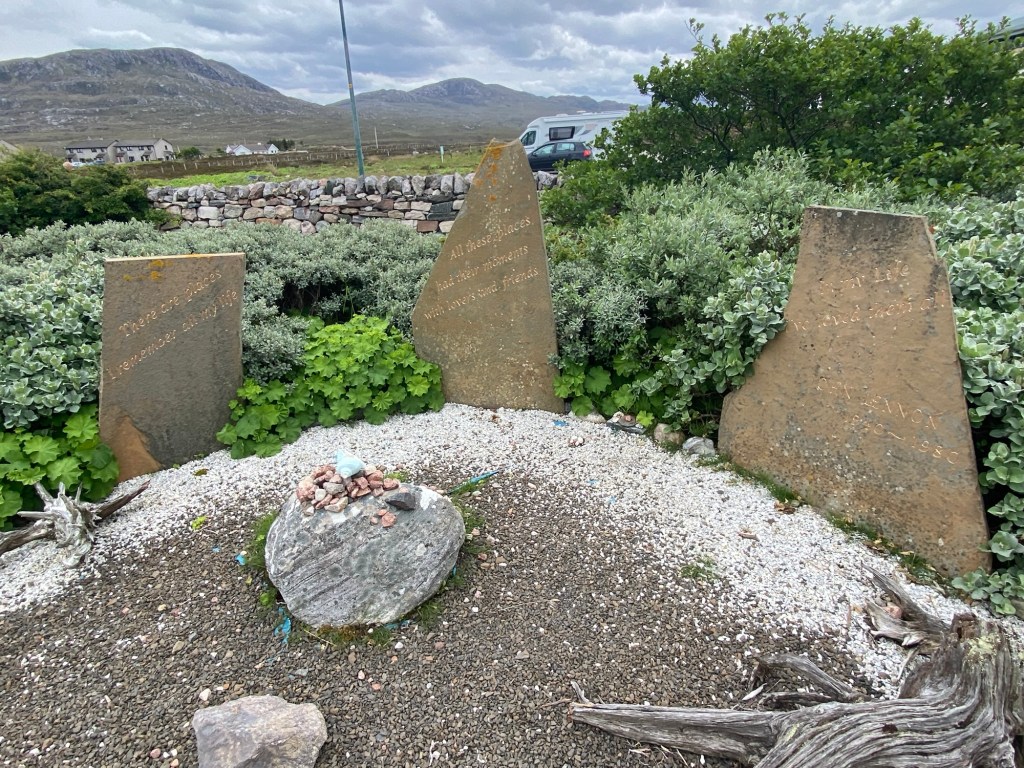
After Smoo. We went looking for the John Lennon Memorial Garden. Apparently John Lennon used to holiday here with his family in Durness when he was a youngster and remained fond of the area through his later life. The garden definitely needed some love as it was overgrown with lots of weeds. There were slabs in the garden with some words inscribed, lyrics from the Beatles song, In My Life , “There are places I remember, all my life….”

Lyrics of “In My Life”.

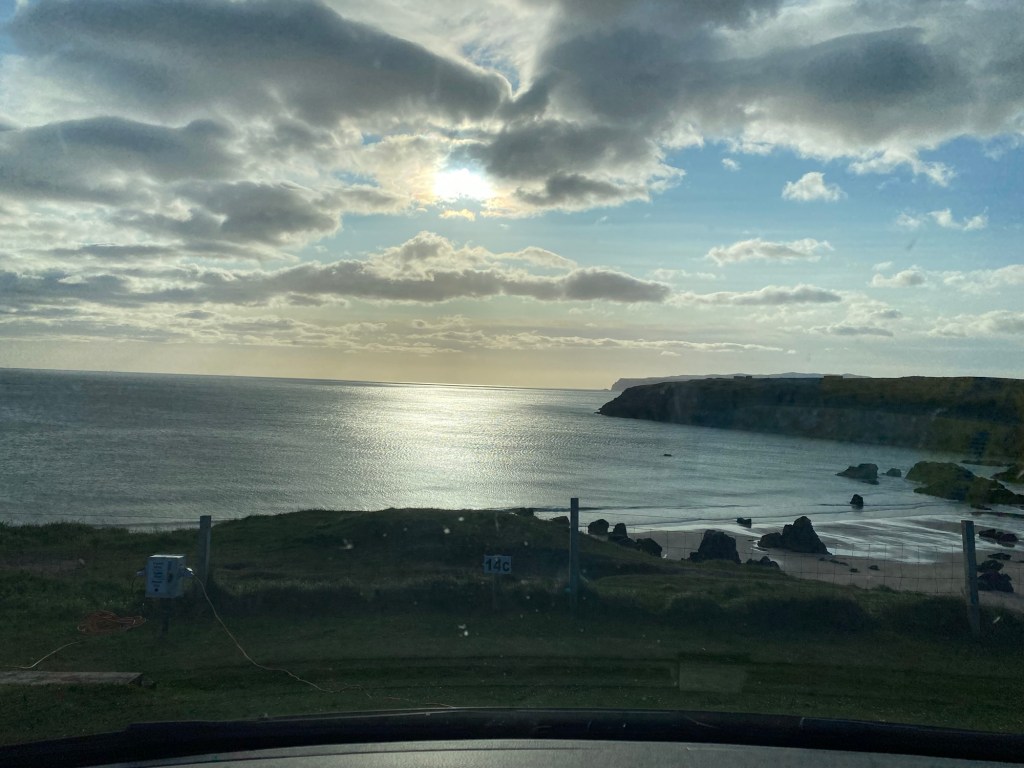
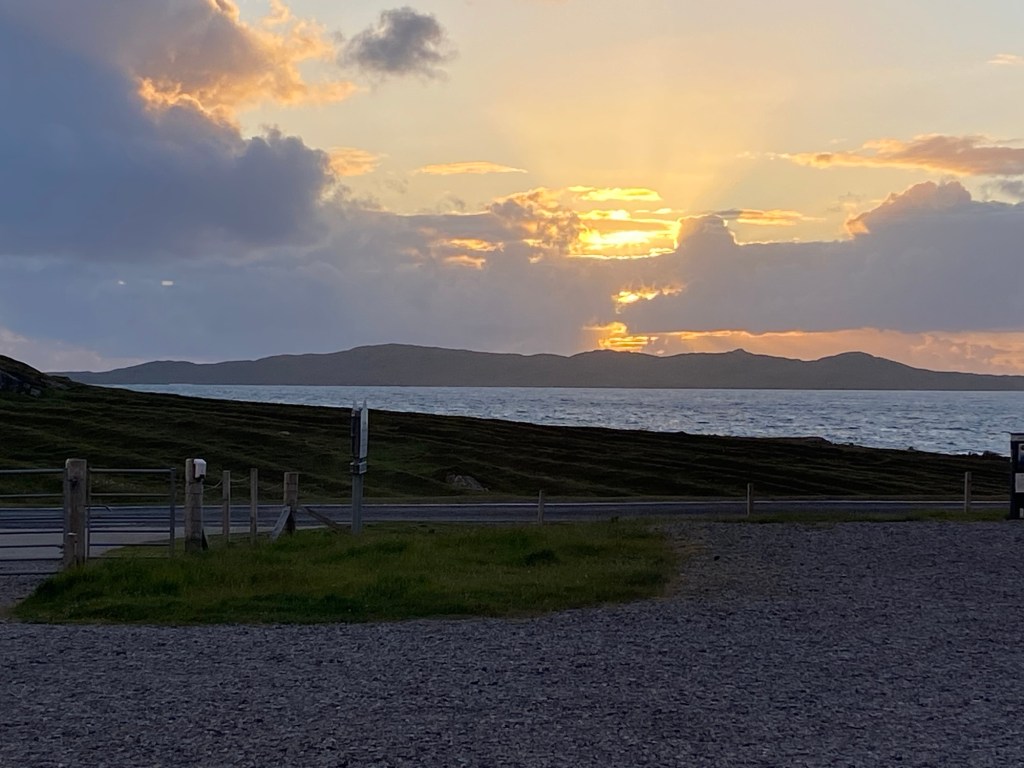
Afterwards, we were back to the campsite for the evening. It was set back on a cliff overlooking the Atlantic. It was a beautiful sunset on this very windy night.

Sunset on the North Atlantic.

June 3d

We set off from Durness along the A838 across the north coast of Scotland to Scrabster where we would take the ferry across the Pentland Firth to the Orkney Islands. Again, mist, showers and wind with 50% of the journey being on single track roads, was the name of the game. It was a lonely journey at first, no other car to be seen for at least an hour. Midway, we started to see more signs of life 😆

Once in Scrabster, we had time to kill before our ferry at 1:15pm so we found a little rustic diner called the Peerie Cafe next to the wharf. Turns out it was a fisherman’s cafe that serves up hearty food. We had a good reasonably priced lunch in an atmosphere that beckoned to times of old and Scrabster’s fishing history. A few fisherman or harbor workers were there enjoying a break too.

The ferry was late leaving. Once onboard, the captain announced we would be going a different route due to high winds, not around the Old Man of Hoy, which is the usual one. It was fairly rough crossing the Pentland Firth, but once in between the islands, it levelled off. We were happy to see Stromness coming in.

Coming into Stromness, Orkney Mainland
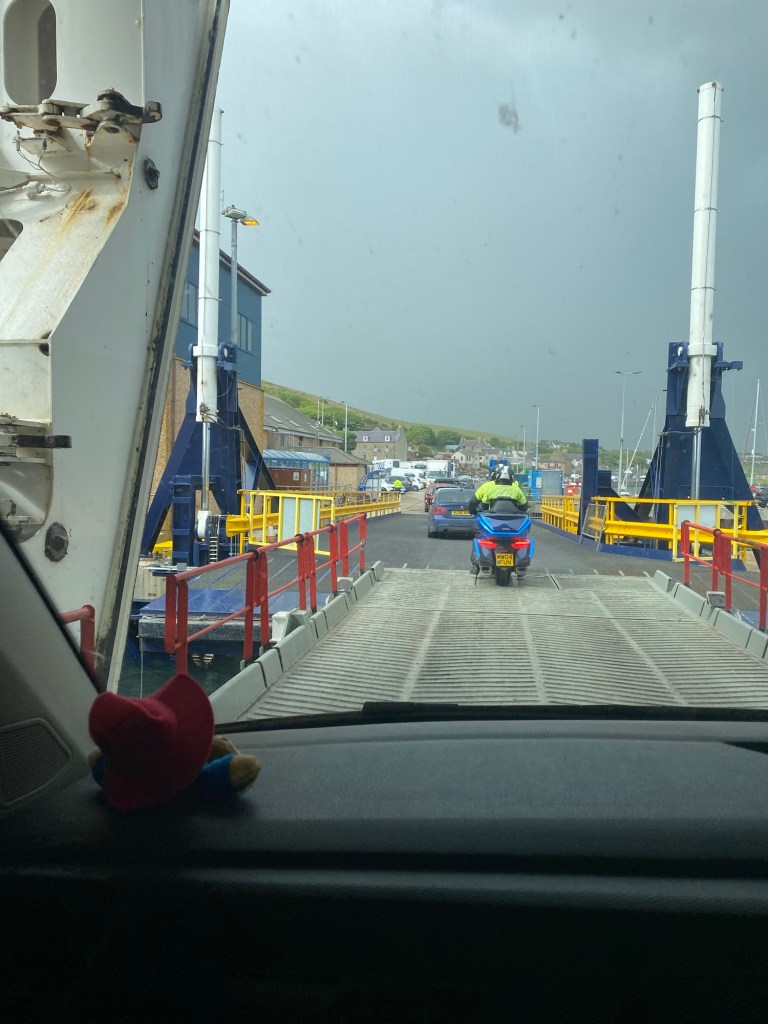
Getting off the ferry
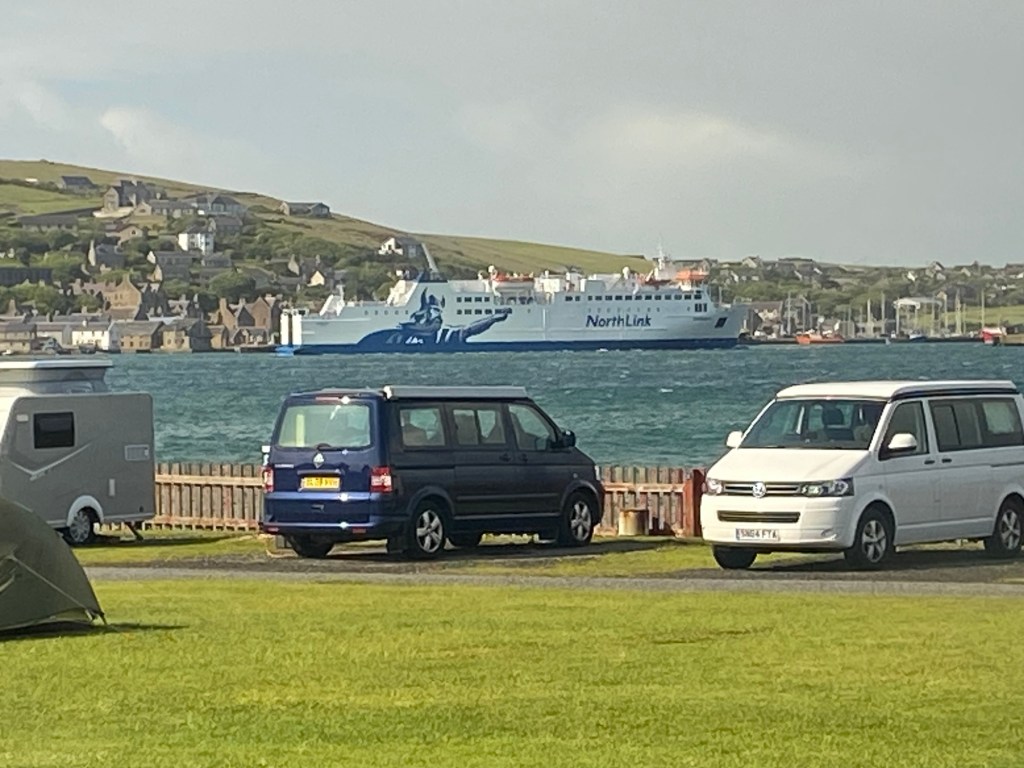
Our campsite, Point of Ness
Paddington likes the view.
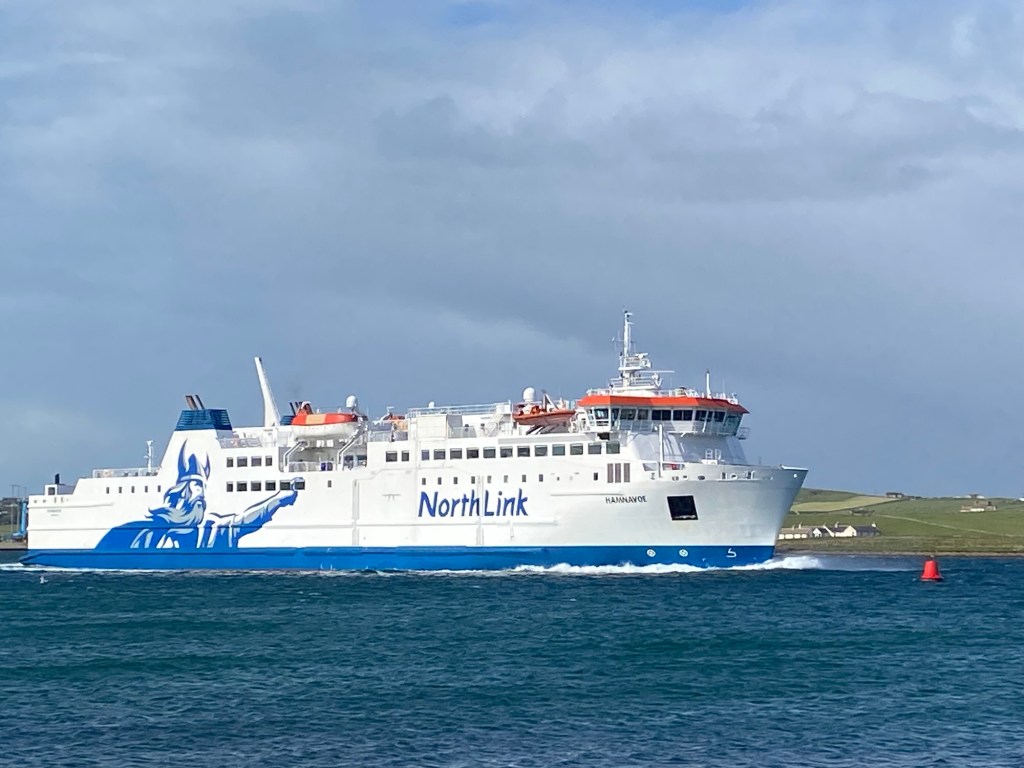
Northlink Ferry going past our campsite.

The winds were extreme that night. Our campsite, Point of Ness, was on an outcropping on the ocean with very little wind protection. The van shuttered and shaked a lot of the night. It was cold so we kept the heat on well into the late hours.

June 4th

We set out reasonably early to see Skara Brae.

Skara Brae is a 5000 year old Neolithic Village and a UNESCO World Heritage Site, about a 25 minute drive from our campsite. When we got there, we were told that because of the high winds, the actual village was closed all day. We would have to come another day. We were free to go around the exhibition and museum inside as well as the inside of Skaill house, a heritage estate next door. We did all that including a walk down to the beach in the wind, vowing to come back, if we could, to see Skara Brae itself.

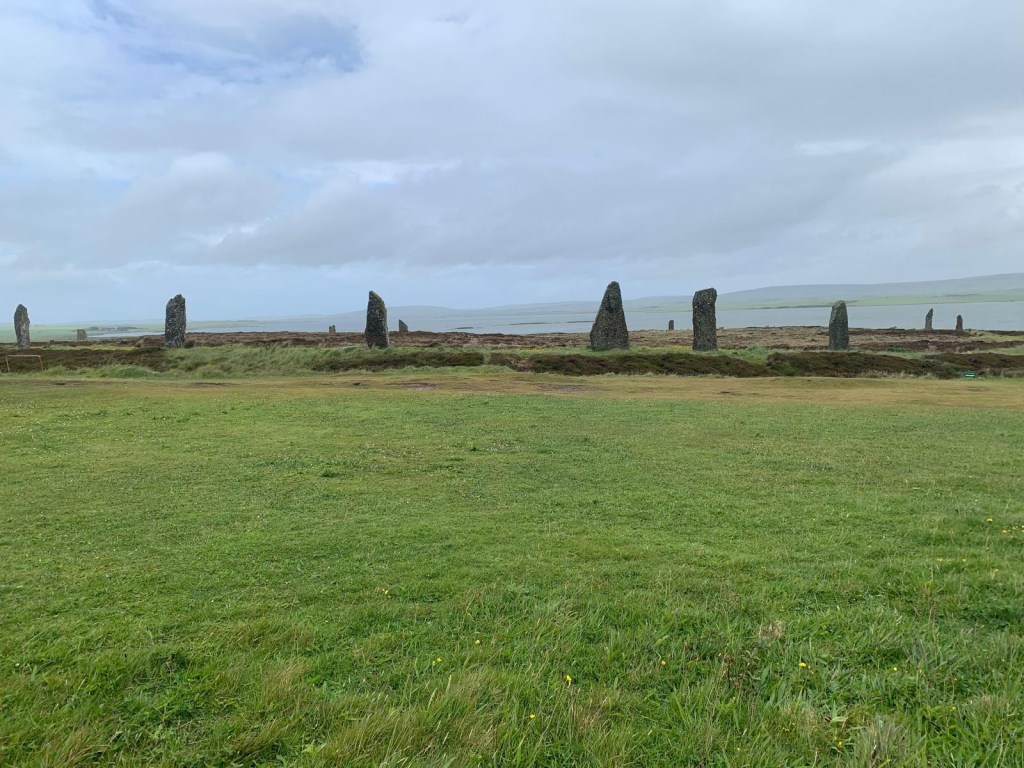
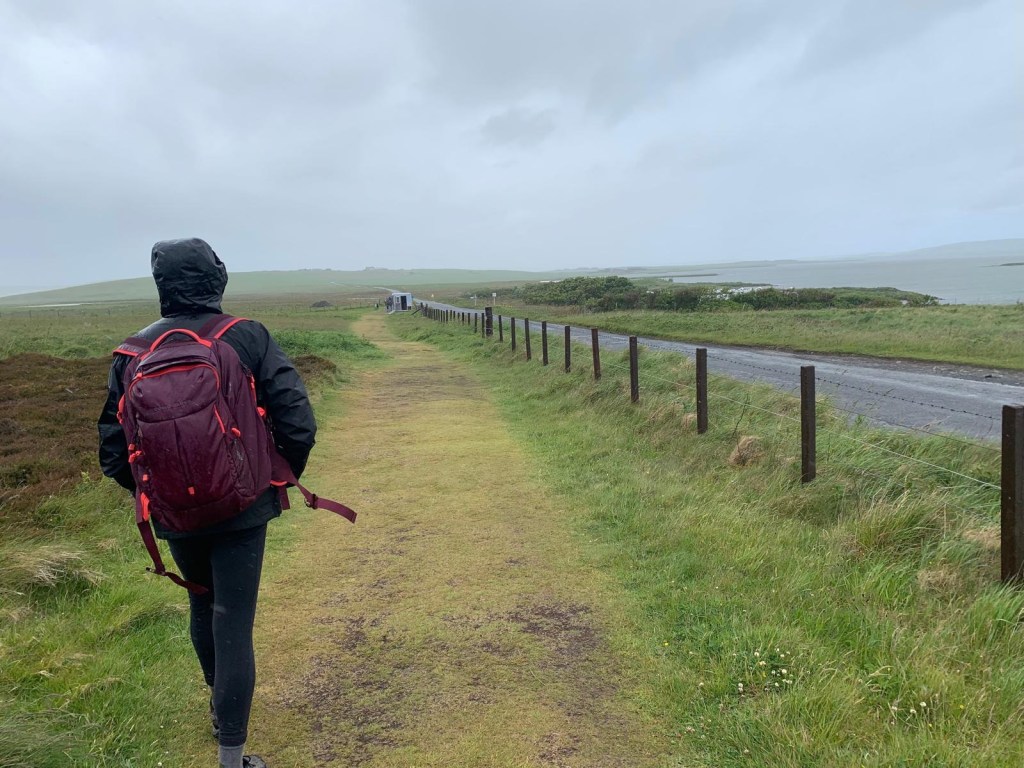
Afterwards, we set out to the Ring of Brodgar, another Unesco World Heritage Site in the Orkneys. This stone circle, with 37 of the original 60 left standing, is likely from 2500BCE – 2000 BCE and probably like other stone circles used for ritual. They are as important as Stone Henge due to its size and age. Like at Stonehenge, we couldn’t walk through the stones, only around them. With so many visitors each year, even stones need to be protected. The walk to the stones from the parking lot in the wind and the rain was very atmospheric and the elements somehow added to the whole experience.

Ring of Brodgar

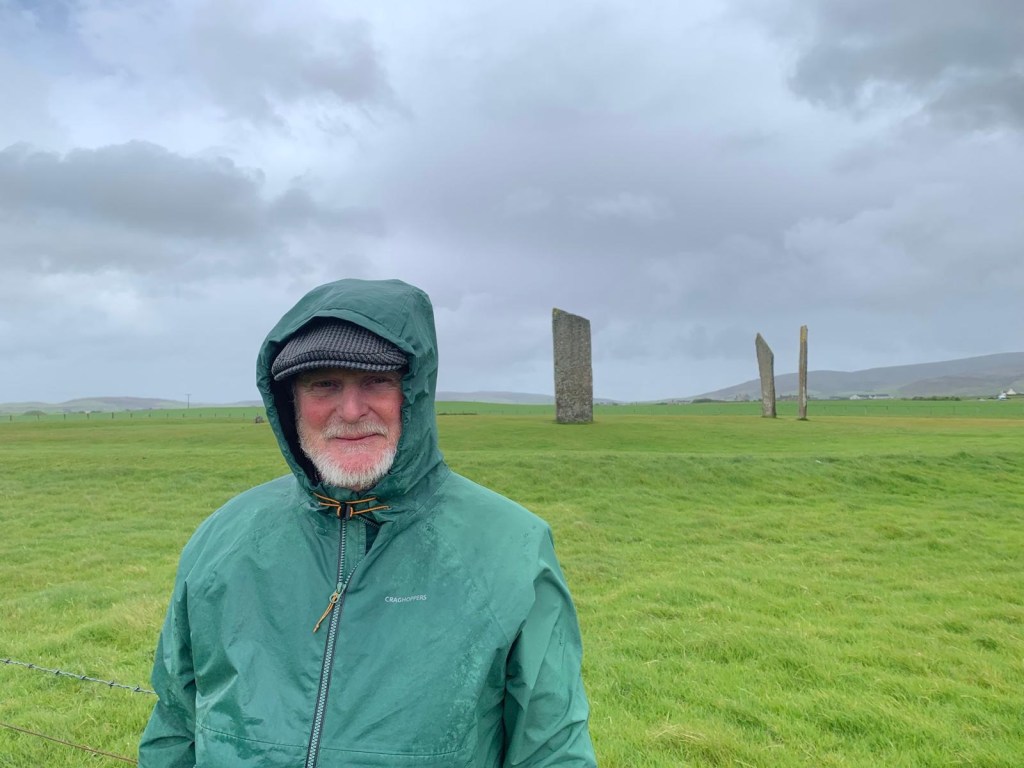
Afterwards, we walked out to the Stones of Stenness, about a mile down the road.

They are thought to be the oldest stone circle in the British isles, dating back to 5000 years ago. Also part of the Orkney World Heritage site, there used to be 12 large stones in the circle and now there are only 4.

The sun came out as we walked back to the car, a pleasant ending to our time visiting these ancient sites. After a quick parking lot snack in the van, we drove the half hour into Kirkwall, the largest town and most major hub in the Orkneys. Our plan was to see the Magnus Cathedral, The Earl and Bishops Palace and the Orkney Museum. In the end, we only had time to quickly see the Cathedral and go through the museum. We made the plan to come back to Kirkwall on our last day to spend more time there.

The Orkney Museum gave us a good overview of the area from the Stone Age to the Vikings. The Orkney Islands is made up of 70 islands. 20 of these islands are inhabited. The Islands are 10 miles off the north coast of Scotland. They have a Neolithic, Bronze Age, and Norse history with the Vikings. People from the Orkney’s are known as Orcadians. Vikings came to the Orkneys in the 8th century and began colonizing it in the 9th century. The Orkneys went from Norse rule to Scottish rules in the 15th century. Apparently 1/3 of Orcadians are descendants of Norse settlers and it’s shown in family names, place names, and genetically. The Orkneys are also a place of rich wildlife and the area was very involved in the first and second World Wars.

(https://www.wildernessscotland.com/orkney-islands-travel-guide/)

After the museum, we wandered back to the car, our heads like cabbages with all the information. We got gas and pumped up the tire with a slow leak. Then we picked up some groceries. We were heading to the Isle of Hoy the next morning for a couple of days. The Old Man of Hoy was expecting us.

Uist and onward.

May 28th

We headed out from our campsite at around 9 am to get our 10:45am ferry at Leverburgh (Harris) back to Berneray.

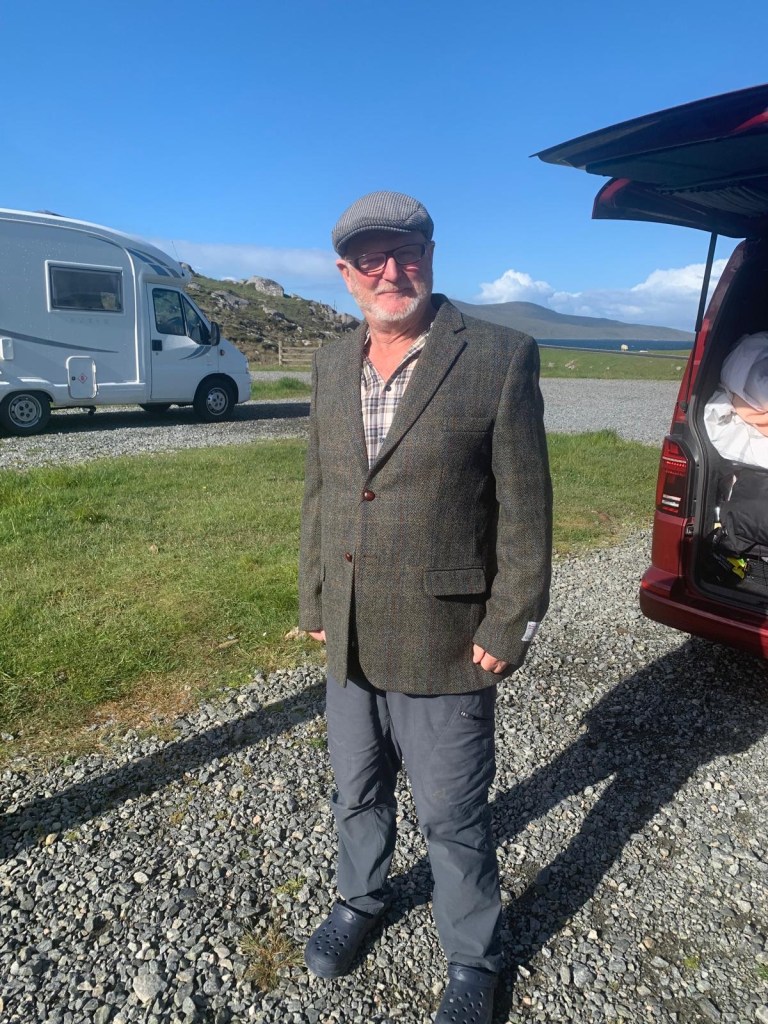
Guy in his new Harris tweed jacket. He wanted a pic before we left Harris.
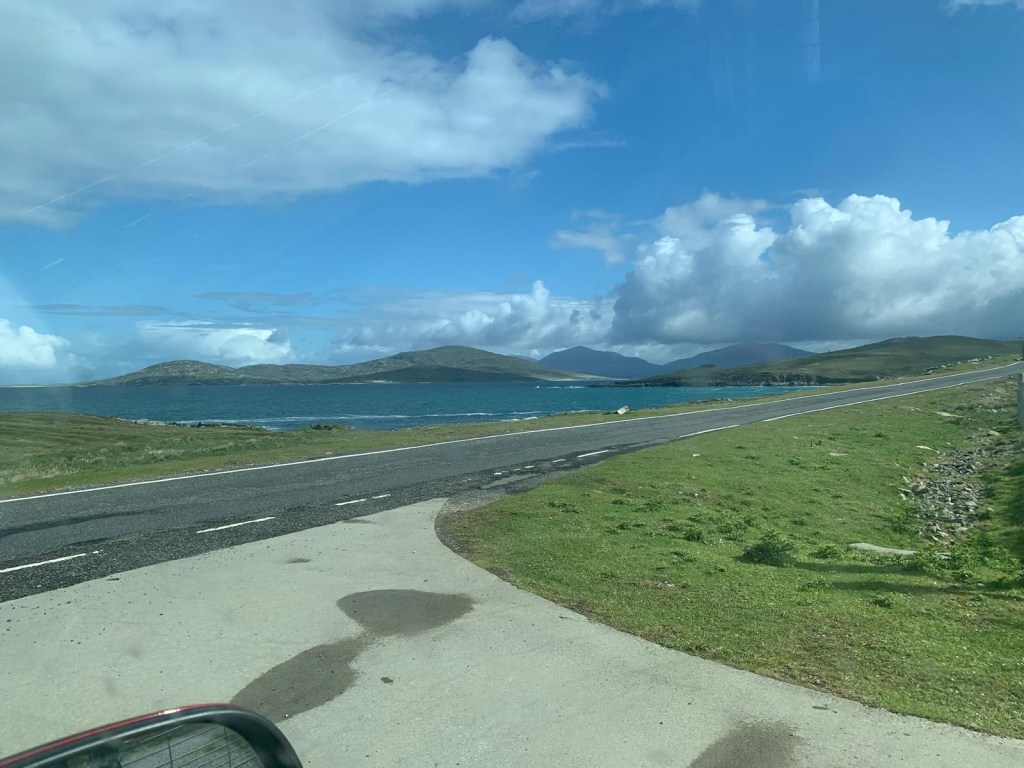
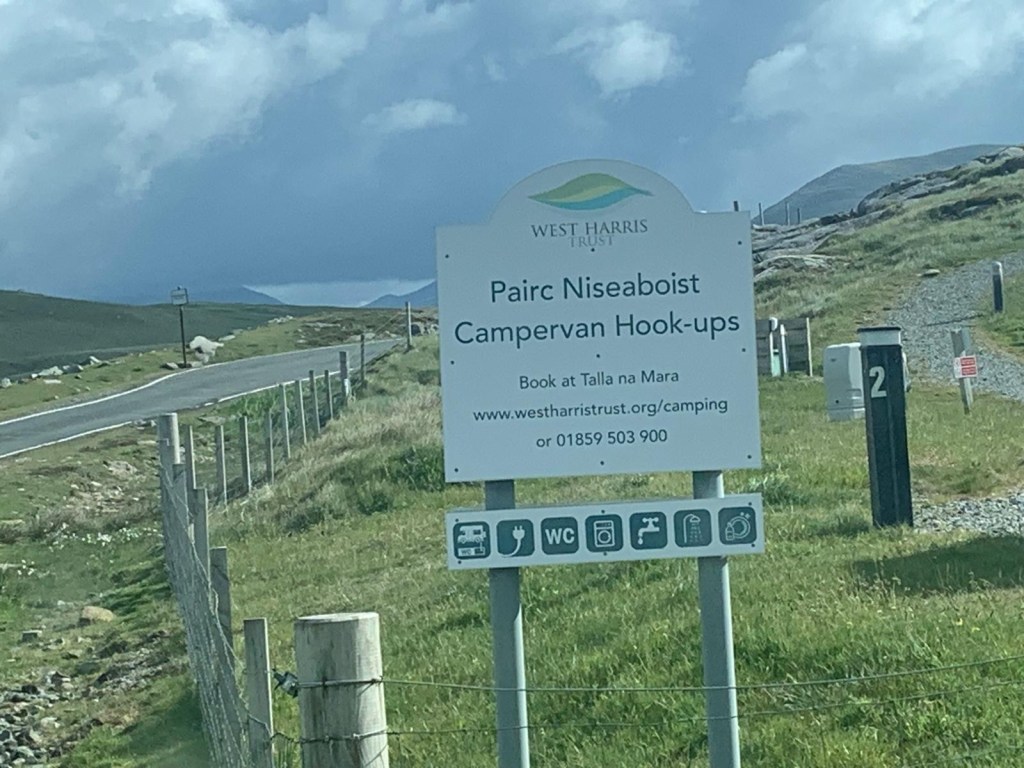
Leaving our campsite Pairc Niseaboist. I recommend this site, taken care of by The West Harris Trust.
On the way tto the ferry.

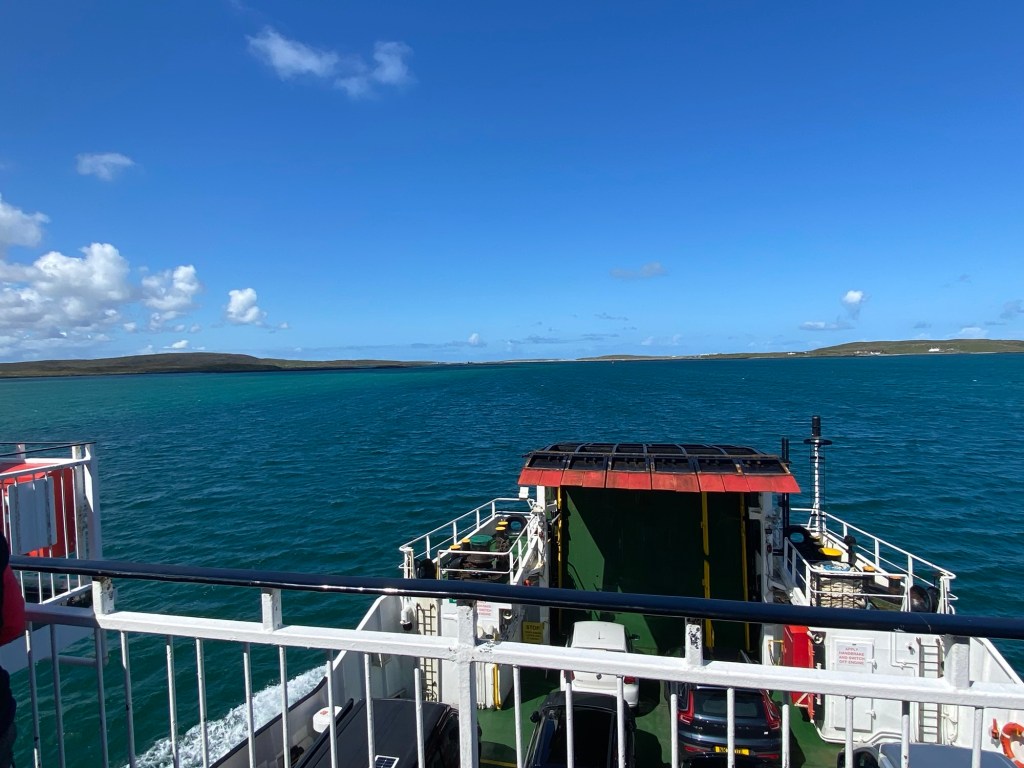
The ferry crossing was good and the sun did come out for most of the day.

When we got off the ferry at Berneray on our way back to Uist, we came to a T junction. We hadn’t programmed google maps yet and we couldn’t remember if we should go left or right ,so we turned right. We quickly realized we were on a road that goes up one side of Berneray Island. The scenery got better and better so we just continued on, passing cute little crofter cottages, beautiful bays, sheep on the road and finally, a stunning beach at the end of the road with an area on the gentle hill above it where we could park. We got out and sat on the hill enjoying the view and had a mid morning snack before we headed off again.

After the break, we headed back the way we came and in to the wee village of Lochmaddy on Uist. The scenery on the way up was incredible. We hadn’t been down this particular way the last time we were on Uist.

We got some fuel and then spent an hour or more at the local art gallery and museum.

Gas station at Lochmaddy. You filled up and then ran across the street to the supermarket and paid. Trusting!

By 3 pm, we were back at Balranald, the campsite we stayed at the week before. Guy promptly got to work painting and I headed off for a walk along the beach and around the headlands.

Guy made progress with his paintings that afternoon and into the evening. After dinner, we hit the hay reasonably early as we had an early morning start again with a 7:15 am ferry from Uist back to Skye.

May 29th

We were up at 5 am and on the road by 5:25 am. We are a fine tuned machine now when it comes to getting ready to go.

It was a rainy, misty morning with slight breezes after a windy night.

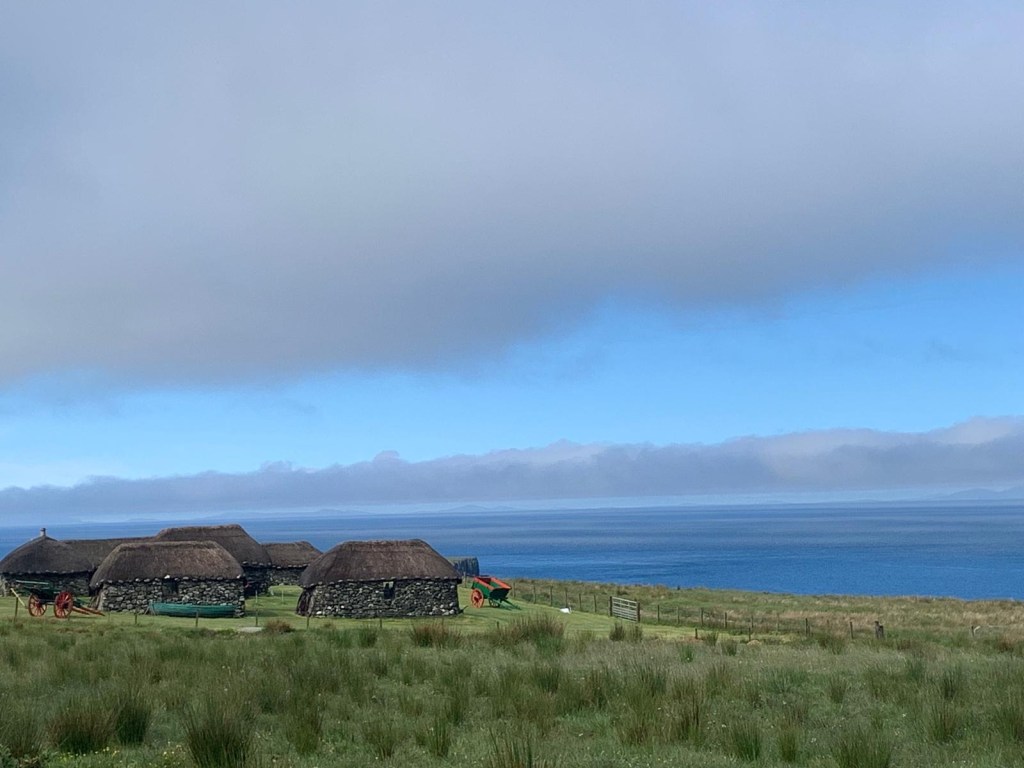
The 1 hour 40 ferry crossing across Little Minch was pretty smooth even though the captain said it could be a little rough. Once back on Skye, we drove the one track pot holed laden road to the Skye Museum of Island Life in the village Kilmuir, not far from Portree. We learned about the crofter way of life on Skye. The museum was setup in old black cottages.

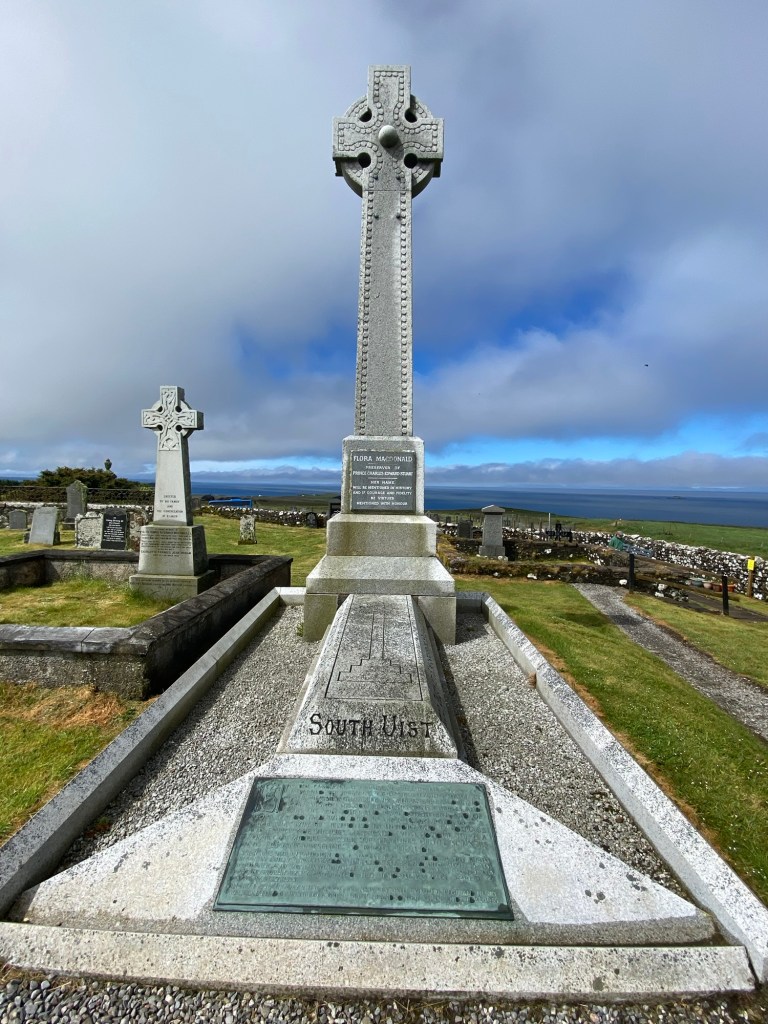
After the museum, we took a walk out to an old graveyard up the road from the museum. There was a memorial for Flora MacDonald, a much revered woman in these parts. She helped Bonnie Prince Charlie escape from Scotland after the battle of Culloden in 1746 where the Jacobite rebellion was squashed. It’s a long story and I’m no expert so here’s a link. https://www.historic-uk.com/HistoryUK/HistoryofScotland/Flora-Macdonald/

Memorial for Flora MacDonald.
Maybe a grave of an early Scottish king.

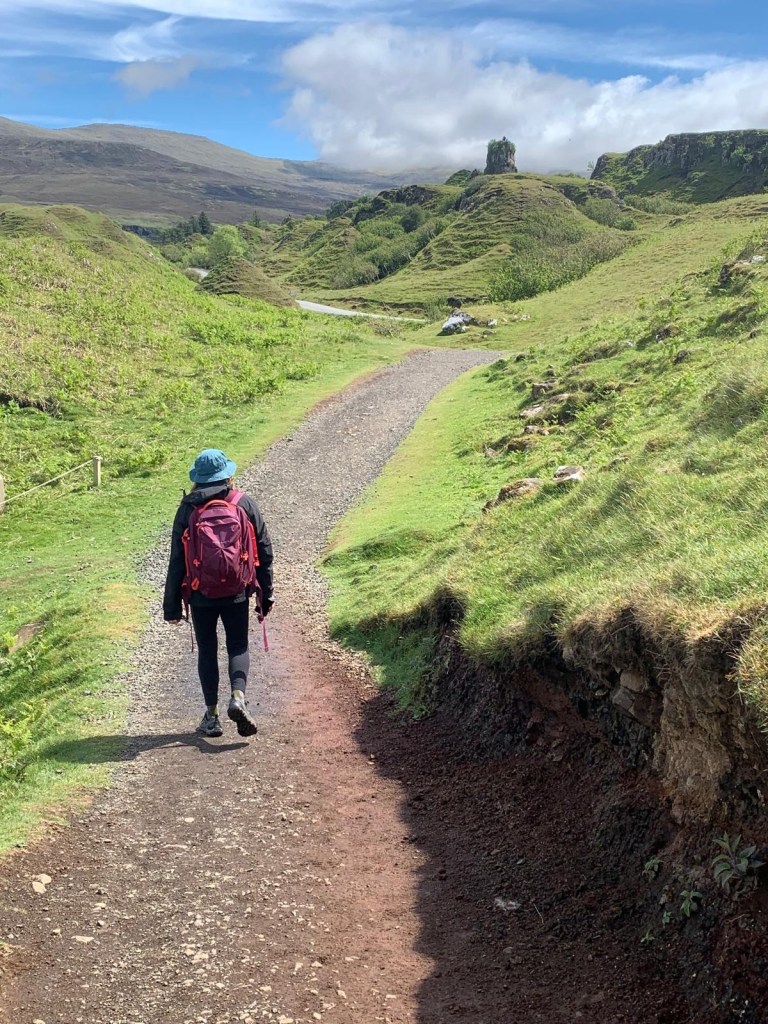
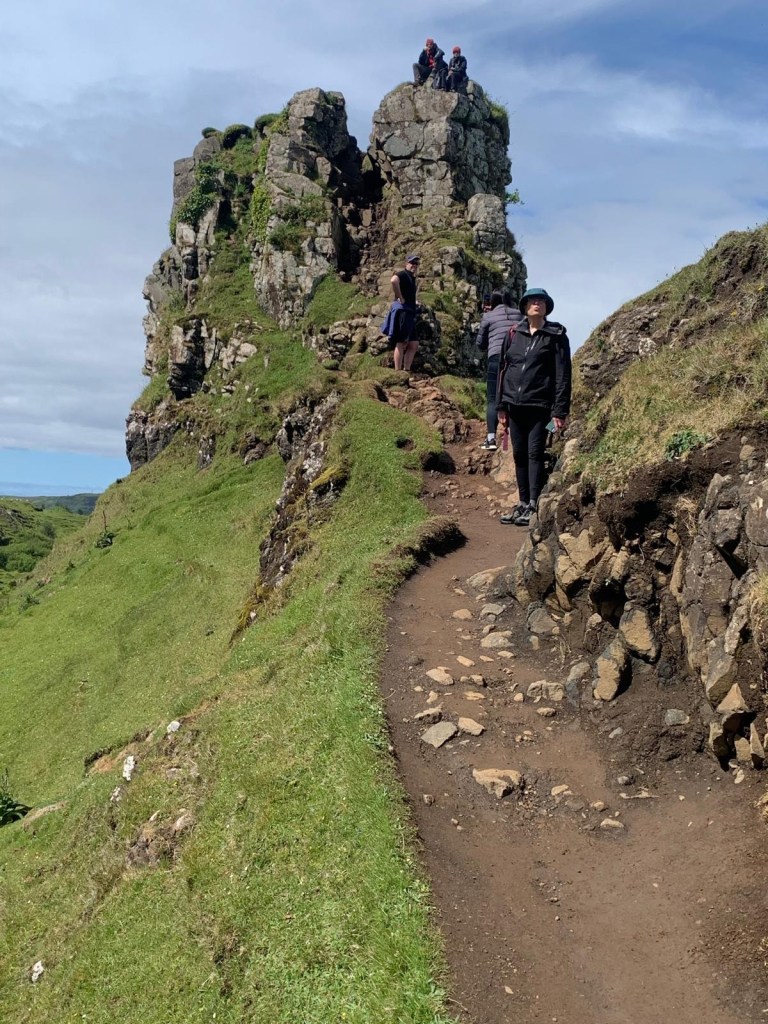
After the museum we went back on that crazy road we came in on and then went for a walk at Fairy Glen. We were not the only ones taking advantage of the sunny afternoon and it was quite busy. This magical place with interesting shaped hills and landscape “was formed over 100,000 years ago by post-Glacier landslides, while years of erosion and the elements sculpted the Torridonian sandstone be it into unusual patterns of cone-shaped craggy hillocks, random boulders, tranquil lochans and even a basalt castle.”(https://www.isleofskye.com/skye-guide/skye-places/fairy-glen)

The pictures do tell that story.

After Ferry Glen, we went to our campsite where Guy got to some painting. Time was running out for 10 paintings in the Hebrides as we only had one day left there.

May 30

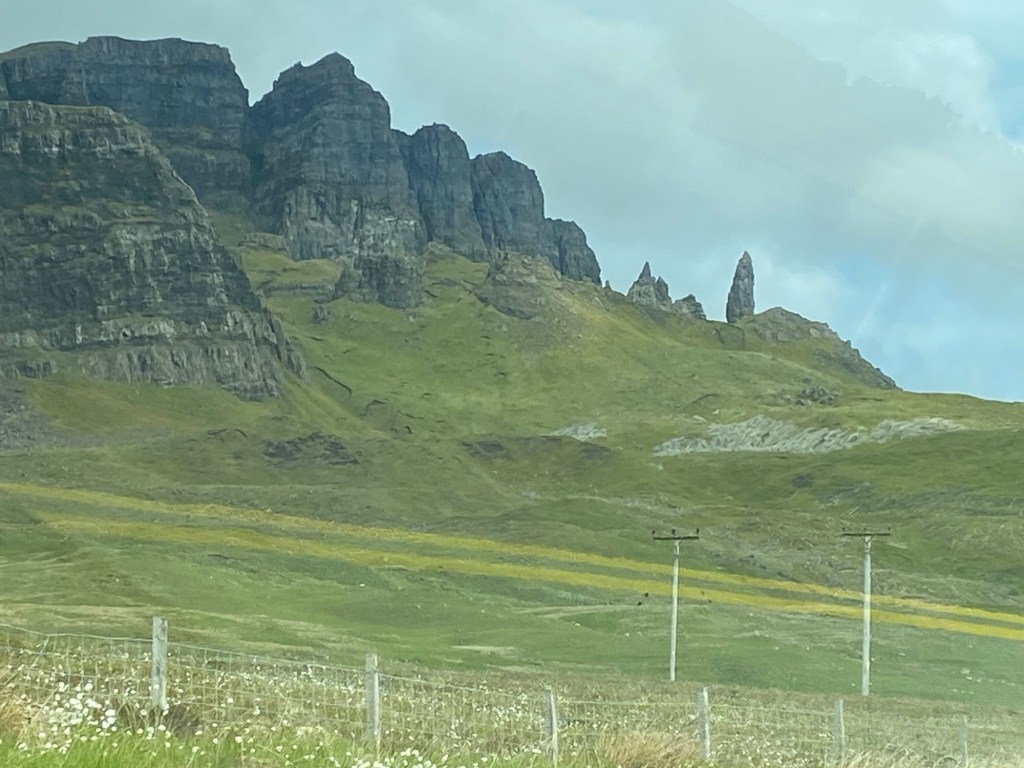
Our plan was to visit the Old Man of Storr. I guess it was everybody else’s plan too. Going through Portree was a traffic jam. We thought it might be road works but it was traffic congestion from folks heading up to the Old Man of Storr. When we reached the main parking lot at Storr, we were told camper vans weren’t allowed. It was completely full anyway. We were told to park in the overflow or on the road. They were both completely full. It was so frustrating. We decided to forget it since we did not fancy hiking with 1000 other people and got some pictures from the road and left.

Old Man of Storr area. Not the greatest photo.

Afterwards, we went to Portree to look around. It is a picturesque little village. We pulled into a parking lot and found out campervans were not allowed. The town was plugged with tourists by this point so we took it as an omen to get out of Portree.

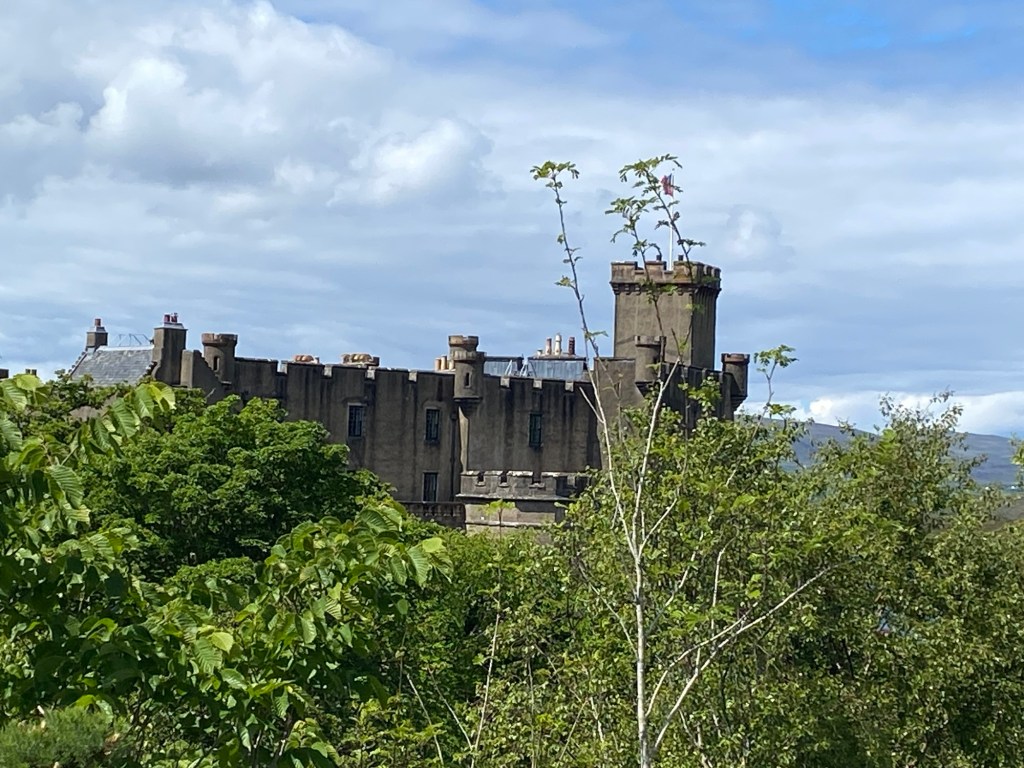
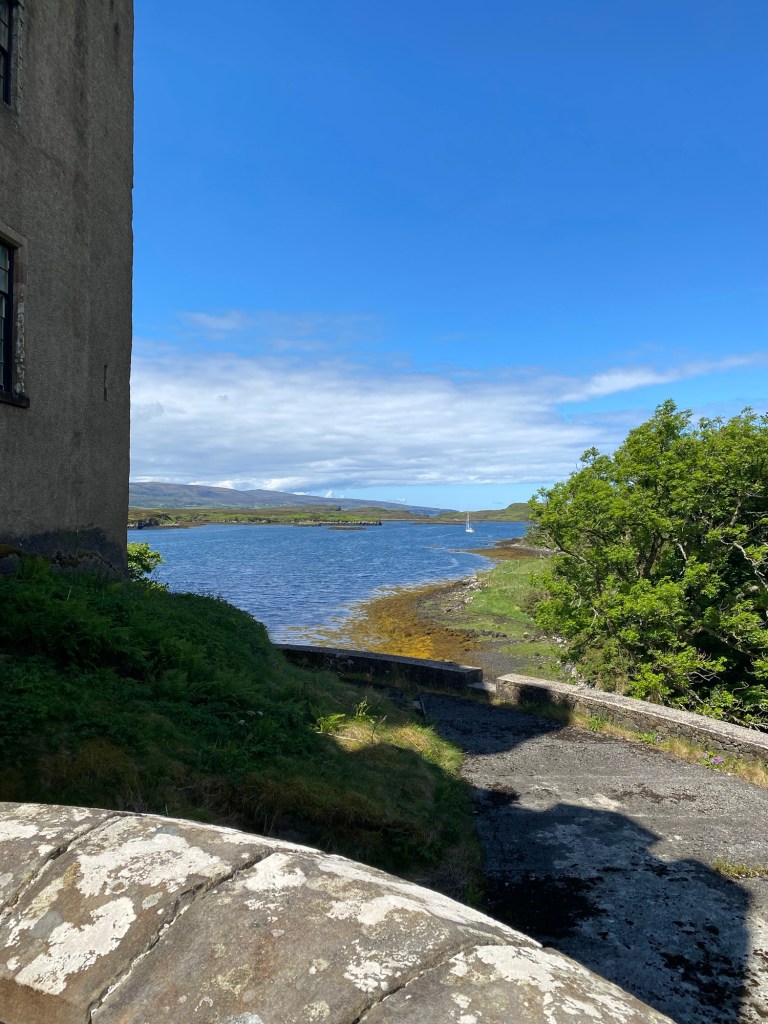
Our 3d option that day was Dunvegan Castle and Gardens. We had a lovely few hours there touring this beautiful estate and gardens of the MacLeod clan.

By bedtime, Guy had finished the last of his ten paintings of the Hebrides. Yeah, another bucket list item completed!! I will add pictures of the paintings to an upcoming blog.

May 31

We left Skye for the last time. Our destination was Poolewe in Wester Ross, part of the North Coast 500. We were on our way to the very top of Scotland.

The scenery was better than imagined.

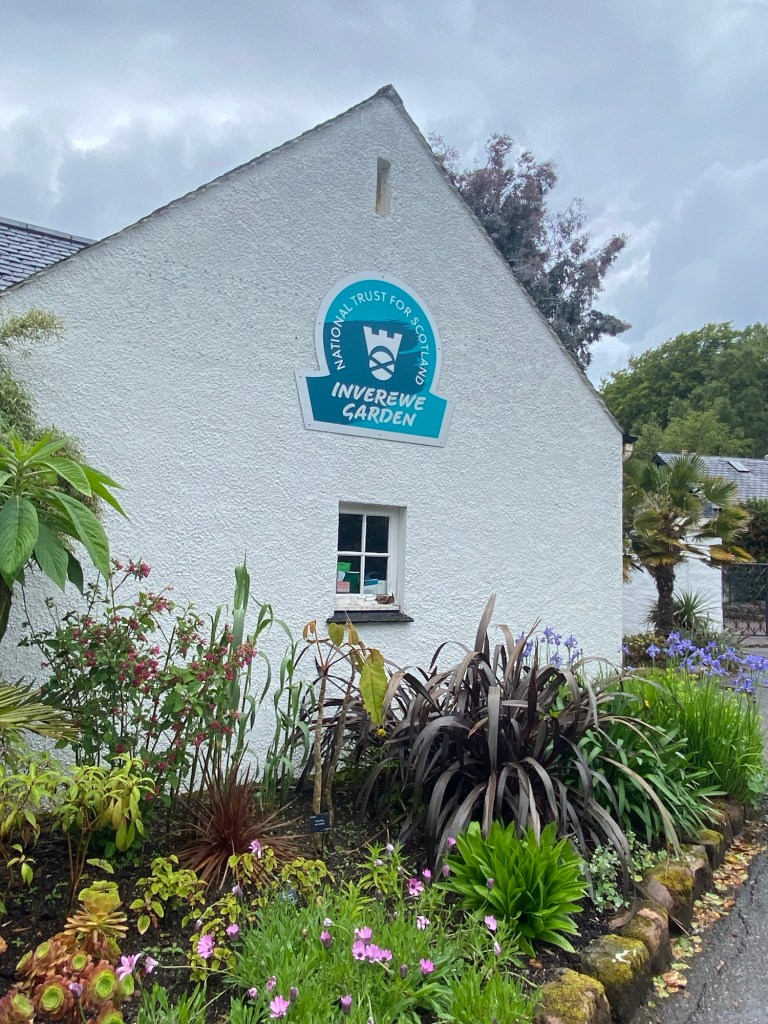
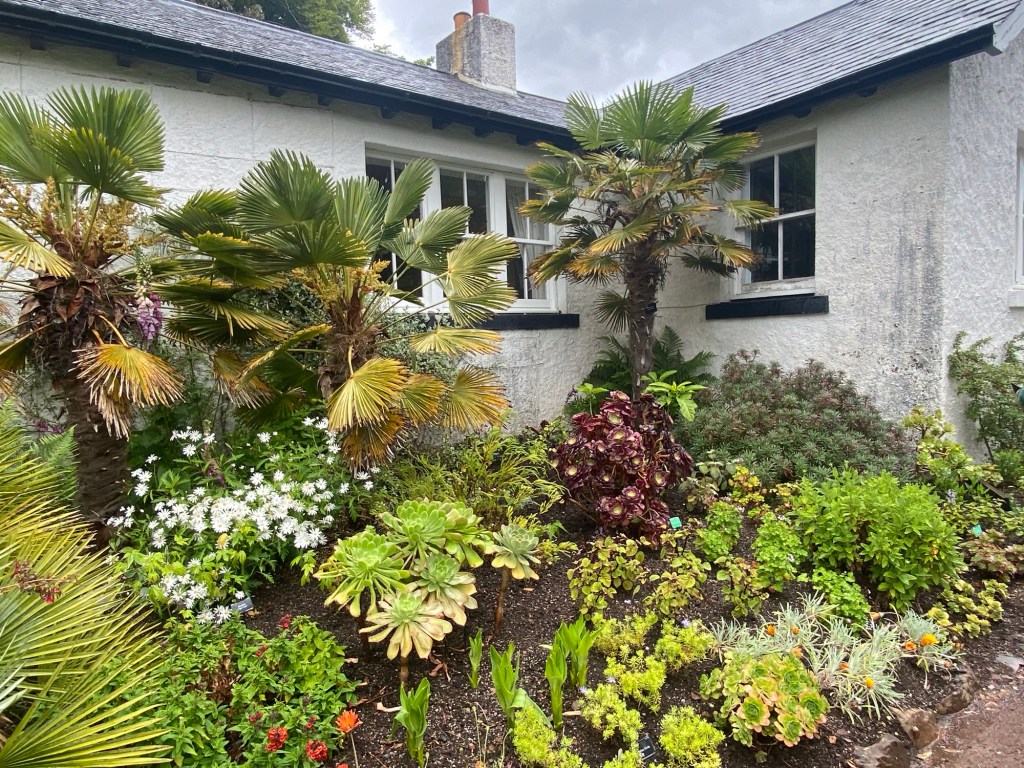
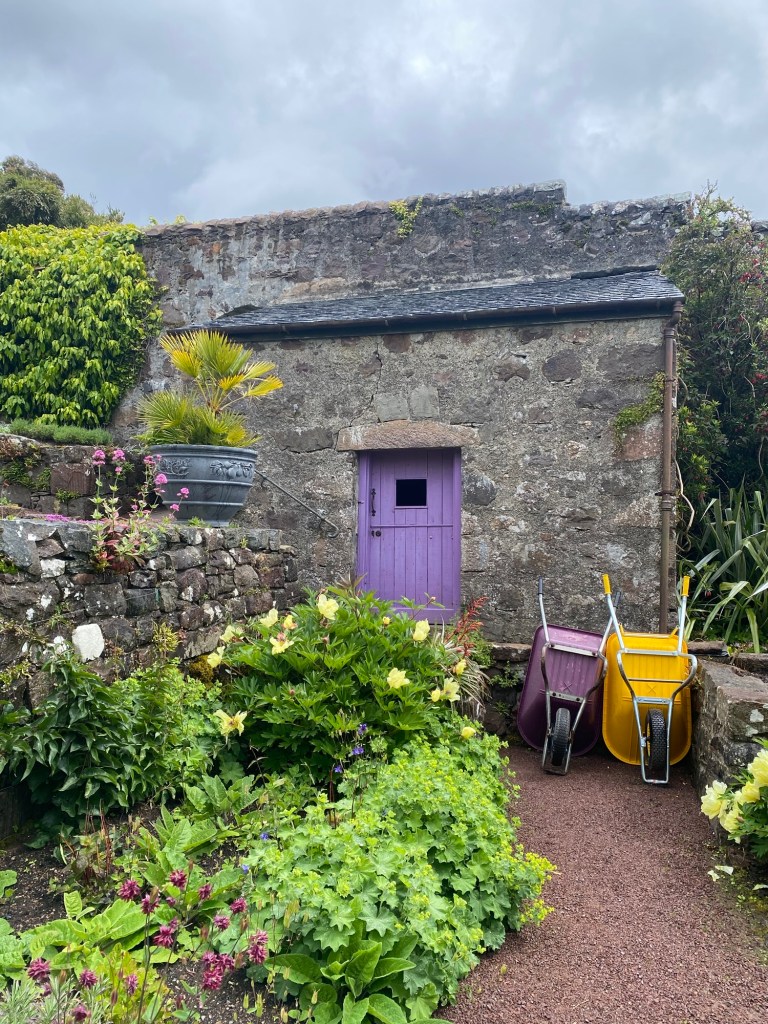
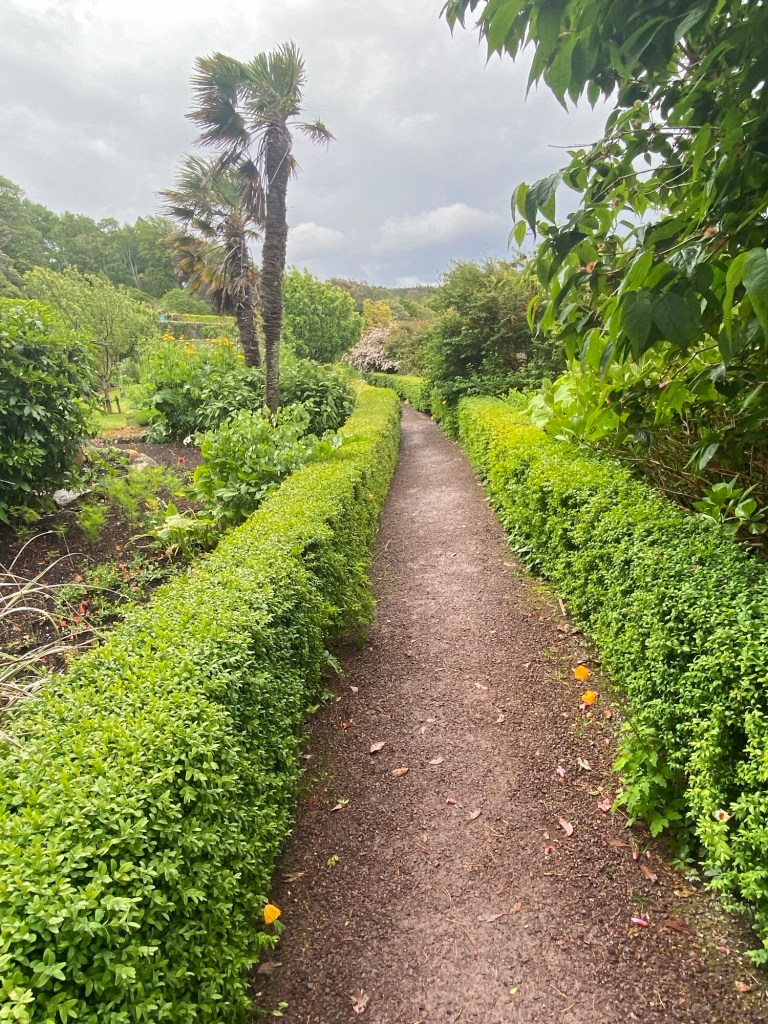
After the three hour or so drive to Poolewe on Loch Ewe, we visited Inverewe Gardens. The gardens are cared for by at the National Trust of Scotland. The original owner of the property was Osgood Mackenzie. In 1862, he started the garden from barren land. He had to bring in masses of soil and plant dozens of trees with the goal to create a wind break from the harshness of the winds of the Atlantic. He had a passion for gardening. This area of the Scottish coast is impacted by the Gulf Stream so different plants including more tropical ones can be grown here.

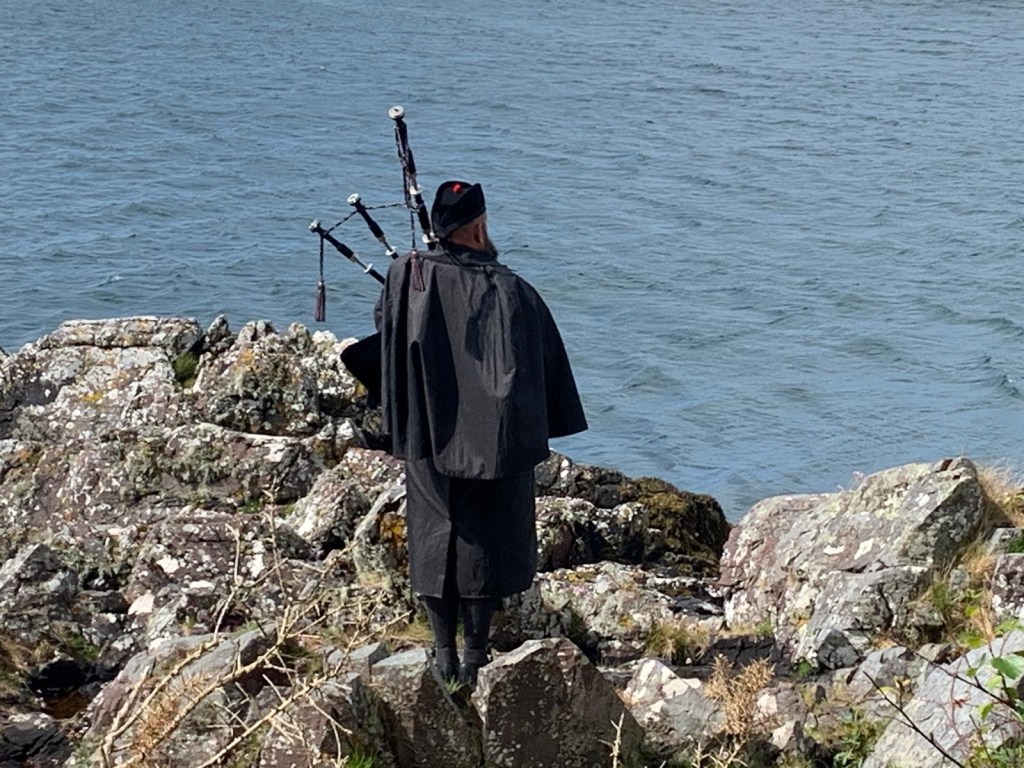
One of the highlights of the day was a bag piper down at the jetty on the property who was piping in tourists from a cruise ship. They were being brought into shore by little boat to see the garden. I heard the pipes and we went to find them. It was so moving to hear looking out to the highlands. Love the bagpipes!

Lewis and Harris

May 25th

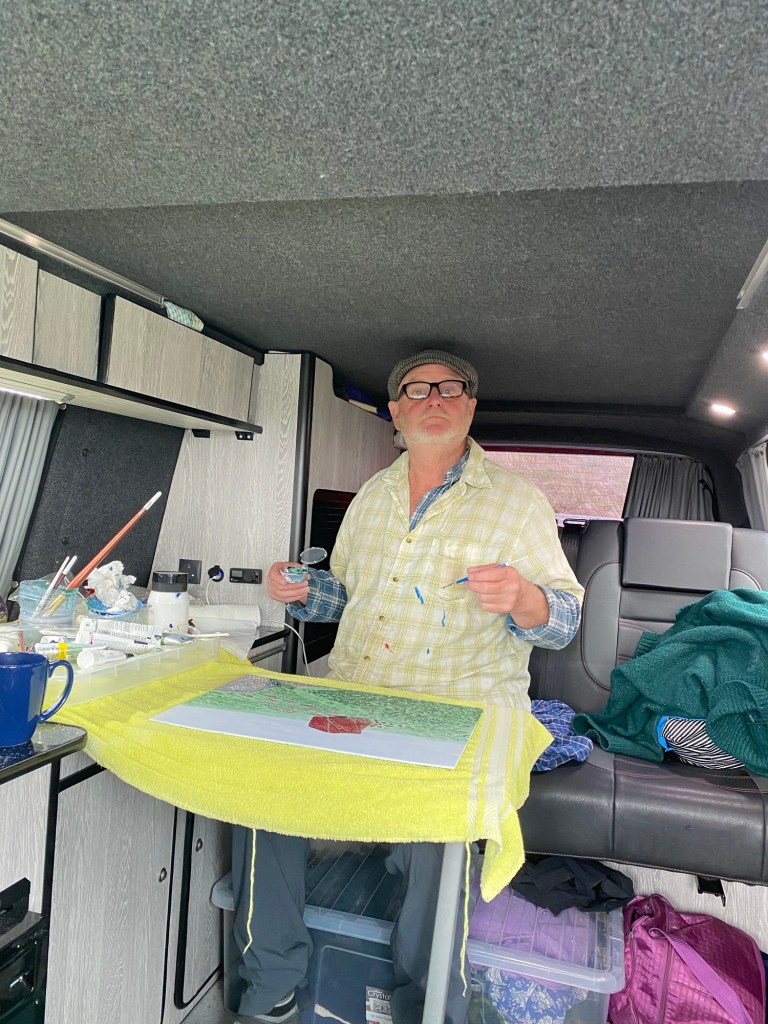
It was a quiet day at the campsite on Harris. The wind was howling and the rain was coming down, so we decided it was a good catch up day for Guy and his painting. He is under a bit of a time limit as his bucket list states, “ I’ll shall do 10 paintings on the Outer Hebrides”.

Painting mode

I caught up on my blog and did a bit of laundry and reading.

The Hebrides islands are known for their tumultuous weather with being right on the North Atlantic. Now as I write, it’s blazing sunshine through the clouds and it looks promising. But give it a minute and we will likely be back to rain and wind and then sun again.

It was just us and the sheep today at the campsite.

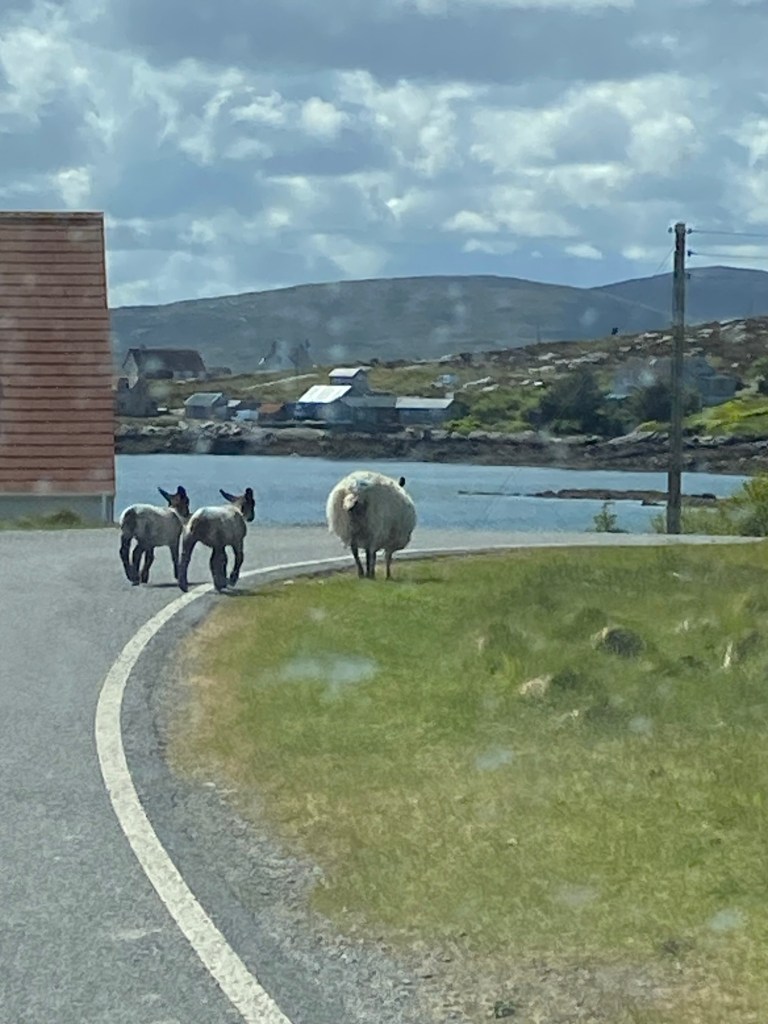
Sheep on the road outside the campsite gate
View from campsite. Feel bad for the sheep in this weather but at least they have the right outfits.

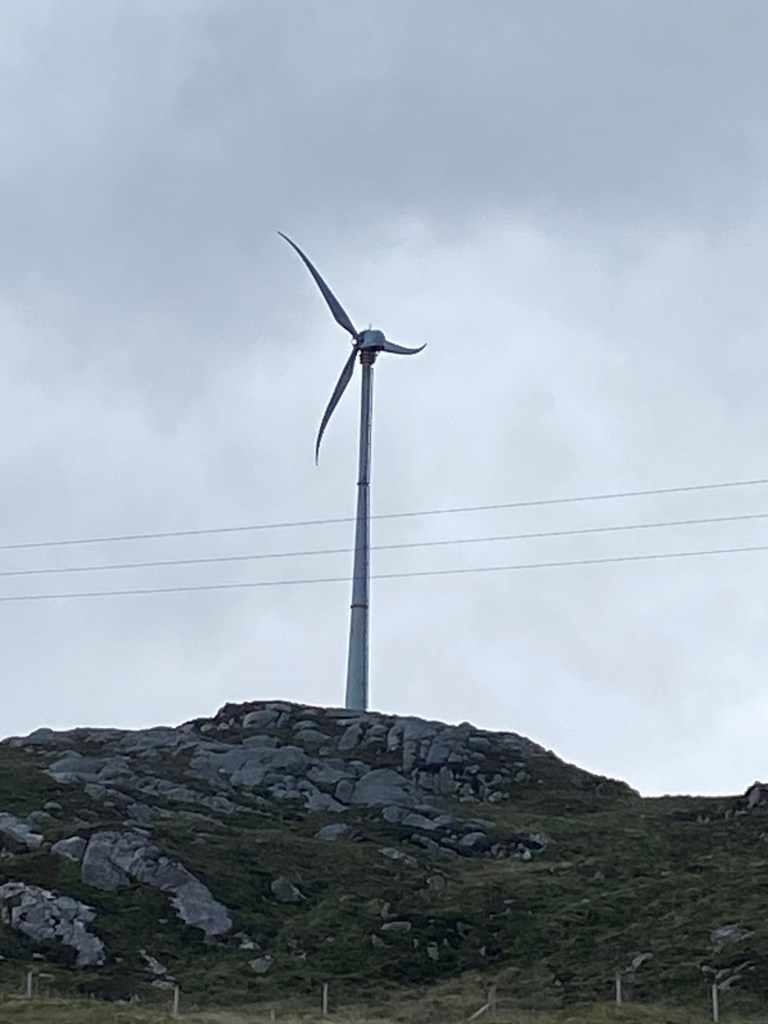
Just an observation, above our campsite is a windmill. It is super windy and it hasn’t moved since we got there. I may climb up to the top with some WD40 and fix it. 😂

Windmill needs some oil

May 26th

We left our campsite by 9 to drive north up to Lewis to see the Callanish Stones and Gearrannan Blackhouse Cottages. The scenery on the way up was stunning. The mountains got bigger (Hebrides standards) and more dramatic on North Harris and into Lewis.

Seilebost beach near the campsite
Driving westward on the Isle of Lewis to the Callanish Stones.

The Callanish Standing stones are 5000 years old, older than Stone Henge. Rituals were held there for 2000 years. As well, it may have acted as an “astronomical observatory” when the low moons light hit the stones every 18.6 years. (www.historicenvironment.scot/visit-a-place/places/calanais-standing-stones/). On this day, the skies offered a great backdrop to highlight the stones.

Callanish Standing Stones on the Isle of Lewis
The stones from another angle.

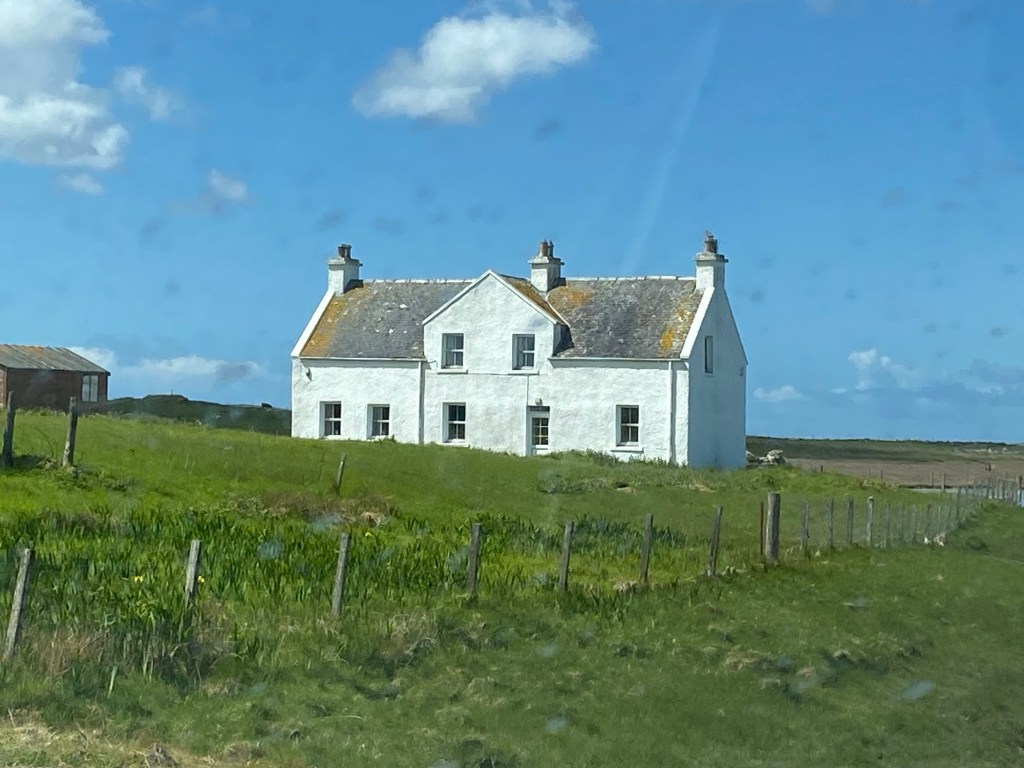
After the stones, we motored along to Gearrannan Blackhouse Cottages. Enroute, I took pictures of the countryside and old houses that Guy is intrigued by.

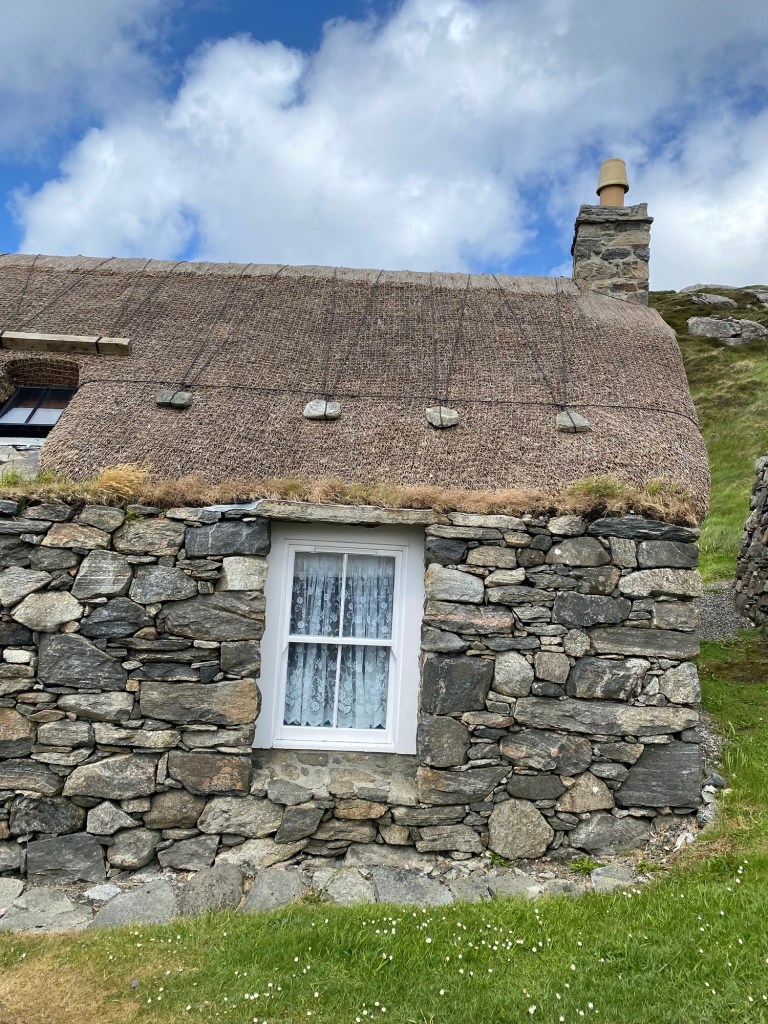
The cottages at Gearrannan were crofter cottages, built in the late 1800’s and inhabited until 1974. They are called black cottages because they are made out of turf and stone, with very thick and sturdy walls, and thatched roofs. This type of building was very common in days of old.

At the museum, we learned about the weaving of Harris tweed, how peat is harvested and dried for fuel, the lifestyle of crofters and their challenges over the years. For those that don’t know, a croft is :

“a traditional Scottish term for a fenced or enclosed area of land, usually small and arable, and usually, but not always, with a crofter’s dwelling thereon. A crofter is one who has tenure and use of the land, typically as a tenant farmer, especially in rural areas”. (Wikipedia).

Crofts received special legislation in 1886 after the Highland Clearances from 1750 to 1860 when highlanders were evicted off their lands, land often worked by their families for generations. It destroyed a way of life and the rich culture that went with this life. Many people from the clearances immigrated to Canada, America and Australia and New Zealand.

We went into the cottages and they felt so solid. It was a very windy day and you could feel no trace of the wind inside. Each cottage had two chimneys for cozy heat all around. One had a peat fire burning in the fireplace when we were there. I was tempted to put the kettle on and settle in next to the fire.

A well stacked pile of peat.
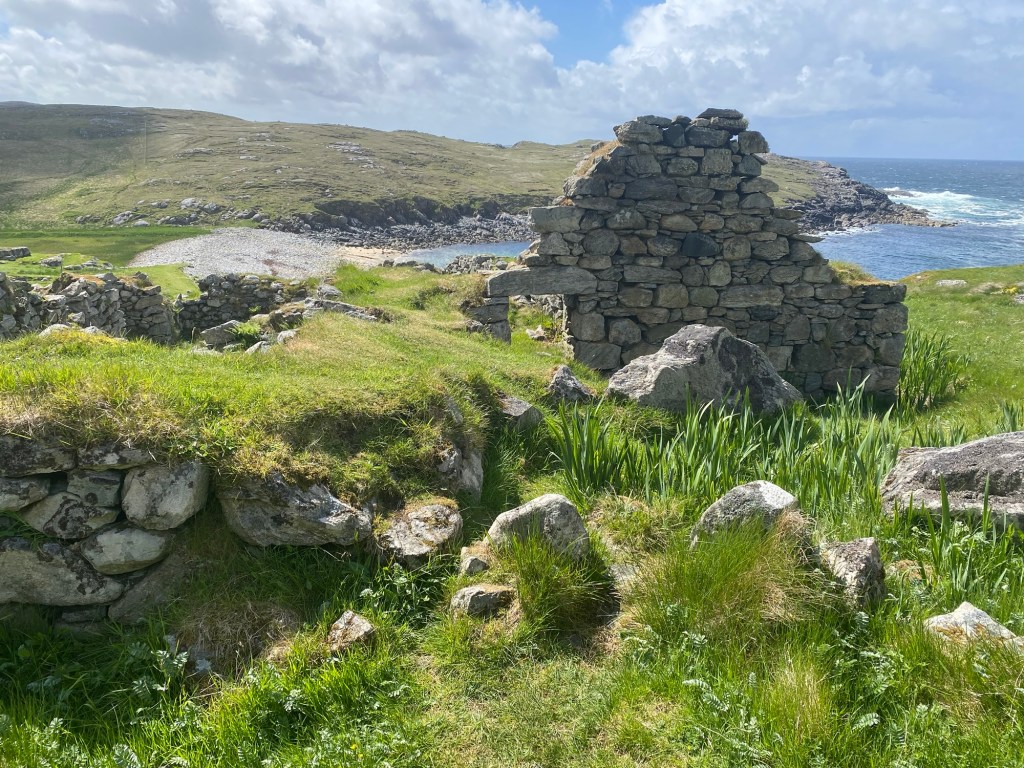
A ruined cottage not yet restored.

In 1989, Urras nan Gearrannan or Garenin Trust, (named after the township the cottages are in) took them over and have been working at restoring them since. You can rent out one of the cottages for a vacation, a good fundraising measure to enable them to carry on the restoration and upkeep.

A walk nearby the cottages.
A little cove beneath the village.

After visiting the Black Cottages, we headed north and then east down to Stornaway. We did a bit of shopping and drove the one hour back to the campsite in Harris.

We got back to the campsite around 6:30 pm for another blustery and rainy evening.

May 27th

Guy painted in the morning. I went and checked out some art galleries nearby and then had another walk up MacLeod’s Stone. It was fabulous to be up there in the wind and sun on my own.

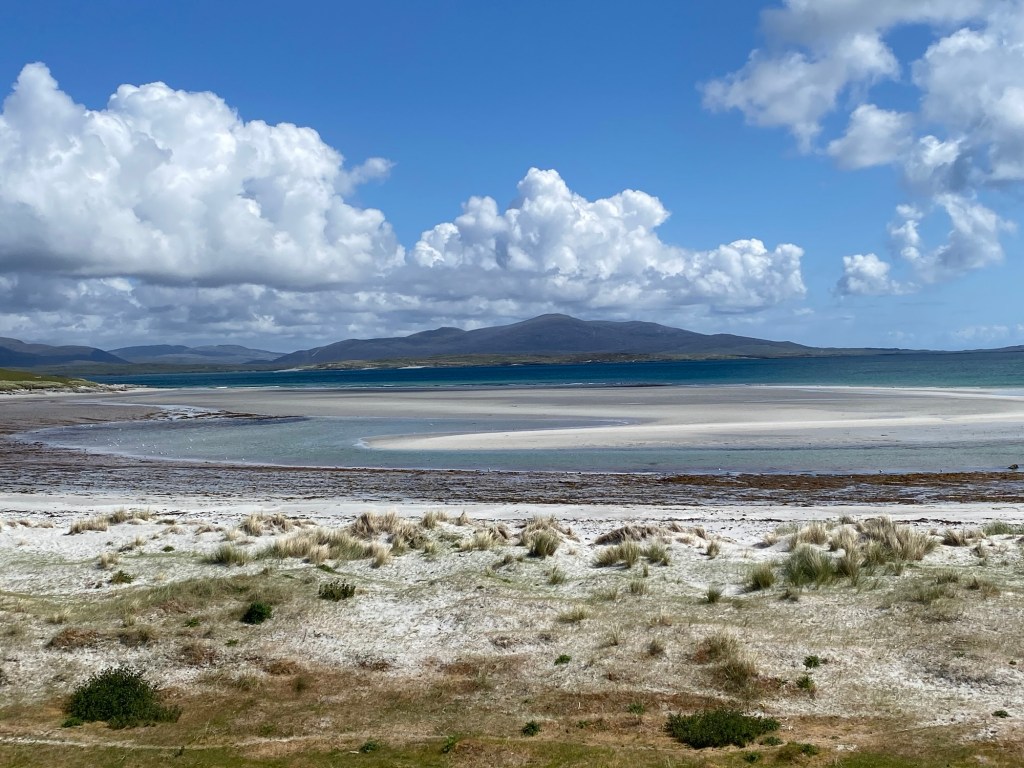
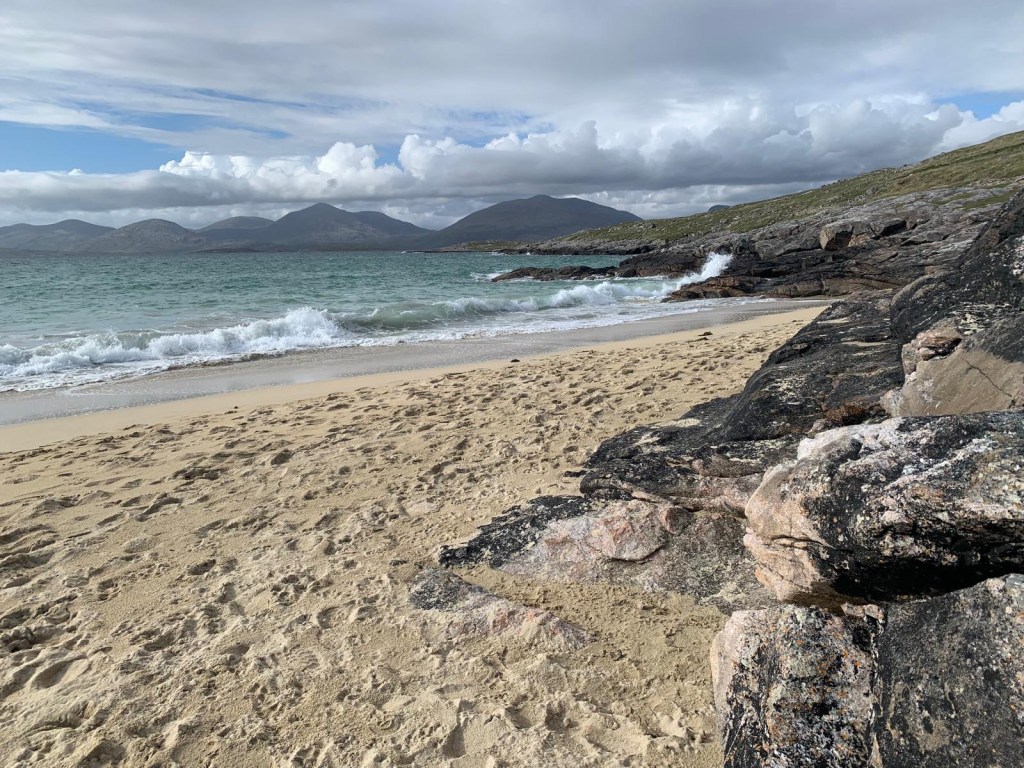
In the afternoon, when the sun came out, we drove out to Luskentyre Beach. It has been voted one of the best beaches in the UK. The road out to the beach is a one track with lots of pull outs, in a very beautiful pastoral setting hugging the edge of a lake. The white sanded beach goes for miles and the day we were there, the ocean was a beautiful blue that reminded us of warm weather holiday places we have been.

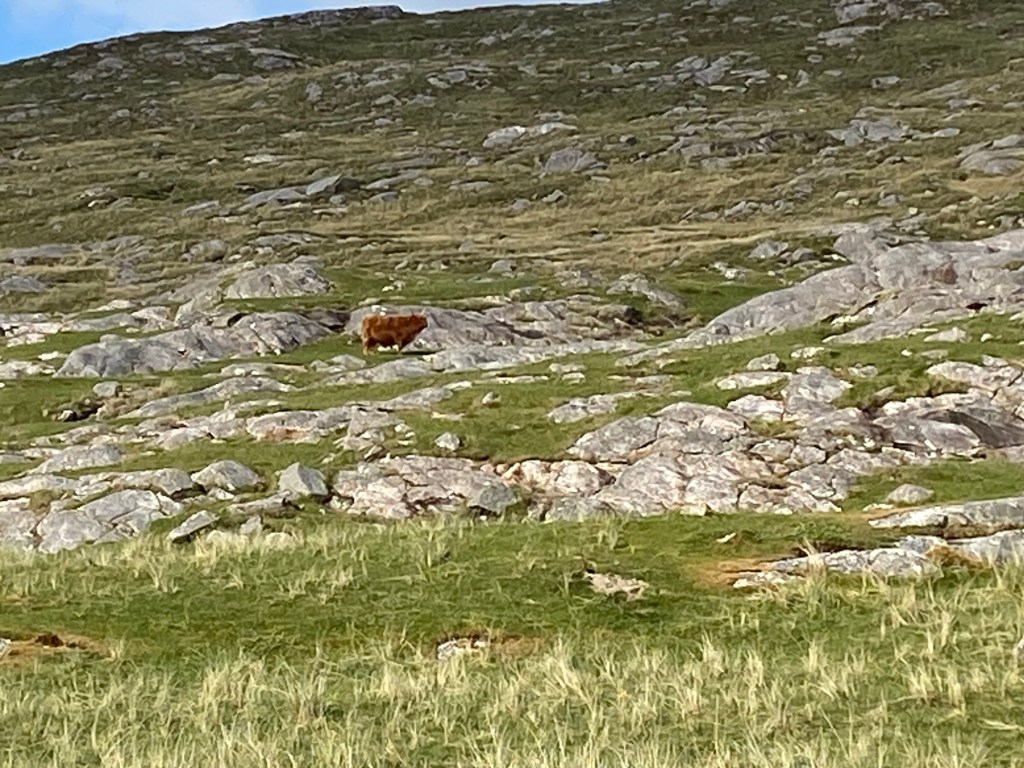
Angus cow on the hill by the beach.

It was a lovely sunny walk on the beach. Now back at the campsite, the winds are roaring and there is intermittent heavy rain. I commented about the rain to another camper earlier in the day and she said, “What? This is good weather.” And her husband chimed in, “You don’t come to Scotland for the sunshine.” You got that right!

We are spoiled. We had such a long run of sunshine. Looking back, we landed in London on February 28th to sunshine and it was mostly that until just after our time in Glasgow around May 17th, except for a blip in Wales in Bala back in April.

Our time in the UK and Ireland is moving along. We go back to Uist (still Outer Hebrides) tomorrow for one night before heading back to Skye (Inner Hebrides) for two days. The following day, we start working our way north up the west coast of mainland Scotland.

Sunset, last night on Isle of Lewis.