April 27th
We left Tree Grove Campsite and Kilkenny in the morning. I loved the ponies that were in the field across from our campsite. Every time I passed them to wash the dishes or visit the facilities, I said hello. They would often come up for a scritch.

Our destination that morning was The Rock of Cashell in County Tipperary on our way to County Cork.


The Rock of Cashell is a massive limestone outcropping with a number of ecclestical buildings towering above the village of Cashell. It is quite an awe inspiring site to see when you first enter the area.
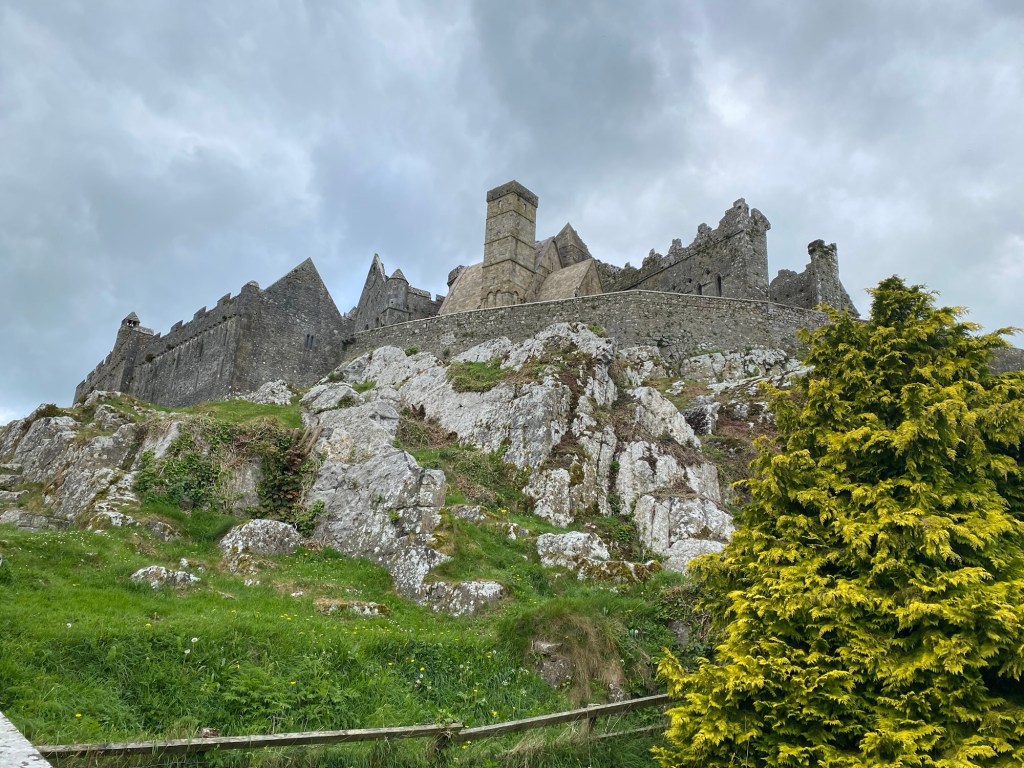
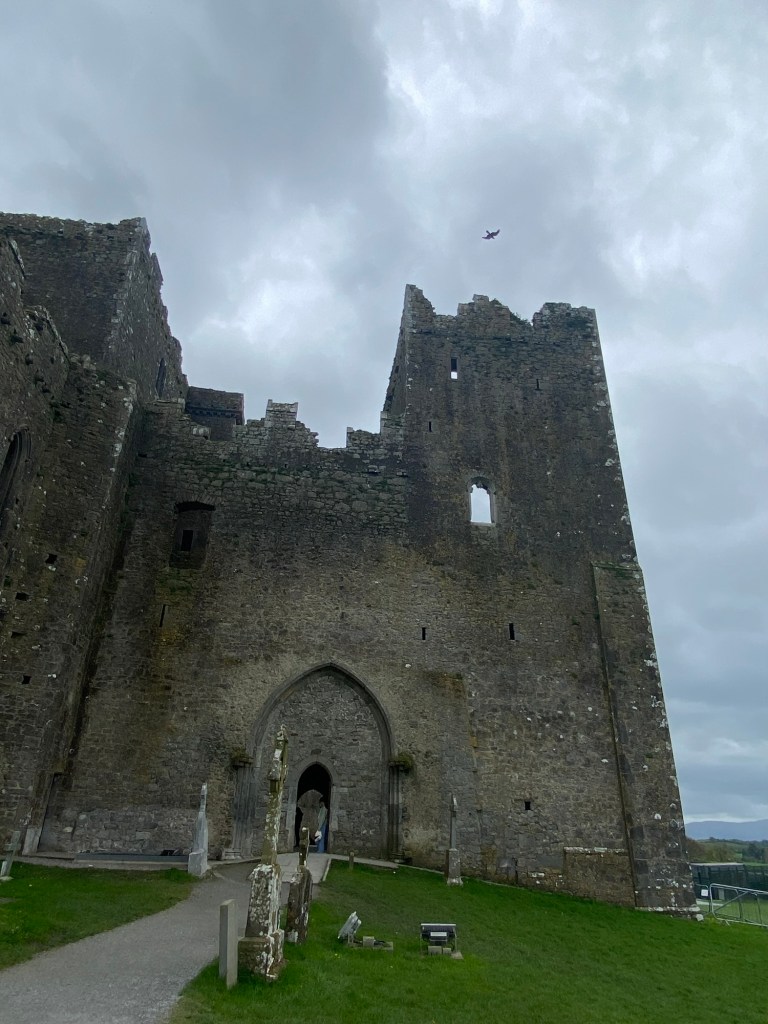
The Rock of Cashell has a wealth of history. From the Heritage Ireland website it says The Rock of Cashell is “iconic in its historic significance” and “possesses the most impressive cluster of medieval buildings in Ireland. Among the monuments to be found there is a round tower, a high cross, a Romanesque chapel, a Gothic cathedral, an abbey, the Hall of the Vicars Choral and a fifteenth-century Tower House.” (https://heritageireland.ie/places-to-visit/the-rock-of-cashel/). Apparently St. Patrick came here in the 5th century from Britain to convert the King of Munster to Christianity. Munster is one of four provinces Ireland was divided into in early times.

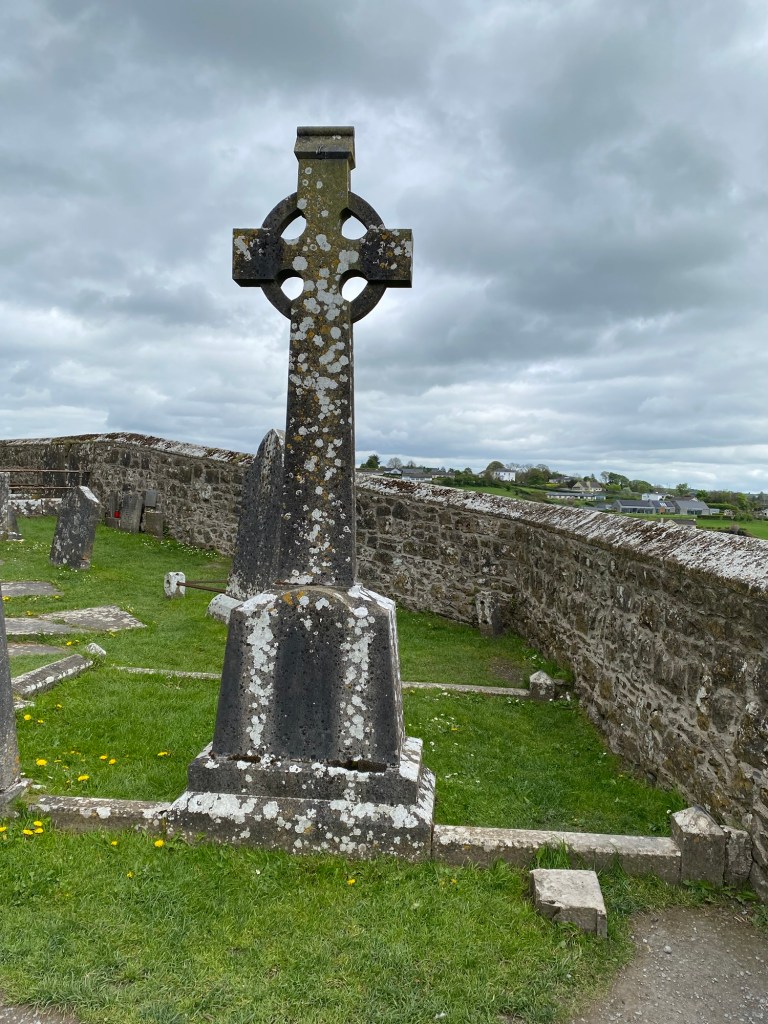
We went on an excellent one hour tour of the site, including Cormac’s Chapel below with 12th century Romanesque frescoes. Apparently they are the only ones left in Ireland.


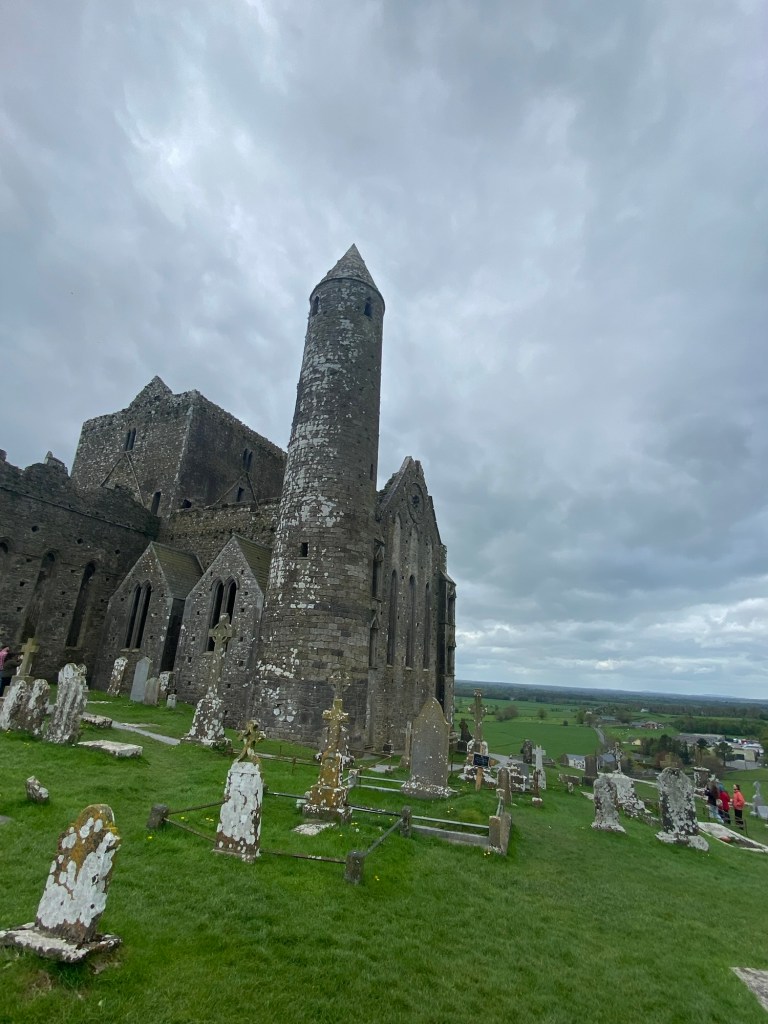
Except for two elderly ladies who have rights to be buried at The Rock of Cashell through a family registry, the graveyard will soon be closed for any further burials.
Lastly on the Rock of Cashell, on September 15th, 1647, Cromwell’s army scaled the walls of the Cathedral and massacred 1000 villagers, men, women and children, who were hiding there. The goal was to obliterate any Roman Catholic strongholds in Munster. Apparently some ghosts have been seen in the buildings at The Rock of Cashell that could be of villagers that died that awful day. (https://heritageireland.ie/2023/10/the-rock-of-cashel-walking-amongst-the-dead/)
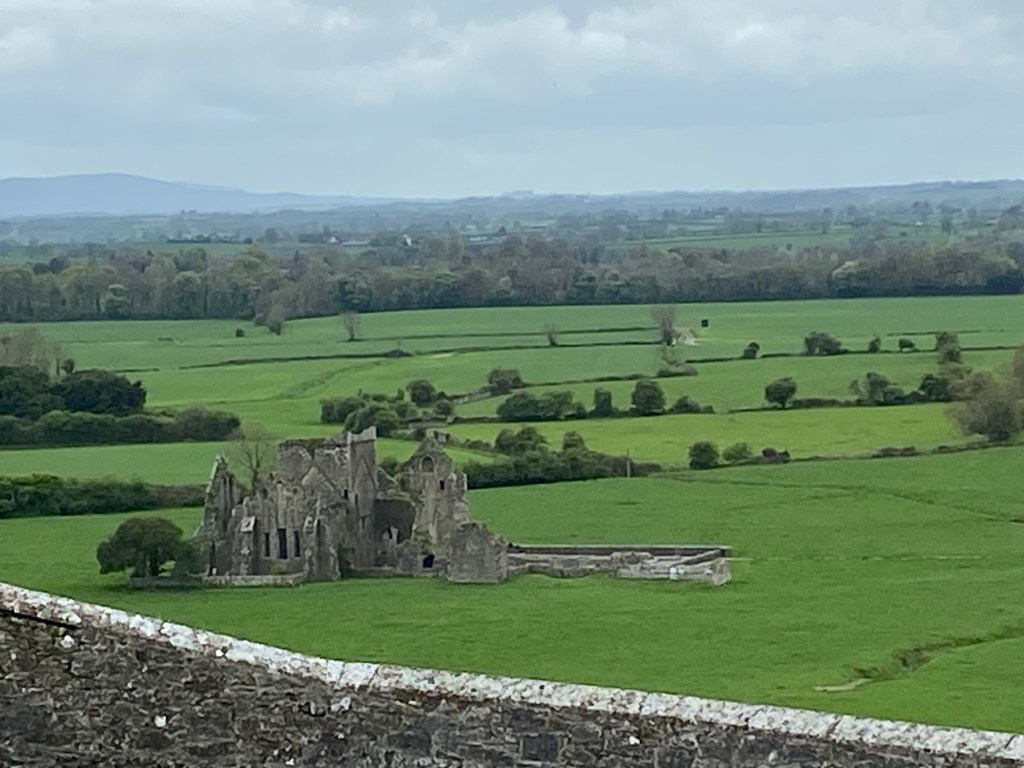
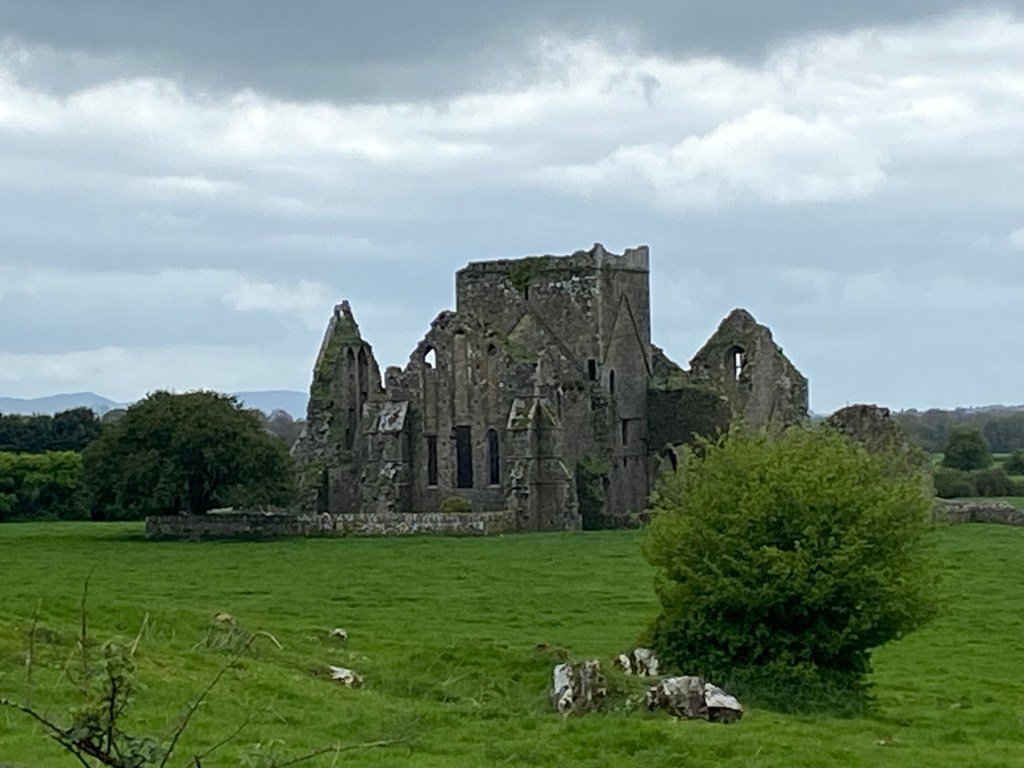
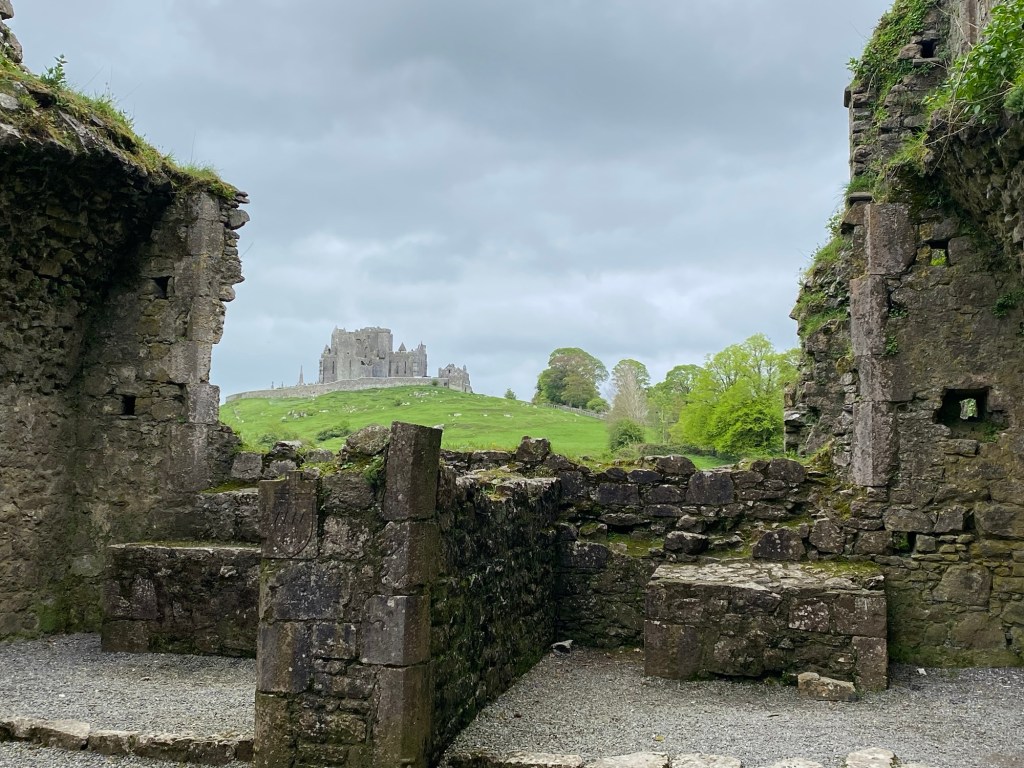
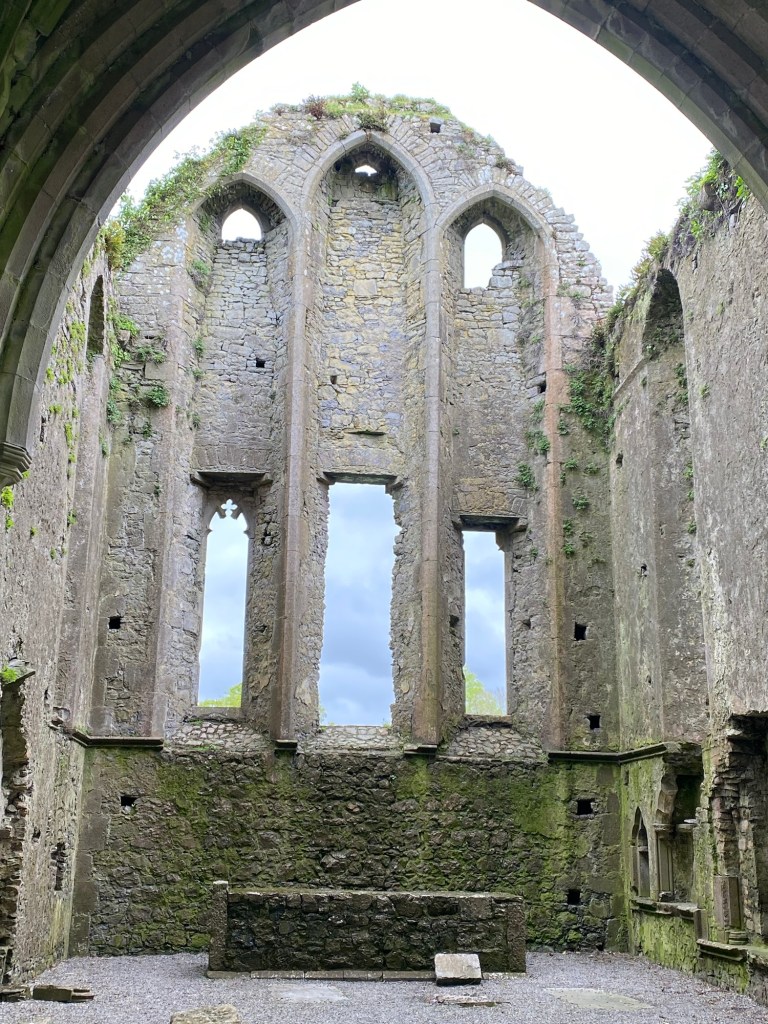
Walking the grounds, we saw another ruin in the distance and decided to go see it. It was a half hour walk away and well worth it. Hore Abbey is a ruined monastery built in 1272. It is an exquisite rune (if you can use those two words together)and it’s hard to believe that it is open to the public with no fee to get in. We were the only ones there when we visited. It’s a “have to see” if you are already there for The Rock of Cashell.

.
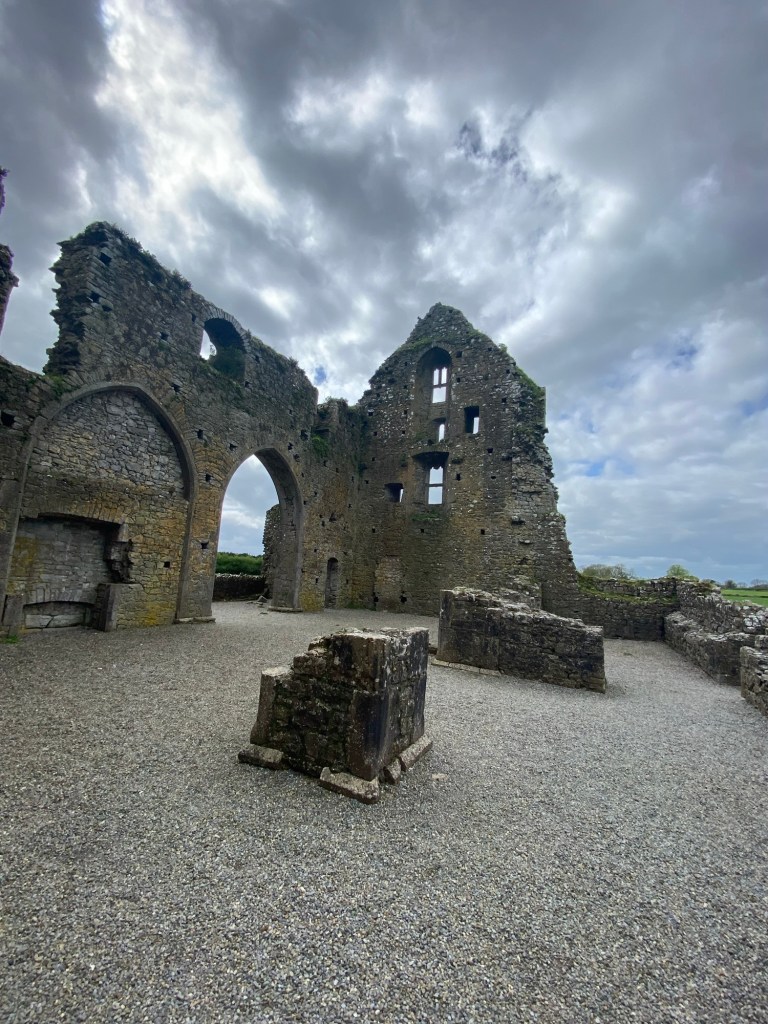
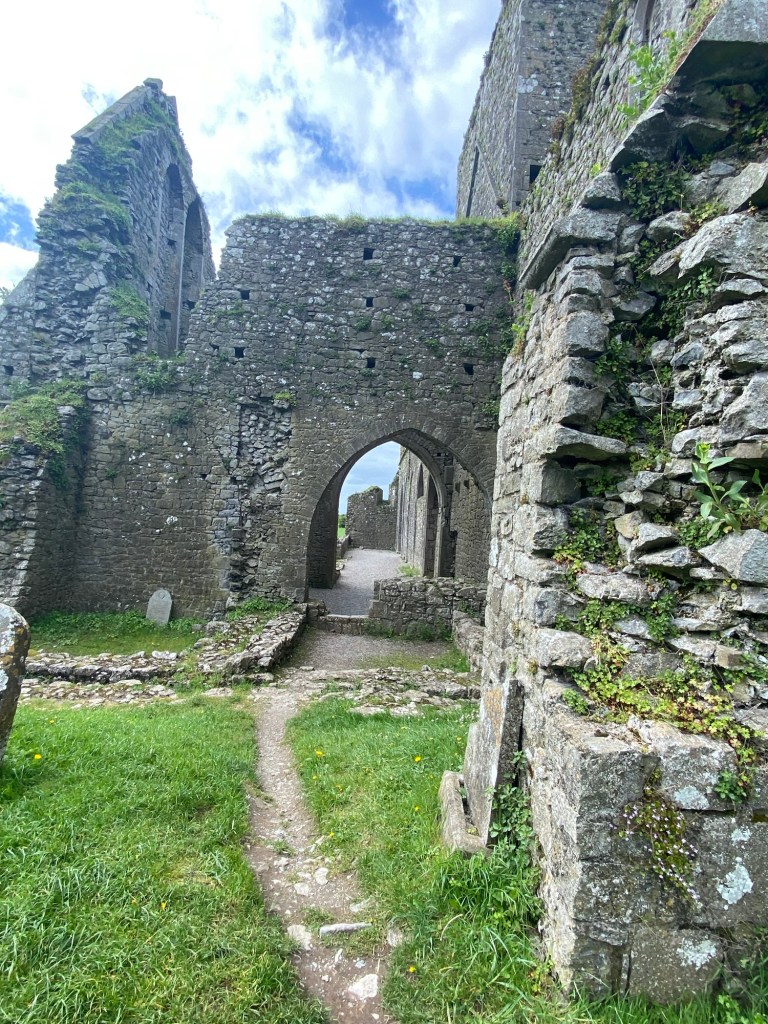

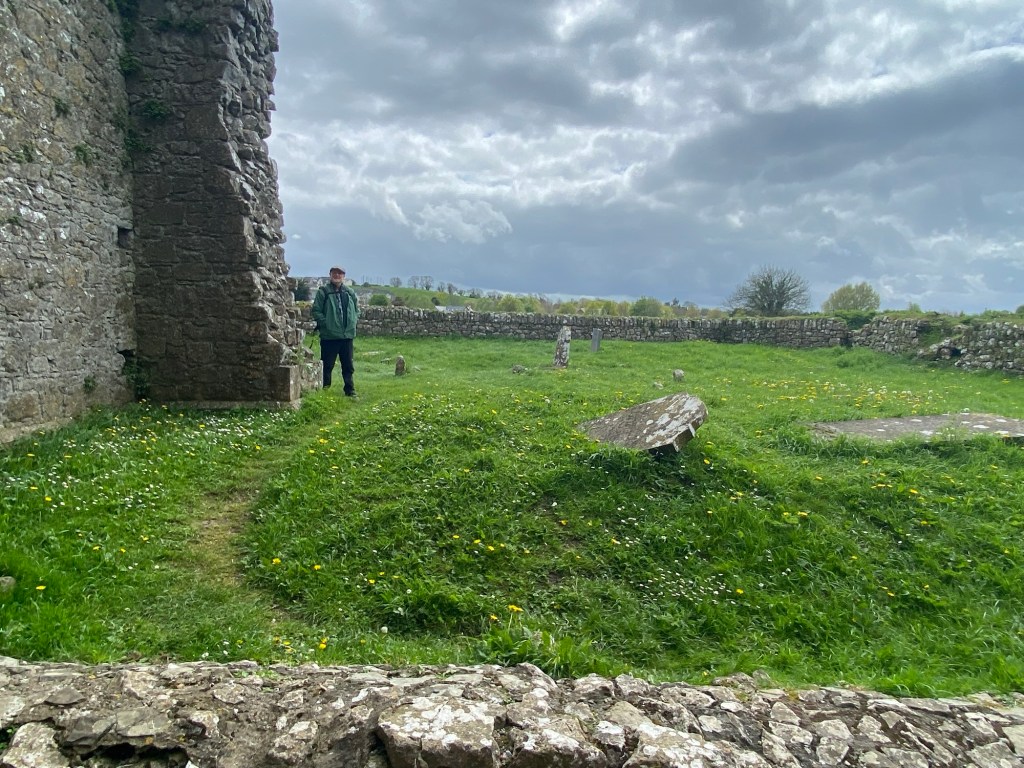
We walked back to our parking spot which had a friendly little cafe nearby called Granny’s Kitchen. We had coffee and Irish Whiskey Cake which is similar to fruitcake but just with raisins. Wonderful.
Our drive to Blarney near Cork was straightforward until google girl tricked us again and we ended up on an interesting tour of the hills and back lanes through the countryside. I’m really starting to dislike her.
We decompressed in the late afternoon at the campsite, playing 18 holes on the pitch and putt. It was so much fun. Oh oh. I think I’m starting to really like golf……
April 28th
We spent the better part of the day at Blarney Castle and Gardens. Blarney Castle was built 600 years ago in 1446. Guy walked up to the top of the Castle and kissed the Blarney Stone. The stone was built into the top of the wall of the castle. An old legend says that kissing the Blarney Stone makes one eloquent. This is the second time Guy has kissed the stone so he’ll be doubly eloquent now.
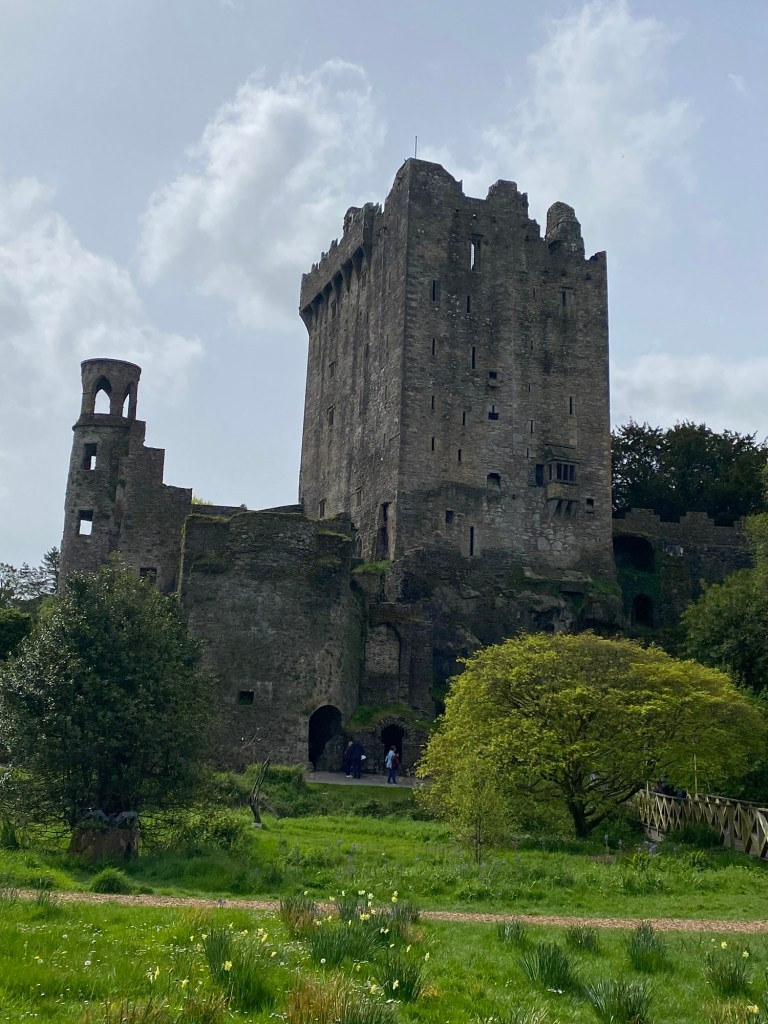

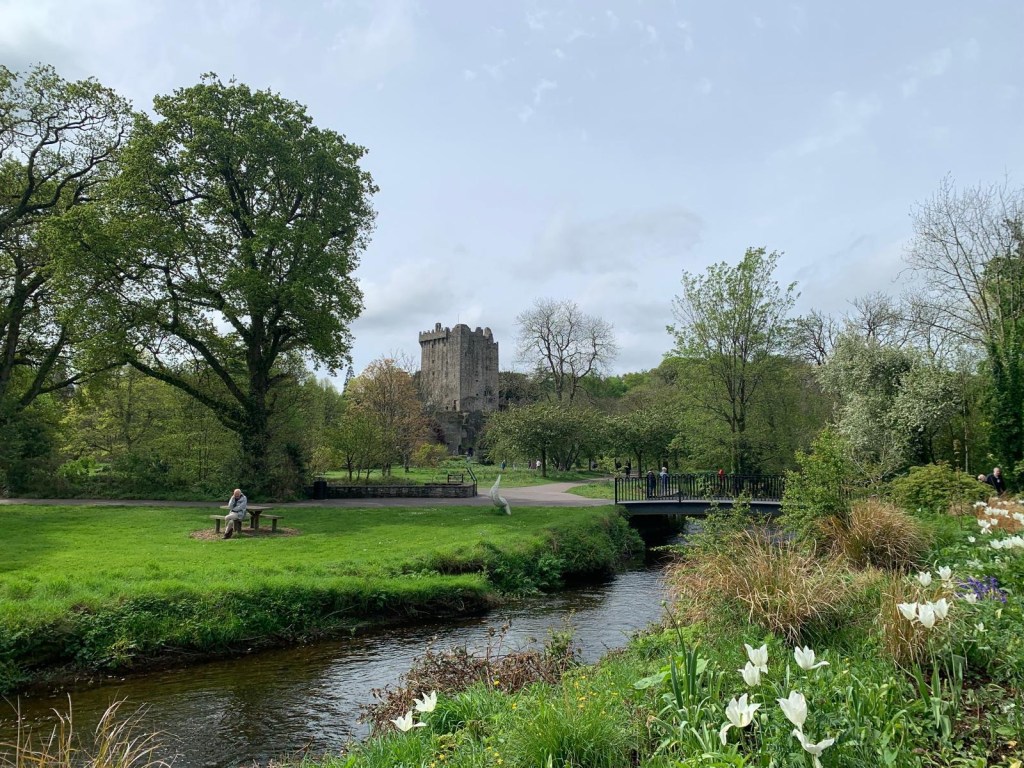
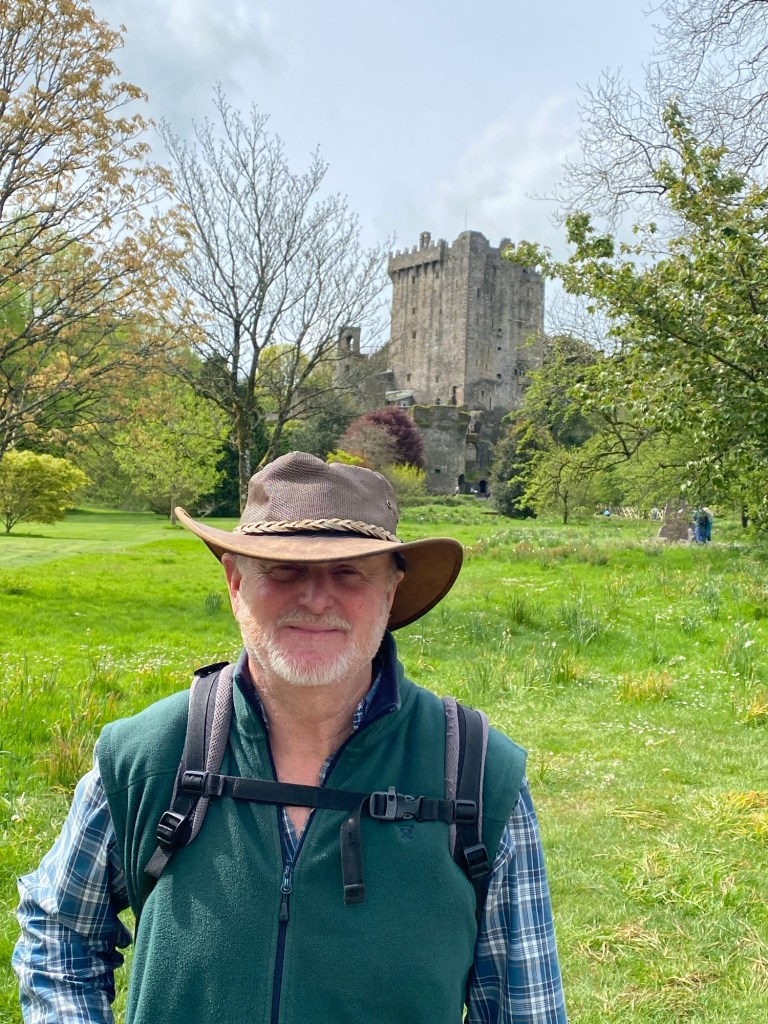
After seeing the castle and kissing the stone, we wandered the gardens.


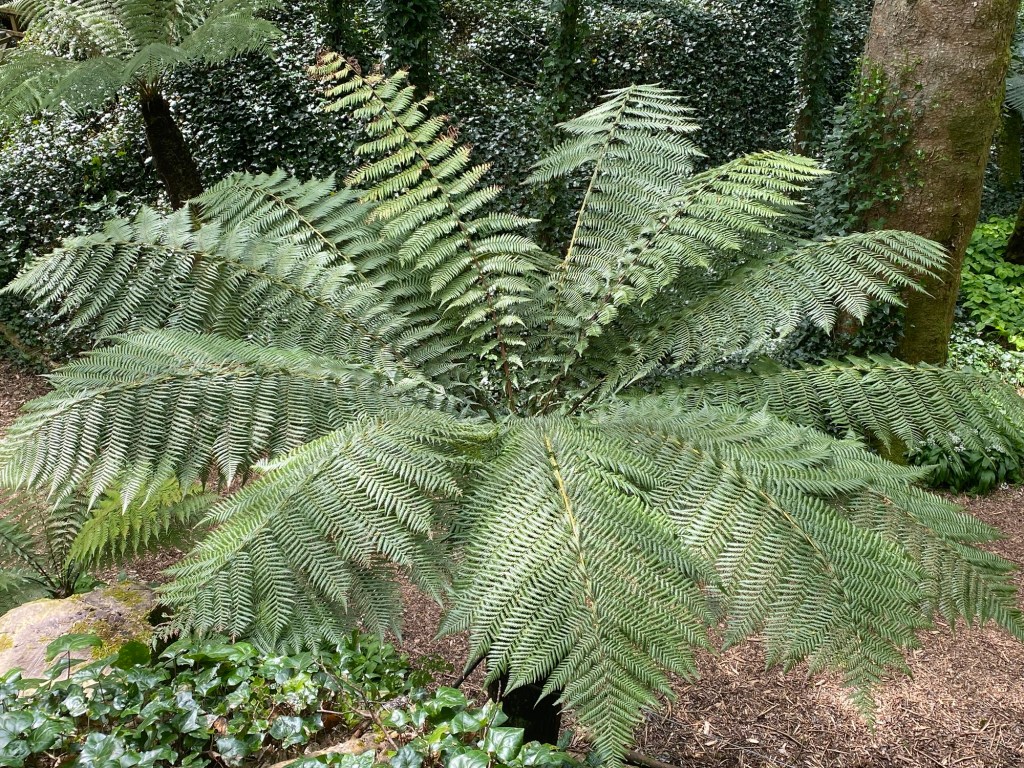


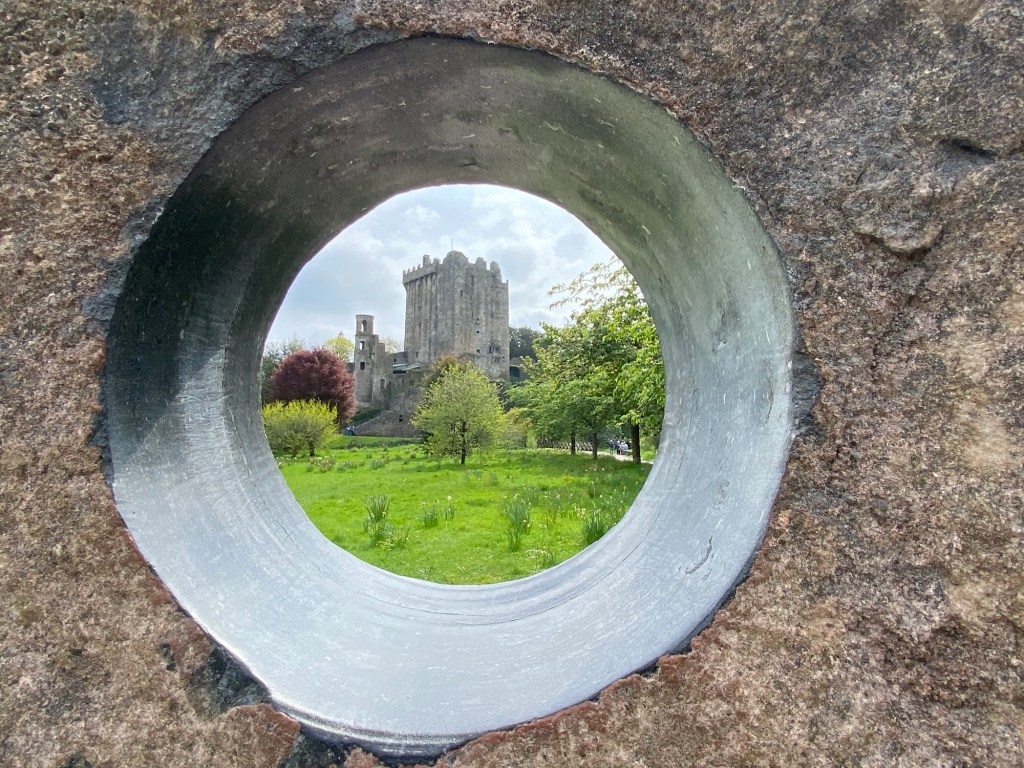
Then we walked loop around the Lake. Then it was back to the castle. We took one more photo (below), got an ice cream, and then, did some grocery shopping and headed back to the campsite for the night.
April 29th
We circumnavigated Cork city and went out to Great Island to the town of Cohb. Great Island is connected to the mainland by a bridge or you can take a ferry there if coming in from the east. The town sits on Cork Harbor, the second largest harbor in the world.
We went into the “Titanic Experience” exhibition located just above the White Star Line Dock, the Titanic’s last port of call before crossing the Atlantic on April 11, 1912. 123 people boarded the ship bound for New York at Cohb. In total, there were 1308 passengers and 898 crew on board totalling 2206 people. Of course most know that the Titanic sank after hitting an iceberg on April 15, 1912 in the North Atlantic. 1517 people perished in the sinking.
We learned that 7 lucky folks got off the ship in Cohb as they had only bought tickets at Southampton to go that far.
After time with Titanic, we went for coffee on the beautiful strip down by the water. It was lovely.


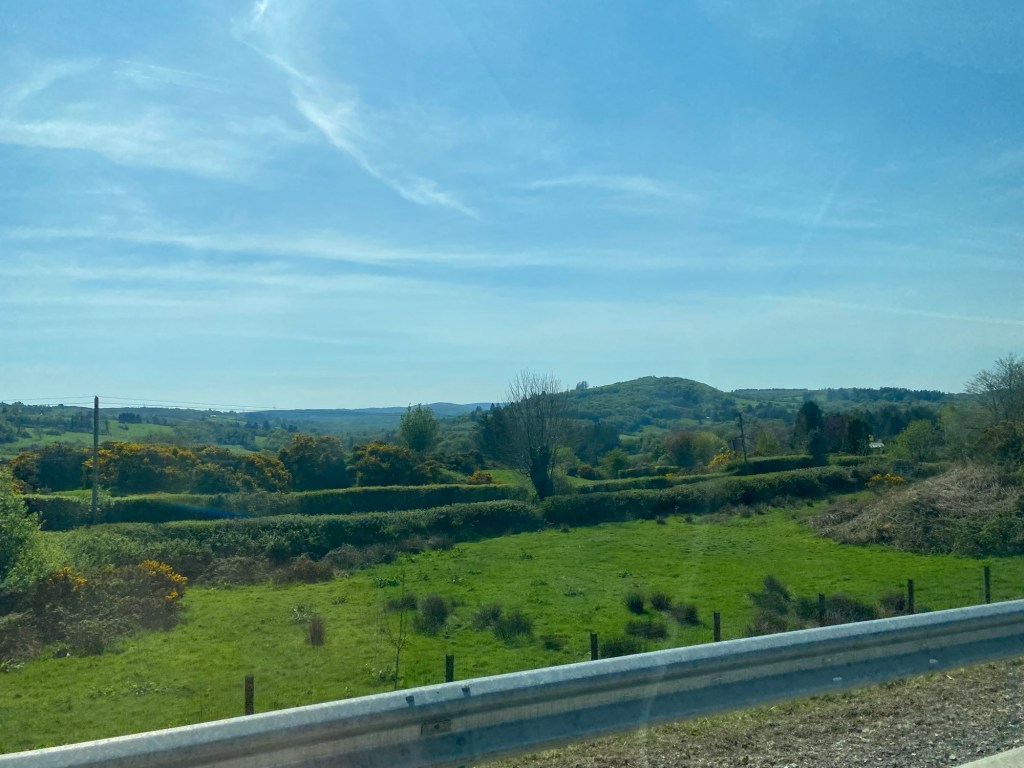
We made our way to our Campsite in Killarney. The scenery westward was spectacular. Ask anybody. It was beautiful. So beautiful. It really was.😂 Oops, another Trump impersonation. But truthfully, it was incredible scenery. It’s a different green here, like it’s been given a little shot of yellow.
April 30th
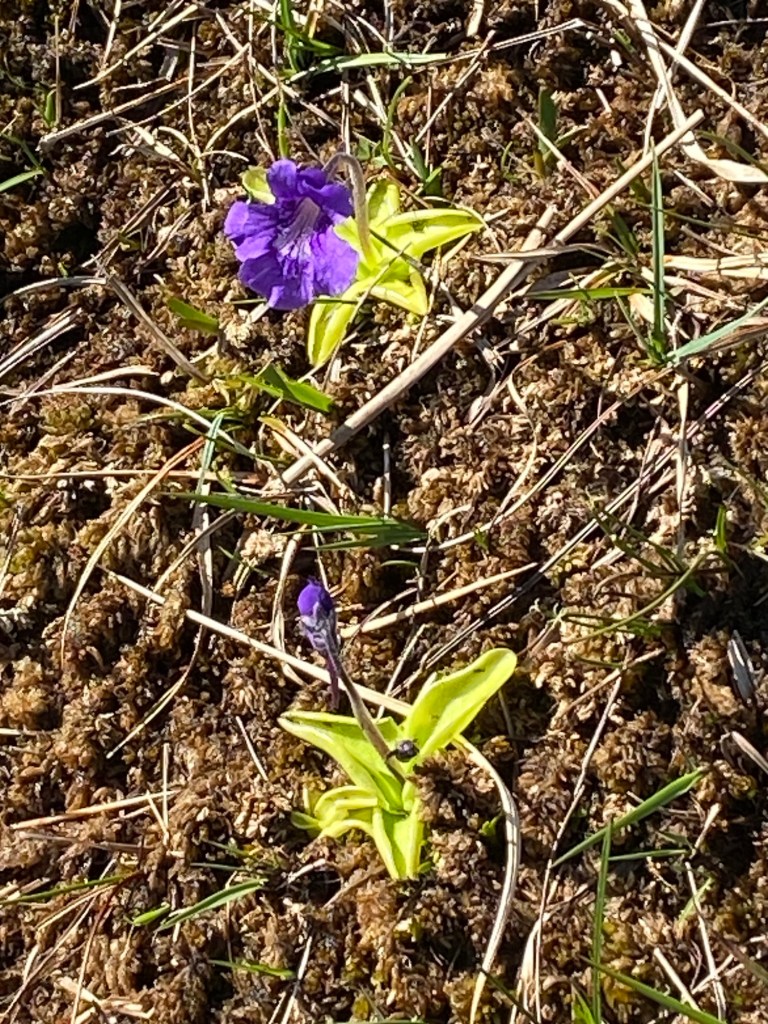
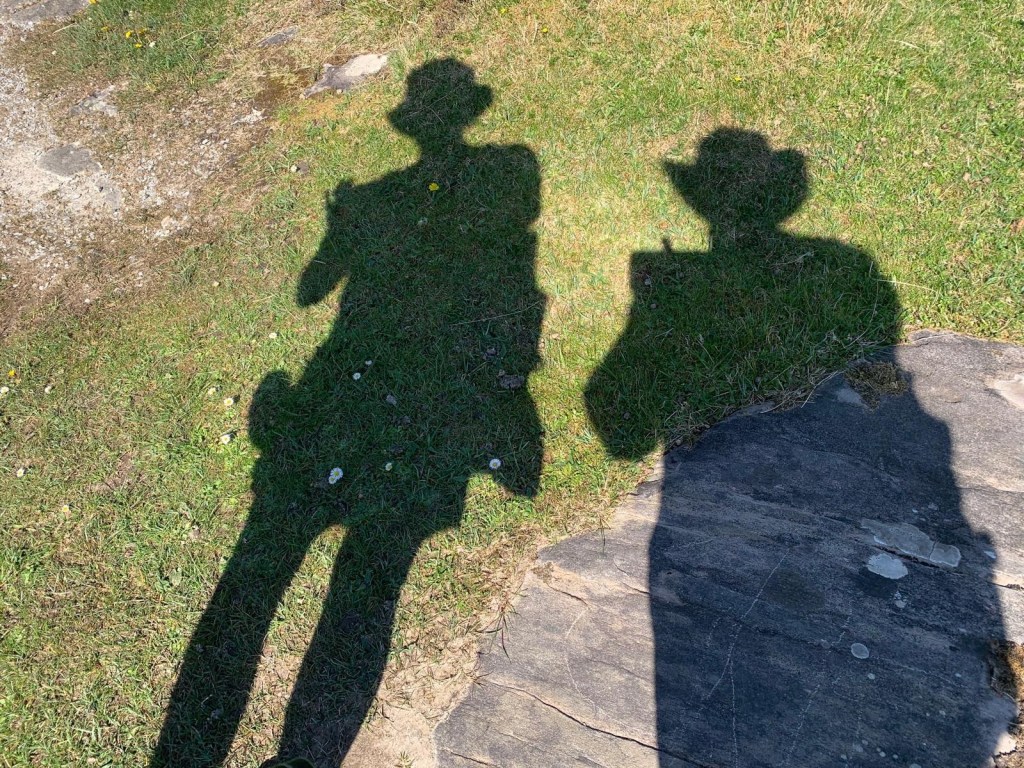
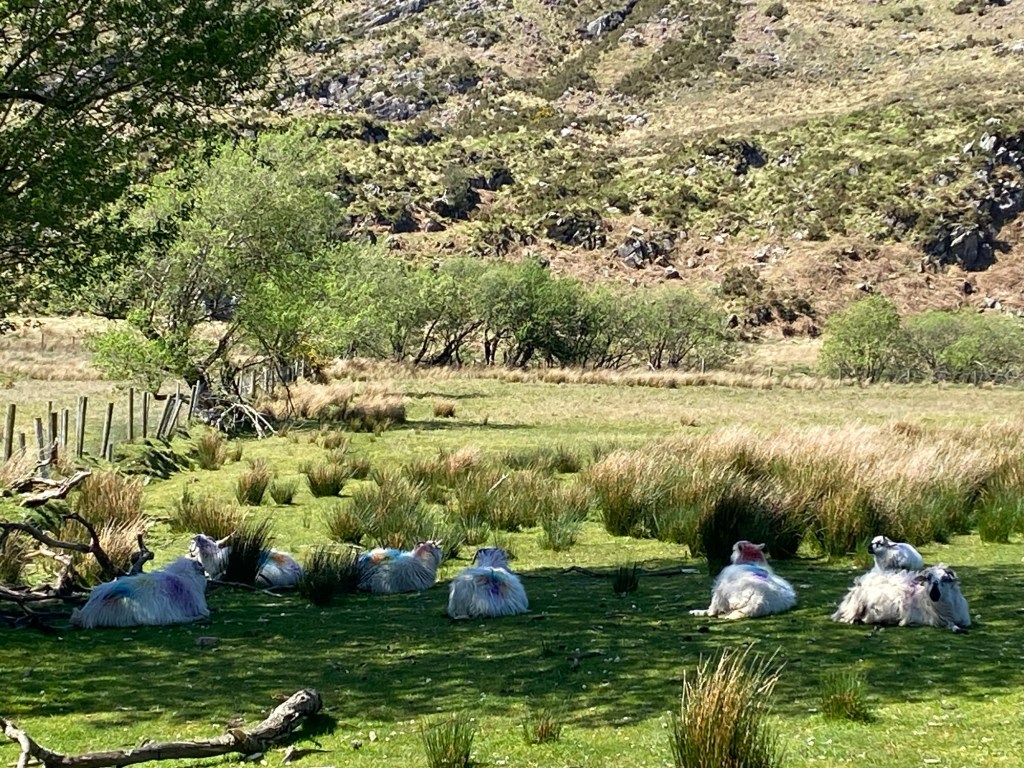
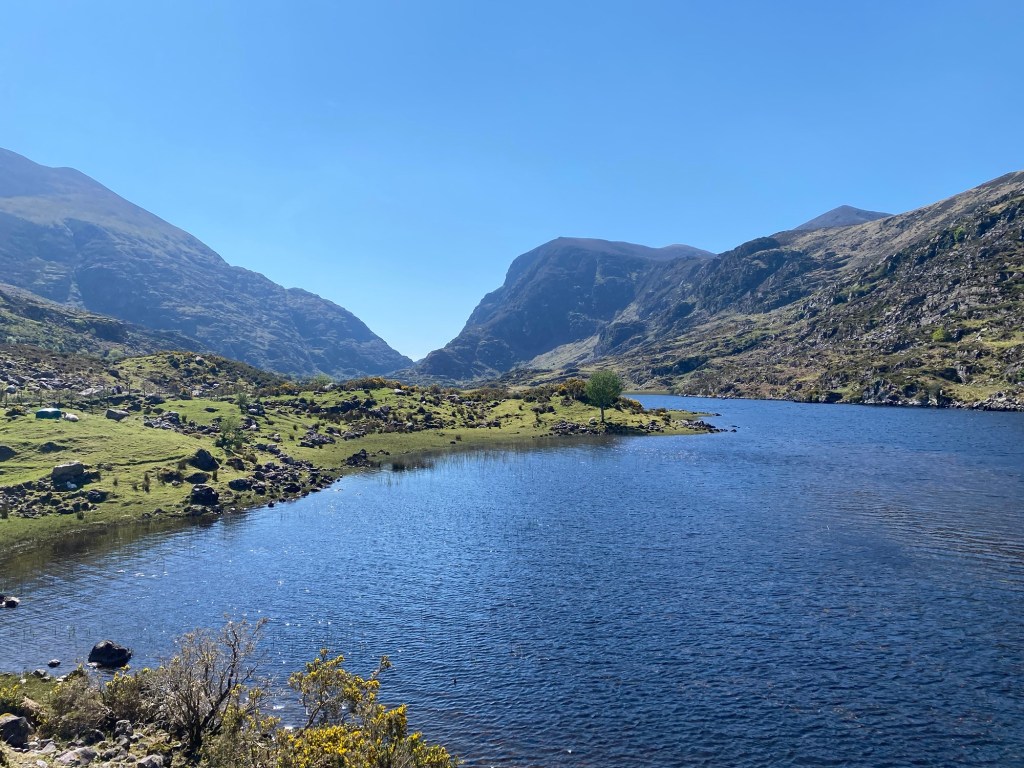
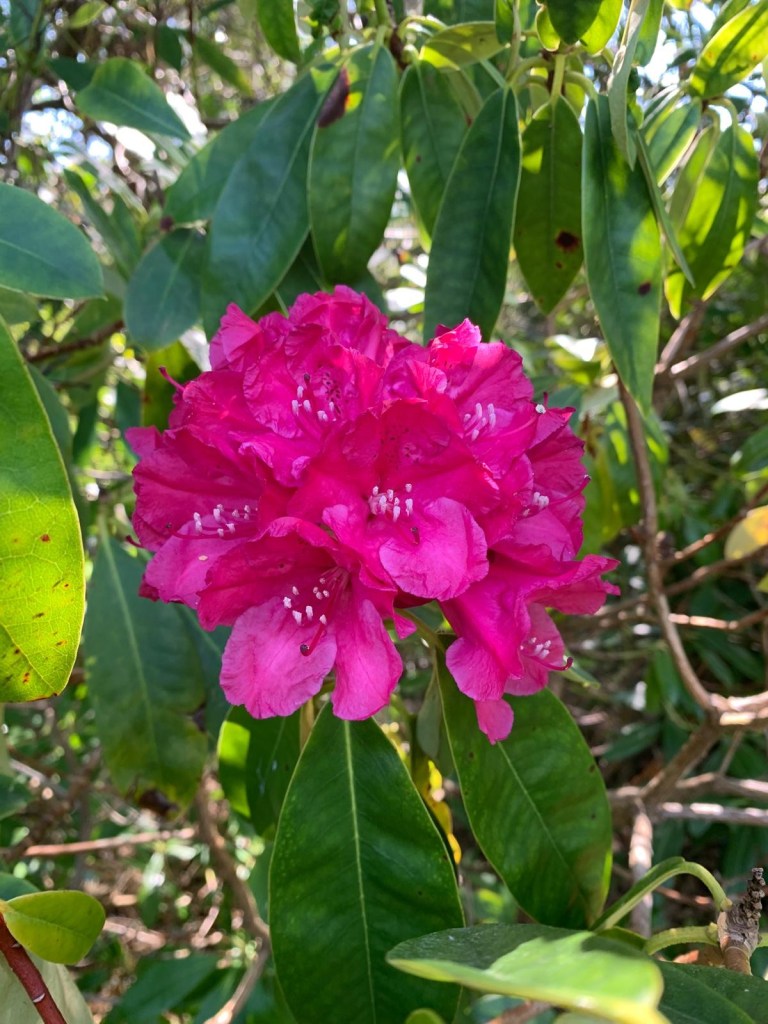
Today we left our campsite and drove to Kate Kearney’s Cottage and the beginning of the Gap of Dunloe. The Gap of Dunloe is a mountain pass in County Kerry and part of Killarney National Park. We walked the narrow road up to the Gap as there is no trail. Very few cars use it as they are deterred from doing so as it’s a one track narrow road with precarious pull offs. An occasional horse and buggy passes by loaded with folks who can’t or don’t want to make the trek to the views. It took us approximately two hours each way. The Gap of Dunloe is a huge tourist spot. Because of the time of year we were visiting it wasn’t that busy. It was a glorious day with the views and the sun and the breeze, the wild flowers and masses of rhodendrons about to bloom, the bird song and the sheep in the fields

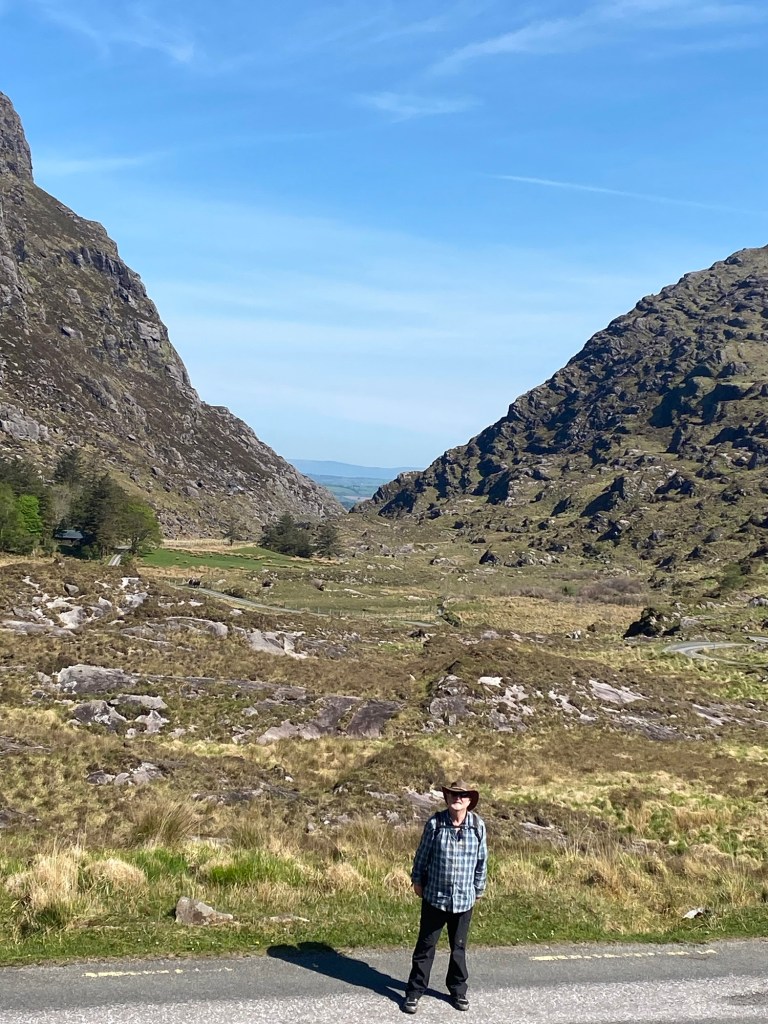
Once to the top, we had a picnic and looked toward the valley on the other side of the Gap. Then we turned around and walked back seeing the beauty in the other direction. Glorious. The pictures don’t really do it justice.
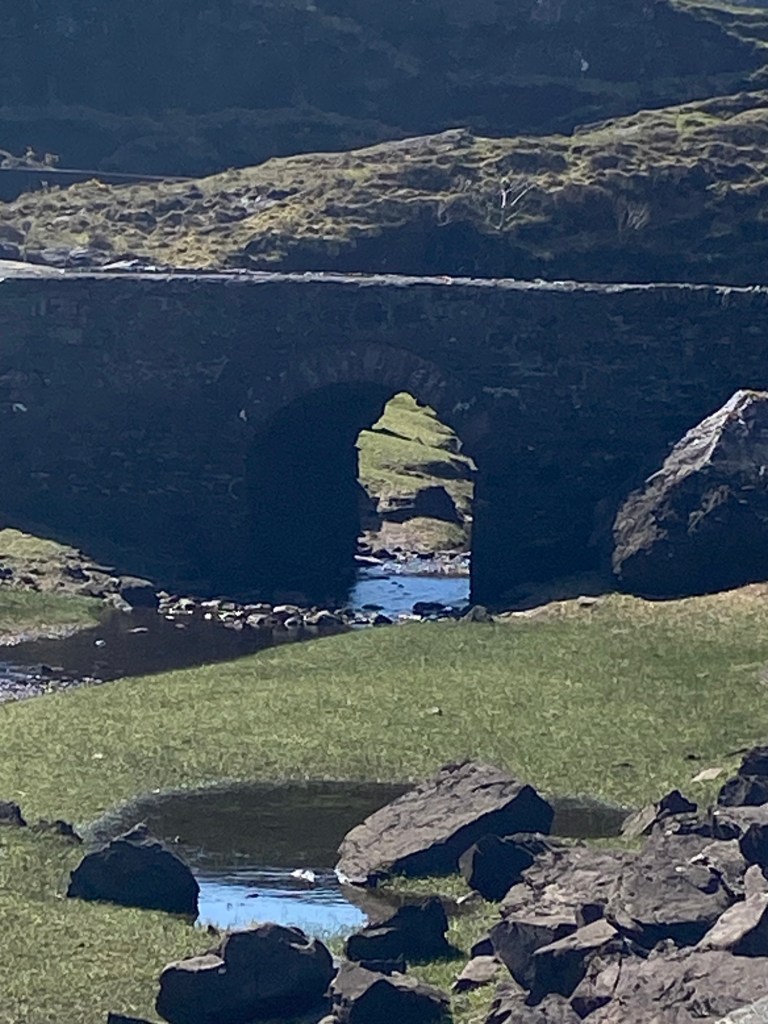

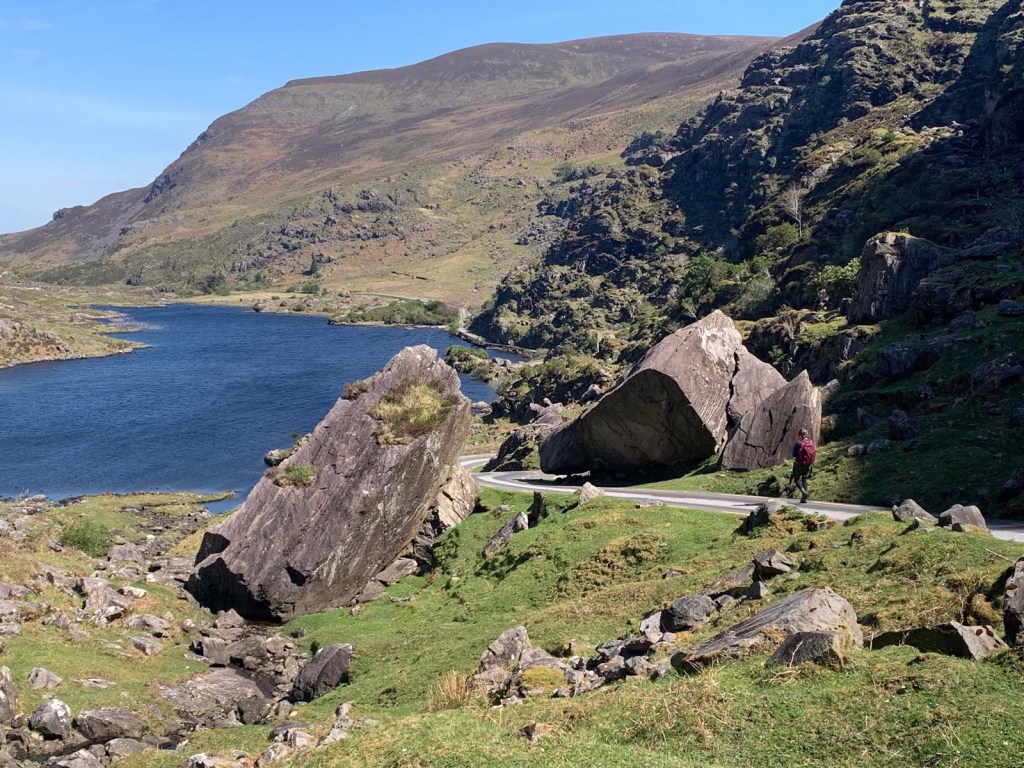


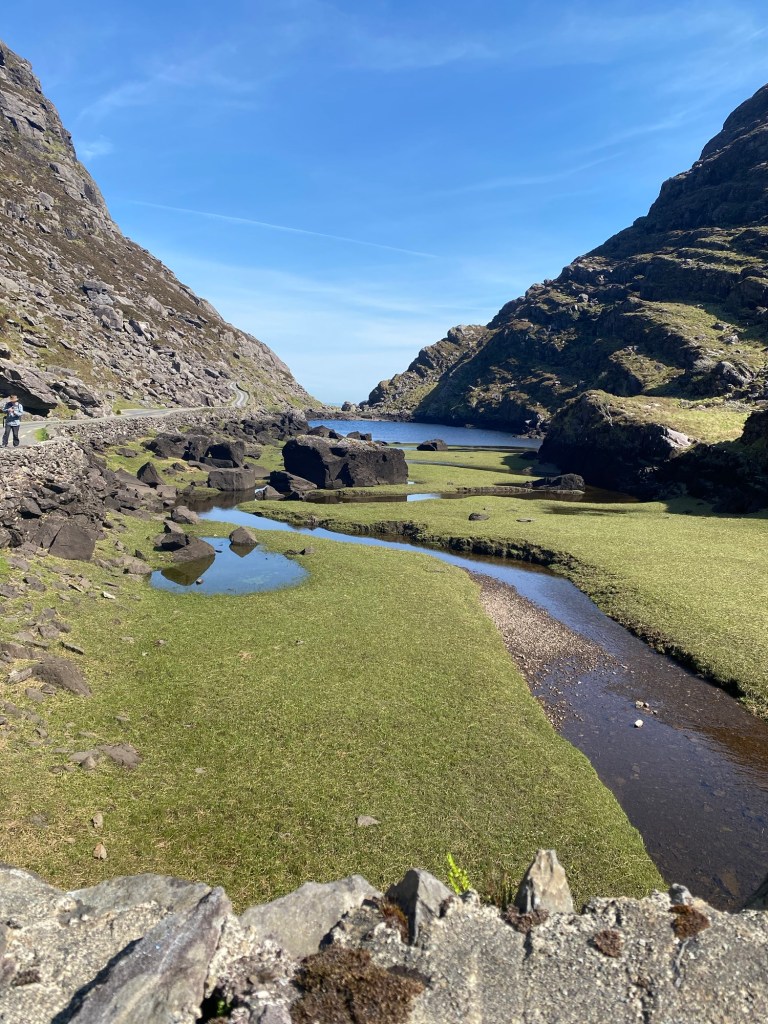

Just a bit more on the Gap: “The Gap of Dunloe was formed 25,000 years ago during Ireland’s last ice age as a result of a “glacial breach” where a glacier in the Black Valley, part of the Templenoe Icecap, estimated to be over 500 metres deep, broke through the Head of the Gap and moved northwards carving out a U-shaped valley.” (https://en.m.wikipedia.org/wiki/Gap_of_Dunloe).
Looks more like a “V” to me but I am no expert. 😃

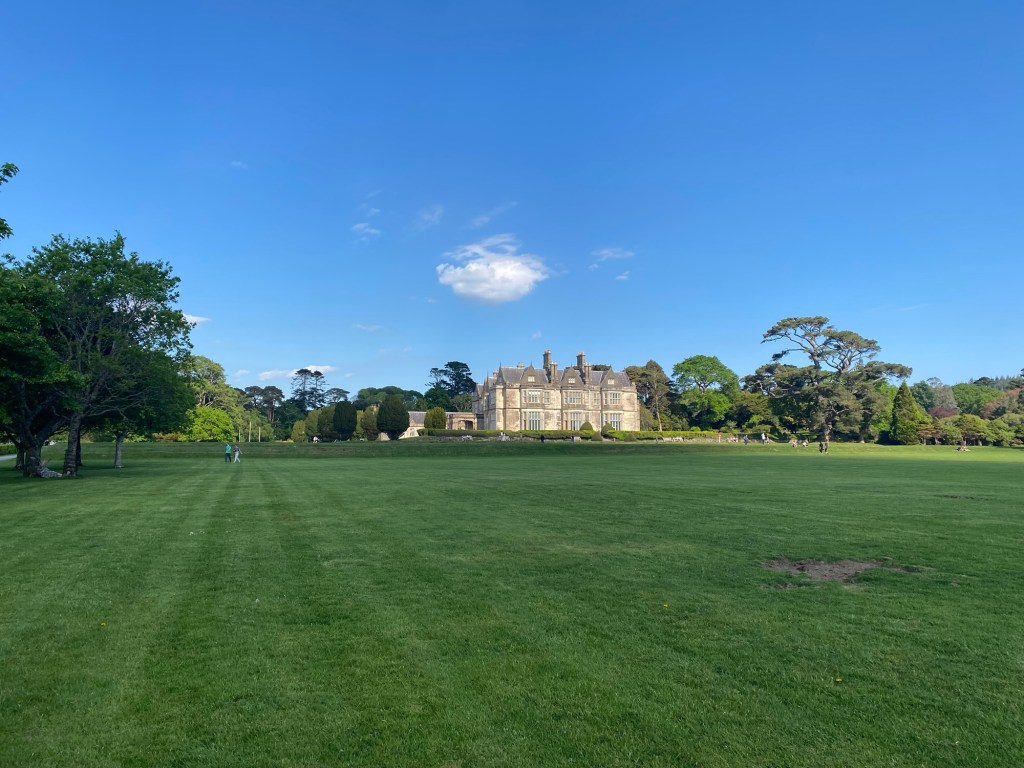
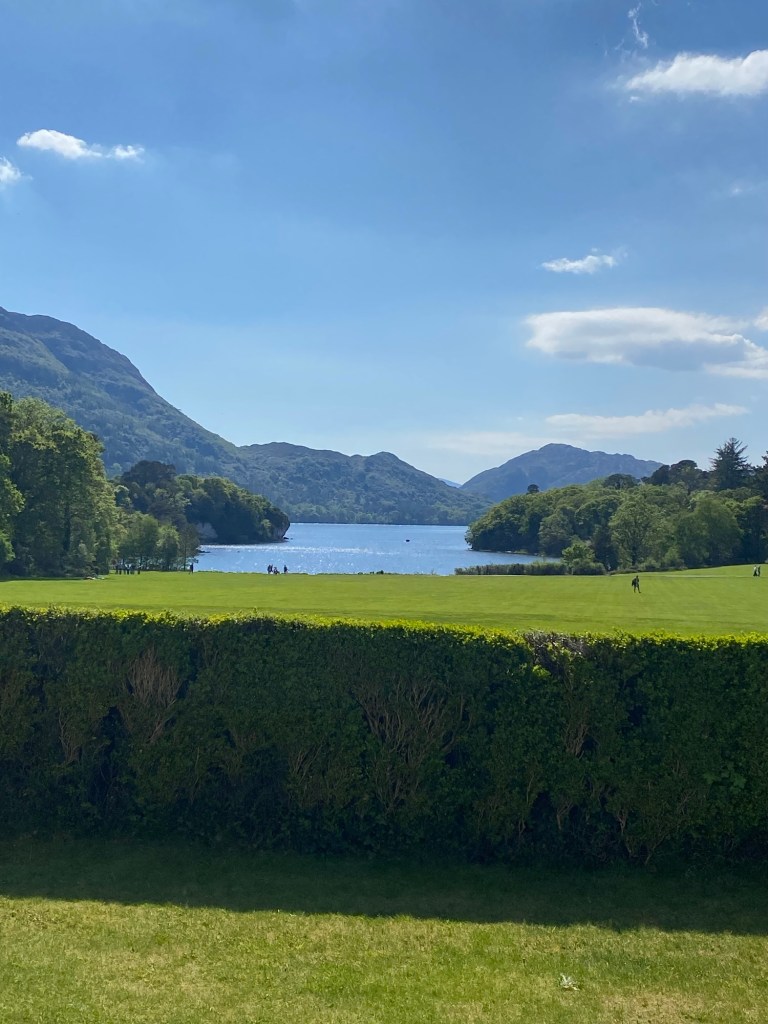
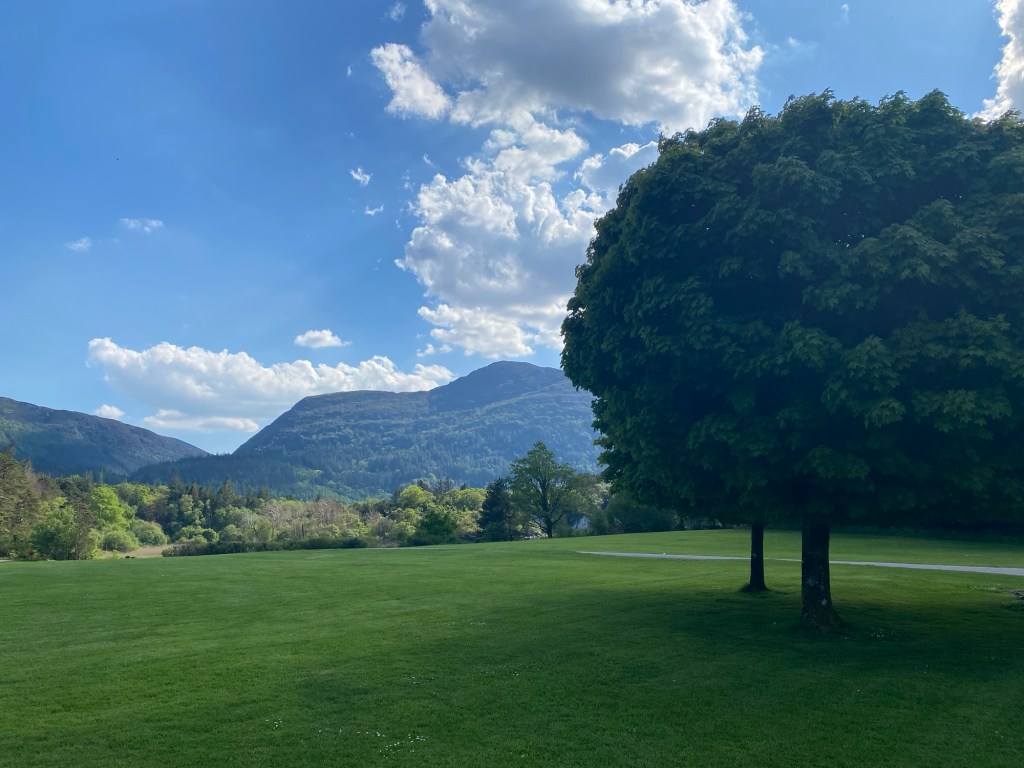
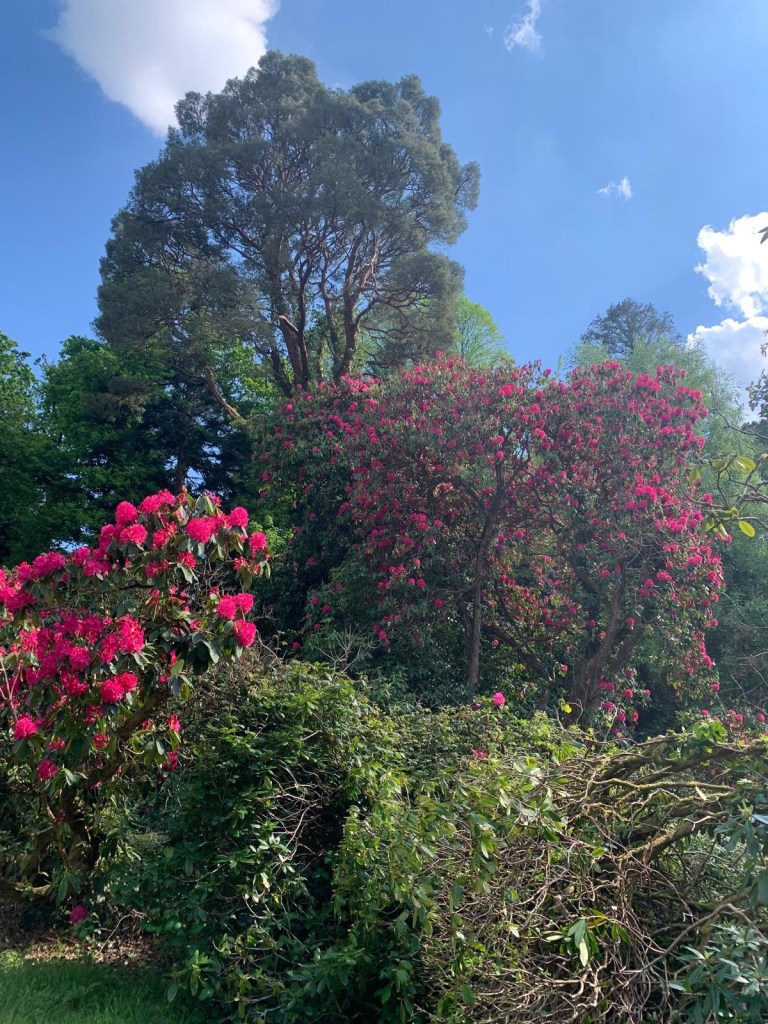
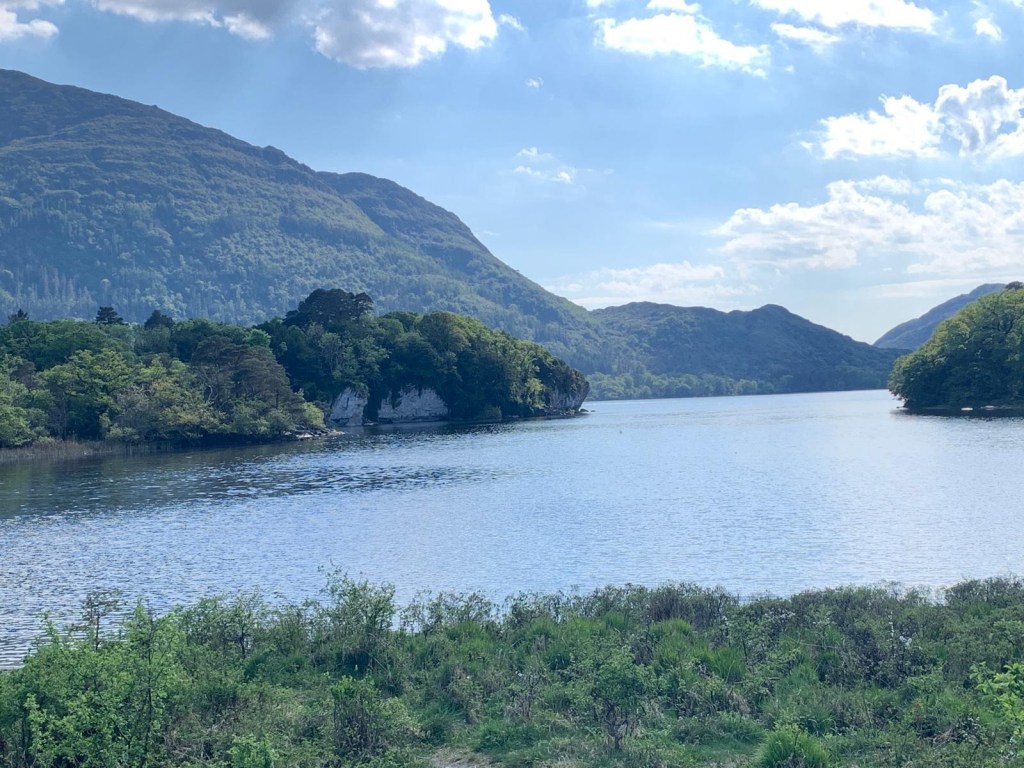
After a very pleasant time at The Gap of Dunloe, we made our way in the late afternoon to Muckross Estate and Gardens, another stop recommended in this area. Muckross is another example of a very generous family donating their estate and lands to the public. When we got there, we beelined for a big old oak tree and had a wee nap under it. Then we wandered the gardens and estate for a couple of hours before going back to the campsite for the evening.


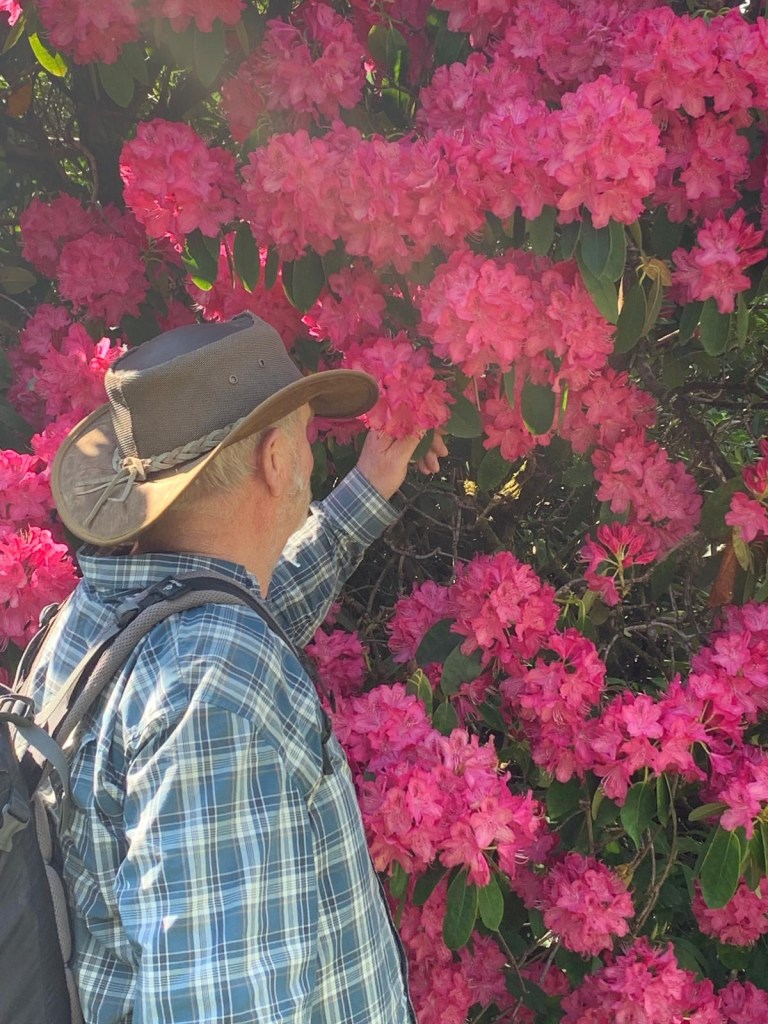
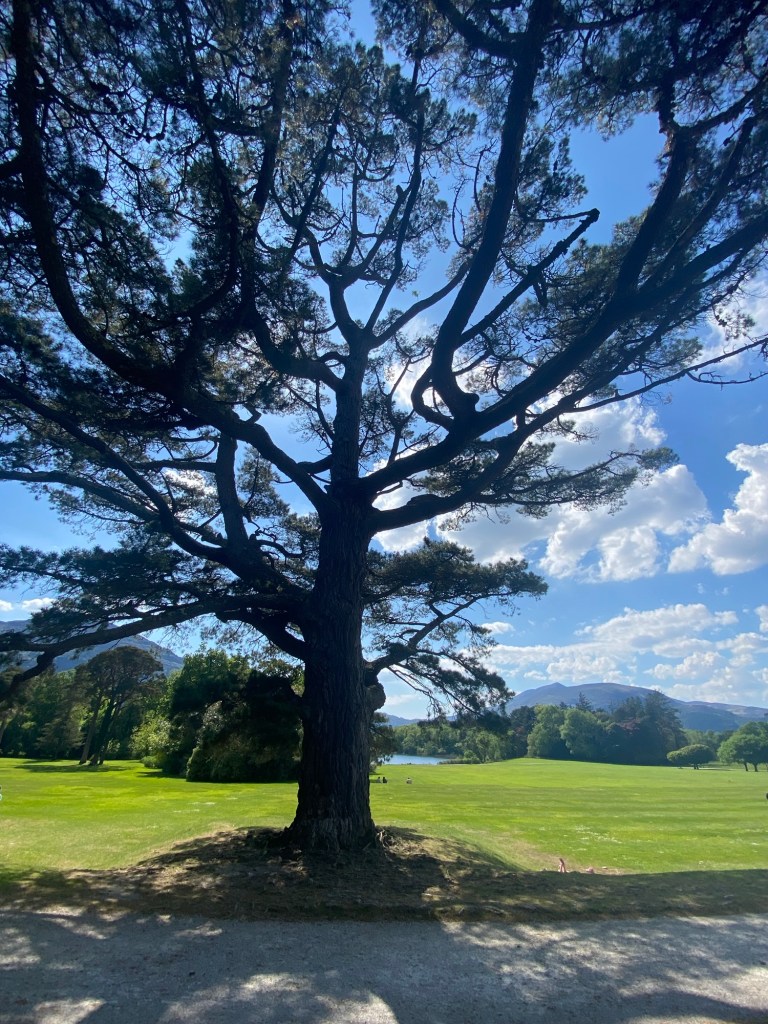

Horses getting ready to go home for the night too.
 Guy and Joys' 2025 UK and Ireland Campervan Trip.
Wow I’m defo going to Ireland before, or even after I die. Love the history and all those incredible castles!!!! Fascinating!
LikeLiked by 1 person
You’ve got to!!!
LikeLike
Absolutely beautiful scenery and bursting with incredible history delights. Definitely a wow factor. Looks as though the weather has been on your side too! ❤️❤️Caroline On Sun, May 4, 2025 at 3:42 PM Guy and Joys’ 2025 UK and Ireland Campervan
LikeLiked by 1 person
Weather has been great. Changed now in the Hebrides. Rain and wind!
LikeLike